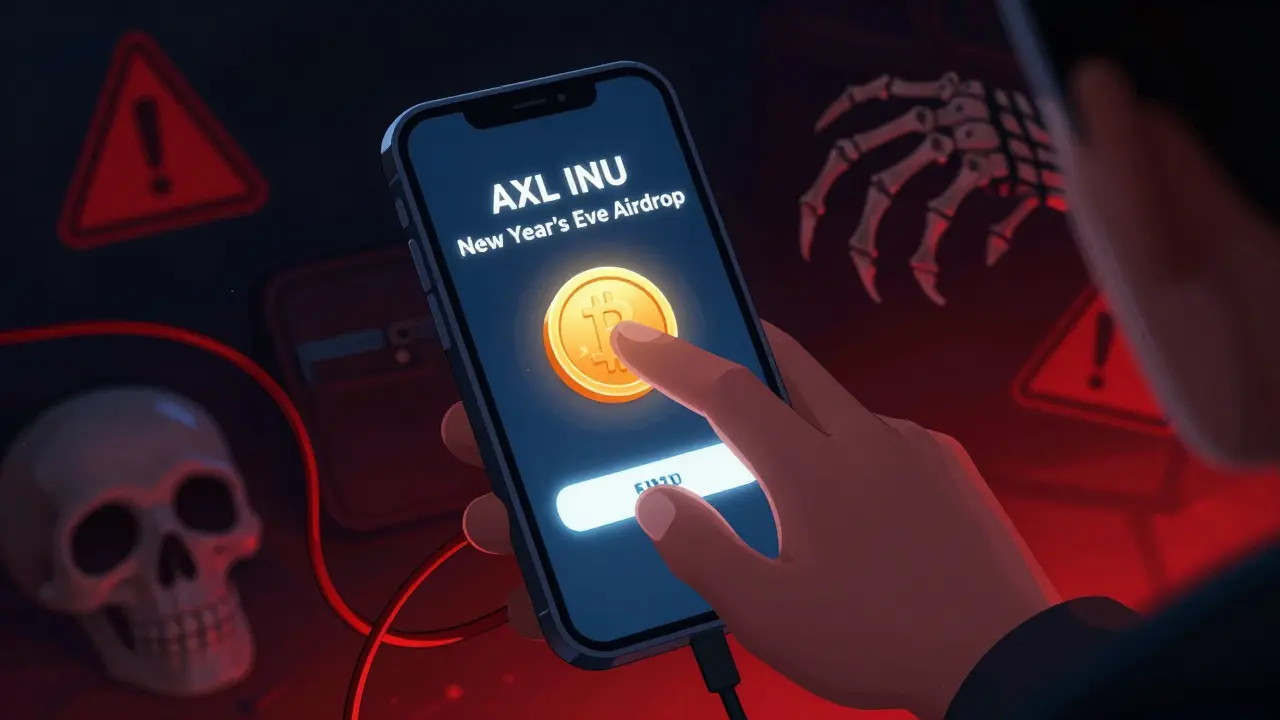
You might have seen posts promising free AXL INU tokens for a "New Year's Eve airdrop." Before you connect your wallet or click any links, stop. This is not a legitimate opportunity. It is a coordinated phishing campaign designed to steal your funds. The data is clear: this specific event is a trap.
The Reality Behind the AXL INU Token
To understand why this airdrop is dangerous, we first need to look at the asset itself. Axl Inu (AXL) is a low-cap meme coin with negligible market activity and no verifiable development team. As of late 2025, it ranked #6907 on CoinMarketCap. Its market capitalization hovered around $773. That is less than the cost of a single dinner for two in many cities. The trading volume was effectively zero.
Compare this to legitimate projects. When a project has a market cap under $1,000 and zero daily trading volume, it usually means one of two things: the project is abandoned, or it is being manipulated. Dr. David Gerard, author of 'Attack of the 50 Foot Blockchain,' noted in October 2024 that sustained zero-volume periods typically indicate deliberate manipulation through illiquid markets. Axl Inu fits this profile perfectly.
There is also significant confusion between Axl Inu and Axelar Network, which is a legitimate cross-chain communication protocol using the same AXL ticker. Axelar is a serious infrastructure project founded by Illia Polosukhin and others. Axl Inu is a separate entity with no whitepaper, no utility, and no active development. Scammers often rely on this name similarity to trick users into thinking they are interacting with a reputable brand.
Anatomy of the "New Year's Eve" Phishing Scheme
The "New Year's Eve airdrop" narrative is a classic social engineering tactic. Here is how the scam operates, based on forensic analysis from Chainalysis and CertiK:
- Wallet Stuffing: You receive unsolicited AXL tokens in your wallet. This is not a gift. It is bait. The Blockchain Transparency Institute’s Q3 2025 report categorized this as "wallet stuffing," where tokens are distributed to create a false appearance of adoption.
- The Hook: Social media bots and fake Telegram groups promote the idea that these tokens are valuable and can be claimed during a special holiday event.
- The Trap: Users are directed to newly registered domains like axl-inu-airdrop.live. These sites were registered in October 2025 via Russian hosting providers. They contain identical phishing scripts.
- The Theft: The site asks you to connect your wallet to "claim" the airdrop. Once connected, it requests an unlimited approval allowance for a malicious smart contract. If you approve, the scammers drain your other assets-ETH, USDT, or whatever else is in your wallet.
By October 13, 2025, at least 127 wallets had approved these malicious contracts, resulting in over $3,800 in stolen funds. The pattern is consistent with previous scams targeting low-liquidity tokens.
Red Flags You Must Recognize
If you are unsure whether an offer is real, check it against these criteria. Legitimate airdrops do not behave like scams.
| Feature | Legitimate Project | AXL INU "Airdrop" |
|---|---|---|
| Official Announcement | Posted on verified Twitter/Discord/Website | No official channels; rumors on random forums |
| Cost to Claim | Free (gas fees only, if any) | Requests private keys or unlimited approvals |
| Token Utility | Clear use case (governance, staking, etc.) | None; purely speculative/meme |
| Domain Age | Established domain (months/years old) | Newly registered (October 2025) |
| Trading Volume | Healthy liquidity on major DEXs/CEXs | $0 volume; unverified pools |
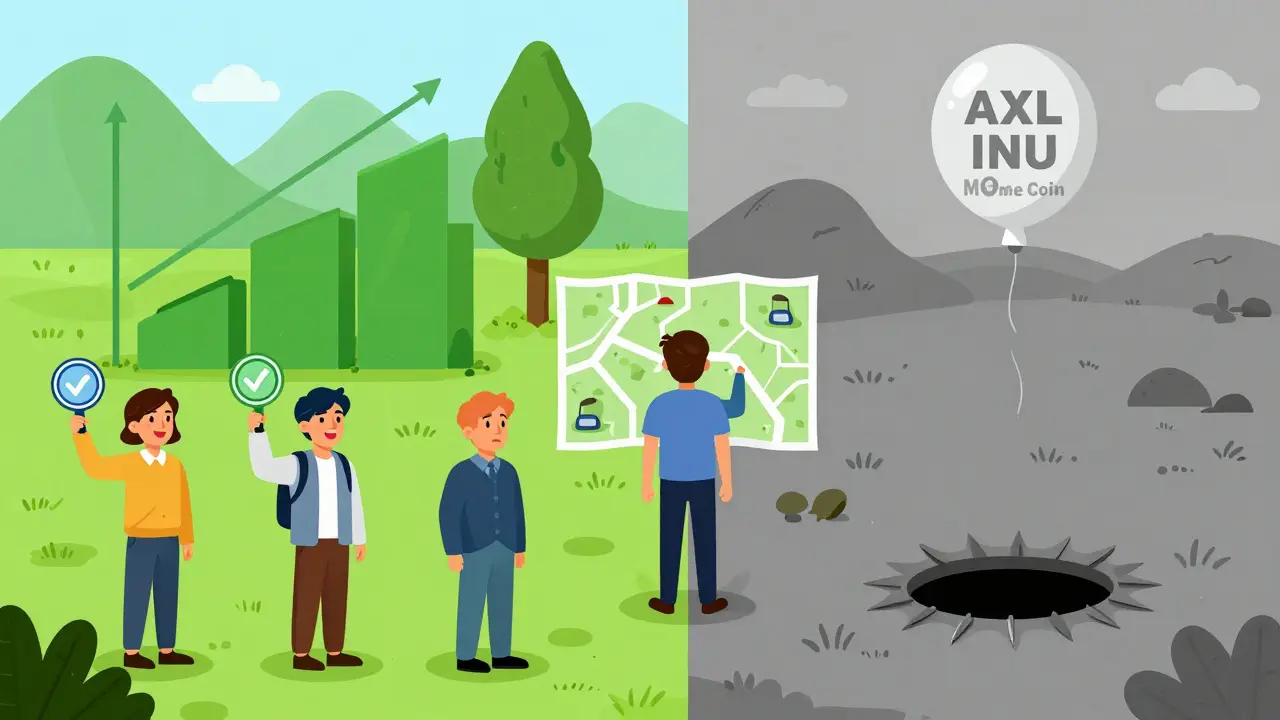
Notice the discrepancy. Real projects don't ask for your private key. Real projects don't host their claim pages on domains registered three days before the campaign starts. And real projects don't have a market cap of $773.
Regulatory Scrutiny and Exchange Actions
This isn't just community speculation. Regulators and exchanges are actively flagging these tokens. On October 8, 2025, the SEC's Enforcement Division issued Release No. 2025-187, specifically warning against "tokens with zero verifiable trading activity promoting fictional airdrop events." This places Axl Inu directly in the crosshairs of federal enforcement priorities.
Major exchanges are taking action too. Binance added AXL INU to its "high-risk monitoring list" in October 2025. The exchange stated that delisting would occur if daily trading volume did not exceed $1,000. Given the token's history of zero volume, this delisting was inevitable. Trading such assets carries extreme counterparty risk and potential legal complications if you inadvertently engage with sanctioned entities involved in the scam distribution.
How to Protect Your Wallet Right Now
If you already have AXL tokens in your wallet, do not panic. Simply ignoring them is the safest option. Do not try to sell them; there is no liquidity to buy them back, and attempting to trade may trigger additional interactions with malicious contracts. Instead, follow these steps:
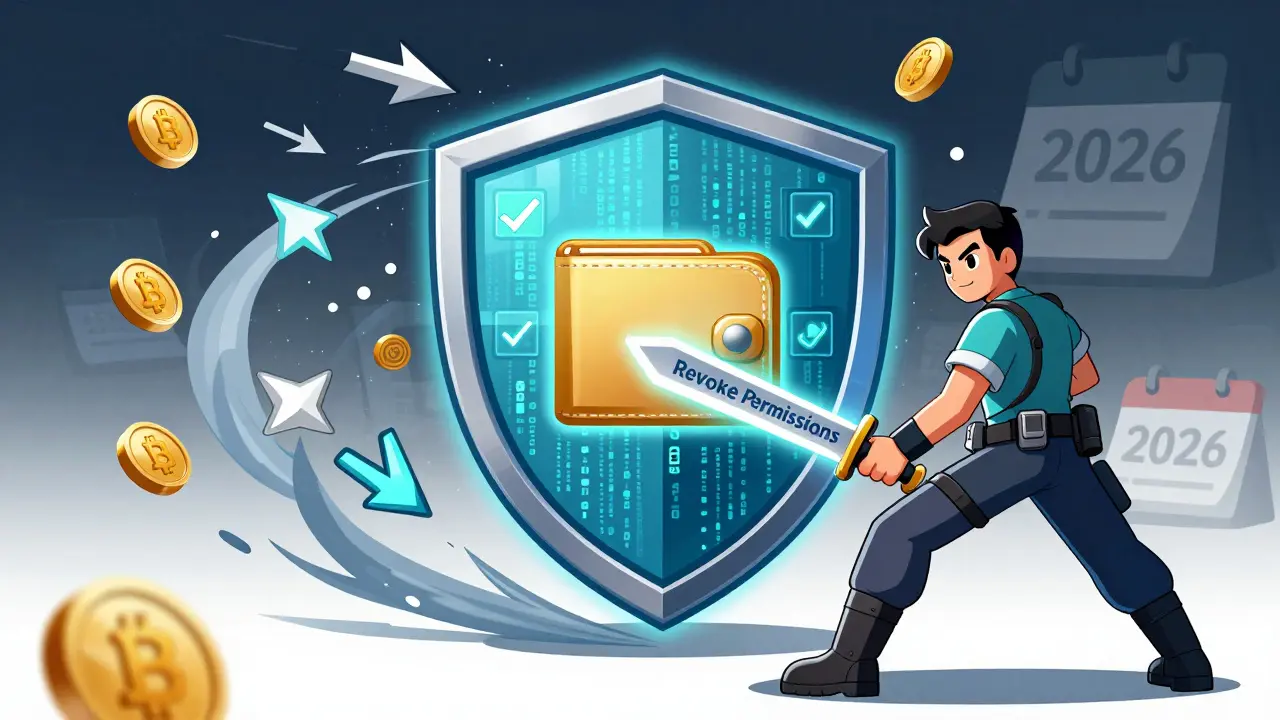
- Revoke Permissions: Use tools like Revoke.cash to check if your wallet has granted unlimited allowances to unknown contracts. If you see approvals linked to recent suspicious interactions, revoke them immediately.
- Use a Burner Wallet: For future interactions with new or unverified tokens, never use your main holding wallet. Create a separate "burner" wallet with minimal funds. If it gets compromised, your main assets remain safe.
- Verify Domains: Always check the URL. Look for slight misspellings or new TLDs (.live, .xyz, .top) that are common in phishing campaigns. Compare the link with the project's official website listed on CoinGecko or CoinMarketCap.
- Ignore Unsolicited DMs: Support teams will never message you first on Telegram or Discord. If someone claims to help you claim an airdrop, block them.
Why This Matters Beyond AXL INU
The Axl Inu case is a microcosm of a larger problem in the crypto space. Messari’s 'Meme Coin Ecosystem Q3 2025' report highlighted that tokens with market caps under $1,000 account for 68.3% of reported scam incidents. These "zombie coins" are used as vehicles for fraud because they lack oversight and community vigilance.
As you move into 2026, expect similar tactics. Scammers adapt quickly. They might change the token name, the holiday theme, or the platform, but the core mechanic remains the same: lure you with free money, exploit trust, and steal your keys. By understanding the mechanics of the AXL INU scam, you build immunity against the next variation.
Is the AXL INU New Year's Eve airdrop real?
No. There is no official announcement from any credible source regarding an AXL INU airdrop. Investigations by CertiK and Chainalysis confirm that websites promoting this event are phishing operations designed to steal funds.
What should I do if I received free AXL tokens?
Do not interact with them. These tokens are likely part of a "wallet stuffing" scheme. Ignoring them is the safest course of action. Do not attempt to swap or sell them, as this may require connecting to malicious interfaces.
Is Axl Inu the same as Axelar Network?
No. They are completely different projects. Axelar Network is a legitimate cross-chain protocol with a strong development team and high trading volume. Axl Inu is a low-cap meme coin with no utility and zero trading volume. Scammers often confuse users by using similar tickers (AXL).
How can I tell if a crypto airdrop is a scam?
Check for these red flags: the project has no official website or social media presence, the domain is newly registered, the token has zero trading volume, and the claim process requires your private key or unlimited token approvals. Legitimate airdrops are always announced through verified channels.
Can I recover funds lost to the AXL INU scam?
Recovery is extremely difficult once funds are sent to a hacker's wallet. Blockchain transactions are irreversible. Report the incident to local authorities and the platform where the interaction occurred, but assume the loss is permanent to prioritize prevention in the future.