Have you ever wanted to trade stocks or gold without selling your Bitcoin? That is the promise of Dsdaq, a cryptocurrency exchange that lets you use your digital assets as collateral for traditional financial markets. Launched in late 2019, Dsdaq carved out a niche by bridging the gap between crypto holdings and global finance. But does it actually work well, or is it just another flashy platform with hidden risks?
In this review, we break down everything you need to know about Dsdaq. We look at how its unique three-account system works, whether the fees are truly competitive, and most importantly, if your funds are safe. If you are looking for a standard spot-trading platform like Coinbase, this might not be it. But if you want leverage and cross-asset exposure, read on.
What Exactly Is Dsdaq?
Dsdaq is a centralized cryptocurrency exchange specializing in derivatives and crypto-collateralized trading. Unlike typical exchanges where you buy and sell coins directly, Dsdaq focuses on contracts. It allows users to hold cryptocurrencies while simultaneously trading other assets like stocks, indices, commodities, and forex pairs.
The company was founded in December 2019 and is headquartered in Hong Kong. Its legal registration is in the Cayman Islands, specifically at the Grand Pavilion Commercial Centre. This structure is common for crypto firms seeking regulatory flexibility, but it also means they operate outside the strict oversight of major jurisdictions like the United States or the European Union. They received early funding from DraperDragon Innovation Fund III, which adds some credibility regarding their initial backing.
As of 2026, Dsdaq supports over 46 cryptocurrencies and offers more than 300 financial products. However, it is crucial to note right away: US residents cannot use Dsdaq. The platform blocks users from the United States, likely due to complex securities regulations. If you live in the US, you will need to look elsewhere.
The Unique Three-Account System
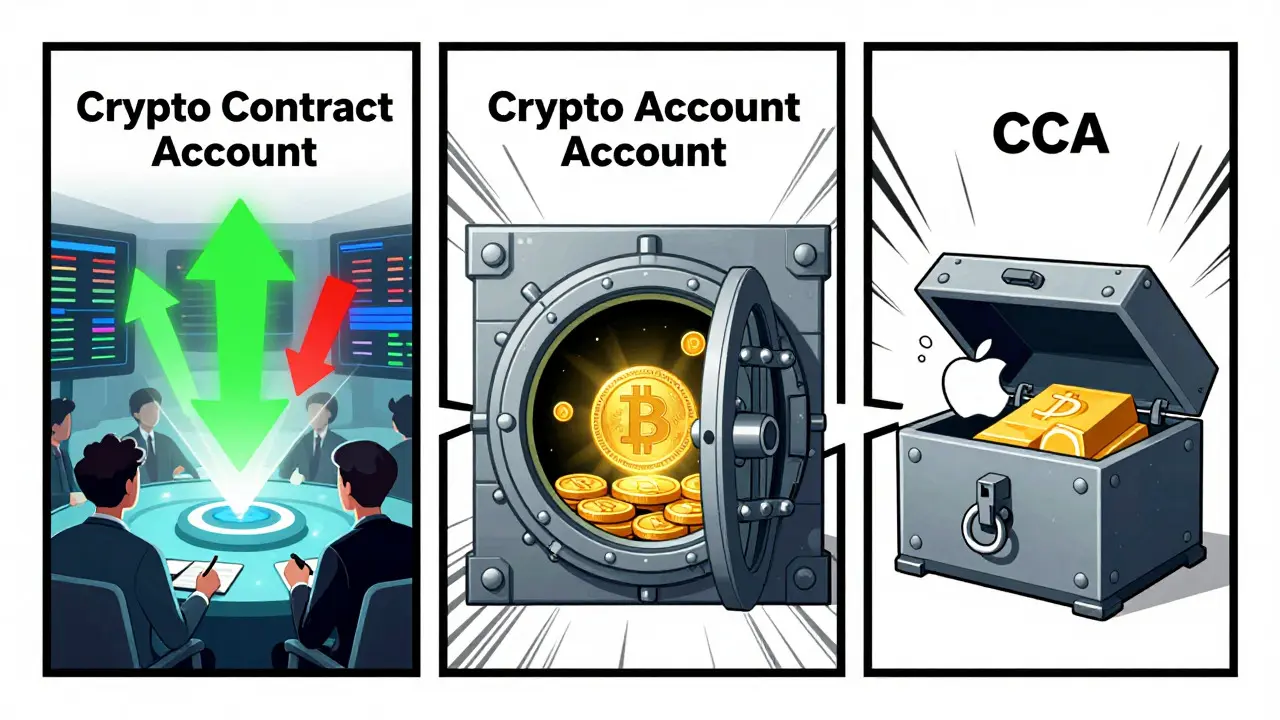
The core innovation of Dsdaq is its account structure. Most exchanges give you one wallet. Dsdaq gives you three distinct accounts that work together. Understanding this is key to using the platform effectively.
- Crypto Account: This is your standard wallet. You deposit fiat (if supported) or transfer cryptocurrencies here. It handles basic deposits and withdrawals.
- Crypto Contract Account: Use this for trading cryptocurrency derivatives. Here, you can go long or short on Bitcoin, Ethereum, and other coins using leverage.
- Crypto Collateral Account (CCA): This is the standout feature. You move crypto from your main account here to use as collateral. Instead of selling your Bitcoin, you lock it up to trade traditional assets like Apple stock, Gold, or the S&P 500 index.
Transfers between these sub-accounts are instant and fee-free. This design encourages you to keep your crypto holdings intact while still participating in other markets. For example, if you believe Bitcoin will rise but think Tesla stock will dip, you can hold BTC and short Tesla using your BTC as margin. It’s a sophisticated strategy that appeals to experienced traders.
Fees and Costs: Are They Really Low?
Costs matter when you are trading frequently. Dsdaq positions itself as a low-cost option, but the structure varies depending on what you trade. Let’s break down the numbers so there are no surprises.
| Asset Type | Maker Fee | Taker Fee | Notes |
|---|---|---|---|
| Traditional Assets (Stocks, Forex, etc.) via CCA | 0% | 0% | No commission on trades using crypto collateral |
| Crypto Spot Trading | 0.1% | 0.1% | Flat rate for all pairs |
| Crypto Derivatives (Contracts) | 0.02% | 0.05% | Competitive maker-taker model |
| Overnight Financing | 0.015% daily | Charged on leveraged positions held overnight | |
| Bitcoin Withdrawal | 0.0005 BTC | Network fees apply; varies by coin | |
The zero-commission policy for traditional assets traded through the Crypto Collateral Account is aggressive marketing. It makes sense because they earn revenue from the spread and financing costs rather than direct trade fees. However, always check the current rates before executing large trades, as exchanges can adjust terms with notice.
Safety, Security, and Regulation
This is the most critical section. When dealing with derivatives and collateral, security is paramount. Dsdaq employs standard industry practices, including cold storage for the majority of user funds. Cold storage means the assets are kept offline, protected from online hacks.
However, the regulatory picture is mixed. Being registered in the Cayman Islands and operating primarily from Hong Kong means Dsdaq is not regulated by the SEC (USA), FCA (UK), or BaFin (Germany). While this allows them to offer innovative products quickly, it also means less consumer protection for you if something goes wrong. There is no insurance fund like FDIC coverage for bank accounts or similar guarantees for crypto losses due to exchange failure.
Always enable two-factor authentication (2FA) immediately after signing up. Use an authenticator app, not SMS, for better security. Given the lack of mainstream regulatory oversight, treat Dsdaq as a high-risk tool suitable only for capital you can afford to lose.
User Experience and Mobile App
Dsdaq is a mobile-first platform. Their iOS and Android apps are polished and intuitive, designed for traders who want to execute orders on the go. The interface is clean, avoiding the cluttered dashboards seen on older platforms like BitMEX.
For desktop users, the experience is decent but not best-in-class. Professional traders who rely on complex charting tools and multiple screens might find the web version limiting compared to dedicated trading terminals. The platform prioritizes accessibility over deep customization. If you are a casual trader or someone who manages positions from their phone, you will likely appreciate the seamless design.
Customer support operates 24/7, which is essential for a derivatives platform where markets never sleep. Response times vary, but having human support available is a plus compared to exchanges that rely solely on chatbots.

Who Should Use Dsdaq?
Dsdaq is not for everyone. It serves a specific type of investor. Here is a quick breakdown:
- Good for: Experienced traders who understand leverage and margin calls. Users who want to diversify into stocks/commodities without converting crypto to fiat. Non-US residents seeking alternative trading venues.
- Not for: Beginners new to crypto. US residents. Investors seeking simple buy-and-hold storage. Those who require strict regulatory oversight and insured deposits.
If you are looking for a place to simply buy Bitcoin and hold it for years, stick with established custodians. Dsdaq shines when you want active trading strategies that involve multiple asset classes.
Alternatives to Consider
If Dsdaq doesn’t fit your needs, consider these alternatives based on your goals:
- Binance: Offers a vast array of crypto pairs and futures. More liquid, but also more complex and facing ongoing regulatory scrutiny globally.
- Kraken: Excellent for US users. Strong security reputation and good derivatives offerings, though fewer traditional asset options.
- Robinhood: Great for beginners wanting to trade stocks and crypto together, but lacks advanced features and true ownership of assets in some cases.
Each platform has trade-offs. Dsdaq’s unique value proposition is the crypto-collateral bridge. Until a major competitor replicates this exact model with better regulation, Dsdaq remains a unique player in the niche.
Final Thoughts
Dsdaq offers an intriguing solution for crypto holders who want broader market exposure. The ability to trade stocks and forex using Bitcoin as collateral is powerful. The fees are competitive, especially for traditional asset trading. However, the lack of US access and limited regulatory oversight require caution.
Use Dsdaq if you understand the risks of leverage and are comfortable with offshore-regulated entities. Start small, test the mobile app, and ensure you have robust security measures in place. In the volatile world of crypto derivatives, knowledge is your best defense.
Can US residents use Dsdaq?
No, Dsdaq does not allow users from the United States to create accounts or trade on the platform. This is likely due to stringent securities regulations enforced by the SEC and CFTC.
Is Dsdaq safe for storing crypto?
Dsdaq uses cold storage for most funds, which is a standard security practice. However, it is not regulated by major Western authorities like the SEC or FCA. Therefore, it carries higher risk compared to fully regulated banks or top-tier exchanges. Always use strong passwords and 2FA.
How does the Crypto Collateral Account work?
You transfer cryptocurrency from your main wallet to the Crypto Collateral Account (CCA). This crypto acts as margin (security deposit) allowing you to open positions on traditional assets like stocks, indices, or forex without selling your original crypto holdings.
What are the fees for trading stocks on Dsdaq?
Trading traditional financial assets such as stocks, ETFs, and forex using the Crypto Collateral Account incurs zero commission fees. However, overnight financing charges may apply if you hold leveraged positions past the daily reset time.
Does Dsdaq offer a desktop trading platform?
Yes, Dsdaq offers a web-based platform for desktop users. However, the company emphasizes its mobile applications (iOS and Android) for the best user experience. The desktop version is functional but may lack some advanced charting tools found on specialized professional trading software.
What cryptocurrencies are supported on Dsdaq?
Dsdaq supports over 46 different cryptocurrencies. Major coins like Bitcoin (BTC), Ethereum (ETH), and Ripple (XRP) are included. The selection is moderate compared to giants like Binance, but sufficient for leveraging popular assets as collateral.