Imagine borrowing $10 million to buy an asset, selling it for a profit, and repaying the loan-all before your browser finishes loading the confirmation screen. No credit check. No collateral. No waiting days for settlement. This isn't science fiction; it's a flash loan, an uncollateralized loan that must be borrowed and repaid within a single blockchain transaction. If you can't repay it by the end of that block, the entire transaction reverts as if it never happened.
Since their introduction by Aave in February 2020, flash loans have processed over $15 billion in volume across networks like Ethereum and Polygon. But why would anyone lend out millions without asking for collateral? The answer lies in the unique mechanics of blockchain atomicity. This article breaks down exactly how these loans work, who uses them, and the specific strategies-from simple arbitrage to complex liquidations-that drive the DeFi economy.
The Mechanics of Atomic Lending
To understand the use cases, you first need to grasp the constraint that makes them possible. In traditional finance, if you borrow money, you might take weeks or months to pay it back. In decentralized finance (DeFi), a flash loan exists only within the lifespan of one smart contract execution. The protocol lends you assets, you perform actions with those assets, and you return the principal plus a small fee (typically 0.09% on Aave) in the same function call.
If any step fails-say, the price moves against you mid-trade-the smart contract triggers a revert. The state of the blockchain rolls back completely. The lender gets their tokens back instantly, and you lose nothing but the gas fees paid to attempt the transaction. This risk-free structure for lenders is what allows protocols like Balancer and Uniswap to offer massive liquidity pools without worrying about defaults.
| Protocol | Fee Structure | Market Share | Key Feature |
|---|---|---|---|
| Aave V3 | 0.09% | 62.3% | Highest liquidity, strict validation |
| Balancer V2 | 0.30% | 21.7% | Balanced pools, multi-token swaps |
| Uniswap V3 | 0.30% | 16.0% | Flash swaps (borrow/sell simultaneously) |
Arbitrage: Exploiting Price Discrepancies
The most common legitimate use case for flash loans is arbitrage. Because different Decentralized Exchanges (DEXs) operate independently, the price of a token like WETH might be $1,800 on Uniswap but $1,805 on SushiSwap at the exact same second. A trader can spot this gap and execute a trade that captures the difference.
Without a flash loan, you'd need to own enough capital to buy the full amount on both exchanges simultaneously, risking significant exposure if prices shift before you sell. With a flash loan, you borrow $100,000 worth of WETH from Aave, buy it cheaply on Uniswap, sell it higher on SushiSwap, and repay the loan with the profit left over. You didn't put up your own capital; you just provided the logic and the gas fees.
This strategy keeps markets efficient. As bots compete to close these gaps, prices across platforms converge. However, competition is fierce. Professional traders often bundle multiple arbitrage opportunities into a single transaction to maximize profit per gas unit. Tools like Tenderly are essential here, allowing developers to simulate transactions before broadcasting them to ensure profitability after gas costs.
Liquidations: Cleaning Up Bad Debt
DeFi lending platforms require borrowers to over-collateralize their loans. If you borrow $100 against $150 worth of ETH, and the price of ETH drops sharply, your position becomes undercollateralized. At this point, anyone can trigger a "liquidation." This is where flash loans shine.
A liquidator doesn't need to hold cash to buy the defaulted debt. They can flash borrow stablecoins like USDC from Aave, use those funds to repay the borrower's debt on Compound or MakerDAO, receive the discounted collateral (e.g., ETH) as a reward, swap that ETH back to USDC, and repay the original flash loan. The profit comes from the liquidation bonus, typically 5-10%.
This mechanism ensures solvency across the ecosystem. Without flash loans, liquidators would need massive reserves of cash ready to deploy at a moment's notice during market crashes. Flash loans democratize this process, allowing smaller participants to keep the system healthy by providing temporary liquidity when it's needed most.
Self-Liquidation and Collateral Swaps
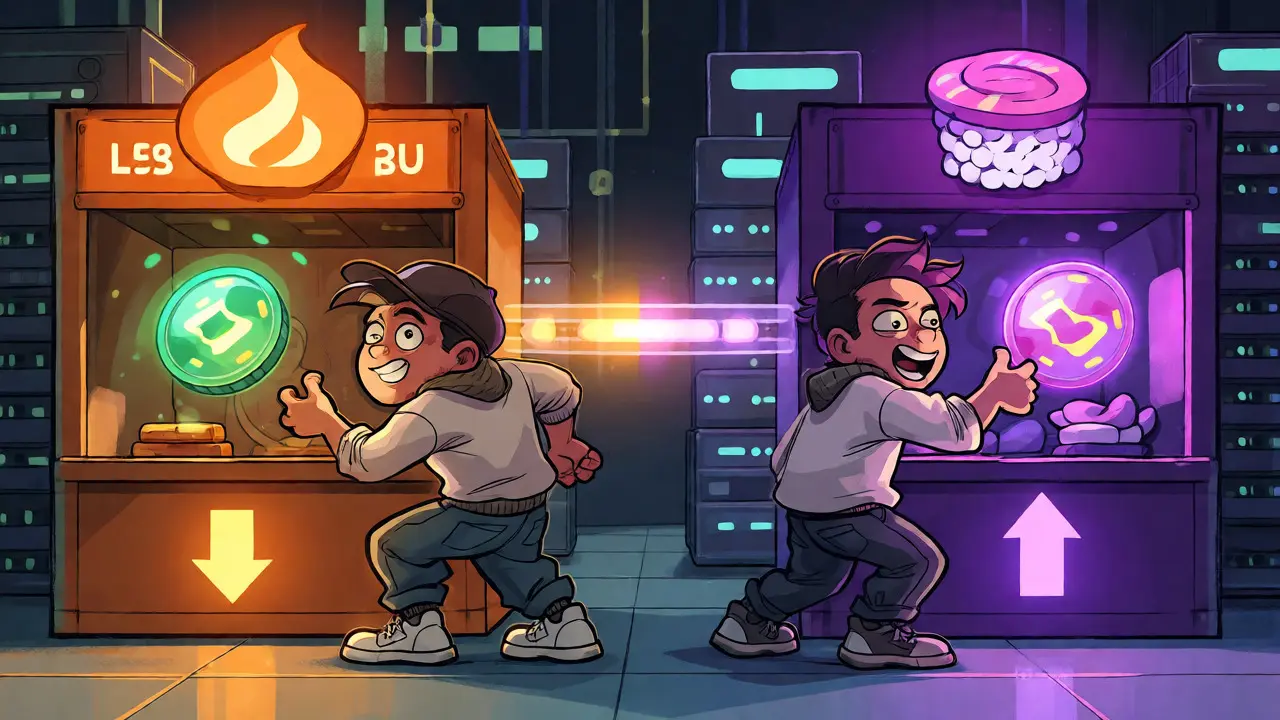
Not all flash loan usage is external. Borrowers themselves use them to manage their positions. Imagine you're holding a large position in WBTC but want to switch to DAI to reduce volatility, without withdrawing and depositing separately (which incurs double gas fees and slippage).
You can initiate a flash loan to temporarily boost your liquidity, swap your WBTC for DAI in one go, and adjust your collateral ratio instantly. This is known as a self-liquidation or collateral swap. It’s particularly useful when market conditions change rapidly, and you need to rebalance your portfolio without exposing yourself to the risk of partial fills or price movements between separate transactions.
Furthermore, users can leverage flash loans to consolidate debt. If you have multiple small loans across different protocols, you can flash borrow a large sum, pay off all individual debts, and open a single, more efficient loan position. This reduces complexity and potentially lowers overall interest rates by optimizing which protocol holds your debt.
The Dark Side: Flash Loan Attacks
While powerful, flash loans are a double-edged sword. Their primary malicious use case is manipulating oracle prices. Many DeFi protocols rely on external data feeds (oracles) to determine asset prices. If a protocol uses a vulnerable oracle that derives price solely from a low-liquidity pool, an attacker can exploit it.
In a typical attack, the hacker flash borrows a huge amount of Token A. They dump this amount into a thin liquidity pool, crashing the price of Token A relative to Token B. The vulnerable protocol reads this manipulated price and thinks Token A is worthless. The attacker then borrows Token B against their now-worthless Token A collateral, withdraws the funds, buys back Token A at the depressed price, repays the flash loan, and pockets the difference. The entire attack happens in one block.
Security firms like OpenZeppelin note that flash loan attacks account for a significant portion of DeFi losses. To mitigate this, modern protocols implement time-weighted average prices (TWAP) and cross-chain verification, making it much harder for a single transaction to skew the perceived market price long enough to exploit.

Getting Started: Technical Requirements
Executing these strategies isn't as simple as clicking a button. It requires writing smart contracts, usually in Solidity. You need to inherit from the protocol's interface (like `IFlashLoanReceiver` for Aave) and implement the `executeOperation` function. This function contains your logic: what to do with the borrowed funds and how to ensure repayment.
For beginners, the learning curve is steep. Most successful operators spend 3-6 months studying DeFi mechanics and Solidity before going live. Gas costs are also a major factor. On Ethereum mainnet, a failed transaction still costs gas. During network congestion, fees can spike, turning a profitable arbitrage into a loss. Many traders move to Layer 2 solutions like Polygon or Arbitrum, where gas is cheaper, though liquidity may be lower than on mainnet.
Always test on a local fork or testnet first. Debugging reentrancy issues-where a contract calls itself recursively-is a common hurdle. Using established templates from GitHub repositories like `aave/flash-loan-demo` can save weeks of development time.
Frequently Asked Questions
Do I need my own capital to use flash loans?
No, you do not need to provide collateral or upfront capital for the loan itself. However, you must cover the gas fees for the transaction. If the transaction fails, you lose the gas fees, so having some ETH in your wallet is necessary to interact with the protocol.
What happens if I cannot repay the flash loan?
The entire transaction reverts. This means the state of the blockchain returns to exactly what it was before the transaction started. The lender gets their tokens back automatically, and no part of the operation remains on the ledger. You simply lose the gas cost of the failed attempt.
Which protocols support flash loans?
Major protocols include Aave, Balancer, Uniswap (via flash swaps), dYdX, and Curve Finance. Each has slightly different interfaces and fee structures, so you must write specific code for each integration.
Are flash loans legal?
Generally, yes, they are considered a financial tool similar to margin trading. However, regulatory frameworks like MiCA in Europe and evolving SEC guidelines in the US are scrutinizing their use, particularly regarding potential market manipulation and money laundering implications.
Can non-developers use flash loans?
Directly, no. You need to write and deploy a smart contract. However, third-party platforms and aggregators are emerging that allow users to execute pre-defined flash loan strategies via a user-friendly interface, abstracting away the coding requirements.