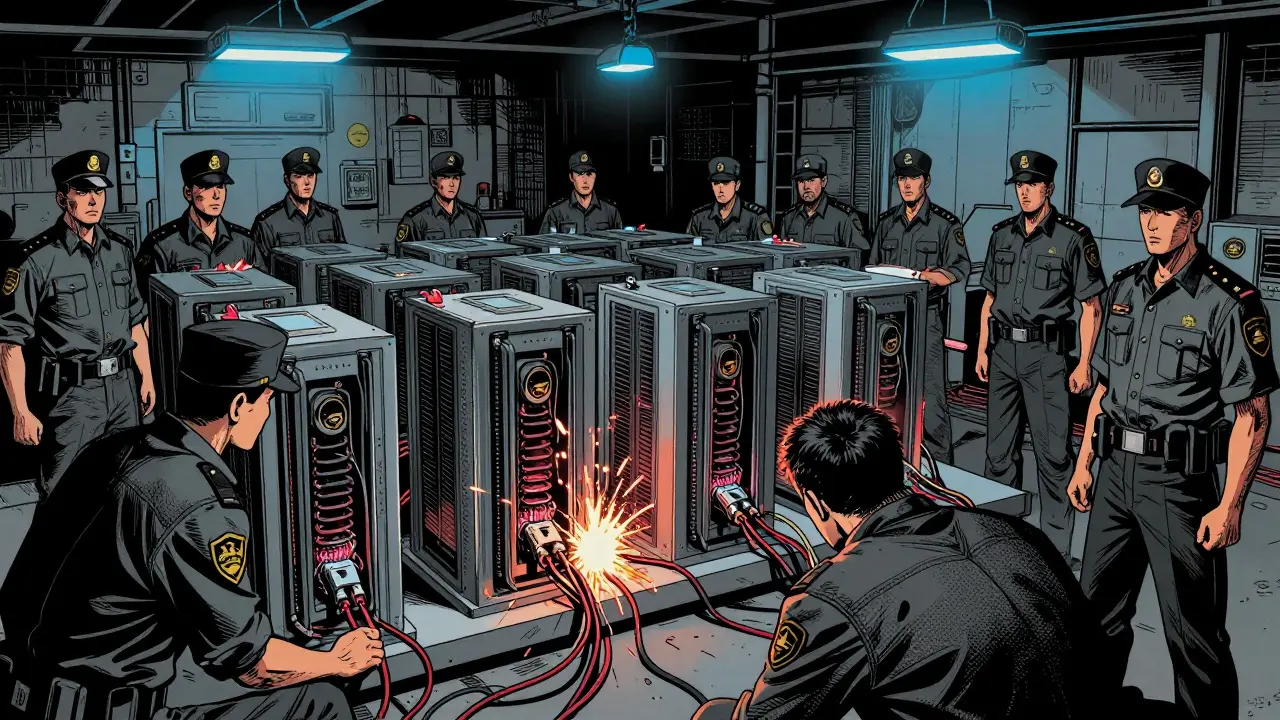
You might have heard rumors that you can still mine Bitcoin in China if you keep it quiet. Let’s get one thing straight right away: that is dangerous advice. As of mid-2026, mining crypto in China is not just illegal; it is a criminal offense with severe penalties. The government has moved beyond simple warnings to active, aggressive enforcement.
If you are looking at the map for your next mining farm location, cross out mainland China immediately. The era where China dominated global hash power is over, replaced by a regime of total prohibition designed to crush decentralized finance and protect the state-backed digital yuan. Here is exactly how the law works now, why they did it, and what happens if you try to sneak around the rules.
The Current Legal Status: A Total Ban
To understand where things stand today, you need to look at the timeline. It wasn’t an overnight decision. It was a slow tightening of screws that ended in a hammer blow. In 2013, banks were told to stop processing Bitcoin transactions. By 2017, Initial Coin Offerings (ICOs) were banned as "unauthorized fundraising." But the real turning point came in 2021.
In September 2021, the People's Bank of China (PBOC) and six other agencies declared all cryptocurrency business activities illegal. This included mining. They didn't just say "don't do it"; they classified it as an "illegal financial activity." Then, on May 31, 2025, the government escalated this further. They implemented a comprehensive ban covering not just commercial operations, but individual ownership and trading as well.
| Year | Regulatory Action | Impact on Mining |
|---|---|---|
| 2013 | Banks prohibited from processing Bitcoin transactions | Financial isolation begins |
| 2017 | ICO ban and shutdown of domestic exchanges | Market liquidity drops |
| 2021 | All crypto transactions and mining declared illegal | Mass exodus of miners abroad |
| 2024 | Systematic arrests and asset seizures | Underground operations targeted |
| 2025 | Comprehensive ban including individual ownership | Criminalization of all involvement |
Today, the legal framework is clear. There is no gray area. Whether you are running a massive industrial farm or a single ASIC miner in your garage, you are violating Chinese law. The authorities view this not as a regulatory oversight issue, but as a threat to national financial security.
Why China Banned Crypto Mining
You might wonder why a country that invented blockchain technology would go so hard against its application. It comes down to four main drivers. Understanding these helps you see why the ban isn't going away anytime soon.
Energy Consumption is the big one. Bitcoin mining uses a lot of electricity. China has set ambitious carbon neutrality goals for 2060. When millions of high-powered computers are running 24/7 in provinces like Sichuan and Inner Mongolia, it clashes directly with those environmental targets. The government sees mining as wasteful energy use that provides no tangible economic benefit to the real economy.
Second is Financial Control. Cryptocurrencies operate outside the traditional banking system. This makes it hard for the People's Bank of China to control money supply and interest rates. If people move their wealth into Bitcoin, the central bank loses leverage over the economy. That is a non-starter for Beijing.
Third, there is the issue of Capital Flight. In a country with strict capital controls, cryptocurrencies offer a way to move money out of the country illegally. Authorities link crypto usage to money laundering and evasion of foreign exchange regulations. By banning the entry point (mining and trading), they hope to cut off the exit route.
Finally, there is the Digital Yuan (e-CNY). China wants to lead the world in Central Bank Digital Currencies (CBDCs). They want everyone using the e-CNY. Allowing competing decentralized currencies like Bitcoin undermines the adoption of their own state-controlled digital currency. The ban clears the field for the e-CNY.
How They Catch You: Enforcement Mechanisms
Thinking you can hide? Think again. The Chinese government has built a sophisticated surveillance net specifically designed to find underground mining operations. They don't just rely on police raids anymore; they use data.
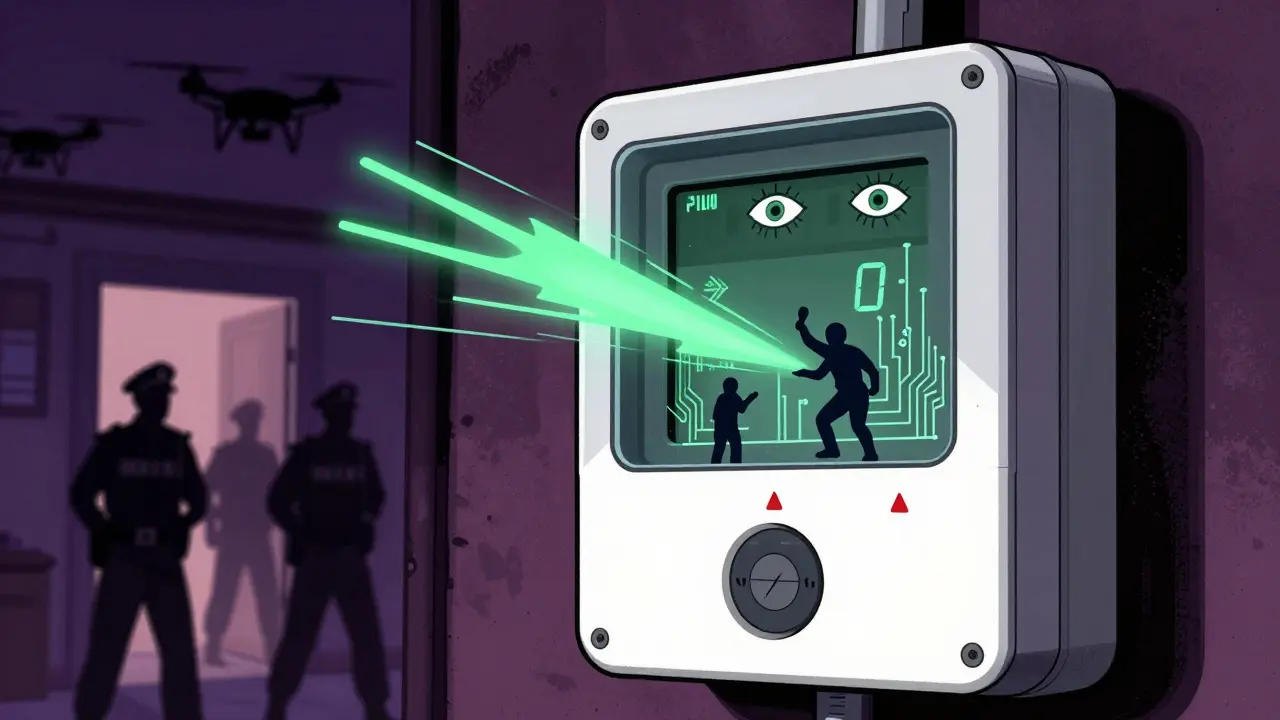
The primary tool is Electricity Monitoring. Mining farms consume huge amounts of power in very specific patterns. Utility companies monitor grids for unusual spikes. If a residential building starts drawing industrial-level power, or if a factory shifts its consumption pattern to match mining cycles, flags go up. Local authorities then investigate.
Then there is Banking Compliance. The State Administration of Foreign Exchange and major banks track transaction flows. If your account receives payments from known crypto-related entities or shows irregular large transfers, your accounts can be frozen instantly. Financial institutions are under heavy pressure to report any suspicious activity related to digital assets.
The Cyberspace Administration also monitors internet traffic. They block access to foreign exchanges and mining pools. Even if you manage to buy hardware and get power, connecting to the global network to participate in mining is difficult without specialized, detectable tunneling software.
The consequences are harsh. We aren't talking about small fines. Operators face confiscation of all mining equipment, which can amount to hundreds of thousands of dollars in lost assets. Individuals involved in large-scale operations face criminal charges, which can lead to imprisonment. In 2024 and 2025, news reports highlighted numerous arrests of local officials who tried to protect underground mines for kickbacks, showing the seriousness with which Beijing views this issue.
The Global Shift: Where Did the Miners Go?
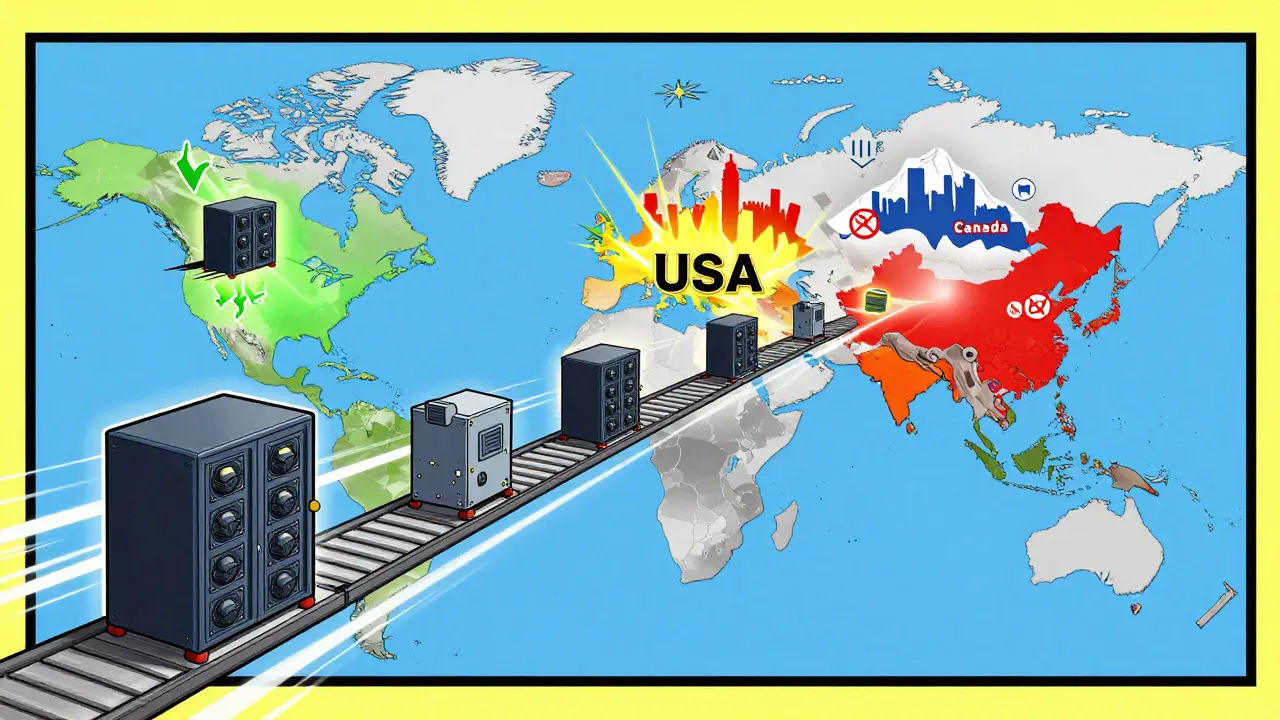
When China pulled the plug in 2021, the global crypto landscape changed overnight. Before the ban, China held more than 60% of the world's Bitcoin hashrate. Today, that number is near zero officially. But the machines didn't disappear; they moved.
This migration created winners and losers globally. The United States became the new hub, particularly states like Texas and New York, which offered cheap energy and favorable regulations. Canada also saw a surge in mining operations due to its stable grid and cold climate, which helps with cooling servers. Kazakhstan initially attracted many miners fleeing China, though it later tightened its own rules due to grid instability.
This shift has implications for network security. Some experts worry about the centralization of mining in fewer jurisdictions. However, it has also led to innovation. Miners are now more focused on efficiency because energy costs are higher in Western countries compared to the subsidized rates some Chinese farms enjoyed. This has pushed the industry toward newer, more efficient hardware like the latest generation Antminer S series and WhatsMiner models.
Underground Operations: Is It Still Happening?
Despite the ban, rumors persist. Are there still miners in China? Technically, yes, but it is a shadow game. Studies suggest that some small-scale, fragmented operations continue in remote areas. These are not the massive warehouses of the past. They are hidden setups, often disguised as other businesses, trying to fly under the radar.
However, this is incredibly risky. These underground miners operate in fear. One power spike, one neighbor's complaint, or one routine inspection can shut them down permanently. They cannot scale. They cannot access legal financing. And they live with the constant threat of arrest. For anyone considering entering this market, the risk-reward ratio is terrible. The potential profits do not justify the legal danger.
What This Means for Investors and Businesses
If you are an investor, you need to adjust your strategy. Do not invest in any company claiming to have mining operations in mainland China. It is likely a scam or a misrepresentation. Legitimate public mining companies like Marathon Digital or Riot Platforms operate exclusively in compliant jurisdictions.
For businesses, the lesson is about compliance. Ensure your supply chain does not inadvertently support illegal mining activities in restricted zones. Also, be aware that the geopolitical tension between China's ban and Western adoption affects market volatility. News of crackdowns in China often causes short-term dips in Bitcoin prices, as we saw in May 2025 when the price dropped from $111,000 to $104,500 within hours.
Look at the broader trend. China is doubling down on blockchain technology for supply chain tracking and government services, but strictly under centralized control. They want the tech without the freedom. This distinction is crucial. You can partner with Chinese firms on enterprise blockchain solutions, but never on public cryptocurrency issuance or mining.
Future Outlook: No Reversal Expected
Will China ever lift the ban? Almost certainly not. The political will to maintain financial sovereignty and promote the digital yuan is too strong. The 2025 comprehensive ban was described by insiders as the "final stage" of their elimination strategy. There is no indication of policy relaxation.
Instead, expect enforcement to get smarter. Authorities are likely investing in AI-driven tools to detect anomalous energy usage and financial transactions even faster. The window for opportunistic underground mining is closing rapidly. The future of crypto mining is in North America, Europe, and parts of Africa and South America, where renewable energy and supportive regulations align.
China has drawn a line in the sand. On one side is the state-controlled digital yuan and strict financial oversight. On the other is the decentralized crypto world. They have chosen to build a wall between the two. Respect that boundary if you want to stay out of jail.
Is Bitcoin mining legal in China in 2026?
No. Bitcoin mining is completely illegal in China. As of 2025, it is classified as a criminal offense. All forms of cryptocurrency mining, trading, and ownership are prohibited by the People's Bank of China and other regulatory bodies.
What happens if I get caught mining crypto in China?
If caught, you face severe penalties. Your mining equipment will be confiscated. You may be fined heavily. In serious cases, especially involving large-scale operations or organized crime, individuals can face imprisonment. Banks may also freeze your assets.
Why did China ban cryptocurrency mining?
China banned mining primarily due to high energy consumption conflicting with carbon goals, concerns over financial stability and capital flight, risks of money laundering, and the desire to promote its own central bank digital currency, the e-CNY.
Can I still buy crypto hardware in China?
While manufacturing of hardware like ASIC miners still occurs in China, selling them for the purpose of domestic mining is illegal. Exporting them is common, but importing or using them locally for mining violates the ban. Be cautious of online sales claims.
Where did Chinese miners go after the ban?
Many miners relocated to countries with favorable regulations and cheap energy, such as the United States (Texas, New York), Canada, Kazakhstan, and parts of Northern Europe. This shifted the global center of gravity for Bitcoin mining westward.
Does China allow blockchain technology?
Yes, but only under strict government oversight. China supports blockchain for enterprise applications, supply chain management, and government services. However, it bans decentralized public blockchains used for cryptocurrency issuance and trading.
Is the ban likely to change in the future?
It is highly unlikely. The Chinese government views the ban as essential for maintaining financial control and promoting the digital yuan. Experts consider the 2025 comprehensive ban to be the final stage of their anti-crypto strategy, with no signs of reversal.


Jackie D
July 13, 2026 AT 17:50so like, is it actually true that they are using AI to sniff out the power spikes now? because that sounds kinda dystopian but also pretty impressive tech wise. i mean, if you have a grid that smart, why not just optimize the whole country's energy use instead of just banning one thing? feels like throwing the baby out with the bathwater. maybe there is a middle ground where they tax it heavily instead of criminalizing it? just wondering how they balance the innovation vs control aspect.
Ruth Williams
July 14, 2026 AT 20:19The notion that one might 'balance' financial sovereignty with unregulated speculative assets is intellectually bankrupt. China’s decision is not merely about energy; it is about maintaining the integrity of the state-controlled monetary system against the chaotic inefficiencies of decentralized ledgers. To suggest otherwise is to ignore the fundamental principles of macroeconomic stability and the necessity of centralized oversight in preventing capital flight and illicit activities.
Sophie Nakasako
July 16, 2026 AT 19:11I see what you are saying about stability, but isn't there value in having a backup system outside the traditional banks? It makes me think about resilience in nature. If one tree falls, the forest survives. If the central bank fails or gets corrupted, people lose everything. Maybe the chaos is a feature, not a bug. It forces innovation and gives individuals agency over their own wealth. What do you think about the ethical implications of forcing everyone into one digital currency?
Kristy Morrow
July 16, 2026 AT 20:04agency is an illusion when the server is owned by the state anyway. they call it freedom but its just compliance with a different interface. the e-cny tracks every purchase every thought every desire. crypto was supposed to be the escape hatch but now even that is being hunted down like rats in the walls. we are all just data points waiting to be harvested. wake up sheeple
John Harman
July 17, 2026 AT 07:00Look, I ran a small farm back in 2019 before things got tight. The electricity monitoring is no joke. They literally sent guys to check the meters if your usage looked weird for three days straight. You cant hide industrial draw on a residential line. And dont even get me started on the heat. Those ASICs run hot enough to fry an egg on top of them. When the ban hit, half the guys in my province lost their shirts overnight. Equipment seized, accounts frozen. Total nightmare.
Antony Lopez
July 18, 2026 AT 17:57Good riddance. Let them keep their toxic waste mining operations out of our country too. We need cheap energy for American families and industries, not for some virtual gold rush that benefits nobody but offshore speculators. The US should follow suit and ban it entirely. Protecting our grid and our economy from foreign interference and environmental degradation should be priority number one. No excuses.
Kat Barr
July 20, 2026 AT 15:42oh wow, that sounds so intense!! 😱 i cant imagine living with that kind of pressure every single day... freezing accounts and seizing equipment?? thats scary! 🥶 but hey, at least the air is cleaner now right? 🌿 maybe its better this way for the planet overall. lets hope everyone stays safe and follows the rules! ✨💖
Logan Edmison
July 22, 2026 AT 12:13i mean sure the air is cleaner but who really cares about a few tons of co2 when you can make millions? lol. jkjk. but seriously the enforcement is crazy. they are basically playing cat and mouse with supercomputers. i bet theres still stuff happening in the mountains somewhere. people always find a way around the rules. its human nature. u cant stop progress just by passing laws.
Michelle Walker
July 23, 2026 AT 18:29You are delusional if you think underground mining is viable. The risk/reward ratio is catastrophic. Confiscation plus prison time. Zero upside. Smart money moved to Texas and Canada years ago. Stop romanticizing crime. It is inefficient and stupid.