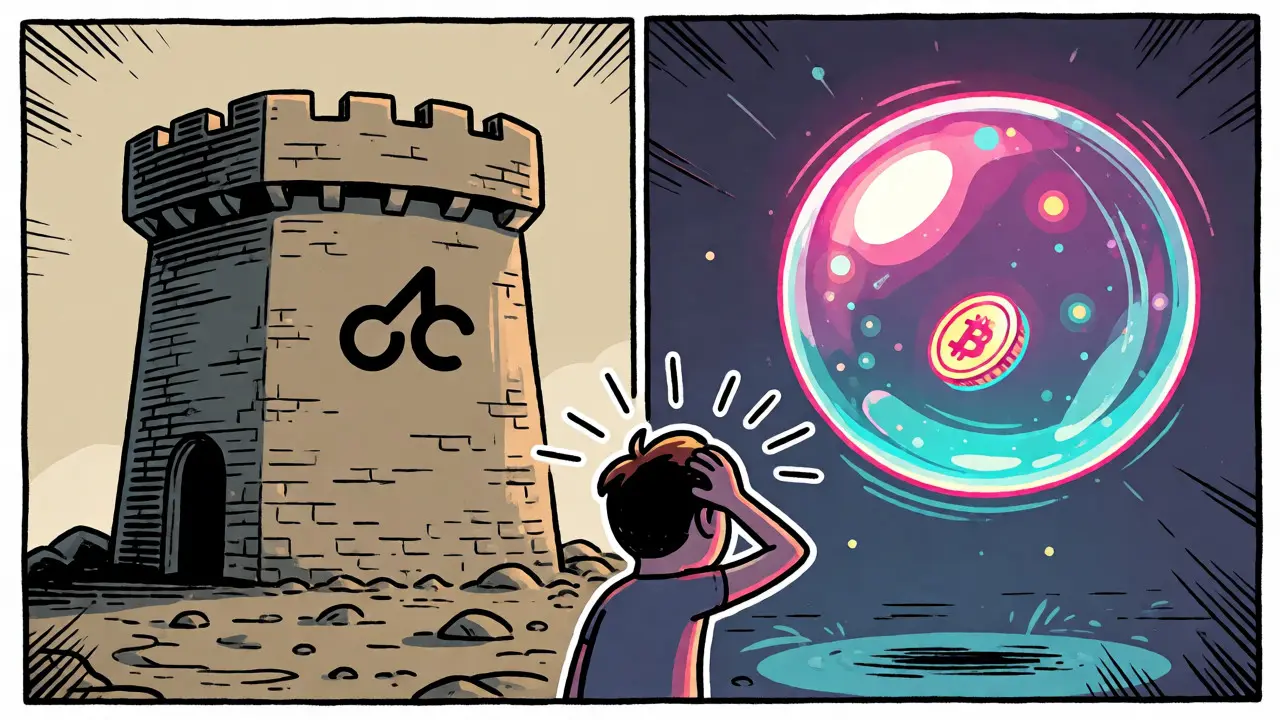
You see the name Bitcoin Pay, check the ticker BTCPAY, and assume it’s connected to the famous open-source payment processor everyone talks about. You’re not alone. This confusion is exactly why you need to pause before buying. Bitcoin Pay (BTCPAY) is a low-cap cryptocurrency token on the Binance Smart Chain (BEP-20 standard). It brands itself as a "decentralized, self-hosted blockchain peer-to-peer payment processor." But here is the kicker: it has almost zero trading volume, no clear team, and no real-world adoption. If you are looking for a serious payment solution, this might be a trap.
The Name Game: BTCPAY vs. BTCPay Server
Let’s clear up the biggest misconception right now. There are two things people mix up constantly. One is BTCPay Server. This is a free, open-source, non-custodial Bitcoin payment processor. It has been around for years, powers thousands of businesses, and crucially, it does not have a native token. You don’t buy "BTCPay coins" to use the software.
The other is Bitcoin Pay (BTCPAY). This is a speculative BEP-20 token launched on the BNB Smart Chain. It uses similar branding to borrow credibility from the established software project. While BTCPay Server is a tool you run on your own server, Bitcoin Pay is an asset you trade on decentralized exchanges. They are completely unrelated entities. The token essentially piggybacks on the reputation of the software without contributing code or infrastructure to it. If you thought you were investing in the tech behind the payment gateway, you’re actually holding a micro-cap token with very little liquidity.
Technical Basics: A BEP-20 Token on BNB Chain
Technically, Bitcoin Pay isn’t its own blockchain. It doesn’t mine blocks or secure its own network. It lives on the BNB Smart Chain (formerly Binance Smart Chain). This means it follows the BEP-20 standard, which is nearly identical to Ethereum’s ERC-20 standard. Because it rides on BSC, it inherits certain characteristics:
- Speed: Transactions confirm in roughly 3 seconds.
- Fees: Gas fees are typically under $0.10, making small transfers feasible.
- Compatibility: It works with wallets like MetaMask and Trust Wallet if you add the correct contract address.
However, being a token on another chain means it lacks independence. If BNB Chain gets congested or suffers a bridge hack, BTCPAY is affected too. Unlike Bitcoin, which runs on its own robust proof-of-work network, BTCPAY relies entirely on the security model of BSC. For a "payment coin," speed is good, but centralization risks are higher because a few large validators control much of the network's power.
| Feature | Bitcoin Pay (BTCPAY) | Bitcoin (BTC) | USDT (Tether) |
|---|---|---|---|
| Blockchain | BNB Smart Chain (BEP-20) | Bitcoin Network | Multi-chain (ERC-20, TRC-20, etc.) |
| Purpose | Speculative / Marketing | Store of Value / P2P Cash | Stablecoin / Medium of Exchange |
| Volatility | Extreme | High | Low (pegged to USD) |
| Adoption | Negligible | Global Institutional/Retail | Global DeFi/Trading |
| Team Transparency | Unknown/Anonymous | Satoshi Nakamoto (Historical) | Tether Ltd. (Public Company) |
Market Reality: Liquidity and Trading Volume
If you look at data aggregators like CoinGecko, the numbers tell a stark story. Recent data shows a 24-hour trading volume hovering around $2.65. Let that sink in. Less than three dollars traded hands in a full day across all markets. The price sits near fractions of a cent, often quoted around $0.00074480 USD per token.
This isn’t just "low cap"; it’s effectively illiquid. Most trading happens on decentralized exchanges (DEXs) like PancakeSwap. You won’t find BTCPAY listed on major centralized exchanges like Binance, Coinbase, or Kraken. Why does this matter? Slippage. If you try to sell a significant amount of BTCPAY, you’ll likely crash the price because there aren’t enough buyers on the other side. The market capitalization is often below $1 million, and sometimes hard to calculate due to missing circulating supply data. For investors, this creates a huge exit risk. Getting in is easy; getting out without losing value is hard.

Project Transparency: The Missing Whitepaper
A legitimate crypto project usually publishes a whitepaper detailing its technology, tokenomics, and roadmap. Bitcoin Pay lacks a widely accessible, detailed technical whitepaper. Searches for the founding team yield vague results. Who created this token? Are they developers? Marketers? Anonymous individuals?
In contrast, projects like Litecoin or XRP have clear histories, active development teams, and public GitHub repositories. With BTCPAY, you’re largely relying on marketing copy found on listing sites. Phrases like "borderless," "contactless," and "triple-point asset" appear frequently, but they lack specific implementation details. What does "triple-point asset" actually mean in their smart contract? How do they enforce it? Without code audits or clear documentation, these terms feel more like buzzwords than functional features.
This opacity is a red flag for risk-averse investors. In the crypto world, anonymity isn’t always bad (Bitcoin started anonymously), but when combined with low liquidity and borrowed branding, it increases the chance of a "rug pull"-where developers remove liquidity and disappear with investor funds.
Risks: Rug Pulls and Brand Confusion
The primary risk with Bitcoin Pay isn’t just market volatility; it’s structural. Many BNB Smart Chain tokens follow a pattern: launch with hype, attract retail investors confused by the name, pump the price, and then dump. Since the team is unknown, there’s no accountability.
Community sentiment reflects this skepticism. On forums like Reddit’s r/cryptomoonshots, users warn newcomers: "Be careful with anything using the BTCPay name; the real BTCPay Server is free... anything selling you BTCPAY tokens is not the same project." This confusion seems intentional. By naming it "Bitcoin Pay," the creators leverage the strongest brand in crypto. But unlike Bitcoin, which has decades of network effect, BTCPAY has none. It hasn’t been integrated into any major e-commerce platforms. You can’t easily pay for coffee with it. Its utility remains theoretical.
How to Buy and Use BTCPAY
If you still want to speculate on this token, here is the practical path. You cannot buy it with a credit card directly. You need to navigate the DeFi ecosystem on BNB Chain.
- Get a Wallet: Install MetaMask or Trust Wallet.
- Fund with BNB: Buy BNB on an exchange and send it to your wallet. You need BNB to pay for gas fees.
- Connect to PancakeSwap: Go to the PancakeSwap DEX interface and connect your wallet.
- Add the Contract Address: Copy the official BTCPAY contract address from a reliable source like BscScan. Paste it into the "Import Token" section.
- Swap: Trade BNB (or USDT/BUSD) for BTCPAY. Set your slippage tolerance higher than usual (e.g., 5-10%) because low liquidity causes price fluctuations during swaps.
Once you hold the token, sending it is simple-it’s just a standard transfer on BSC. But remember, unless someone accepts BTCPAY specifically, you can’t spend it anywhere. You’d have to swap it back to BNB or USDT first, paying fees each time.
Verdict: Speculation, Not Utility
Bitcoin Pay (BTCPAY) is best understood as a speculative micro-cap token rather than a functional payment currency. It offers fast transactions and low fees thanks to the BNB Smart Chain, but it lacks the critical components of a successful payment network: widespread merchant acceptance, transparent leadership, and deep liquidity.
For most users, the confusion with BTCPay Server outweighs any potential upside. If you want a stable medium of exchange, stick to USDT or USDC. If you want a store of value, Bitcoin remains king. BTCPAY fits neither category comfortably. Treat it as a high-risk gamble, only invest what you can afford to lose entirely, and verify the contract address carefully to avoid scams.
Is Bitcoin Pay (BTCPAY) related to BTCPay Server?
No, they are completely unrelated. BTCPay Server is an open-source, non-custodial Bitcoin payment processor with no native token. Bitcoin Pay (BTCPAY) is a separate BEP-20 token on the BNB Smart Chain that uses similar branding but operates independently.
Where can I buy BTCPAY?
BTCPAY is primarily traded on decentralized exchanges (DEXs) on the BNB Smart Chain, such as PancakeSwap. It is generally not listed on major centralized exchanges like Binance or Coinbase.
Is BTCPAY a good investment?
It is considered a high-risk, speculative asset. Due to extremely low trading volume, lack of transparent team information, and minimal real-world adoption, it carries significant risk of loss compared to established cryptocurrencies.
Does BTCPAY have its own blockchain?
No, BTCPAY is a token issued on the existing BNB Smart Chain (Binance Smart Chain). It does not operate its own independent blockchain network.
Why is the trading volume so low?
The low volume reflects limited interest from traders and investors, lack of exchange listings, and minimal utility in actual payment scenarios. Many holders may be inactive, or the token may suffer from poor liquidity pools.