Have you ever stumbled upon a crypto ticker that sounds like a restaurant menu item and wondered if it’s legitimate? You are not alone. SteakHut Finance, trading under the ticker STEAK, has been popping up on various crypto aggregators, leaving many investors scratching their heads. Is this a new yield farming opportunity on Avalanche, or just another obscure micro-cap token with little substance?
The short answer is that SteakHut Finance is a real decentralized finance (DeFi) protocol built on the Avalanche blockchain, which is a high-performance Layer-1 network known for its speed and low transaction costs. However, digging deeper reveals a complex picture of inconsistent data, extremely low liquidity, and significant risks. Before you decide whether to buy, hold, or avoid STEAK, we need to break down exactly what the project does, who is behind it, and why the numbers across different platforms seem to contradict each other.
What Exactly Does SteakHut Finance Do?
To understand the value proposition of STEAK, you first have to understand the problem it tries to solve. In the world of DeFi, providing liquidity to decentralized exchanges (DEXes) can be tedious. You deposit tokens, wait for fees, and then manually rebalance your portfolio to avoid impermanent loss or to capture better yields. It is time-consuming and requires constant monitoring.
SteakHut Finance positions itself as a multilayered liquidity primitive designed to automate this process. Think of it as an autopilot system for your liquidity. The protocol focuses heavily on Trader Joe, which is the leading decentralized exchange on the Avalanche network. Instead of you manually managing your position in a Trader Joe pool, SteakHut’s smart contracts handle the allocation, claiming of rewards, and reinvestment.
The core features include:
- Automated Liquidity Management: Users deposit assets, and the protocol distributes them across optimized pools.
- Yield Optimization: The system aims to maximize returns by boosting yields through mechanisms like veJOE (voting-escrowed JOE tokens).
- Governance: The STEAK token allows holders to vote on protocol decisions and potentially share in the profits generated by the platform.
The community refers to users as "the Herd," emphasizing a collective approach to capital efficiency. If the protocol works as intended, you earn passive income without the daily grind of checking charts and swapping tokens manually.
The STEAK Token: Supply, Price, and Data Chaos
Here is where things get messy. If you look at five different crypto tracking websites right now, you will likely see five different stories about the STEAK token. This inconsistency is a major red flag for any investor, but it is also a common trait among micro-cap DeFi governance tokens.
| Platform | Total Supply | Circulating Supply | Price Snapshot | Status Note |
|---|---|---|---|---|
| ICOAnalytics | ~5 Million | N/A | $0.60 - $2.35 (ATH) | Tracks ICO sale from Nov 2023 |
| CoinMarketCap | 3.22 Million | 0 | $0 | No active trading volume detected |
| Bitget | 3.22 Million | 0 | $0 | Ranks ~#4925; Value not widely recognized |
| Crypto.com | N/A | 2.09 Million | $0.016 | Low volume, sporadic updates |
| CoinGecko | 1.9 Million | 1.9 Million | $0.005 | Trading halted on listed exchanges |
Why such huge discrepancies? Several factors are at play. First, the Fully Diluted Valuation (FDV) estimates range from roughly $1.4 million to $3 million, placing STEAK firmly in the micro-cap category. Second, there is very little actual trading activity. When a token trades only a few dollars worth of volume per day, price feeds become stale or inaccurate. CoinGecko even noted that trading had stopped on all listed exchanges for periods of time.
Additionally, do not confuse SteakHut Finance with Steaks.finance. There is another unrelated project with a similar name and ticker symbol that has its own price history and market cap. Always verify the contract address and the official website before making any moves.
Who Is Behind SteakHut Labs?
In the crypto world, anonymity is both a feature and a bug. For SteakHut Finance, the team operates under the brand name SteakHut Labs, which is the developer entity responsible for building and maintaining the protocol. Unlike larger projects like Uniswap or Aave, there are no public biographies of founders, no LinkedIn profiles, and no corporate registration details readily available on major aggregators.
This pseudonymous structure means you cannot vet the team’s past experience or reputation. While many successful DeFi projects started anonymously, the lack of transparency increases the risk. If something goes wrong with the smart contracts or the treasury, there is no clear point of accountability. Investors must rely entirely on the code and the community’s vigilance.
Technical Architecture and Integration with Avalanche
SteakHut Finance lives and dies on the Avalanche network. Why Avalanche? Because it offers sub-second finality and low gas fees, which makes frequent rebalancing and automated strategies economically viable. On Ethereum Mainnet, the gas costs for such granular management would eat up most of the profits.
The protocol interacts directly with Trader Joe’s liquidity pools. Here is a simplified view of how it works:
- You deposit stablecoins or volatile assets into the SteakHut vault.
- The smart contract converts these into LP (Liquidity Provider) tokens on Trader Joe.
- The protocol may use these LP tokens to lock them or stake them to earn additional incentives (like JOE tokens).
- Rewards are automatically compounded or distributed back to you.
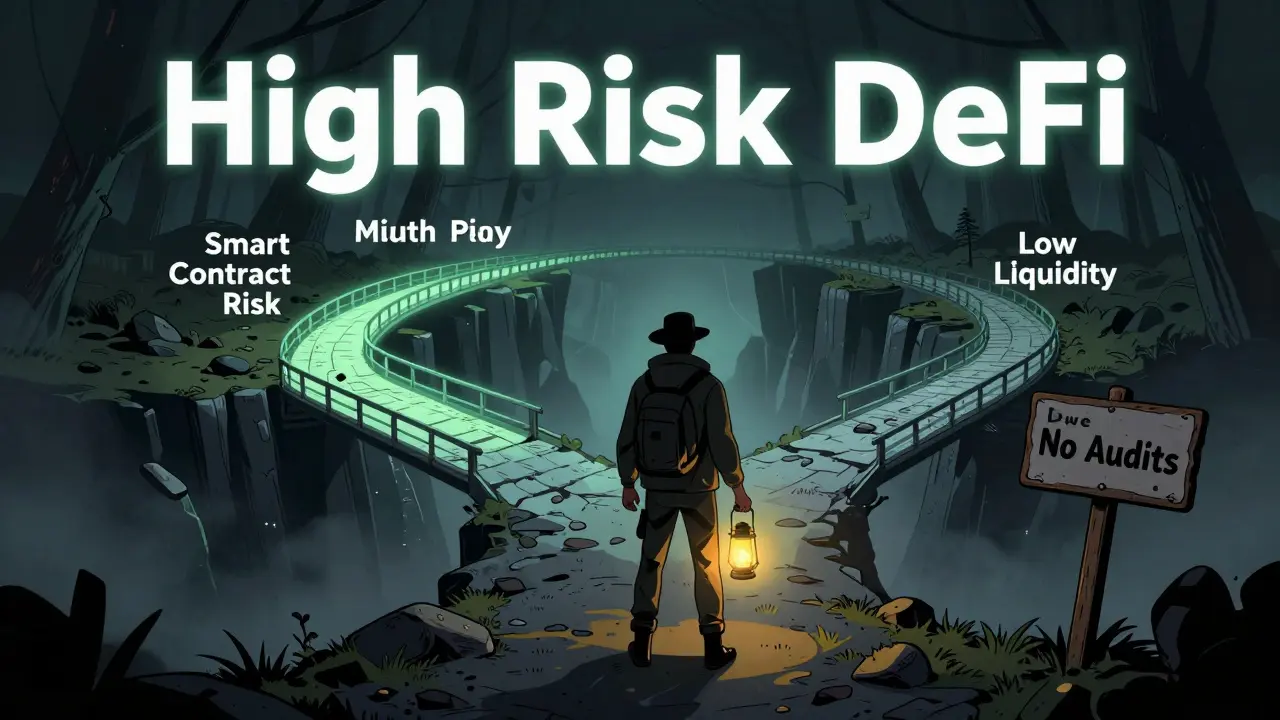
While this sounds efficient, it introduces smart contract risk. Every interaction between SteakHut, Trader Joe, and the underlying tokens is handled by code. If there is a bug in SteakHut’s automation logic, funds could be stuck or drained. As of now, there are no publicly cited formal security audits from reputable firms like CertiK or Trail of Bits mentioned in the primary data sources. This absence is a critical detail for risk assessment.
Is STEAK a Good Investment? Risks vs. Rewards
Let’s be blunt: investing in STEAK is highly speculative. It is not a blue-chip asset like Bitcoin or Ethereum. It is a niche utility token for a specific tool on a specific blockchain. Here is what you need to weigh:
The Potential Upside: If SteakHut successfully captures a significant portion of Trader Joe’s liquidity providers, demand for the STEAK token could rise due to its governance and staking utility. The token has shown volatility in the past, with an All-Time High (ATH) ROI of roughly 6.37x from its initial coin offering (ICO) price of $0.369 in late 2023. This proves that price discovery has happened, albeit briefly.
The Significant Risks:
- Liquidity Crisis: With daily volumes often near zero, selling your STEAK tokens could result in massive slippage. You might not be able to exit your position at a fair price.
- Data Reliability: The conflicting supply numbers suggest poor data hygiene, which can make technical analysis useless.
- Smart Contract Risk: No visible audits mean you are trusting unverified code with your capital.
- Adoption Uncertainty: There is no evidence of a large, active user base. Small communities can vanish quickly if development stalls.
Coinbase tracks the token but explicitly states it is not supported for trading on their exchange. This is a subtle signal that STEAK has not met the rigorous listing standards of a top-tier centralized exchange, further limiting its accessibility to retail investors.
How to Get Started (If You Decide To)
If you have weighed the risks and still want to explore SteakHut Finance, here is the practical path forward. Remember, this involves interacting with DeFi protocols, so proceed with caution.
- Set Up a Wallet: You will need a Web3 wallet compatible with Avalanche, such as MetaMask or Core Wallet. Configure it to connect to the Avalanche C-Chain.
- Fund Your Wallet: Buy AVAX on a major exchange and transfer it to your wallet. You will need AVAX to pay for gas fees when interacting with the SteakHut dApp.
- Acquire STEAK: Since centralized exchange listings are sparse or inactive, you may need to find STEAK on a DEX like Trader Joe or Pangolin on Avalanche. Use a block explorer to verify the correct contract address to avoid scams.
- Connect to SteakHut: Visit the official SteakHut website and connect your wallet. Look for verified links on social media channels like X (formerly Twitter) under the handle @steakhut_fi.
- Deposit and Stake: Navigate to the liquidity or staking section. Deposit your assets according to the interface instructions. Start small to test the process.
Always double-check URLs and contract addresses. Phishing sites targeting DeFi users are common.
Is SteakHut Finance safe to use?
Safety in DeFi is relative. While SteakHut Finance operates on the secure Avalanche blockchain, the protocol itself lacks publicly available security audits from major firms. This means there is inherent smart contract risk. Additionally, the team is pseudonymous, which adds a layer of trust risk. Only invest what you can afford to lose.
Why is the STEAK token price different on every website?
The discrepancy arises because STEAK is a micro-cap token with very low trading volume. Different aggregators pull data from different sources, some of which may be outdated or inactive. Some platforms show zero volume, while others show stale prices from months ago. This fragmentation is typical for illiquid assets.
Can I buy STEAK on Coinbase or Binance?
No. Coinbase tracks the token for informational purposes but does not list it for trading. Binance does not list STEAK. To acquire the token, you typically need to use a decentralized exchange (DEX) on the Avalanche network, such as Trader Joe, which requires a Web3 wallet.
What is the difference between SteakHut Finance and Steaks.finance?
They are completely unrelated projects. SteakHut Finance is an Avalanche-based liquidity management protocol. Steaks.finance is a separate entity with its own token and price history. Confusing the two can lead to buying the wrong asset. Always check the contract address and official documentation.
Does SteakHut Finance offer guaranteed returns?
No. Like all DeFi protocols, SteakHut Finance does not guarantee returns. Yields depend on trading volume on Trader Joe, incentive programs, and market conditions. Impermanent loss and smart contract risks can also erode your principal investment.