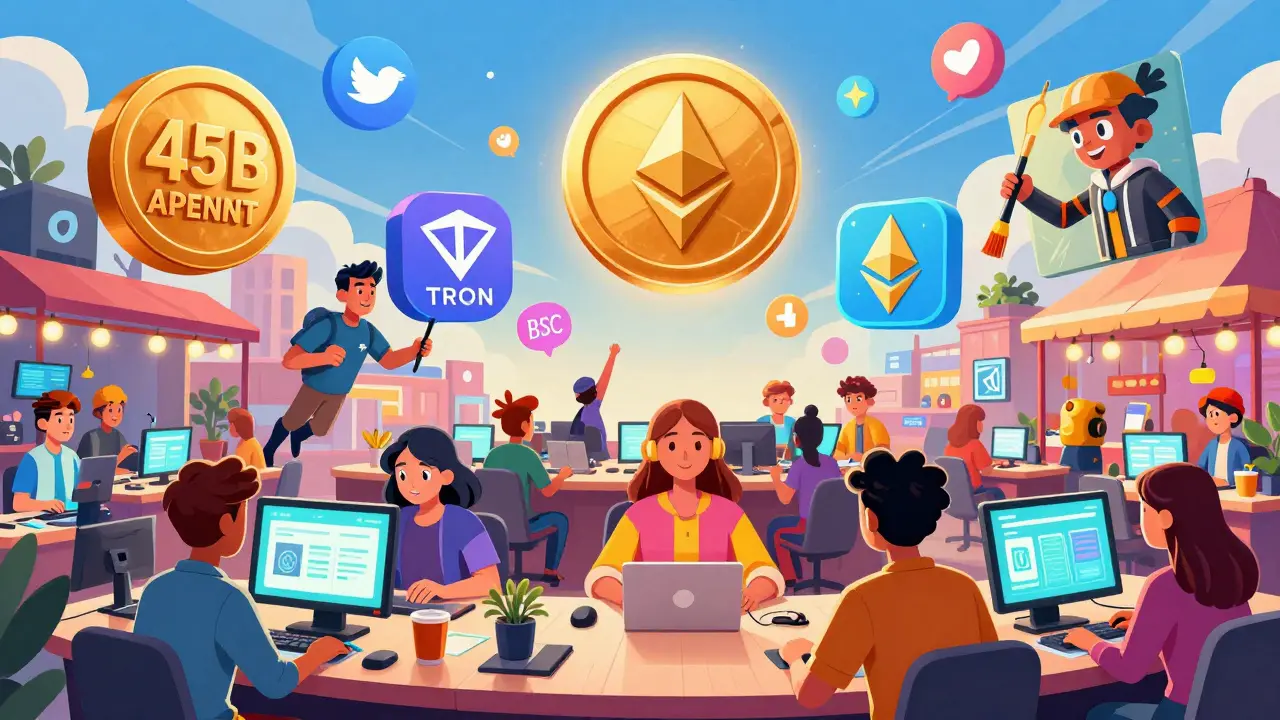
By January 2026, the APENFT airdrop has already wrapped up its major distribution rounds - but that doesn’t mean there’s nothing left to learn. If you missed the big wave of 45+ billion NFT tokens handed out to 10,000 winners, you’re not too late. Understanding how it worked helps you prepare for the next one. And if you’re still holding TRON, BSC, or Ethereum wallets from 2021-2025, you might still have unclaimed rewards sitting idle.
What Was the APENFT Airdrop?
APENFT didn’t just hand out tokens. It ran one of the largest NFT airdrop campaigns in crypto history. Between 2021 and July 2025, the APENFT Foundation distributed 45,454,545,454.54 NFT tokens across 17 rounds. The biggest single drop gave away 4.5 million NFT tokens to each of 10,000 winners - that’s over $430 million in total value at peak prices. This wasn’t a random giveaway. It was a structured, multi-platform campaign designed to grow the user base across TRON, BSC, and Ethereum.
The goal? Turn passive token holders into active participants. APENFT needed users to trade, vote, and engage with its marketplace. So they made participation simple: follow, like, retweet, join Telegram, join Discord. No complex staking. No locked funds. Just social actions tied to real rewards.
How Did You Qualify for the APENFT Airdrop?
You didn’t need to buy anything. You just needed to be active in the right places. Here’s what users had to do to enter:
- Add APENFT to your watchlist on CoinMarketCap
- Follow the official Twitter account: @apenftorg
- Like and retweet the pinned airdrop tweet
- Tag three friends in the retweet
- Join the official Telegram group: t.me/apenftEN
- Join the Discord server: discord.gg/PX6WfxdUEt
That’s it. No wallet deposits. No KYC. No fees. The system tracked your social actions automatically. Winners were selected based on engagement quality, not just volume. Some people got lucky with one retweet. Others spent weeks building hype and still missed out. It wasn’t always fair - but it was transparent.
Who Got the Biggest Airdrops?
The top 10,000 winners received between 100,000 and 4,545,454.55 NFT tokens each. Most everyday participants got between 5,000 and 50,000 tokens. The distribution wasn’t equal - but it was massive. For comparison, the average Ethereum airdrop in 2024 was under 500 tokens. APENFT gave out over 9,000 times more.
Early TRON holders had the biggest advantage. The project started with a TRON mainnet airdrop in May 2021, targeting users who held TRX before the APENFT token existed. By the time the CoinMarketCap campaign launched in late 2024, millions of TRX wallets were already eligible. That’s why so many winners came from the TRON ecosystem.
Exchange users also benefited. Kraken’s March 2025 listing came with a $90,000 Reef Program airdrop for its users. Binance Alpha users got a conversion rate of 0.000000003285 BNB per NFT token. KuCoin completed five rounds of distribution. These weren’t side gigs - they were coordinated, exchange-backed events.
What Could You Do With APENFT Tokens?
APENFT wasn’t just a collectible. It was a governance token. Holding it gave you:
- Voting rights on marketplace fees and new art listings
- Eligibility for future NFT airdrops
- Access to exclusive drops on the APENFT Marketplace
- Ability to trade fractional NFTs using the TRC404 standard
TRC404 was the real game-changer. Before APENFT, fractionalizing NFTs was messy. You needed complex smart contracts. APENFT built it into the chain. Now, you could buy 1% of a Picasso NFT for under $1. That drove liquidity. That drove volume. That drove more airdrops.
And then there was NFT Pump - the first fair NFT launchpad with "one click and zero barriers" issuance. Artists could mint and list NFTs in seconds. No gas wars. No front-running. Just direct access. This turned APENFT from a marketplace into a creator engine.
Why Did APENFT Use So Many Blockchains?
APENFT didn’t pick one chain. It used three: TRON, BSC, and Ethereum. Why?
- TRON was fastest and cheapest - perfect for mass airdrops and daily trading.
- BSC had deep user penetration in Asia and Africa - key markets for growth.
- Ethereum brought credibility and access to high-value collectors.
They even used BTFS (BitTorrent File System) for decentralized storage. That meant NFT metadata couldn’t be deleted. Art couldn’t vanish. That built trust.
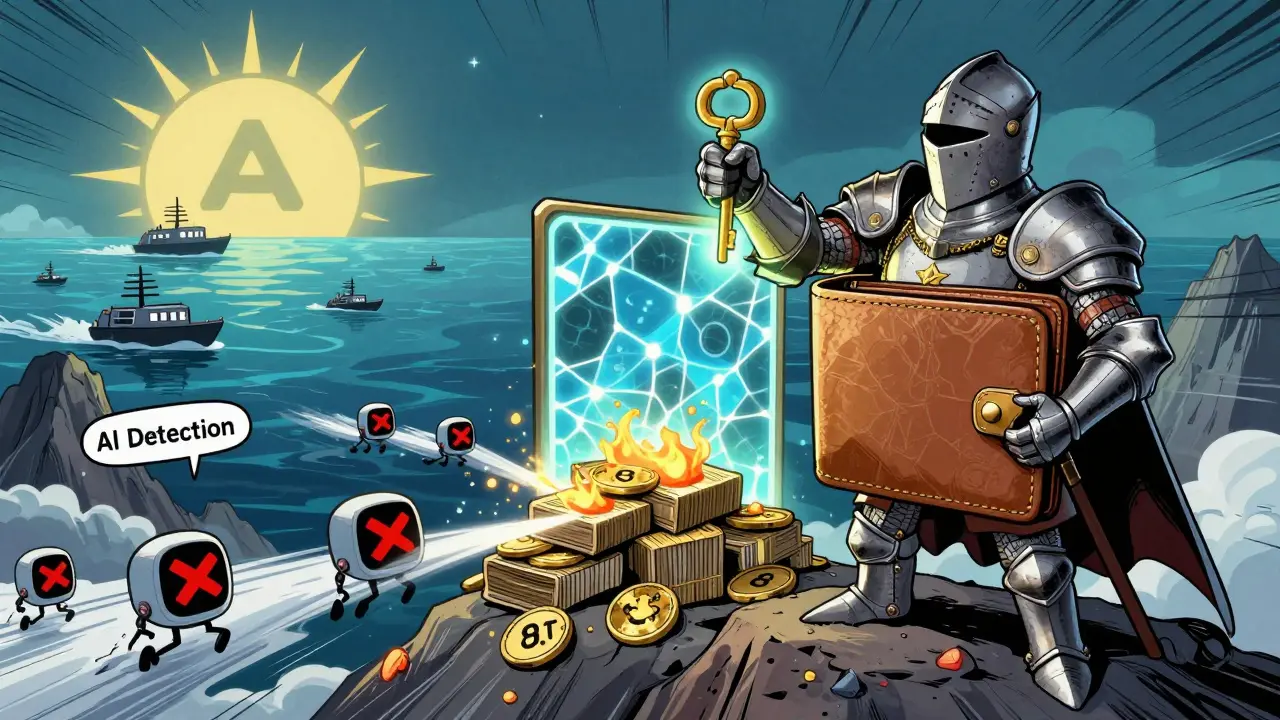
And they burned over 9.8 trillion NFT tokens by August 2025. That’s not a typo. They destroyed trillions to reduce supply and increase scarcity. It was a bold move - and it worked. Prices stabilized after early volatility.
Did APENFT Use AI?
Yes. And it wasn’t just marketing.
APENFT integrated AI to help artists generate NFT concepts, suggest color palettes, and even simulate how a piece might look in a virtual gallery. The AI didn’t replace artists - it amplified them. A painter could describe a mood, and the AI would generate 50 variations in seconds. The artist picked the best one, then minted it.
They also used AI to detect fake accounts during airdrop campaigns. If a bot tried to join 20 Discord servers with the same username, it got flagged. Real humans got rewarded. Bots got blocked. That kept the ecosystem clean.
What Happened After the Airdrop Ended?
The 17th and final airdrop round closed in July 2025. But APENFT didn’t disappear. It shifted focus.
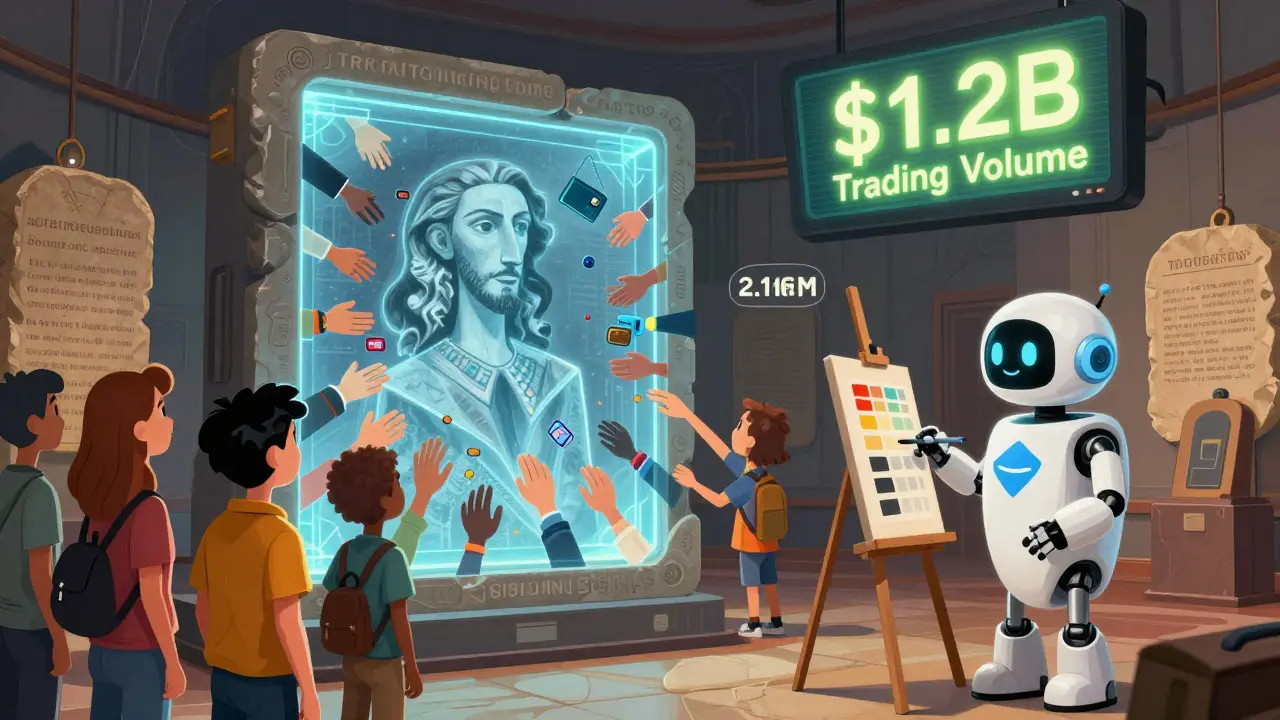
- Trading volume on the APENFT Marketplace hit $1.2 billion in 2025.
- Over 2.16 million unique wallets held APENFT tokens by March 2025.
- They launched the TRONscription marketplace - turning TRON chain inscriptions into collectible art.
- They partnered with HashKey, Kraken, and Binance Alpha to expand institutional access.
The project evolved from a token giveaway into a full digital art ecosystem. It’s now a bridge between physical galleries and the metaverse. Major museums have started digitizing pieces through APENFT’s platform.
Can You Still Get APENFT Tokens?
No airdrops are active as of January 2026. But you can still buy APENFT on major exchanges:
- HTX
- OKX
- Poloniex
- Kraken (APENFT/USD, APENFT/EUR)
- Binance Alpha
Prices fluctuate based on market demand. As of January 2026, APENFT trades between $0.00000012 and $0.00000018 per token. That’s low - but remember: there are over 45 billion tokens in circulation. A 10% price rise means a $500 million market cap bump.
If you want to be ready for the next airdrop, keep your TRON or BSC wallet active. Follow @apenftorg on Twitter. Join their Telegram and Discord. The next campaign will likely follow the same pattern - social engagement + blockchain eligibility.
Why Did APENFT Succeed Where Others Failed?
Most NFT projects died because they focused on hype, not utility. APENFT focused on three things:
- Access - Anyone could join, no money needed.
- Liquidity - TRC404 made fractional ownership real.
- Long-term value - Burning tokens, AI tools, and exchange listings built trust.
They didn’t promise moonshots. They delivered tools. And that’s why they still matter in 2026.
Was the APENFT airdrop real or a scam?
The APENFT airdrop was real. It was backed by major exchanges like Kraken and Binance Alpha, and distributed over 45 billion tokens to verified users. The project burned trillions of tokens to reduce supply, partnered with legitimate art institutions, and used transparent on-chain tracking. There were no rug pulls. No hidden fees. Winners received tokens directly to their wallets. The entire process was documented on CoinMarketCap and verified by crypto analysts at CryptoSlate and CryptoBriefing.
Do I still need to claim my APENFT airdrop tokens?
If you were a winner and completed all the required steps before July 2025, your tokens were automatically sent to your registered wallet. If you never received them, check your TRON, BSC, or Ethereum wallet address on the APENFT official dashboard. No claims are open after July 2025. Any website asking you to pay a fee to "claim" APENFT now is a scam.
Can I still earn APENFT tokens without buying them?
As of January 2026, there are no active airdrops or free token programs. APENFT’s last distribution ended in July 2025. The only way to get APENFT now is to buy it on exchanges like Kraken, Binance Alpha, or OKX. Future airdrops are possible, but nothing has been announced. Stay alert through their official Twitter and Telegram channels.
Why did APENFT choose TRON over Ethereum for most airdrops?
TRON offered near-zero transaction fees and faster confirmations - critical when distributing billions of tokens to millions of users. Ethereum’s gas fees would have made small airdrops unaffordable. TRON’s infrastructure allowed APENFT to reach everyday crypto users, not just whale wallets. The TRC404 standard, built on TRON, also enabled fractional NFT trading, which became central to APENFT’s growth.
What’s the difference between APENFT and other NFT projects like CryptoPunks or Bored Apes?
CryptoPunks and Bored Apes are static digital collectibles. APENFT is a living ecosystem. It combines NFT trading, AI-assisted art creation, fractional ownership (TRC404), GameFi integration, and a launchpad for artists. It’s not just about owning art - it’s about participating in its creation and governance. APENFT also burned over 9.8 trillion tokens to control supply, something no major NFT project has done at this scale.
Is APENFT still active in 2026?
Yes. APENFT is still active as a marketplace, exchange-listed token, and digital art platform. It has over 2.16 million unique holders and continues to list new artworks, including partnerships with physical galleries. The team has shifted from airdrop campaigns to ecosystem growth - focusing on AI tools, TRONscription, and institutional adoption. The token is still tradable and actively used in governance votes.
Linda Prehn
January 21, 2026 AT 16:25Brenda Platt
January 21, 2026 AT 17:05David Zinger
January 22, 2026 AT 19:32Adam Fularz
January 23, 2026 AT 07:37Catherine Hays
January 25, 2026 AT 00:50george haris
January 25, 2026 AT 07:07carol johnson
January 26, 2026 AT 02:04Steve Fennell
January 27, 2026 AT 15:32