Imagine opening your favorite app, buying some Bitcoin, and then realizing you can’t get it out. For many users on Bibox is a cryptocurrency exchange platform launched in 2017 that claims to be AI-enhanced but faces significant trust and operational challenges, this isn’t a hypothetical nightmare-it’s their daily reality. If you are looking for a safe place to park your digital assets or execute trades without headaches, you need to look past the flashy marketing of "AI-enhanced" trading and look at the hard data. The short answer? Bibox carries serious red flags that most seasoned traders avoid.
We have analyzed the platform’s fee structure, security reputation, user complaints, and regulatory standing to give you a clear picture of what happens when you sign up. This review cuts through the noise to help you decide if your money is safe here.
The Verdict: High Risk, Low Trust
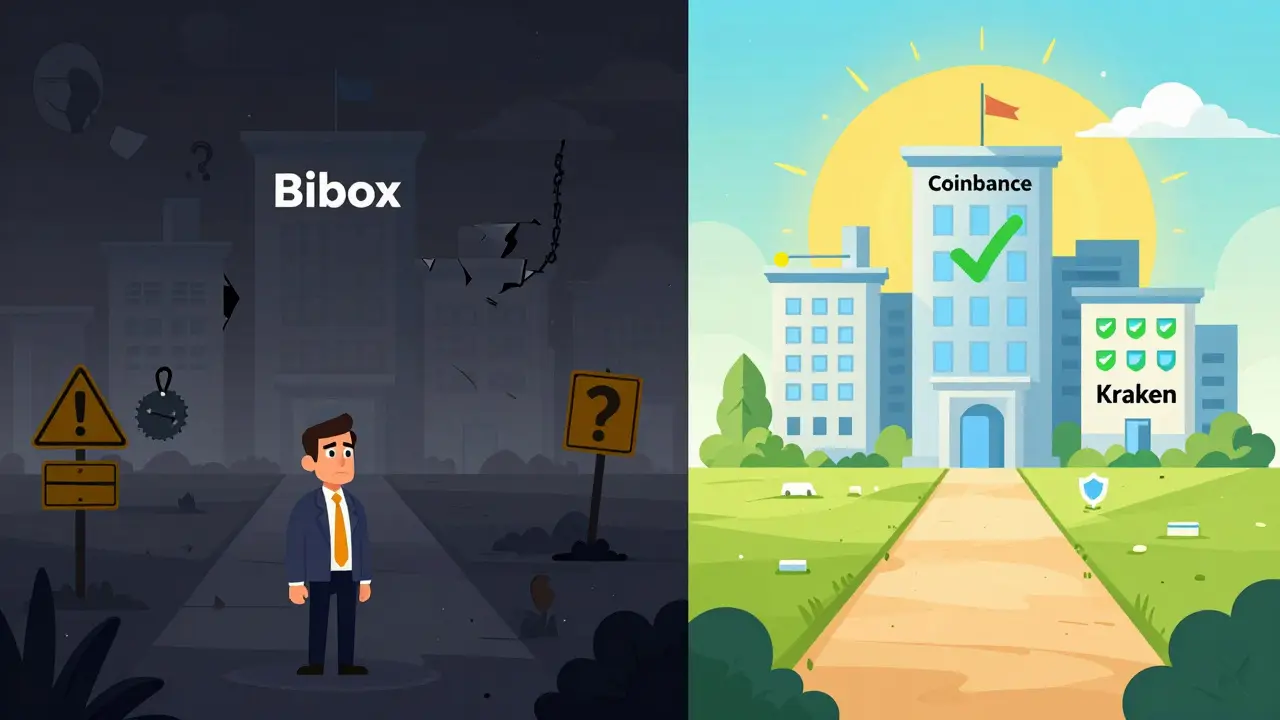
Let’s get straight to the point. Based on current data from July 2026, Bibox is not recommended for new users or anyone prioritizing capital safety. While the platform has been around since 2017, longevity does not equal reliability in the crypto world. In fact, Bibox scores poorly across almost every major trust metric compared to industry leaders like Binance, Coinbase, or Kraken.
Here is the snapshot:
- Trustpilot Rating: 1.1 out of 5 stars (based on 170+ reviews). This is catastrophic for a financial service.
- ScamAdviser Score: 70/100 (Moderate Risk).
- Traders Union Score: 3.37/10 (Higher-than-average risk).
These numbers aren’t just bad; they are warning signs. When an exchange has more than half of its reviewers giving it one star, something is fundamentally broken in how they treat customers.
Fees and Trading Costs: The BIX Token Trap
Bibox tries to lure traders with competitive-looking fees. On paper, spot trading fees range from 0.1% to 0.2%, and futures trading fees sit between 0.04% and 0.06%. These rates seem standard, even attractive for high-volume traders. But there is a catch that changes the entire value proposition.
To get the lowest possible fee rate-down to a whisper-quiet 0.01%-you must hold and use BIX, the exchange’s native utility token. Unlike traditional exchanges where higher verification levels (KYC) lower your fees, Bibox ties discounts strictly to holding their proprietary coin. This creates a conflict of interest. You are incentivized to buy and hold a volatile asset issued by the very company managing your funds, rather than simply paying a fair market rate for trading services.
| Feature | Bibox | Major Exchanges (e.g., Binance/Kraken) |
|---|---|---|
| Spot Trading Fee (Base) | 0.1% - 0.2% | 0.1% - 0.1% |
| Futures Trading Fee | 0.04% - 0.06% | 0.02% - 0.04% |
| Discount Method | Hold Native Token (BIX) | VIP Levels / Volume / Native Token |
| Fiat Deposit Support | No Direct Fiat Deposits | Yes (Bank Transfer, Card) |
| Minimum Deposit | $1 | $1 - $10 |
The biggest shocker in the table above? Bibox does not accept direct fiat deposits. You cannot wire US Dollars or Euros directly into your account. You have to buy crypto elsewhere and send it over. This adds friction, extra fees, and complexity for beginners who just want to start trading with cash.
The Withdrawal Nightmare: Where Users Get Stuck
If fees were the only issue, Bibox might still be worth considering for advanced traders. But the core function of an exchange-letting you move your money-is where Bibox fails miserably. The overwhelming majority of negative reviews on Trustpilot and Reddit focus on one thing: withdrawals.
Users report delays ranging from several days to weeks. Some accounts get frozen entirely without explanation. During periods of high market volatility, these issues worsen. Imagine your portfolio spikes in value, and you want to take profits, only to find your withdrawal button grayed out or stuck in "pending" status for ten days. That is the reality for many Bibox users.
Why does this happen? Often, it stems from poor liquidity management or internal administrative bottlenecks. Without transparent communication, users are left guessing whether their funds are safe or if the platform is struggling to meet obligations.
Customer Support: A Black Hole
When things go wrong-and on Bibox, they often do-you need help. Unfortunately, Bibox’s customer support is widely described as inactive. The primary contact method is email, and response times are notoriously slow. Many users report sending multiple tickets with zero replies.
There is no live chat, no phone support, and no robust community forum where you can crowdsource solutions. For a platform handling millions of dollars in transactions, relying solely on unresponsive email support is negligent. If you are used to instant assistance from platforms like Coinbase or Kraken, Bibox will feel like shouting into a void.
Security and Regulatory Red Flags
In 2026, regulatory compliance is not optional; it is a baseline requirement for trust. Bibox operates without clear licensing in major jurisdictions like the United States and the European Union. This lack of oversight means there are fewer protections for your funds if the platform goes under or engages in fraudulent activity.
While Bibox markets itself as a "decentralized exchange," this label is disputed. True decentralized exchanges (DEXs) like Uniswap or SushiSwap allow users to trade peer-to-peer without a central authority holding funds. Bibox, however, acts as a centralized intermediary. It holds your keys, manages your orders, and controls your withdrawals. Calling it "decentralized" is misleading marketing that obscures the actual risk profile: you are trusting a single corporate entity with your assets, without the legal safeguards that regulated entities provide.
The platform also lacks Proof of Reserves (PoR) audits that are now standard among reputable exchanges. Without independent verification that they actually hold the assets they claim to back, users are operating on faith alone.
Who Might Still Use Bibox? (And Why It’s Risky)
Despite the warnings, some traders stick with Bibox. Why? Usually, it comes down to two factors:
- Exotic Coin Selection: Bibox lists over 500 cryptocurrencies, including many small-cap altcoins not found on larger exchanges. If you are hunting for a specific micro-cap gem, Bibox might be one of the few places to find it.
- High Leverage Futures: They offer margin trading with leverage up to 1:150. For aggressive day traders, this level of leverage is tempting, though incredibly dangerous.
However, chasing obscure coins or extreme leverage on an unstable platform is a recipe for disaster. If the exchange freezes your account while you are leveraged long during a dip, you could lose everything-not just because of the market, but because of the platform’s failure.
Better Alternatives for 2026
You do not need to settle for Bibox’s risks. There are safer, more reliable options depending on your needs:
- For Beginners: Coinbase or Kraken. Both are publicly traded or heavily regulated, offer easy fiat deposits, and have excellent support.
- For Advanced Traders: Binance or Bybit. They offer deep liquidity, low fees, and extensive coin selections with much better reputations.
- For DeFi Enthusiasts: Use non-custodial wallets like MetaMask connected to DEXs like Uniswap. You keep control of your private keys, eliminating counterparty risk.
Final Thoughts
Bibox offers a superficially appealing package: low minimum deposits, a wide array of coins, and cheap fees if you hold their token. But beneath the surface lies a platform plagued by withdrawal failures, unresponsive support, and regulatory ambiguity. In the crypto space, trust is the most valuable currency. Bibox has spent years spending down its trust reserves, and as of mid-2026, it has very little left.
Unless you have a specific reason to access a niche coin available only on Bibox, we strongly advise keeping your funds elsewhere. Your peace of mind is worth more than a 0.01% fee discount.
Is Bibox a scam?
While Bibox is not officially classified as a outright scam by law enforcement agencies, it exhibits many characteristics of high-risk platforms. With a 1.1/5 Trustpilot rating and widespread reports of frozen withdrawals and unresponsive support, it poses significant financial risk. Users should exercise extreme caution and consider it unsafe for large holdings.
Can I deposit USD directly to Bibox?
No, Bibox does not support direct fiat currency deposits such as USD, EUR, or GBP. You must purchase cryptocurrency on another platform and transfer it to your Bibox wallet address. This adds extra steps and transaction fees to your trading process.
How do I reduce fees on Bibox?
Bibox reduces trading fees primarily through holding its native token, BIX. By holding a certain amount of BIX and using it to pay for transaction fees, you can unlock discounts down to 0.01%. However, this requires you to invest in a volatile asset tied to the exchange's performance, which introduces additional risk.
Is Bibox regulated in the USA or EU?
No, Bibox does not hold clear regulatory licenses in major jurisdictions like the United States or the European Union. This lack of regulation means users have fewer legal protections if disputes arise or if the platform fails to meet its obligations.
What is the maximum leverage on Bibox?
Bibox offers margin trading and futures contracts with leverage up to 1:150. While this allows for amplified gains, it also significantly increases the risk of liquidation. Given the platform's stability issues, using high leverage on Bibox is particularly dangerous.
How long do withdrawals take on Bibox?
Withdrawal times vary wildly and are a major complaint among users. While some may process within hours, many users report delays of several days to weeks. During periods of high network congestion or market volatility, withdrawals can be paused or delayed indefinitely without clear communication.
Does Bibox have a mobile app?
Yes, Bibox offers mobile applications for both iOS and Android devices. However, user reviews for the apps are mixed, with many citing security concerns and reliability issues that mirror those experienced on the web platform. The functionality is present, but the underlying trust issues remain.
What is the BIX token used for?
The BIX token is the native utility token of the Bibox ecosystem. Its primary use case is to provide discounted trading fees for holders. Additionally, it may be used for governance voting or participation in launchpad events, though its main appeal to retail users is the fee reduction benefit.
Is Bibox a decentralized exchange (DEX)?
No, despite marketing claims, Bibox operates as a centralized exchange (CEX). It acts as an intermediary that holds user funds and facilitates trades. True decentralized exchanges operate via smart contracts without a central authority holding custody of assets. Bibox's classification as "decentralized" is considered misleading by industry experts.
Should I move my funds off Bibox?
Given the poor trust ratings, withdrawal issues, and lack of regulatory oversight, it is highly advisable to move your funds to a more reputable and regulated exchange. Platforms like Coinbase, Kraken, or Binance offer stronger security measures, better customer support, and clearer regulatory standings, ensuring greater safety for your digital assets.

Heather Austin
July 15, 2026 AT 21:34honestly this article is spot on and i wish more people would read it before throwing their savings at these sketchy platforms. i have been trading crypto since the early days and seeing exchanges like bibox operate with zero transparency is just reckless. they claim to be ai enhanced but all that really means is they use algorithms to delay your withdrawals while you panic. the lack of direct fiat support is a huge red flag for anyone who isn't already deep in the web3 rabbit hole. if you cant deposit usd directly you are paying extra fees on every step of the process which eats into your margins faster than you think. holding bix tokens for discounts is a classic trap designed to lock up liquidity within their ecosystem rather than helping you trade efficiently. i moved my funds to kraken last year and the difference in customer service is night and day. no more waiting weeks for a reply from a black hole support team. just stick to regulated entities unless you want to play russian roulette with your portfolio.
Lisa Chong
July 16, 2026 AT 12:23the elites want you to believe that centralized exchanges are safe but look at what happened with ftx and now bibox. it is all part of a grand design to control your assets through digital leashes. they call it security but it is actually surveillance and suppression of individual freedom. when they say they are decentralized they are lying to keep you docile while they harvest your data. do not trust any platform that holds your keys because they will freeze them when the government demands it or when they need to cover their own tracks. the only true safety is cold storage and disconnecting from the grid entirely. these reviews are probably paid for by competitors to drive traffic elsewhere. stay vigilant and question everything including this very post.
Ran Tao
July 17, 2026 AT 17:40oh please 🙄 everyone here is so boringly cautious. sure bibox has issues but where is the fun in that? i love the thrill of trying to withdraw my profits while praying the server doesn't crash 😂. the leverage options are insane and that is why i keep coming back. if you can't handle a little risk then maybe crypto isn't for you. also saying it's a scam is lazy journalism. every big exchange has had its moments. i made 20k last week using 150x leverage on a shitcoin listed only on bibox. would you have done that on coinbase? no because they don't list the gems. live a little and take the Ls as learning experiences 💅🚀.
Brad Semp
July 19, 2026 AT 03:42It is quite amusing to witness the collective hysteria surrounding this platform. The notion that one must avoid an exchange due to minor operational inefficiencies suggests a profound lack of sophistication in one's investment strategy. While the withdrawal delays are indeed inconvenient, they are a small price to pay for access to exotic altcoins that are simply not available on the pedestrian platforms favored by the masses. One should not conflate regulatory compliance with financial acumen. Those who flock to Coinbase are merely seeking the comfort of mediocrity. True investors understand that higher risk correlates with higher reward, and Bibox offers precisely that dynamic environment.
Korn Arrieta
July 20, 2026 AT 07:54let's cut the crap and look at the numbers. a 1.1 trustpilot rating is not a glitch it is a death sentence for any business model. the fact that they require you to hold their native token to reduce fees is a predatory tactic known as forced liquidity provision. you are essentially buying debt to save money on interest. furthermore the absence of proof of reserves means you are trusting a black box with your life savings. during market downturns these unregulated entities often engage in wash trading to inflate volume metrics. it is a house of cards waiting to collapse. stop romanticizing the chaos and move your assets to a jurisdiction with actual legal recourse.
Jackie D
July 21, 2026 AT 23:40i feel like we are missing the bigger picture here. why do we keep falling for these flashy ai marketing campaigns? it is like a shiny object syndrome for our wallets. i remember when i first started i was so eager to find the next big thing that i ignored all the warning signs. the community aspect is important but without trust it is just noise. i suggest everyone creates a simple checklist before signing up anywhere. does it have clear licensing? can i get my money out easily? is there real human support? if the answer is no to any of these then walk away. let's protect each other instead of arguing about leverage limits.
Ruth Williams
July 22, 2026 AT 09:26The moral decay of the cryptocurrency industry is evident in the continued patronage of such dubious establishments. To participate in a platform that deliberately obscures its regulatory status is to complicit in one's own financial ruin. The author of this review provides a necessary corrective to the delusional narratives perpetuated by retail traders. It is imperative that individuals exercise due diligence and prioritize ethical considerations over speculative gains. The lack of fiat integration is not a feature but a symptom of systemic illegitimacy. One must elevate their standards and refuse to engage with entities that treat user capital as collateral for their own operational failures.
Kim Kay
July 22, 2026 AT 14:31thanks for sharing this info it really helps newbies like me. i was thinking of trying bibox because of the low fees but after reading this i am scared. the part about frozen accounts sounds terrifying. i guess i will stick to coinbase for now even if the fees are higher. better safe than sorry right?