
Imagine waking up to find your bank account frozen. You didn't steal anything. You didn't commit fraud. You simply bought some Bitcoin last week using a local agent or a peer-to-peer app. In Bangladesh, this isn't a hypothetical nightmare; it’s a daily reality for hundreds of thousands of traders. While the government officially prohibits digital currencies, the laws are murky enough that many people still trade them-often at their own peril.
If you are holding crypto in Bangladesh, you aren't just fighting market volatility. You are navigating a complex web of central bank warnings, money laundering statutes, and aggressive enforcement tactics. The question isn't whether crypto is illegal (the answer is complicated), but what happens when the authorities decide to act against you.
The Regulatory Landscape: A Ban Without a Specific Law
To understand the risk, you first need to understand the rules-or rather, the lack of clear ones. Bangladesh does not have a single law titled "The Cryptocurrency Prohibition Act." Instead, the ban relies on circulars and interpretations of older financial laws. This creates what legal experts call a "dangerous legal limbo."
It all started with Bangladesh Bank, the country's central bank, issuing its first warning against Bitcoin in December 2014. By February 2016, they issued a stronger circular stating that using cryptocurrencies could violate the Foreign Exchange Regulation Act of 1947 and the Money Laundering Prevention Act of 2012. In 2017, the central bank declared that cryptocurrencies "are not legal tender" and strictly prohibited their use as a medium of exchange, store of value, or investment vehicle.
Here is the catch: owning crypto isn't explicitly criminalized by a specific statute. However, the moment you move money into or out of crypto, you likely trigger violations under ancillary laws. Current Governor Dr. Abdur Rouf Talukder has maintained this hardline stance since taking office in May 2022, issuing regular warnings approximately every quarter. The message from Dhaka is consistent: keep your hands off digital assets if you want to stay out of trouble.
Legal Consequences: Fines, Jail Time, and Asset Seizure
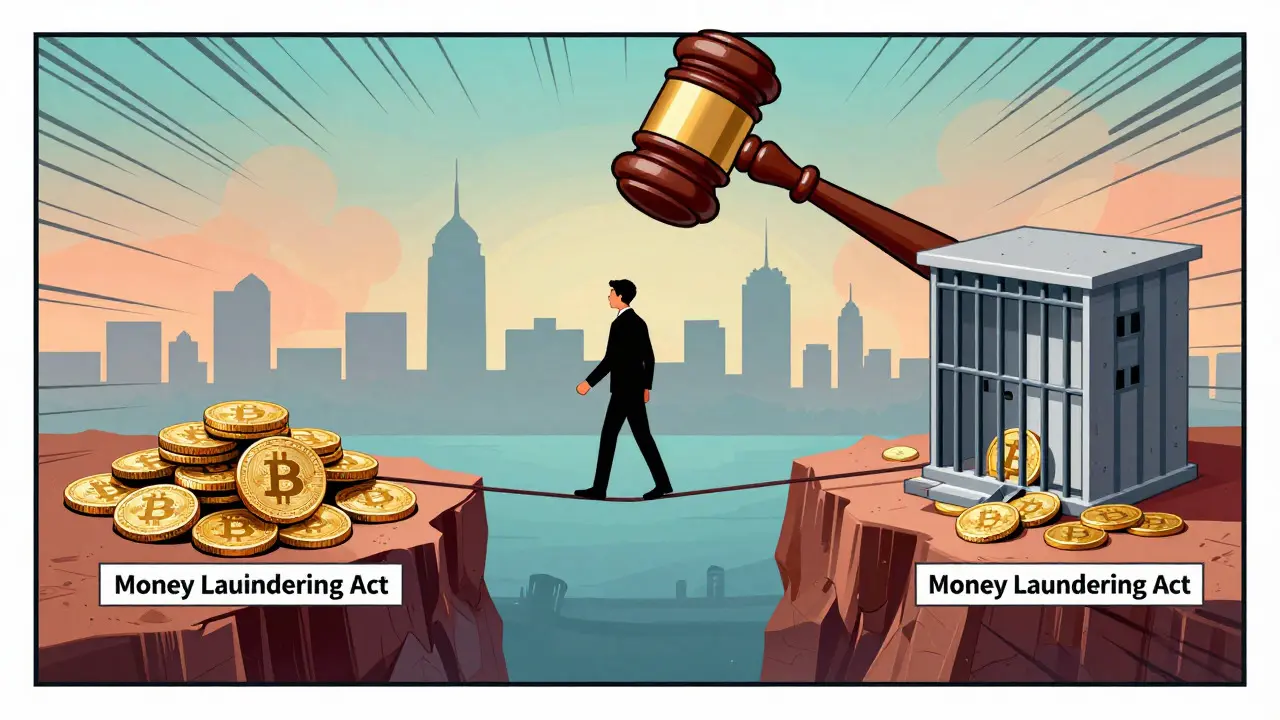
So, what actually happens if you get caught? Since there is no direct "crypto crime," prosecutors use existing laws to build cases. The primary tool is the Money Laundering Prevention Act, specifically Section 6, which criminalizes transactions involving proceeds from illegal activities. Authorities interpret any unexplained crypto transaction as potential money laundering or terrorist financing.
The penalties are severe. Under the 2015 amendment to the Money Laundering Prevention Act, offenders face imprisonment ranging from one to ten years. Fines can range from 10,000 BDT to 1,000,000 BDT (approximately $1,200 to $120,000 USD). But jail time isn't the only threat. Your assets can be seized.
Consider these recent enforcement actions:
- July 2022: The Criminal Investigation Department (CID) arrested 14 individuals in Dhaka for operating an underground crypto exchange. They were processing about $2.3 million in transactions.
- February 2023: Authorities seized 127 Bitcoin from a trader named Mohammad Ali in Dhaka. At the time, this was worth roughly 1.3 billion BDT ($12.1 million).
- May 2024: Seven university students in Chittagong were investigated by the Bangladesh Financial Intelligence Unit (BFIU) for facilitating $85,000 in monthly transactions through peer-to-peer networks.
These cases show that while mere possession might fly under the radar, active trading-especially in larger volumes-draws immediate and heavy-handed attention.
| Country | Regulatory Status | Taxation | Enforcement Severity |
|---|---|---|---|
| Bangladesh | Strict Ban (No Legal Tender) | Gray Area (Up to 30% Income Tax) | High (Jail, Seizure, Account Freezes) |
| India | Legal but Regulated | 30% Flat Tax + 1% TDS | Moderate (Compliance Focus) |
| Pakistan | Exploring Reserves | Unclear/Evolving | Low to Moderate |
How Authorities Catch Traders: Monitoring Methods
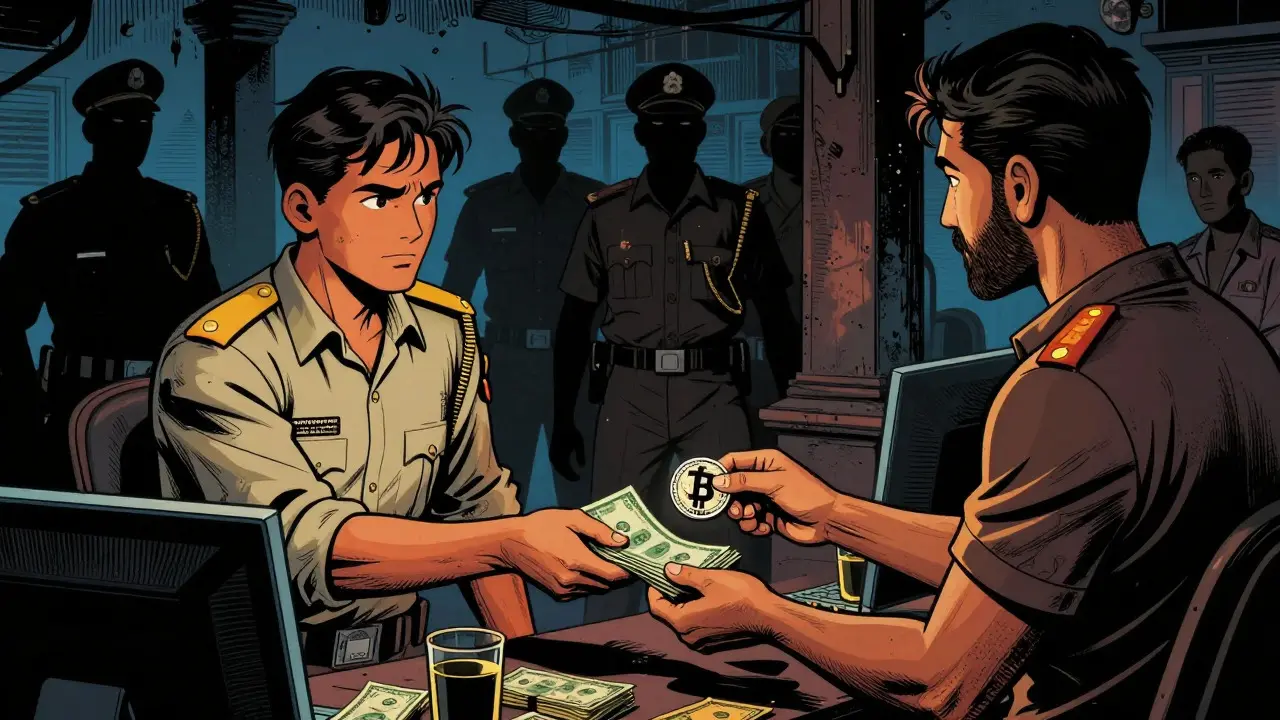
You might think that buying Bitcoin online is anonymous. In Bangladesh, it’s not. The government has sophisticated tools to track digital asset flows. The primary method is monitoring international card transactions through the Bangladesh Automated Clearing House (BACH). If you try to buy USDT or Bitcoin directly with a Bangladeshi debit or credit card, the system flags it immediately. In Q4 2024 alone, 127 suspicious crypto-related transactions were flagged through this system.
But most traders don't use cards. They use mobile financial services (MFS) like bKash and Nagad. These providers are under strict pressure to report unusual activity. In 2024, bKash and Nagad blocked 2,843 accounts for suspected crypto activity. If you suddenly receive multiple small transfers from different people and then send a large lump sum abroad (or to an unknown wallet address), algorithms flag your account for review.
Once flagged, the result is usually instant: your account is frozen. You lose access to your salary, savings, and ability to pay bills until you prove to the bank and potentially the police that the funds weren't involved in illicit activity. For many users, this administrative headache is punishment enough.
The Underground Market: Agents, P2P, and Scams
Despite the risks, an estimated 500,000 to 700,000 Bangladeshis actively trade crypto. How? Through underground channels. A 2024 report by the Blockchain Association of Bangladesh highlights three main methods:
- Local Agents: Individuals who charge a 3-5% commission to convert Tether (USDT) to Bangladeshi Taka. You send Taka via bKash; they send USDT to your wallet. This is risky because there is no contract. In June 2024, 23 traders lost approximately $350,000 when an agent named 'Sohel Rana' disappeared after collecting payments.
- Peer-to-Peer (P2P) Platforms: Apps like Binance and KuCoin remain available on the Google Play Store in Bangladesh. Sensor Tower data from March 2025 shows 150,000-200,000 active monthly users. Traders use VPNs to access platforms like LocalBitcoins or P2P sections within major exchanges.
- Crypto ATMs: Rare but emerging in urban centers like Dhaka, though these are often monitored closely by CCTV and police.
The reliance on local agents creates a trust deficit. Unlike regulated banks, if an agent scams you, you have little legal recourse without admitting to participating in an illegal market yourself. It’s a catch-22: you break the law to trade, and if you get scammed, breaking the law makes it harder to seek justice.
Taxation: The Gray Zone
If you do manage to trade successfully, do you owe taxes? Technically, yes. The National Board of Revenue (NBR) applies the general Income Tax Ordinance of 1984 to crypto transactions. There are no specific crypto tax rules. This means profits could be subject to the standard 25% corporate tax rate or the 30% personal income tax rate.
However, reporting crypto income is dangerous. To declare the income, you must admit to holding and trading crypto, which contradicts the Bangladesh Bank's prohibition. As NBR Commissioner Md. Moniruzzaman confirmed in a February 2025 press briefing, no specific crypto tax regulations exist. Most traders operate in the shadows, paying no tax, which further fuels the government's argument that crypto enables tax evasion.
Why the Ban Persists: Economic Stability vs. Innovation
Why is Bangladesh so strict compared to neighbors like India (which taxes crypto gains but allows trading) or Pakistan (exploring Bitcoin reserves)? The answer lies in economic vulnerability. Bangladesh relies heavily on remittances, which constituted 6.1% of GDP in 2024, totaling $21.1 billion annually. The central bank fears that if citizens start sending money via crypto instead of traditional banking channels, the government will lose control over foreign exchange reserves and monetary policy.
Dr. B M Mainul Hossain, Professor of Finance at Dhaka University, argues in his April 2024 paper that the ban costs Bangladesh approximately $150 million annually in potential tax revenue and stifles blockchain innovation. Yet, the Bangladesh Bank's Research Department maintains in their 2025 Financial Stability Report that crypto adoption threatens monetary stability.
This tension is evident in the government's dual approach. While banning crypto, the 2020 National Blockchain Strategy recognized the potential of blockchain technology for digital transformation. In January 2025, the central bank's Innovation Hub launched a sandbox for non-crypto blockchain applications. The distinction is clear: they want the tech, but they fear the currency.
What Should You Do?
If you are in Bangladesh and considering Bitcoin trading, here is the realistic picture. The risk is high. You are not protected by consumer laws. Your bank account can be frozen at any moment. Your assets can be seized if you trade in significant volumes. And if you use a local agent, you risk being scammed with little recourse.
For the average user, the safest path is currently abstinence. If you must participate, keep volumes low, avoid direct bank transfers where possible, and be prepared for administrative friction. But remember: in the eyes of the Bangladesh Bank, you are playing with fire. The flames haven't consumed everyone yet, but the smoke is getting thicker.
Is owning Bitcoin illegal in Bangladesh?
Owning Bitcoin itself is not explicitly criminalized by a specific law. However, the Bangladesh Bank prohibits its use as legal tender. You become vulnerable to prosecution if your ownership is linked to money laundering, foreign exchange violations, or terrorist financing under the Money Laundering Prevention Act.
Can I use Binance in Bangladesh?
Yes, the Binance app is available on the Google Play Store in Bangladesh, and there are an estimated 150,000-200,000 active monthly users. However, using it involves risk. Banks may freeze your account if they detect transactions related to Binance, and you operate outside the protection of formal financial regulations.
What are the penalties for crypto trading in Bangladesh?
Penalties fall under the Money Laundering Prevention Act. Offenders can face 1-10 years in prison and fines ranging from 10,000 to 1,000,000 BDT. Additionally, assets can be seized, and bank accounts are frequently frozen during investigations.
Do I have to pay taxes on crypto profits in Bangladesh?
Technically, yes. The National Board of Revenue applies the Income Tax Ordinance of 1984, meaning profits could be taxed at up to 30% for individuals. However, reporting this income requires admitting to crypto activity, which contradicts the central bank's ban, creating a gray area where most traders do not report.
Will Bangladesh legalize crypto in the future?
As of mid-2026, there are no plans to lift the ban. Finance Minister Abul Hassan Mahmood Ali stated in March 2025 that there is no intention to reconsider the prohibition. However, the government is exploring blockchain technology for non-financial uses, suggesting a potential long-term differentiation between the technology and the currency.
Matthew Smith
August 3, 2026 AT 14:52it is fascinating how people ignore the obvious moral decay hidden behind these digital coins. society crumbles when we detach value from tangible reality and trust in invisible ledgers instead of human integrity. the government isn't just banning money laundering they are trying to preserve the social contract that holds civilization together. you think you are smart trading in the shadows but you are merely feeding a beast that consumes community bonds. true freedom comes from transparency not from hiding your transactions from the state. it is a philosophical failure to believe that anonymity equals liberty.
Earl Kott65
August 4, 2026 AT 18:51oh look another lecture on morality from someone who probably hasn't touched crypto since 2013 🙄. seriously though this situation in bangladesh is absolutely wild. freezing accounts for buying bitcoin? that is next level dystopian stuff right there. imagine losing access to your salary because you wanted to diversify your portfolio. it is like living in a sci-fi movie where the bank becomes the villain overnight. stay strong everyone out there navigating this mess 💪
Ethan Yuwono
August 4, 2026 AT 19:16i understand the fear but let us look at the bigger picture here. the lack of specific laws creates a dangerous limbo for everyone involved. it is not just about greed or rebellion it is about the basic need for financial autonomy in an unstable economy. when the central bank issues circulars every quarter without clear statutes people are left guessing what is legal and what is not. this ambiguity hurts the most vulnerable traders who just want to save their savings from inflation. perhaps the solution lies in clearer regulations rather than outright bans that drive activity underground.
Jack Delasquez
August 5, 2026 AT 19:31dude the part about bKash blocking accounts is crazy. i mean who would have thought that sending money to a friend could get you flagged as a terrorist financier lol. its so frustrating when technology moves faster than the law books. hopefullly things will change soon cus waiting around feels like watching paint dry. keep holding on guys!
Harman Singh
August 7, 2026 AT 18:45my life is literally hell right now because of this. i lost half my savings to a scammer agent named sohel rana just like the article said. no one helped me. police laughed at me. banks froze my account for months. why does nobody care about us poor traders who just wanted to survive? it feels like the whole system is designed to crush us while the rich play games with blockchain sandboxes. i am tired of being treated like a criminal for wanting financial stability.