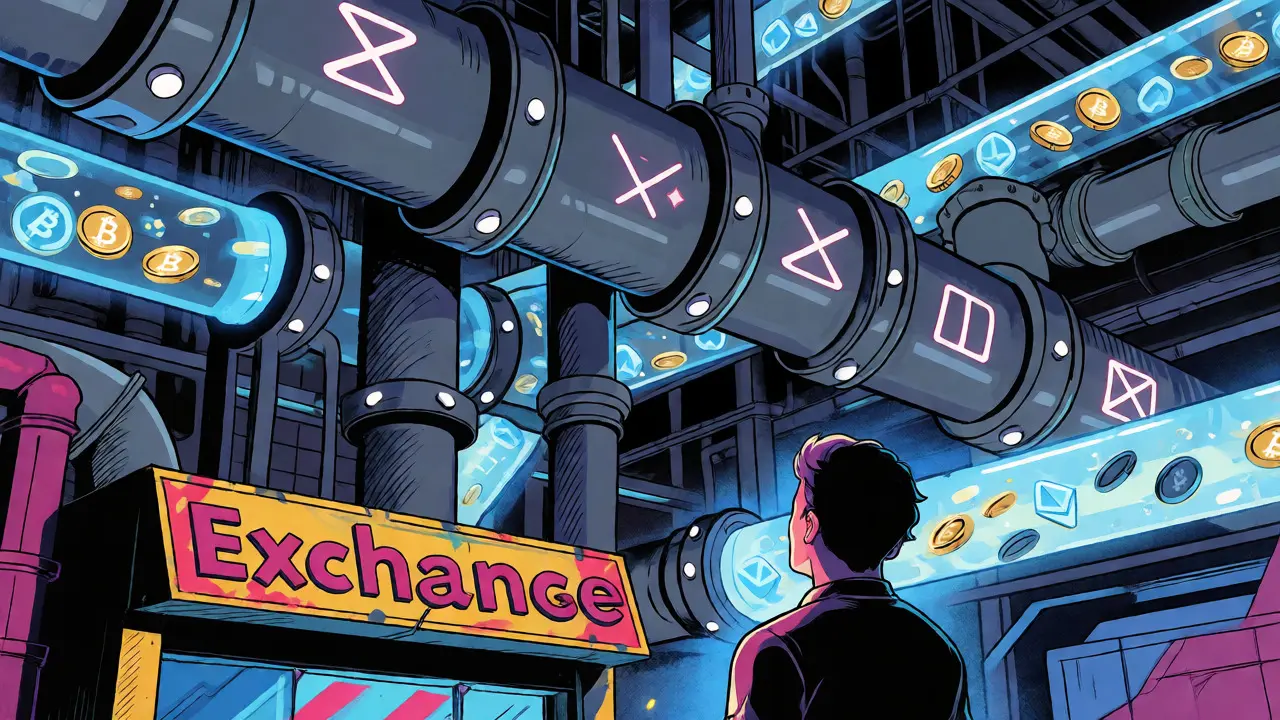
You’ve probably heard the horror stories. An exchange gets hacked, funds vanish overnight, and users are left holding an IOU that’s worth less than the paper it was printed on. That fear is exactly why C3 is getting attention in the crypto space as a self-custodial, cross-chain exchange. The pitch is simple: you keep your keys, you keep your coins. But does this model actually deliver safety and convenience, or is it just another buzzword-heavy platform?
If you’re looking to trade across different blockchains without handing over custody to a centralized giant like Binance or Coinbase, C3 claims to offer a middle ground. But before you connect your wallet and start swapping tokens, you need to know what you’re dealing with. The information landscape around C3 is sparse, which raises red flags for cautious investors. Let’s break down what we know, what’s missing, and whether this platform fits your trading strategy.
The Core Promise: Self-Custody Meets Cross-Chain
Most people misunderstand what "self-custodial" means. It doesn’t mean the exchange has no access to your money; it means they don’t hold it. In a traditional centralized exchange (CEX), you deposit Bitcoin into their hot wallet. They own the private keys. If they go bankrupt or get hacked, your Bitcoin is gone. With C3, the dynamic shifts. You retain control of your private keys. The exchange acts more like a facilitator or a router for trades rather than a bank vault.
This approach aligns with the broader shift toward decentralized finance (DeFi). However, C3 isn’t purely decentralized in the way Uniswap is. It appears to be a hybrid model focusing on cross-chain functionality, allowing users to trade assets across multiple blockchain networks directly from their wallets. Think of it as trying to swap Ethereum for Solana without bridging through a third-party service that might charge high fees or take days to process.
The appeal here is obvious. You avoid the risk of a single point of failure. If C3’s servers go down, your assets remain in your MetaMask or Ledger wallet. They aren’t frozen in a custodial account. But this convenience comes with a trade-off: if you lose your seed phrase, there is no customer support agent who can reset your password for you. You are your own bank.
Security Infrastructure: What We Know vs. What We Hope
Security is the make-or-break factor for any exchange. For C3, the available data is frustratingly thin. We know the platform employs content-filtering techniques and strict access controls. Their terms of service explicitly prohibit users from circumventing these security measures, which suggests they have automated systems monitoring for suspicious activity or bot-like behavior.
However, critical details are missing. Does C3 use multi-signature wallets? How much of their operational liquidity sits in cold storage versus hot wallets? Do they conduct regular third-party audits? Without public audit reports, you’re essentially trusting a black box. In the crypto world, trust is expensive. Leading exchanges like Kraken or Coinbase publish proof-of-reserves and undergo rigorous penetration testing. Until C3 releases similar transparency reports, assume a higher risk profile.
Industry standards dictate that robust exchanges implement multi-factor authentication (MFA) beyond just SMS. Hardware token support is preferred. Withdrawal whitelisting-where you must approve new withdrawal addresses-is another standard feature that prevents unauthorized transfers even if someone steals your login credentials. Since specific implementation details for C3 are scarce, you should manually verify if these features exist in their settings menu before committing significant capital.

The Information Gap: Why Transparency Matters
Here is the elephant in the room: C3 lacks comprehensive public documentation. A quick search reveals almost no founding date, team background, or regulatory licensing status. Who runs this company? Are they based in the US, Europe, or an offshore jurisdiction? This matters because regulations protect you. If a US-based entity holds your funds, they are subject to SEC oversight. If an anonymous team operates from a jurisdiction with loose laws, your legal recourse in a dispute is minimal.
Furthermore, there is no clear data on trading volume or supported asset pairs. Volume matters for two reasons: liquidity and price impact. Low-volume exchanges often have wider spreads, meaning you pay more when you buy and receive less when you sell. If C3 supports only a handful of obscure altcoins, you might find yourself unable to exit a position quickly during a market crash.
| Metric | C3 Crypto Exchange | Standard Centralized Exchange (e.g., Coinbase) | Standard DEX (e.g., Uniswap) |
|---|---|---|---|
| Custody Model | Self-Custodial | Custodial | Self-Custodial |
| Cross-Chain Support | Yes (Claimed) | Limited (Requires Bridging) | Native (Per Chain) |
| Regulatory Clarity | Unknown | High (Licensed) | Low (Code is Law) |
| Audit Transparency | Not Publicly Available | Regular Proof of Reserves | Smart Contract Audits |
| User Support | Unverified | Dedicated Teams | Community Forums |
This table highlights where C3 sits in the ecosystem. It tries to combine the ease of a CEX with the security of a DEX. But without proven track records, it carries the risks of both worlds while potentially lacking the benefits of either.
Who Should Consider C3?
Despite the lack of flashy marketing, C3 might appeal to a specific type of trader. If you are already comfortable managing your own private keys and understand the mechanics of wallet approvals, C3 offers a streamlined way to move assets between chains. For example, if you hold USDC on Ethereum but want to stake SOL on Solana, doing this via a bridge can be slow and costly. A cross-chain exchange promises to simplify this.
It also suits privacy-conscious users. Since you don’t necessarily need to upload a passport for every small trade (depending on their KYC thresholds, which are unclear), you maintain a degree of anonymity compared to fully regulated entities. However, do not mistake this for total anonymity. On-chain transactions are traceable, and if C3 logs IP addresses or connects wallet clusters, your privacy is limited.
Conversely, beginners should likely stay away. The learning curve for self-custodial platforms involves understanding gas fees, slippage tolerance, and network congestion. If you accidentally send the wrong token to the wrong address, there is no undo button. Experienced traders who value autonomy over hand-holding will find the most utility here.

Potential Pitfalls and Risks
The biggest risk with emerging exchanges like C3 is smart contract vulnerability. Even if you hold your keys, the code facilitating the swap executes on the blockchain. If that code has a bug, hackers can drain the liquidity pools. Has C3 been audited by reputable firms like CertiK or Trail of Bits? If not, you are gambling on untested code.
Another concern is liquidity fragmentation. In a cross-chain environment, liquidity is split across different networks. If you try to execute a large order, you might experience significant slippage-the difference between the expected price and the executed price. Always check the depth of the order book before placing large trades.
Finally, consider the longevity of the project. Many niche exchanges pop up, gain traction, and then fade away when user interest wanes. If C3 shuts down tomorrow, your assets are safe in your wallet, but your ability to trade them easily disappears. You’d have to migrate to another platform, incurring additional transaction fees and time delays.
How to Evaluate C3 Before Trading
Don’t jump in with your life savings. Treat this as an experiment. Start with a small amount of capital that you can afford to lose entirely. Here is a practical checklist:
- Verify the URL: Phishing sites are rampant. Ensure you are on the official domain.
- Check Social Sentiment: Search Reddit, Twitter, and Discord for recent user complaints. Look for patterns in issues like delayed withdrawals or poor support responses.
- Test the UI: Spend ten minutes navigating the interface. Is it intuitive? Does it clearly display fees and network costs?
- Review Terms of Service: Specifically look for clauses regarding liability for losses due to technical errors.
- Monitor Gas Fees: Compare the total cost of a swap on C3 against direct bridging services or major DEXes.
By treating C3 as a tool rather than a destination, you mitigate the risk of relying on an opaque platform. Keep your main portfolio in hardware wallets or established custodians, and use C3 for specific tactical moves.
Is C3 Crypto Exchange safe to use?
Safety is relative. Because it is self-custodial, your assets remain in your wallet, reducing the risk of exchange insolvency. However, the platform itself lacks public audit reports and clear regulatory status, so you must assess the risk of smart contract bugs or operational failures independently.
Does C3 require KYC verification?
Information on C3's specific KYC requirements is limited. Typically, self-custodial platforms minimize KYC for small trades but may require identity verification for larger volumes or fiat on-ramps. Check their current terms before signing up.
What cryptocurrencies does C3 support?
While exact lists vary, C3 focuses on major assets across multiple chains. Given its cross-chain focus, expect support for Ethereum, BSC, Polygon, and potentially Solana or Avalanche assets. Always verify the specific pair availability on their live interface.
How are fees calculated on C3?
Fees usually consist of a trading spread, network gas fees, and potentially a protocol fee. Because data on C3's specific fee structure is scarce, compare the final output amount against competitors like 1inch or Jupiter Aggregator to ensure competitiveness.
Can I recover my funds if I forget my password?
Since C3 is self-custodial, recovery depends on your wallet provider (e.g., MetaMask, Phantom), not C3. If you lose your seed phrase, your funds are permanently inaccessible. C3 cannot restore access for you.