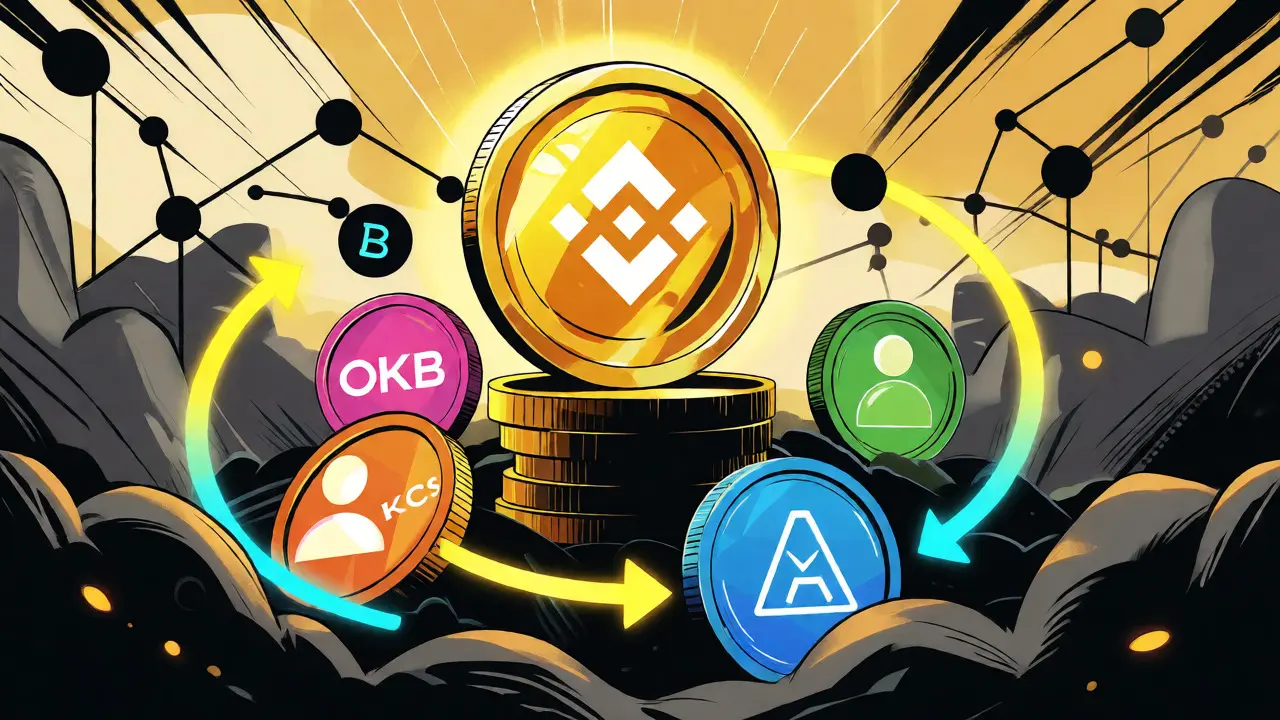
You probably know Bitcoin as digital gold and Ethereum as the fuel for decentralized apps. But what about those coins named after the exchanges themselves? If you've ever seen BNB on your Binance dashboard or wondered why everyone talks about exchange tokens, you're asking the right question. These aren't just random coins; they are strategic financial instruments designed to keep you glued to one platform. Think of them as a loyalty program that actually pays you back, but with a massive catch: your money is tied to the health of a single company.
This guide breaks down exactly what these tokens are, how they work, and whether holding them makes sense for your portfolio in 2026. We'll look at real data from major players like Binance and OKX, and we won't ignore the elephant in the room-the FTX collapse that changed everything.
The Core Concept: Why Exchanges Issue Their Own Coins
At its simplest, an exchange token is a blockchain-based digital asset issued by a centralized cryptocurrency exchange (CEX). Unlike Bitcoin, which exists independently of any company, an exchange token derives its value directly from the performance and policies of the platform that created it. The primary goal here isn't just to raise capital; it's to create a symbiotic relationship between the exchange and its users.
Why would an exchange do this? It’s a classic flywheel effect. When you hold the exchange’s token, you get perks like reduced trading fees. This encourages you to trade more on their platform. More trading means more revenue for the exchange. Higher revenue often leads to higher token value through buybacks or burns, which rewards holders. It’s a closed loop designed to maximize user retention. According to a 2023 report by the Bank for International Settlements, these tokens serve dual purposes: they are utility instruments for users and significant funding mechanisms for the platforms.
Consider the numbers. As of late 2023, the top exchange tokens had a combined market cap exceeding $52 billion. Binance Coin (BNB) alone accounted for roughly 86.5% of that total, with a market cap around $45 billion. That dominance shows how powerful this model can be when executed well. However, it also highlights the concentration risk-if Binance sneezes, the entire sector catches a cold.
How Exchange Tokens Actually Work: Utility and Mechanics
So, what do you actually get for holding these tokens? The utility varies, but it generally falls into three buckets: fee discounts, governance, and ecosystem access.
Fee Discounts: This is the biggest draw. Most exchanges offer tiered discounts if you pay transaction fees using their native token. For example, Binance offers up to a 25% discount on spot trading fees if you hold a certain amount of BNB. KuCoin offers similar incentives for its KuCoin Token (KCS). If you’re a high-volume trader, this isn’t just a perk; it’s a direct cost reduction that adds up quickly. One Reddit user reported saving over $2,300 in a single year just by holding 25 BNB.
Token Burns: To maintain scarcity and potentially drive up price, many exchanges implement "burn" mechanisms. They take a portion of their quarterly profits and use it to buy back their own tokens from the open market, then destroy them permanently. Binance, for instance, burns BNB quarterly based on a formula tied to their profits. In Q1 2023 alone, they burned over 2 million BNB, valued at nearly $600 million. This reduces supply, theoretically supporting the price if demand remains steady.
Ecosystem Access: Some tokens act as gas for specific blockchains. BNB is used to pay for transactions on the BNB Chain (formerly Binance Smart Chain). This gives the token utility beyond just the exchange interface, embedding it into the broader decentralized finance (DeFi) landscape. Without BNB, you can’t interact with thousands of dApps on that network.
| Token | Issuing Exchange | Primary Utility | Market Position |
|---|---|---|---|
| BNB | Binance | Fee discounts, Gas for BNB Chain, Launchpad access | Dominant leader (~78% share) |
| OKB | OKX | Fee discounts, Jumpstart participation, Insurance fund | Strong second place |
| HT | Huobi (HTX) | Fee discounts, Lottery entries, Limited DeFi use | Declining relevance |
| KCS | KuCoin | Fee discounts, Weekly dividends from trading fees | Niche but loyal community |
The Good: Why Investors Love Them
There’s a reason these tokens have survived multiple bear markets. For active traders, the math is hard to argue with. If you trade frequently, paying fees in USD or stablecoins is expensive. Paying in the exchange token cuts costs significantly. Over time, these savings can compound into substantial returns, independent of the token’s price action.
Additionally, there’s the potential for capital appreciation. Because the token’s value is linked to the exchange’s success, a booming crypto market often drives up both trading volumes and token prices. During the 2021 bull run, BNB surged over 1,200%, mirroring Binance’s explosive user growth. Holding the token allowed investors to profit twice: once from trading gains and again from the token’s rise.
Some exchanges also offer exclusive investment opportunities. New projects launching on platforms like Binance Launchpad or OKX Jumpstart often require holding the native token to participate. This gives early access to new cryptocurrencies, which can be lucrative if the new project succeeds.
The Bad: Concentration Risk and Centralization
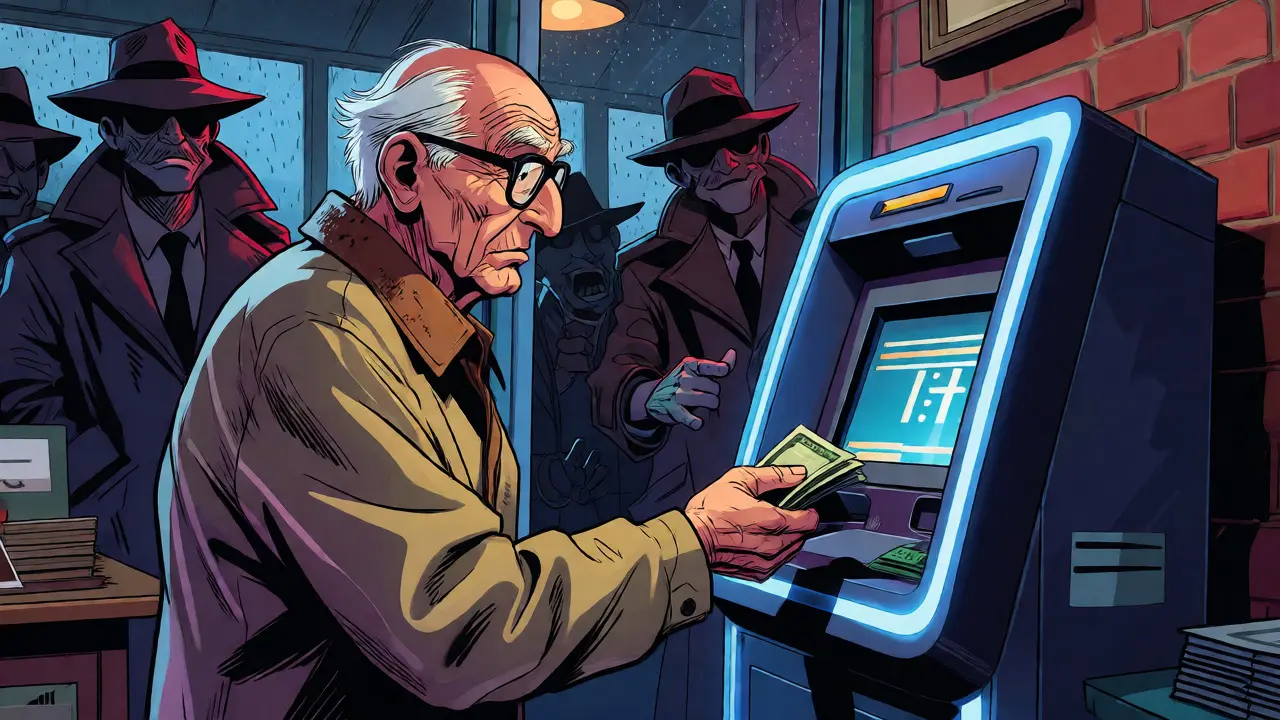
Here is the harsh reality: buying an exchange token is effectively betting on the solvency and integrity of a private company. You are not buying a decentralized asset like Bitcoin. You are buying equity-like exposure to a business.
The FTX collapse in November 2022 serves as the ultimate cautionary tale. FTT, the exchange token for FTX, lost 99.9% of its value within 72 hours. Its market cap plummeted from $8 billion to $8 million. Holders who believed FTT was a safe store of value were wiped out. This event exposed the fundamental flaw: if the exchange fails, the token becomes worthless because its utility vanishes instantly.
Even without a total collapse, centralization poses risks. Governance voting, often touted as a feature, can feel ceremonial. Critics note that real decision-making power usually remains with the executive team, not the token holders. A study by the University of Cambridge found that while exchanges with native tokens had higher user retention, they also showed higher correlation between operational issues and token volatility. If the exchange faces regulatory scrutiny-as Binance did with the SEC in 2023-the token price reacts sharply.
Regulatory Headwinds and Future Outlook
The regulatory environment for exchange tokens is shifting. In June 2023, the U.S. Securities and Exchange Commission (SEC) charged Binance and its CEO Changpeng Zhao, alleging that BNB constituted an unregistered security offering. This legal battle sets a precedent for how other regulators might view exchange tokens globally.
If courts decide these tokens are securities, exchanges may face stricter compliance requirements, potentially altering their utility structures. Furthermore, the trend toward Decentralized Exchanges (DEXs) challenges the traditional model. DEXs don’t issue central tokens in the same way; they rely on liquidity providers and protocol-owned liquidity. While CEXs still dominate volume, the long-term viability of exchange tokens depends on their ability to adapt beyond simple fee discounts.
Despite the risks, industry analysts predict consolidation rather than extinction. With entrenched network effects, major tokens like BNB and OKB are likely to remain relevant through 2030. However, smart investors are now diversifying. Surveys indicate that 82% of users limit their exchange token holdings to less than 15% of their portfolio post-FTX, treating them as tactical assets rather than core holdings.
Should You Buy Exchange Tokens?
Deciding whether to hold an exchange token comes down to your trading style and risk tolerance. Here is a quick checklist to help you decide:
- Are you an active trader? If you execute dozens of trades weekly, the fee discounts provide immediate, tangible ROI. This makes holding the token almost mandatory for efficiency.
- Do you trust the exchange? Research the exchange’s proof-of-reserves, regulatory status, and insurance funds. Never hold more than you can afford to lose if the exchange goes bankrupt.
- Is the token diversified? Does the token have utility outside the exchange? BNB, for example, powers a whole blockchain ecosystem. Tokens with limited utility (like pure fee-discount coins) carry higher risk.
- Can you manage the tax implications? Using tokens to pay fees is often considered a taxable disposal event in many jurisdictions. Keep accurate records.
If you fit the profile of a high-volume trader who trusts a specific platform, exchange tokens are a powerful tool. They lower costs and offer upside potential. But if you are a passive investor looking for a safe haven, sticking to Bitcoin or Ethereum might be safer. The key is understanding that you are buying into a company, not just a technology.
What is the main difference between an exchange token and a regular cryptocurrency?
Regular cryptocurrencies like Bitcoin operate on decentralized networks independent of any single entity. Exchange tokens are issued by centralized companies (exchanges) and derive their value primarily from the utility and performance of that specific platform. If the exchange fails, the token often loses most of its value.
Why do exchanges burn their tokens?
Exchanges burn tokens to reduce the total supply. By permanently destroying a portion of the tokens (often bought back from the market using exchange profits), they aim to increase scarcity. If demand stays constant or rises, reduced supply can theoretically support or increase the token's price.
Is it risky to hold exchange tokens?
Yes, it carries significant concentration risk. Since the token's value is tied to one company, any regulatory trouble, hack, or bankruptcy of that exchange can crash the token price. The collapse of FTX and its token FTT demonstrated this extreme vulnerability.
Can I use exchange tokens for things other than fee discounts?
Yes, though it varies by token. BNB is widely used to pay for gas fees on the BNB Chain and can be used for travel bookings via partners like Travala. Other tokens may offer staking rewards, governance voting rights, or access to exclusive launchpad investments.
How much should I allocate to exchange tokens in my portfolio?
Most prudent investors suggest limiting exposure to 5-15% of their total crypto portfolio. This allows you to benefit from fee discounts and potential upside while minimizing the impact if the issuing exchange faces catastrophic failure.

Mike Thomas
October 2, 2026 AT 21:32Listen up because I am tired of seeing people treat these tokens like lottery tickets when they are actually strategic tools. If you are not trading enough volume to justify the fee discounts then stop buying them and just hold BTC or ETH. But if you are grinding on Binance every single day then BNB is basically free money waiting for you to pick it up. The math does not lie and the savings compound faster than you think so do not let fear keep you from optimizing your stack. You need to look at your P&L sheets and see exactly how much you saved last quarter by paying fees in BNB instead of USDT. That number alone should tell you whether this asset belongs in your portfolio or not. Stop listening to the FUD crowd who never traded a day in their life and start looking at real utility metrics. The flywheel effect is real and if you are part of that loop then you are winning while others are bleeding out on fees. Do not be passive about your costs because every dollar saved is a dollar you can reinvest into higher risk assets later. Get off the sidelines and start treating your exchange token holdings like the business expense deduction that they truly are.
Queen Hijabi
October 3, 2026 AT 00:51lol ok but what happens when the sec decides bnb is a security and delists it tomorrow
oh wait its already happening kinda
lady D
October 3, 2026 AT 16:34I appreciate the breakdown here because honestly it feels like we forget that behind every token there is a human team trying to navigate incredibly complex regulations. It is easy to get caught up in the price charts and miss the cultural shift happening where users are becoming more aware of centralized risks. I feel like many of us, especially those of us coming from traditional finance backgrounds, struggle with the idea of holding an asset that is essentially corporate equity disguised as crypto. We want the decentralization narrative but we also want the convenience of a centralized interface which creates this weird cognitive dissonance. It is important to remember that trust is earned slowly and lost quickly, as we saw with FTX, so empathy for other investors who are hesitant to buy exchange tokens is warranted. We are all learning together in this space and sharing our fears helps normalize the uncertainty that comes with early-stage technology adoption. Let us support each other in making informed decisions rather than mocking those who choose safety over potential yield.
Patrick Heagany
October 4, 2026 AT 21:24The author glosses over the moral bankruptcy inherent in these structures. These exchanges are not benevolent entities; they are predatory capitalistic machines designed to extract value from the uninformed masses through artificial scarcity and gamified loyalty programs. When you buy BNB, you are not buying into a revolution; you are subsidizing the operational costs of a private monopoly that actively suppresses competition. The 'burn' mechanism is nothing more than a theatrical display of wealth destruction intended to distract retail investors from the fact that insiders dumped their bags years ago. It is a casino where the house always wins and the players are too busy watching the slot machine lights to notice their wallets are being picked clean. This entire sector is built on sand and regulatory whims, lacking any true intrinsic value beyond the fleeting attention of speculators. Until these platforms prove they can operate without abusing their market dominance, holding their tokens is a moral compromise that rewards greed over integrity.
Glen Russell
October 5, 2026 AT 19:11One must consider the historical precedent set by previous financial bubbles. The issuance of proprietary tokens by centralized entities has always been a precursor to systemic collapse. Observe the pattern: initial hype, followed by aggressive marketing, leading to widespread adoption by the naive public, and finally resulting in regulatory crackdowns or internal fraud. The current situation with BNB and OKB mirrors the trajectory of failed institutions throughout history. It is not merely a matter of risk tolerance but of understanding the fundamental nature of fiat-backed digital liabilities. These tokens are unsecured promissory notes masquerading as decentralized assets. Any investor failing to recognize this distinction is doomed to repeat the errors of the past. Prudence dictates extreme caution and a skeptical eye toward all claims of utility that rely solely on the continued existence of the issuing corporation.
Chris Larkins
October 6, 2026 AT 11:39I think it is helpful to view this through the lens of community building and long-term sustainability. While the risks are certainly present, the collaborative effort between exchanges and users can drive innovation in areas like payment processing and cross-border transactions. As someone who values clear communication and respectful boundaries, I believe that transparency regarding proof-of-reserves is the most critical factor for any user considering these assets. If an exchange communicates openly about their financial health and adheres to strict ethical standards, then the token can serve as a legitimate tool for ecosystem growth. We should encourage exchanges to prioritize user education and fair practices rather than focusing solely on short-term price appreciation. By supporting platforms that demonstrate genuine commitment to their communities, we help foster a healthier and more resilient cryptocurrency landscape for everyone involved.
Ben Paterson
October 6, 2026 AT 17:46Hey guys why are we even talking about this? 🇺🇸 American tech dominates everything anyway!
If Binance goes down some US company will take over and we will have better regulation.
Stop worrying about foreign coins and focus on domestic solutions.
This whole crypto thing is just a phase until Wall Street fixes it. 😎
Sandra Speakerworth
October 7, 2026 AT 00:31It strikes me that the philosophical underpinning of exchange tokens challenges our very definition of ownership. Are we owners of a piece of a platform, or are we merely tenants paying rent in a specific currency? The distinction matters deeply when we consider the social contract between provider and consumer. In a decentralized world, we seek autonomy, yet exchange tokens reintroduce a hierarchical structure reminiscent of feudal systems where loyalty was rewarded with privileges. Perhaps the true value lies not in the financial return but in the sense of belonging to a curated community. However, one must remain vigilant against the commodification of trust itself. When trust becomes a tradable asset, it loses its organic quality and becomes subject to market volatility. We must ask ourselves if we are willing to trade our autonomy for convenience, and whether that trade-off aligns with our deeper values regarding freedom and control in the digital age.
Richard Moore
October 7, 2026 AT 22:56hey nice post man i really liked the part about the burns
i used to hate holding bnb cause i thought it was just hype
but then i started using it for gas on bsc and realized its actually useful
like way cheaper than eth gas sometimes
so yeah i guess if u use the chain its worth holding
otherwise maybe stick to btc idk
anyway thanks for writing this helped me understand better
keep it up bro 👍