You’ve probably seen the buzz around the CAKEBANK airdrop. Maybe you clicked a link promising free tokens, or perhaps a friend mentioned it in a group chat. The name sounds familiar-it plays off the well-known PancakeSwap a leading decentralized exchange on BNB Chain and its native token, CAKE. But here is the hard truth: there is no credible evidence that a legitimate "Cake Bank" project is currently running an official airdrop for a token called CAKEBANK.
In fact, digging into the data reveals some serious red flags. If you are looking to claim free crypto, this guide will help you separate fact from fiction, understand why this specific token is dangerous, and show you how to spot similar scams before they drain your wallet.
The Reality of the CAKEBANK Token
Let’s look at the numbers first. According to recent market data, the token tickered as CAKEBANK has a price hovering around $0.00000207 USD. That is not a typo. It is a micro-cap token with virtually no liquidity. In the world of cryptocurrency, a price this low usually means one of two things: either the project is brand new and unproven, or it is a speculative asset with little to no real-world utility.
More concerning is the lack of information. Unlike major projects such as Ethereum the second-largest cryptocurrency by market cap or even mid-tier DeFi protocols, there is no whitepaper, no verified team, and no official announcement from any reputable source regarding a "Cake Bank" entity. When you search for "CAKEBANK airdrop details," you won’t find press releases from CoinDesk or announcements on the official PancakeSwap blog. Instead, you find silence-or worse, misleading links designed to phish your private keys.
This absence of documentation is a massive warning sign. Legitimate airdrops are heavily marketed. Projects spend months building communities on Discord and Twitter, releasing technical roadmaps, and auditing their smart contracts. CAKEBANK has none of this. It appears to be a copycat project trying to ride the coattails of PancakeSwap’s popularity.
How Scammers Use Familiar Names
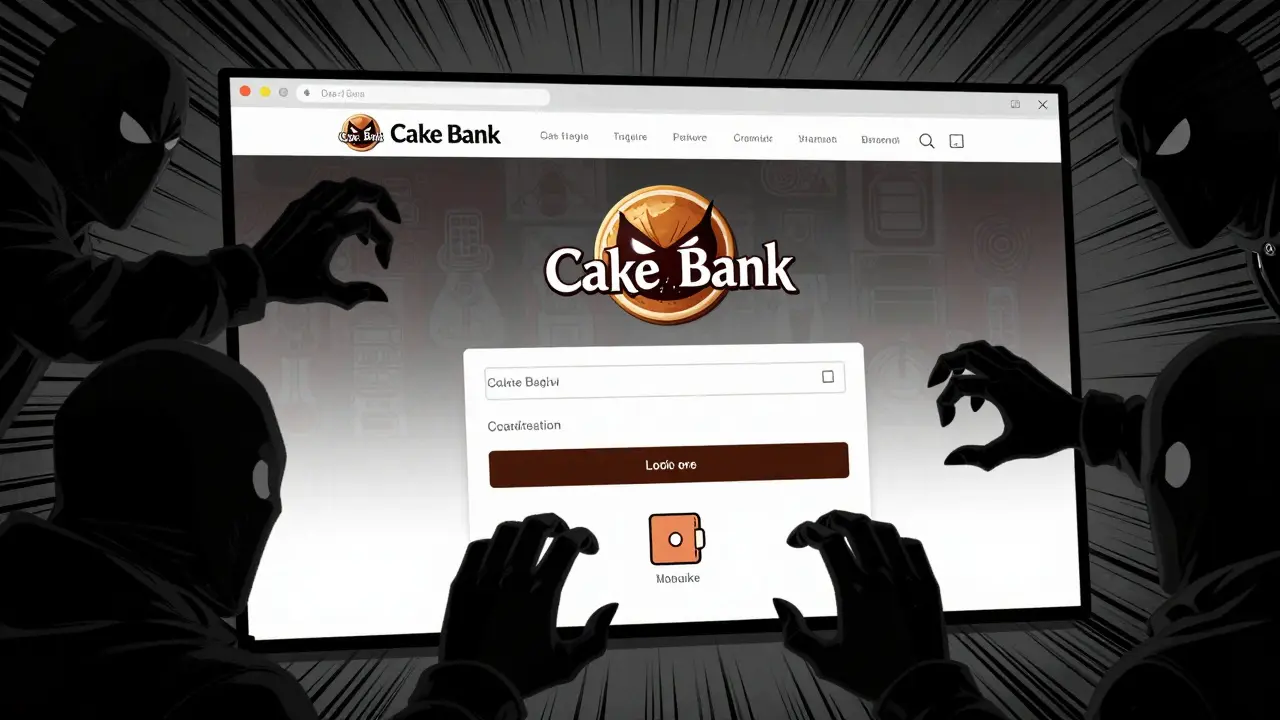
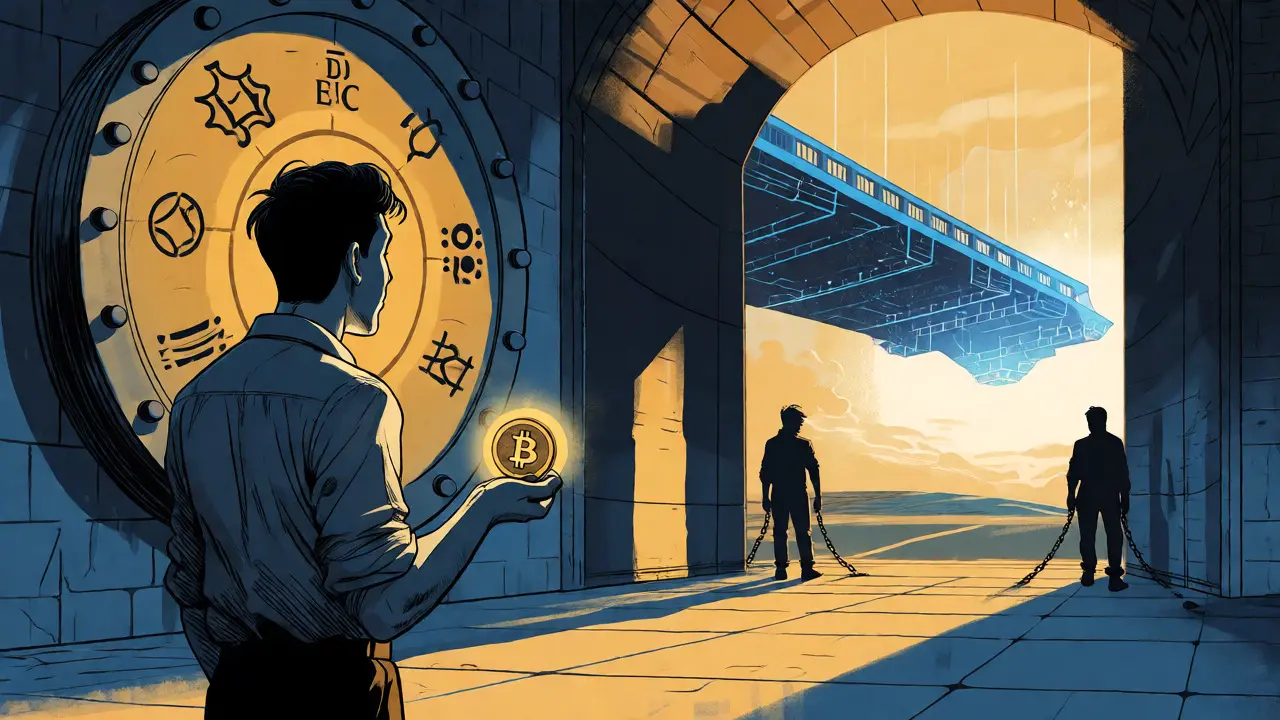
Scammers are clever. They know that people trust established brands. By naming their token "CAKEBANK," they hope you will assume it is affiliated with PancakeSwap a decentralized finance platform. This is a classic phishing tactic. They create a fake website that looks almost identical to the real thing, then announce an "exclusive airdrop" to lure users in.
Here is how these scams typically work:
- The Hook: You see a post claiming that connecting your wallet to "Cake Bank" will grant you free CAKEBANK tokens.
- The Trap: You visit the fake site and connect your MetaMask or Trust Wallet. The site asks for permission to interact with your wallet.
- The Drain: Once connected, the malicious smart contract doesn’t give you tokens. Instead, it scans your wallet for valuable assets-like USDT, ETH, or actual CAKE tokens-and drains them instantly.
I have seen friends lose hundreds of dollars this way. They thought they were getting something for nothing, but the cost was their entire portfolio. Always remember: if it sounds too good to be true, it is almost certainly a scam.
Real Airdrops vs. Fake Promises
To understand what a legitimate airdrop looks like, let’s compare CAKEBANK with real examples from 2025 and 2026. Genuine airdrops require effort. They are rewards for early adoption, not free money handed out to strangers.
| Feature | Legitimate Airdrop (e.g., PancakeSwap, Binance) | Suspicious Airdrop (e.g., CAKEBANK) |
|---|---|---|
| Official Source | Announced on verified social media and official blogs | No official source; rumors on Telegram/TikTok |
| Requirements | Requires trading volume, staking, or quest completion | Just "connect wallet" or click a link |
| Token Value | Established value with high liquidity | Near-zero value ($0.000002) with no liquidity |
| Team Transparency | Public team members and audited contracts | Anonymous team, unaudited code |
| Risk Level | Low (if using official channels) | Extremely High (potential for total loss) |
For instance, PancakeSwap ran a legitimate program where Coinbase One members could earn CAKE tokens by maintaining trading volume on supported networks. This wasn’t a random giveaway; it was a strategic partnership with clear rules. Similarly, Binance’s Megadrop events for tokens like KernelDAO required users to lock BNB or FDUSD to qualify. These programs are transparent, regulated, and safe because they come from trusted entities.
CAKEBANK offers none of this structure. There is no vesting period, no community governance, and no clear use case. It is a hollow shell designed to extract value from unsuspecting users.
Why You Should Avoid CAKEBANK
Beyond the immediate risk of losing funds, participating in shady airdrops can have long-term consequences. Here are three critical reasons to stay away:
- Wallet Compromise: Connecting your wallet to an unverified contract gives the developer access to your assets. Even if you don’t hold much now, you might add funds later, only to find them gone. Some malware even stays dormant, waiting for you to deposit more money.
- Regulatory Heat: The U.S. Securities and Exchange Commission (SEC) and other global bodies are cracking down on unregistered securities. While legitimate airdrops are generally treated as taxable income upon sale, participating in illegal schemes could complicate your tax situation or expose you to legal risks if the project is deemed fraudulent.
- Opportunity Cost: Time spent chasing fake airdrops is time wasted. The crypto market moves fast. While you are clicking suspicious links, you could be learning about legitimate DeFi protocols, staking rewards, or yield farming strategies that actually generate returns.
I live in Boulder, Colorado, where the tech community is huge. I talk to developers and investors daily, and the consensus is clear: if a project isn’t listed on CoinMarketCap or CoinGecko with verified metrics, treat it as hostile. CAKEBANK does not meet this basic standard.
How to Spot Crypto Scams Early
You don’t need to be a blockchain expert to protect yourself. Here is a simple checklist to evaluate any airdrop offer:
- Check the URL: Does the website address match the official project? Scammers often use slight variations like "cake-bank-official.com" instead of the real domain. Hover over links before clicking.
- Verify Social Media: Go to the project’s official Twitter or Discord. Did they announce the airdrop there? If the only mention is from a random account with 100 followers, it’s fake.
- Look for Audits: Legitimate DeFi projects hire firms like CertiK or OpenZeppelin to audit their smart contracts. If you can’t find an audit report, do not connect your wallet.
- Assess the Tokenomics: Who holds the supply? If the founders hold 90% of the tokens, they can dump them on you at any time, crashing the price to zero. This is common in rug pulls.
- Use a Burner Wallet: Never connect your main wallet to new or unverified sites. Use a separate wallet with minimal funds for testing. If you must participate in risky activities, keep your primary assets isolated.
Legitimate Alternatives to CAKEBANK
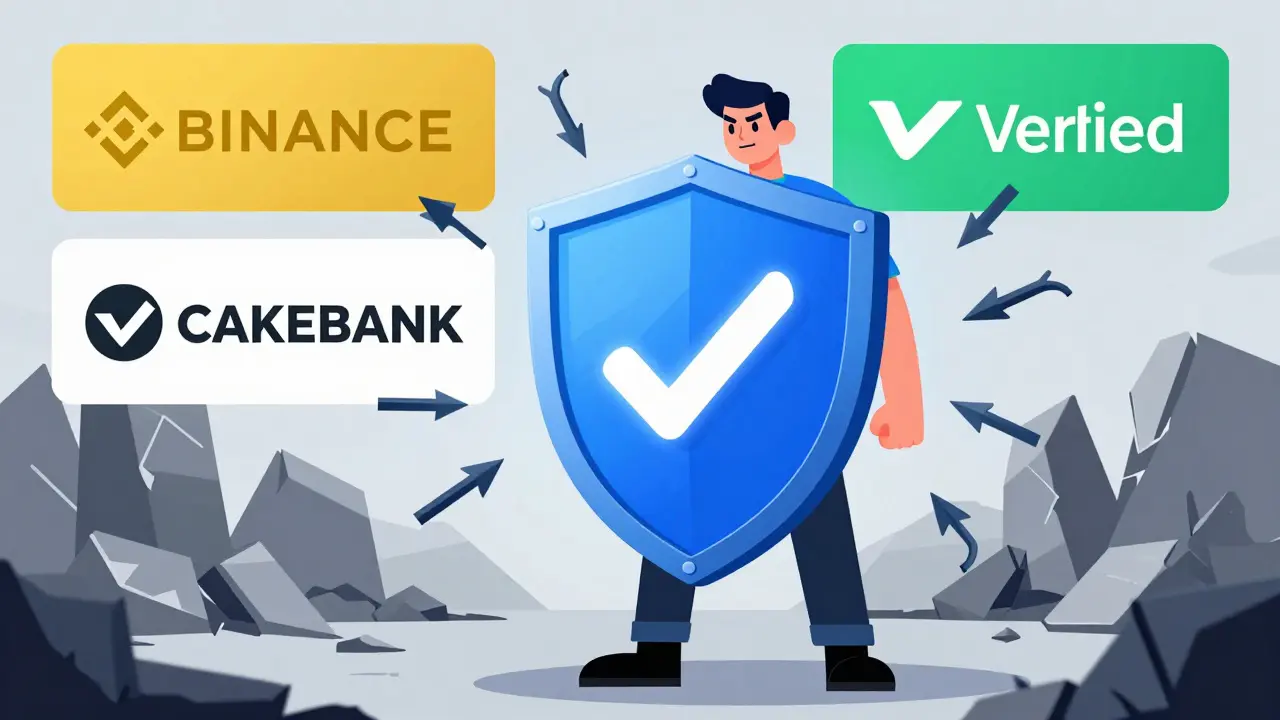
If you are interested in earning crypto rewards, there are safer, proven paths. Instead of chasing ghosts like CAKEBANK, consider these options:
PancakeSwap Syrup Pools: You can stake your existing tokens to earn CAKE. This is a transparent process with predictable yields. No tricks, no hidden fees.
Binance Launchpool: By holding BNB or FDUSD, you can farm new tokens before they list on the exchange. This is one of the safest ways to get early access to promising projects.
Learn-to-Earn Programs: Platforms like Coinbase and Binance offer small amounts of crypto for completing short quizzes about different projects. It’s a low-risk way to learn and earn simultaneously.
These methods require patience and capital, but they are built on trust and transparency. They respect your intelligence and your security.
Tax Implications of Airdrops
Even if you avoid scams, understanding taxes is crucial. In the United States, the IRS treats airdrops as ordinary income. The value of the tokens at the time you receive them is taxable. If you sell them later for a profit, you also owe capital gains tax. Keep detailed records of every transaction. Ignorance of the law is not a defense, and audits can happen years later.
For CAKEBANK specifically, since the token has negligible value, the tax impact might seem small. But if you were tricked into buying it or swapping other assets for it, those losses may be deductible depending on your jurisdiction. Consult a tax professional who specializes in cryptocurrency to navigate these complexities.
Final Thoughts on Digital Safety
The crypto space is full of innovation, but it is also rife with deception. The CAKEBANK airdrop is a textbook example of how scammers exploit curiosity and greed. By ignoring the hype and sticking to verified sources, you protect your financial future. Don’t let a fake name fool you. Do your homework, verify everything, and never rush into a transaction. Your wallet is your responsibility-guard it fiercely.
Is the CAKEBANK airdrop legitimate?
No, there is no credible evidence that CAKEBANK is a legitimate project. It lacks official documentation, has a near-zero market value, and shows all the signs of a phishing scam designed to steal crypto assets.
What is the relationship between CAKEBANK and PancakeSwap?
There is no official relationship. CAKEBANK is likely a copycat project using a similar name to confuse users. PancakeSwap’s native token is CAKE, and they do not endorse or support CAKEBANK.
How can I check if an airdrop is real?
Verify the announcement on the project’s official website and verified social media accounts. Check for smart contract audits, transparent team information, and listings on reputable trackers like CoinMarketCap. If any of these are missing, proceed with extreme caution.
What should I do if I already connected my wallet to a suspicious site?
Immediately disconnect your wallet from the site. Move any remaining funds to a new, secure wallet. Monitor your transaction history for unauthorized transfers. Consider reporting the incident to relevant authorities and changing any passwords associated with that device.
Are there any safe ways to earn free crypto?
Yes, through legitimate platforms like Coinbase Learn-to-Earn, Binance Launchpool, or official airdrops from established projects that require verified activity. Always ensure the platform is reputable and the terms are clearly documented.


Sylvia Mossman
June 9, 2026 AT 07:08Oh please, spare me the lecture on 'digital safety' from someone who clearly doesn't understand how DeFi actually works. You're painting with way too broad a brush here. Just because a token has low liquidity or isn't on CoinGecko yet doesn't mean it's a scam. It means it's early. I've seen projects like this go to zero, sure, but I've also seen them pump 100x for those brave enough to ignore the FUD and do their own due diligence on the contract code itself. The article is just fear-mongering designed to keep people in the safe, boring lane of Coinbase and Binance where they get eaten alive by fees and inflation. Real alpha hunters know that risk equals reward. If you can't handle the possibility of getting rugged, don't play the game. But don't come here telling everyone else it's all a trap just because you lack the technical chops to verify a smart contract yourself.
Steven Jacobowitz
June 11, 2026 AT 03:59Sylvia, while I appreciate your passion for high-risk plays, the distinction between 'early' and 'fraudulent' is usually quite clear when there is literally no team, no whitepaper, and no audit. This isn't about being brave; it's about basic security hygiene. Connecting a wallet to an unverified contract isn't 'due diligence,' it's gambling with your entire portfolio. I'm not saying every obscure token is bad, but CAKEBANK specifically mimics PancakeSwap's branding to phish users. That's not innovation, that's theft. We need to stop romanticizing scams as 'alpha.'
Dinesh Pattigilli
June 12, 2026 AT 15:40Hahaha look at these plebeians arguing over dust tokens. Typical. The masses always fall for the shiny new thing without understanding the underlying mechanics. It is pathetic really. Only true intellectuals who have studied blockchain architecture since 2017 would even glance at such garbage. The rest of you are just lemmings waiting to be harvested. Keep clicking those links, it amuses me to watch the slow ones try to catch up to reality.
Karthikeyan S
June 13, 2026 AT 12:45Wow Dinesh, you really think you're so special huh? 🙄 Your ego is bigger than your portfolio probably. Stop acting like you're some god among men just because you read a few articles. Most people here are just trying to survive, unlike you who probably sits around judging others to feel important. It's sad really. 😒
Brad Ranks
June 13, 2026 AT 20:13I literally lost $500 last week thinking it was legit. My friend sent me the link saying it was exclusive. I connected my wallet, thought nothing of it, and boom, gone. All my USDT vanished in seconds. I spent three days crying and trying to figure out what happened. Now I see the signs everywhere. Thank god I didn't connect my main wallet, but still, the stress was unreal. Please listen to this post. It's not just theory, it's real pain.
Caitlin Donahue
June 14, 2026 AT 23:18omg brad i am so sorry that happened to u :/ its crazy how easy it is to get tricked right? i always use a burner wallet now just incase. its better to be safe then sorry i guess lol. hope ur feeling better soon!