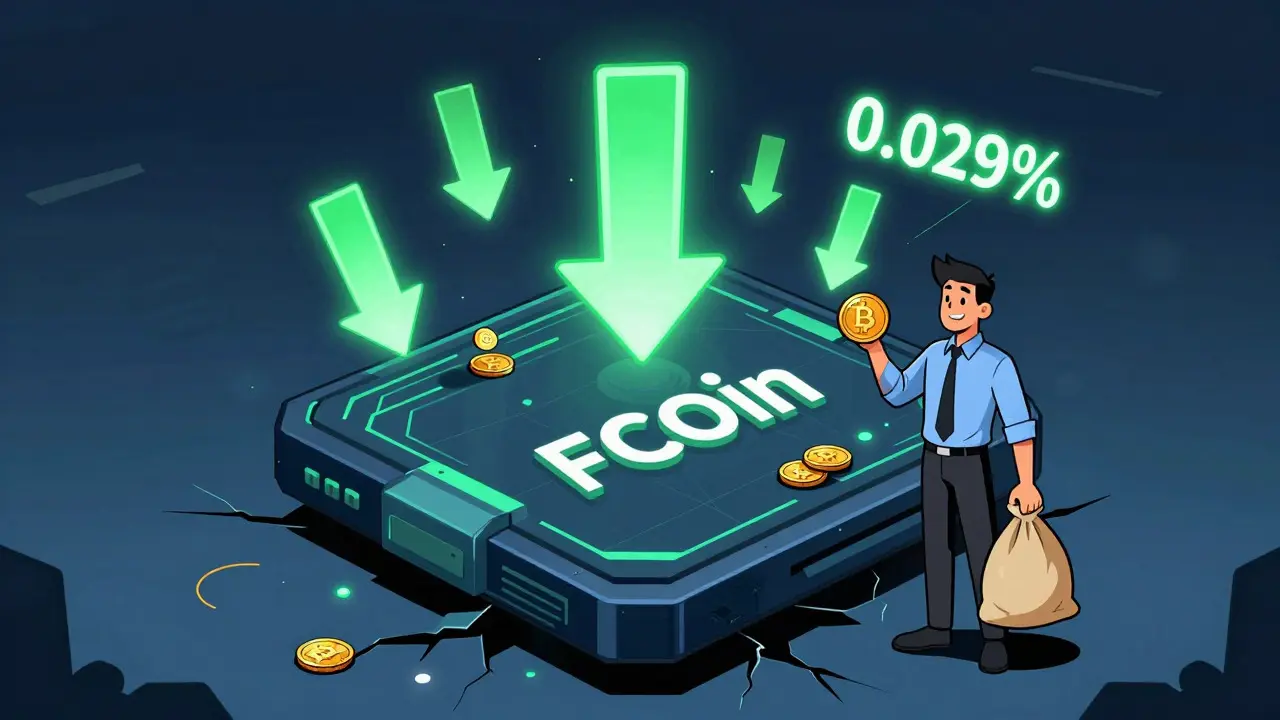
Remember when low fees were the only thing that mattered in crypto? For a brief moment, FCoin was a controversial cryptocurrency exchange known for its ultra-low trading fees and community-driven tokenomics model. It promised to shake up the industry by giving profits back to users. But if you are looking at your screen right now, wondering whether to deposit your Bitcoin into FCoin in 2026, you need to pause. The short answer is: probably not.
The landscape of cryptocurrency has shifted dramatically since FCoin’s peak popularity. What started as an innovative experiment in fee structures turned into a cautionary tale about transparency, regulatory compliance, and operational stability. This review isn’t just about listing features; it’s about understanding why FCoin fell off the map and what you should look for instead.
The Promise of Ultra-Low Fees
Let’s start with why people loved FCoin in the first place. The headline grabber was always the cost. Traditional exchanges like Binance or Coinbase charged fees that could eat into your profits, especially if you were trading frequently. FCoin flipped this model on its head.
They offered a maker-taker fee structure that was unheard of at the time. Makers-those who add liquidity to the order book-paid just 0.029%. Takers-those who remove liquidity by matching existing orders-paid a mere 0.03%. To put that in perspective, the industry average often hovered around 0.1% to 0.5%. FCoin was effectively giving money away compared to competitors.
This aggressive pricing strategy was designed to attract high-volume traders. The logic was simple: lower barriers to entry mean more volume, which means more revenue from other sources. In FCoin’s case, that source was their native token, FTT (FTX Token), though the connection between FCoin and later controversies involving Alameda Research remains a complex web of corporate history. For the average user, however, the appeal was straightforward: keep more of your gains.
| Exchange | Maker Fee | Taker Fee | Fiat Deposit Support |
|---|---|---|---|
| FCoin | 0.029% | 0.03% | No |
| Kraken | 0.16% | 0.26% | Yes |
| Coinbase | 0.40% | 0.60% | Yes |
| Binance US | 0.10% | 0.10% | Yes |
The Catch: No Fiat On-Ramps
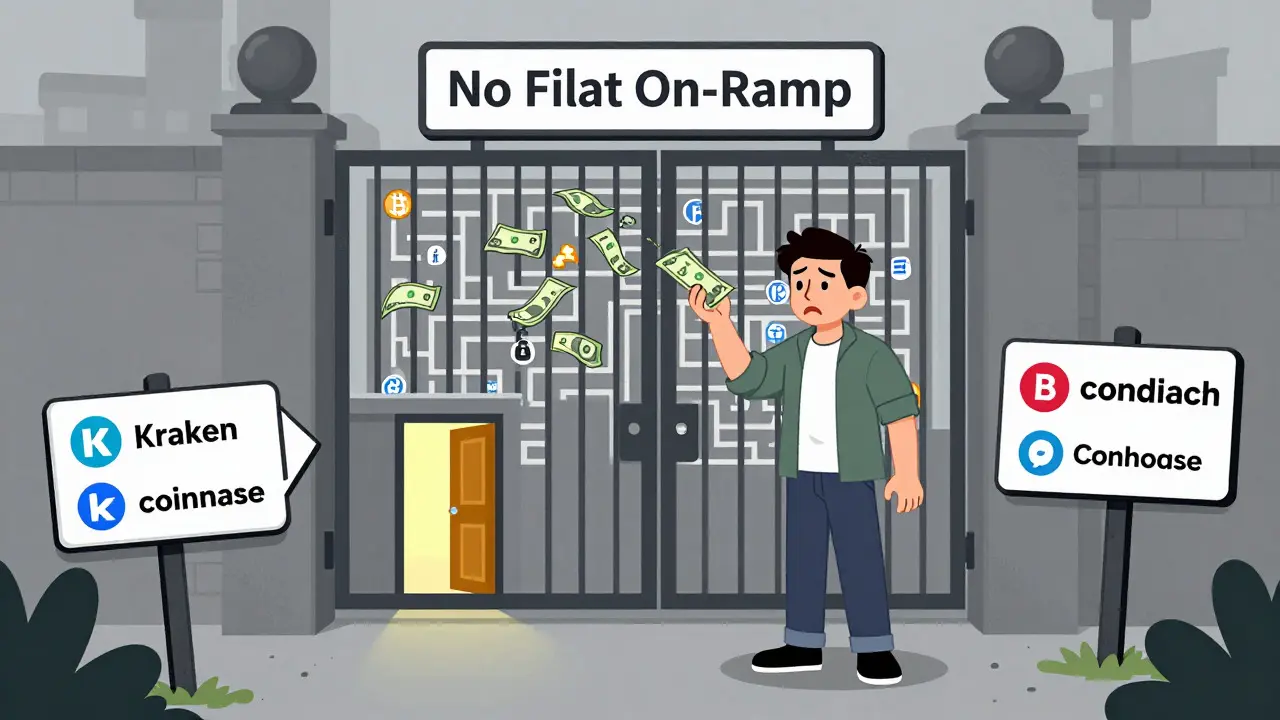
Here is where things got tricky for beginners. FCoin did not accept fiat currency deposits. You couldn’t walk in with a credit card or a bank transfer and buy Bitcoin directly. You had to already own cryptocurrency to trade on the platform.
This created a significant barrier to entry. If you were new to crypto, FCoin wasn’t your starting point. You had to use what experts call an "entry-level exchange"-like Coinbase or Kraken-to buy your first assets using dollars or euros. Then, you’d transfer those assets to FCoin to trade them at those rock-bottom fees.
For seasoned traders, this wasn’t a huge deal. They already had wallets full of digital assets. But for the broader market, it limited FCoin’s reach. It meant FCoin was purely a trading venue, not a comprehensive financial hub. In 2026, where convenience is king, this limitation makes FCoin less attractive than platforms that offer seamless fiat-to-crypto conversion.
User Satisfaction and Trust Issues
Low fees are great, but they don’t matter if you can’t trust the platform. This is where FCoin’s reputation took a hit. User satisfaction metrics painted a concerning picture. On platforms like Cryptogeek, FCoin received a dismal rating of 1 out of 5 stars based on user reviews. While the sample size was small, the sentiment was overwhelmingly negative.
Compare this to established players. BC Bitcoin Exchange, for instance, maintained a 4.8-star rating. Kraken, with its 11-year security record and no major hacks, consistently ranks high in user trust surveys. The contrast is stark. Why would users rate FCoin so poorly?
The issues weren’t just about interface design or customer support response times. They stemmed from deeper operational concerns. Transparency was a major sticking point. Withdrawal fees were rarely clearly advertised. Users reported confusion over how much they would actually pay to move their funds off the platform. In an industry where "not your keys, not your coins" is a mantra, hidden costs feel like a betrayal.
Furthermore, the lack of clear communication during periods of market volatility raised red flags. When crypto markets swing wildly, users need reliable access to their funds. Reports of delayed withdrawals or unclear status updates eroded confidence quickly. Trust, once broken, is hard to rebuild.
Security and Regulatory Compliance
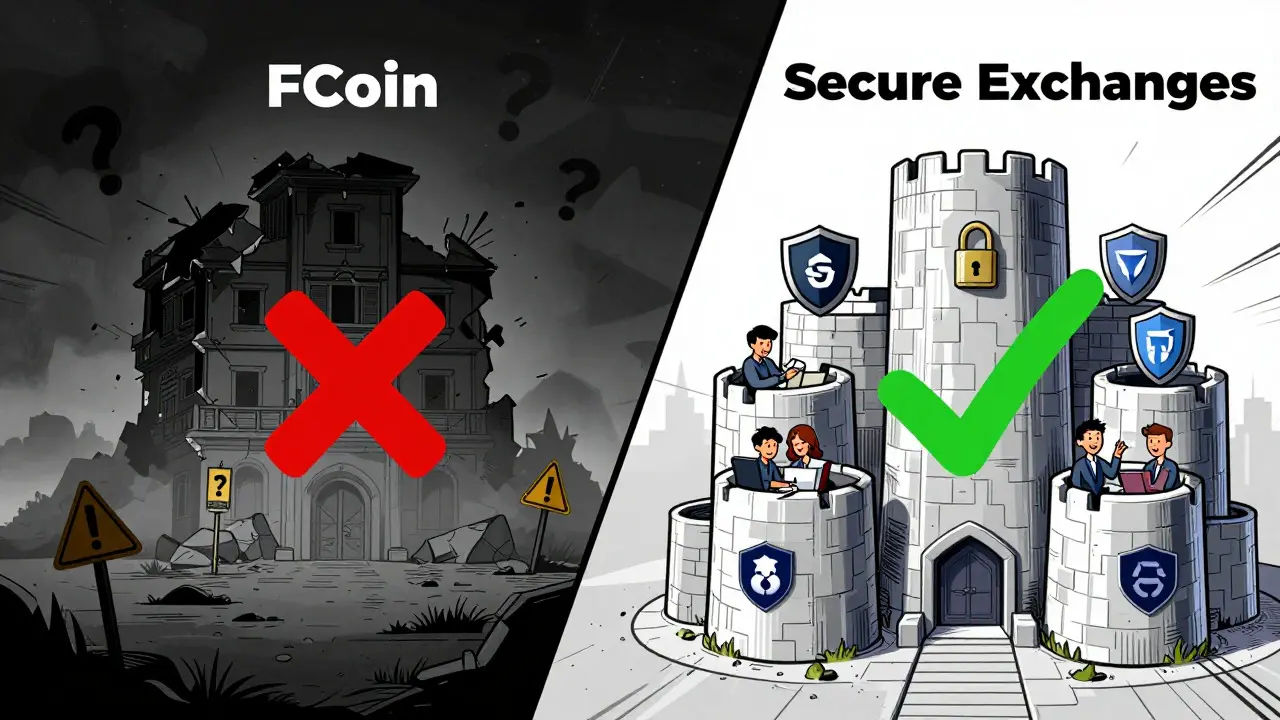
In 2026, security is non-negotiable. Cryptocurrency exchanges are massive honeypots for hackers. A single breach can wipe out millions in user funds. Established exchanges invest heavily in cold storage, multi-signature wallets, and insurance policies to protect against these threats.
FCoin’s approach to security was less transparent. While they claimed to have robust measures in place, there was no public audit trail or proof of reserves that matched the rigor of competitors like Kraken or Gemini. Kraken, for example, publishes regular proof-of-reserves reports, showing exactly how much user asset they hold versus their liabilities.
Regulatory compliance is another critical factor. As governments worldwide tighten rules around crypto trading, exchanges must adapt. FCoin faced scrutiny over its jurisdiction and licensing status. In the United States, for instance, regulators demand strict adherence to KYC (Know Your Customer) and AML (Anti-Money Laundering) laws. Platforms that fail to comply risk being shut down or blocked for US users.
By 2026, leading exchanges like Coinbase, Binance US, and Crypto.com have navigated this complex regulatory landscape successfully. They offer FDIC insurance on cash deposits (in some cases) and maintain open lines of communication with regulators. FCoin’s ambiguous stance left users vulnerable to sudden changes in legal standing.
Is FCoin Still Operational in 2026?
This is the million-dollar question. If you search for FCoin in current buyer’s guides or recommendation lists for 2026, you won’t find it. It has largely disappeared from mainstream discourse. This absence suggests one of three scenarios:
- Cessation of Operations: The platform may have shut down entirely due to unsustainable business models or regulatory pressure.
- Loss of Market Relevance: Competitors with better security, support, and fiat integration may have rendered FCoin obsolete.
- Operational Challenges: Ongoing issues with liquidity, withdrawals, or technical infrastructure may have driven users away.
Without official announcements or active marketing campaigns, assuming FCoin is still a viable option for serious trading is risky. The crypto space moves fast, and platforms that don’t evolve quickly get left behind-or worse, collapse under their own weight.
Better Alternatives for Low-Fee Trading in 2026
If you’re drawn to FCoin because of its low fees, you’re not alone. But you don’t need to compromise on security or convenience to save a few basis points. Here are some top alternatives that balance cost with reliability:
- Kraken: Known for its spotless security record and transparent fee structure. Maker fees start at 0.16%, which is higher than FCoin but still competitive. Plus, they offer 24/7 customer support and fiat deposits.
- Crypto.com: Often cited as the best overall exchange in 2026 due to its user-friendly interface, robust security, and low costs. They also offer additional perks like cashback on crypto purchases.
- Robinhood: For those who want simplicity, Robinhood offers commission-free crypto trading. While not ideal for advanced traders, it’s perfect for beginners who want to dip their toes in without worrying about complex fee schedules.
- Binance US: Offers a wide range of cryptocurrencies and competitive fees. With maker/taker fees around 0.10%, it’s a solid middle ground between cost and feature set.
These platforms provide what FCoin lacked: clear communication, regulatory compliance, and easy access to fiat currencies. They prove that you don’t have to choose between safety and affordability.
Key Takeaways for Traders
When evaluating any crypto exchange, look beyond the headline fees. Ask yourself these questions:
- Does the exchange accept fiat deposits? If not, how difficult is it to fund your account?
- Are withdrawal fees clearly stated? Hidden costs can negate any savings from low trading fees.
- What is the exchange’s security track record? Look for audits, proof of reserves, and history of breaches.
- Is there responsive customer support? Try contacting them before you deposit money.
- Is the exchange regulated in your jurisdiction? This protects you legally if something goes wrong.
FCoin served as an important lesson in the evolution of crypto exchanges. It showed us that innovation in fee structures is valuable, but only if backed by operational integrity. Today, the market demands more than just cheap trades-it demands peace of mind.
Is FCoin still available in 2026?
As of 2026, FCoin is not prominently featured in major exchange recommendations or active trading platforms. Its absence from current market discussions suggests it may have ceased operations or lost significant market relevance due to operational challenges and lack of regulatory compliance.
Why were FCoin's fees so low?
FCoin operated on a unique model where trading fees were minimal (0.029% for makers, 0.03% for takers) to attract volume. The platform aimed to generate revenue through other means, such as its native token ecosystem, rather than traditional trading commissions. However, this model proved difficult to sustain long-term without robust backing.
Can I deposit USD directly into FCoin?
No, FCoin did not accept fiat currency deposits like USD or EUR. Users had to acquire cryptocurrency on another platform first and then transfer it to FCoin for trading. This made it unsuitable for beginners who needed a direct fiat-to-crypto on-ramp.
What are the risks of using FCoin?
The primary risks included lack of transparency regarding withdrawal fees, poor user ratings indicating dissatisfaction, potential regulatory issues, and uncertain operational status. Additionally, the absence of fiat support added complexity for new users.
Which exchange is best for low fees in 2026?
For low fees combined with security and reliability, Kraken and Crypto.com are top choices in 2026. Kraken offers competitive maker/taker fees and excellent security, while Crypto.com provides a user-friendly experience with low costs and additional benefits like cashback.





SUBHAM CHOUDHURY
July 30, 2026 AT 04:44Hey everyone, just wanted to drop a quick note of encouragement for anyone feeling overwhelmed by the crypto space right now. It's totally normal to feel cautious about where you put your money, especially with all the noise out there.
Remember that taking your time to research is actually a superpower in this industry. You don't have to rush into any exchange just because it looks flashy or promises low fees. Your financial peace of mind is worth way more than saving a few basis points on a trade.
Keep asking questions and keep learning. The fact that you are reading reviews like this one shows you are already ahead of the curve. Stay positive and trust your gut instincts when something feels off. We are all in this together trying to navigate these complex markets. You've got this!
amy miranda
July 31, 2026 AT 09:43I am absolutely exhausted by the sheer incompetence of people who still think FCoin is a viable option in 2026. It is not just "risky," it is an insult to basic intelligence.
The article correctly points out the lack of fiat on-ramps, but let us be clear: this was never an oversight. It was a deliberate design flaw to trap users who were too lazy to understand how liquidity works. These platforms thrive on confusion. They prey on the desperate and the uninformed.
To suggest that anyone should even consider depositing funds there is morally bankrupt. Where is the accountability? Where is the shame? The industry has moved on to regulated entities like Kraken and Coinbase for a reason. Transparency is not a luxury; it is a necessity.
Yet here we are, still discussing this ghost ship as if it has any relevance. It is pathetic. If you are using FCoin, you are not a trader; you are a victim waiting to happen. Do better. Demand better. Stop enabling these predatory business models with your attention.
Pernelia Wahkan
July 31, 2026 AT 22:20Fascinating read. The juxtaposition of FCoin’s theoretical elegance versus its operational rot is quite the spectacle. One might argue that the tokenomics were a clever sleight of hand, designed to dazzle rather than deliver.
Consider the maker-taker structure. On paper, it is a symphony of efficiency. In practice, it was a siren song luring sailors onto jagged rocks. The absence of fiat support wasn't merely a hurdle; it was a moat protecting the castle from those who didn't speak the language of decentralized finance fluently.
But here is the crux: trust is the currency of the realm, and FCoin went bankrupt long before its servers did. The lack of proof-of-reserves isn't just a technicality; it's a void where confidence should reside. When you cannot see the gold in the vault, why would you lend your coins?
It reminds me of the tulip mania, but with blockchain instead of bulbs. People chase the narrative, ignoring the fundamentals. The alternatives mentioned, like Kraken, offer a sturdy anchor in a stormy sea. Sometimes, boring is beautiful. Safety is sexy. And transparency? That is the only true innovation left.
Subhash Kashyap Dm
August 1, 2026 AT 15:50fcoint is dead buried six feet under regulatory concrete they dont want you to know the truth about the alameda connection it was never really fcoin it was always a front for washing dirty money through offshore shell companies the whole fee model was a psyop to get retail holders to pump the token while insiders dumped everything look at the withdrawal delays that wasnt tech issues that was capital controls kicking in before the SEC showed up kraken is safe because they play nice with washington they give you your data back so they can tax you properly binance is the same game different players fcoint tried to go rogue and got crushed typical deep state maneuver if you think you can beat the system with zero fees you are naive the market makers control the order book they see every move you make before you make it wake up sheeple
Joy Kwant
August 2, 2026 AT 23:21You are all missing the point entirely. This isn't about fees or security protocols. It is about the soul of the platform.
FCoin promised community governance. It promised to return profits to the people. And what did they do? They vanished. They left their users holding the bag while the founders cashed out. It is a betrayal of the highest order.
I feel sick thinking about the families who lost their savings because they believed in a promise that was never kept. How can you sleep at night knowing you traded on a platform that treated human beings like numbers on a spreadsheet?
The article mentions Kraken and Coinbase as alternatives, but are they truly ethical? Or are they just slightly less corrupt? I need answers. I need justice. Until then, I am sitting on my hands, angry and disappointed in this entire broken system. It makes me want to cry. Why is it so hard to find honesty?