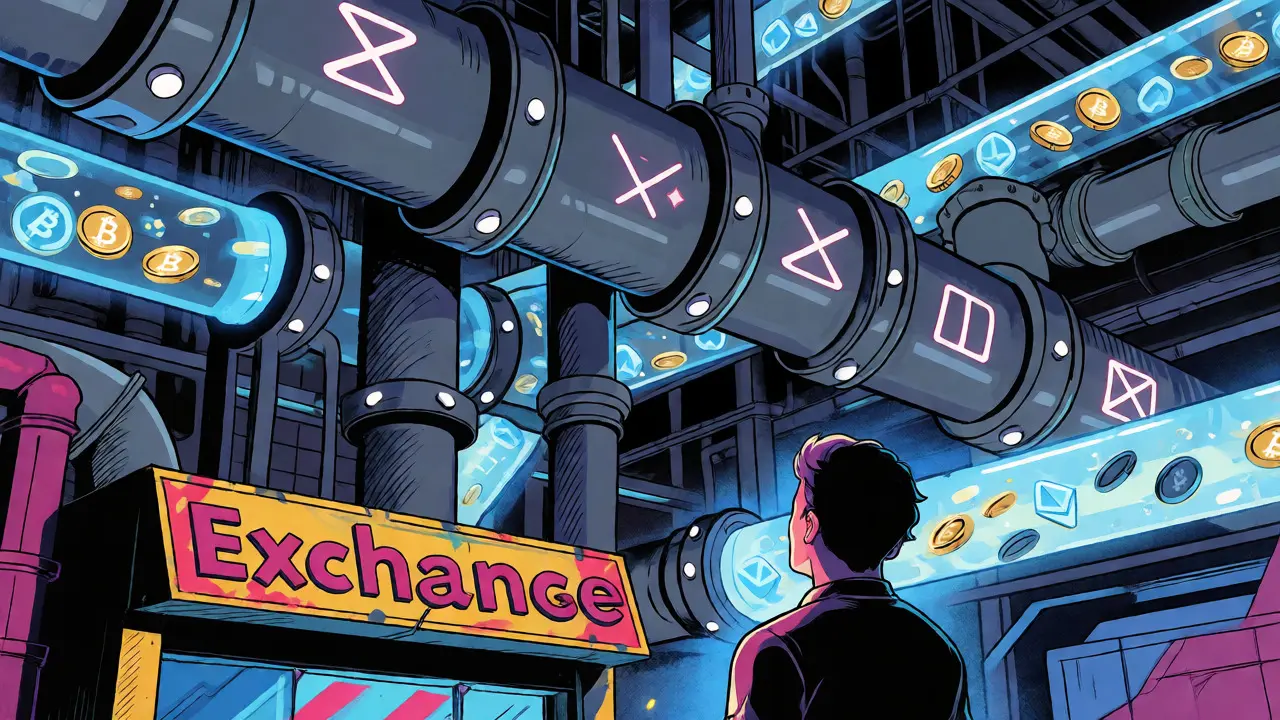
You’ve probably scrolled past hundreds of new coins this year. Some promise to revolutionize finance, others claim to fix supply chains. Then there’s Robora, a token that sounds like it belongs in a sci-fi movie but exists right here on the Ethereum blockchain. If you’re wondering what the fuss is about-or if you should care-you’re in the right place. We’re going to cut through the noise and look at what Robora actually is, why its data looks weird, and whether it has any real legs.
The Core Concept: Robotics Meets Ethereum
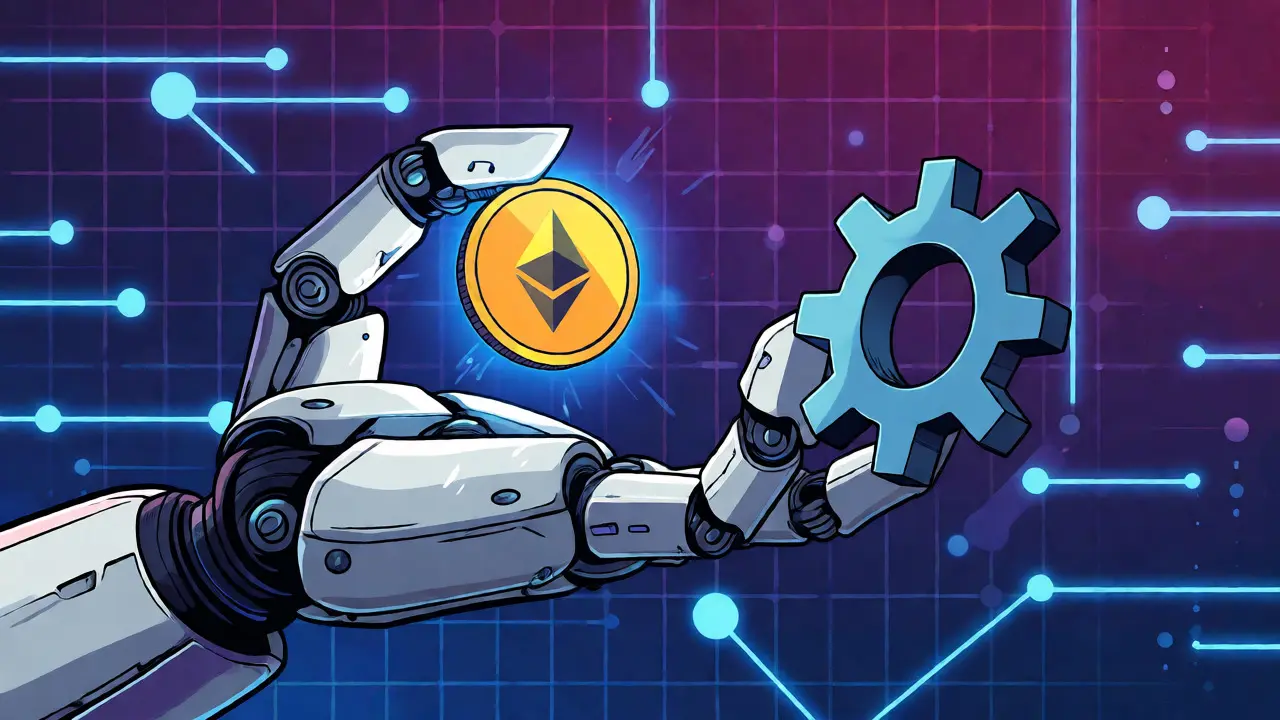
Robora (RBR) is an ERC-20 cryptocurrency token designed to operate within the intersection of robotics and decentralized technology. Think of it as a bridge between physical machines and digital ledgers. The project aims to leverage Ethereum’s smart contract capabilities to potentially automate or secure interactions for robotic systems and IoT devices. It doesn’t build the robots themselves; rather, it provides the financial and logical layer that could allow these machines to transact autonomously.
Why does this matter? Well, imagine a delivery drone that pays for its own charging station usage without a human logging into an app. Or a warehouse robot that releases payment only after verifying a package scan. That’s the kind of utility Robora targets. However, unlike established giants like Chainlink which connect real-world data to blockchains, Robora is still very much in the early, speculative stages of defining its specific role in the robotics ecosystem.
Tokenomics: A Fixed Supply with a Catch
Let’s look at the numbers, because this is where things get interesting-and slightly confusing. Robora operates on a fixed supply model. There will never be more than 100 million RBR tokens. This deflationary structure is common among meme coins and utility tokens alike because it prevents inflation from diluting your holdings over time. No new tokens are minted every day, so scarcity is built into the code.
But here’s the red flag: multiple major data aggregators report the circulating supply as zero. Yes, zero. While the total supply is set at 100 million, the amount currently available for trading seems non-existent according to platforms like Bitget and CoinMarketCap. This usually happens when tokens are locked in smart contracts for vesting periods, held by the team, or simply not yet distributed to the public. For an investor, a "zero" circulating supply label can mean two things: either the liquidity is extremely thin, making price movements volatile and easy to manipulate, or the data providers haven’t updated their metrics correctly. You need to treat this metric with extreme caution.
| Metric | Value / Status | Implication |
|---|---|---|
| Blockchain | Ethereum (ERC-20) | Benefits from high security but suffers from gas fees. |
| Total Supply | 100,000,000 RBR | Fixed cap; no future inflation. |
| Circulating Supply | Reported as 0 | Low liquidity risk; potential data reporting lag. |
| Market Rank | #3983 - #4136 | Micro-cap asset; high volatility expected. |
| Exchange Listings | Limited (Not on Binance/Coinbase) | Harder to buy/sell; higher slippage risk. |
Price Volatility and Data Discrepancies
If you try to check the price of RBR, you’ll notice something odd: different websites give you wildly different answers. On October 14, 2026, one tracker might show $0.088 while another shows $0.061. That’s a massive gap for a single asset. Why does this happen?
This discrepancy stems from low liquidity. When there aren’t many buyers and sellers, a single large trade can swing the price significantly on one exchange without affecting others. Platforms like CoinGecko, Phemex, and Crypto.com all report different prices because they pull data from different sources, some of which may have stale or isolated order books. This isn’t necessarily a scam, but it is a sign of an immature market. If you’re planning to trade, always check the volume. Low volume means you might not be able to exit your position at the price you see on the screen.
Furthermore, the market capitalization often reports as $0.00 despite having trading volume. This mathematical anomaly occurs when the circulating supply is recorded as zero. Since Market Cap = Price × Circulating Supply, anything multiplied by zero is zero. Don’t let this scare you off entirely, but do recognize that standard valuation metrics break down when the underlying data is incomplete.
Where Can You Buy Robora?
Here is the practical hurdle: you cannot buy Robora on the big names. Binance, Coinbase, and Crypto.com do not list RBR for direct trading. They might track the price, but you can’t swap your ETH for RBR directly on their interfaces. Instead, you have to venture into smaller centralized exchanges or decentralized exchanges (DEXs) like Uniswap.
Buying via DEX requires more technical know-how. You’ll need a Web3 wallet like MetaMask, some ETH for gas fees, and the correct contract address. The official contract address for Robora starts with 0x2C43... and ends in ae8D62. Always verify this address on the official website, robora.xyz, before sending any money. Scammers love to create fake tokens with similar names and addresses. Because RBR is a micro-cap coin, it’s a prime target for copycat scams.
Expert Predictions: Hope vs. Reality
So, where is the price heading? Analysts are split, mostly because there isn’t enough historical data to form a solid trendline. Platforms like TradingBeasts and WalletInvestor suggest a conservative outlook. Their models predict that RBR might hover between $0.05 and $0.06 in the near term. These algorithms rely heavily on technical indicators, which struggle with assets that have irregular trading patterns.
LiteFinance offers a similar range, projecting an average value around $0.057. Notice how these predictions are lower than some of the current spot prices reported on certain trackers? This suggests that experts believe the current high prices might be temporary spikes due to low liquidity rather than sustained demand. If the project fails to secure listings on major exchanges or announce concrete partnerships with robotics firms, the price could drift downward as hype fades.
Risks You Should Not Ignore
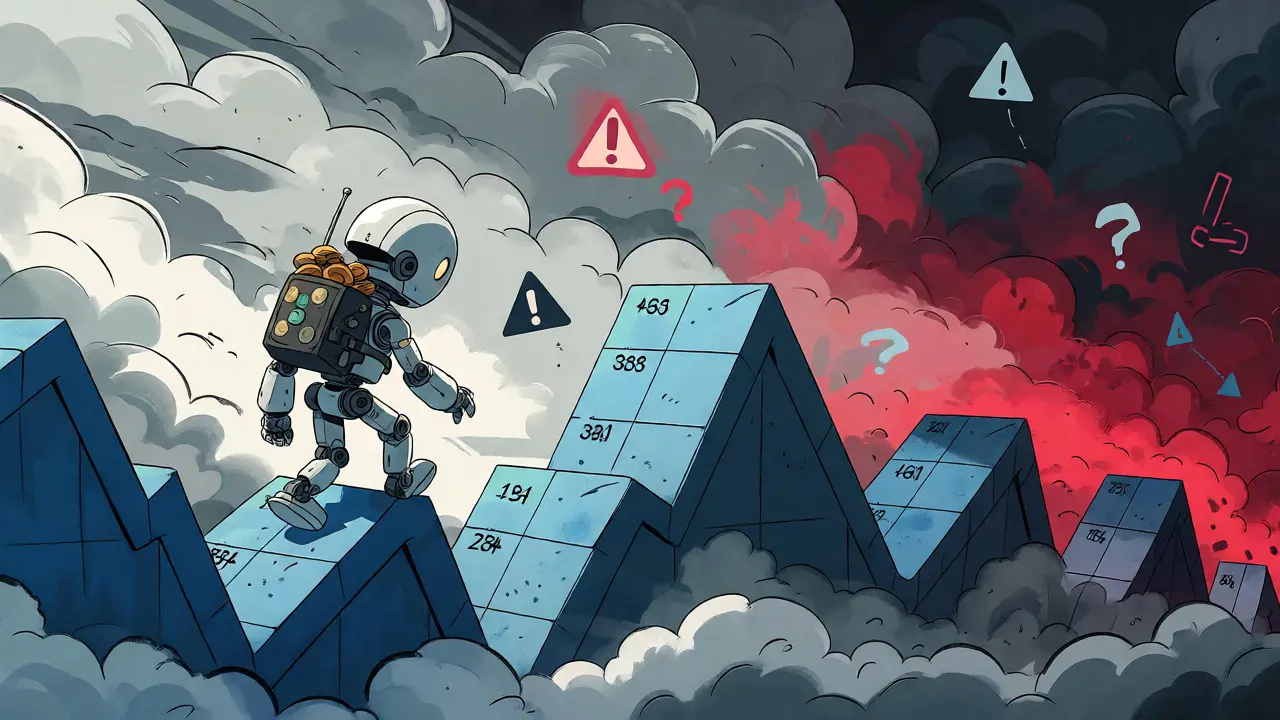
Investing in Robora is not for the faint of heart. Here are the specific dangers:
- Liquidity Risk: With limited exchange support, selling your tokens quickly during a crash could be difficult. You might face high slippage, meaning you sell for less than the displayed price.
- Data Opacity: The conflicting price and supply data make it hard to gauge true value. Is the project dead, or just poorly tracked? Without clear communication from the team, you’re flying blind.
- Utility Uncertainty: While the robotics angle is exciting, there are few documented case studies of RBR being used in actual robotic applications. Is it solving a problem, or just riding a narrative?
- Team Transparency: Information about the development team, whitepaper details, and roadmap milestones is scarce compared to top-tier projects. In crypto, anonymity or lack of detail often correlates with higher failure rates.
Final Verdict: Who Is This For?
Robora (RBR) is a classic micro-cap gamble. It appeals to investors who believe in the long-term convergence of AI, robotics, and blockchain. If you think autonomous machines will eventually manage their own finances, RBR is a cheap ticket to that lottery. However, for the average investor looking for stability or proven utility, Robora presents too many unknowns. The lack of major exchange listings and the confusing supply metrics are significant barriers.
If you decide to invest, keep the allocation small-money you can afford to lose completely. Watch for announcements regarding new exchange listings or verified partnerships with robotics companies. Those are the catalysts that could move RBR from a niche curiosity to a recognized player. Until then, proceed with skepticism and thorough due diligence.
Is Robora (RBR) a good investment?
It depends on your risk tolerance. As a micro-cap token with limited exchange listings and unclear utility implementation, it carries high risk. It may offer high rewards if the robotics sector integrates blockchain solutions, but it lacks the stability of established cryptocurrencies.
Why is the circulating supply of RBR reported as zero?
This likely indicates that tokens are locked in vesting contracts, held by the team, or not fully distributed to the public market. It can also result from data tracking errors on aggregators. Always check the official blockchain explorer for real-time distribution data.
Can I buy Robora on Binance?
No, Binance does not currently list Robora for trading. You typically need to purchase it on smaller centralized exchanges or decentralized exchanges like Uniswap using Ethereum.
What is the maximum supply of Robora?
The maximum supply is fixed at 100,000,000 RBR tokens. No new tokens will be created beyond this limit, preventing inflation.
What is the contract address for Robora?
The contract address begins with 0x2C43 and ends with ae8D62. Always verify the full address on the official website or a trusted blockchain explorer like Etherscan before making a transaction.