
Imagine handing over a stack of paper bills for your morning coffee. Now imagine scanning a QR code to pay the same amount, with the transaction settling on a global ledger in seconds. For decades, the first scenario was the only reality. Today, as we navigate through mid-2026, the second scenario is becoming increasingly common, signaling a massive structural shift in how humanity handles value.
This isn't just about buying Bitcoin or trading Ethereum on weekends. It represents a fundamental change from fiat currency, which relies on government authority and centralized control, to digital currency systems that leverage decentralized blockchain networks.
You might be wondering why this matters to you personally. The answer lies in stability, accessibility, and trust. As inflation rates fluctuate globally and banking hours remain stuck in the past, digital alternatives offer new ways to store wealth and move money across borders without the traditional friction. Let's break down exactly what is changing, why it is happening now, and what it means for your wallet.
The Core Difference: Who Holds the Keys?
To understand the shift, you first need to grasp who actually controls the money. With fiat currency, such as the US Dollar or the Euro, control is highly centralized. Governments issue these currencies, and central banks like the Federal Reserve manage their supply. They decide interest rates, print more money when they see fit, and enforce legal tender status. This system works because you trust the institution behind it.
Digital currency, particularly cryptocurrencies like Bitcoin, flips this model on its head. There is no single CEO, no headquarters, and no board of directors. Instead, control is distributed across a network of computers worldwide. This is known as decentralization. When you hold crypto, you are not trusting a bank; you are trusting mathematics and code. This distinction is crucial because it removes the risk of a single point of failure-like a bank run or a government freezing accounts.
Think of fiat like a library where the librarian decides who can check out books and when. Digital currency is more like a public park where anyone can use the facilities as long as they follow the posted rules. Both serve a purpose, but the power dynamics are completely different.
Trust Mechanisms: Institutions vs. Algorithms
In the traditional financial world, trust is institutional. You believe your money is safe because the bank is insured by the government and regulated by laws. If something goes wrong, there is often a customer service line or a regulatory body to complain to. However, this trust has limits. We have seen governments collapse, currencies hyperinflate, and banks fail despite insurance promises.
Digital currency introduces the concept of "cryptographic trust." Here, security comes from transparency and immutability. Every transaction is recorded on a blockchain, a public ledger that cannot be altered once written. You don't need to trust a person; you just need to verify the data. This is often called a "trustless" system, which sounds counterintuitive but simply means you don't have to trust another human being's honesty-you trust the protocol's integrity.
For example, if someone claims they sent you Bitcoin, you can look at the blockchain explorer and see the transaction yourself. No one can lie about it. In contrast, checking your bank balance requires you to accept the bank's interface as accurate. This shift from trusting people to trusting code is one of the most significant psychological changes driving adoption in 2026.
Value Derivation and Monetary Policy
Where does the value come from? Fiat money has no intrinsic value; a $10 bill is just paper. Its worth comes from scarcity managed by central banks and the legal requirement that it must be accepted for debts. Central banks can increase the money supply at will, a process often referred to as "printing money." While this helps stimulate economies during downturns, it also leads to inflation, slowly eroding the purchasing power of your savings over time.
Cryptocurrencies often have programmed monetary policies. Take Bitcoin, for instance. Its supply is capped at 21 million coins. This scarcity is baked into the code and cannot be changed by any individual or group. New coins are created through mining rewards that decrease over time, a process known as the halving. This predictable issuance contrasts sharply with the discretionary nature of fiat policy. Many investors view this fixed supply as a hedge against inflation, similar to how gold has been viewed for centuries, but with the added benefit of digital portability.
However, not all digital currencies work this way. Some stablecoins are pegged to fiat currencies to maintain stability, while others have inflationary models to reward network participants. Understanding the specific monetary policy of any digital asset is essential before investing or using it.
| Feature | Fiat Currency | Digital Currency (Crypto) |
|---|---|---|
| Control | Centralized (Governments/Central Banks) | Decentralized (Network Participants) |
| Trust Basis | Institutional Authority | Cryptographic Proof & Code |
| Supply Limit | Unlimited (Discretionary) | Often Fixed or Algorithmic |
| Transaction Speed | Hours to Days (Especially Cross-Border) | Minutes to Seconds (Depending on Network) |
| Privacy | Pseudonymous via Bank Accounts | Pseudonymous via Wallet Addresses |
| Reversibility | Reversible (Chargebacks available) | Irreversible (Final settlement) |

The Rise of CBDCs: Bridging the Gap
If pure decentralization seems too risky for mainstream use, consider the middle ground: Central Bank Digital Currencies (CBDCs). By 2026, many countries have moved beyond pilot programs to active deployment of CBDCs. These are digital versions of fiat money, issued directly by central banks but running on digital ledgers.
CBDCs aim to combine the stability and legal backing of fiat with the efficiency and programmability of digital currency. Unlike cryptocurrencies, CBDCs are centralized. The central bank retains full control, including the ability to freeze accounts or impose spending restrictions. For governments, this offers greater oversight of economic activity and reduced reliance on private intermediaries like commercial banks.
For consumers, CBDCs could mean instant payments 24/7, lower fees for transfers, and easier access to financial services. However, privacy advocates raise concerns about surveillance capabilities inherent in a fully transparent, state-controlled digital ledger. The debate around CBDCs highlights the tension between convenience and autonomy in the evolving monetary landscape.
Practical Implications for Everyday Users
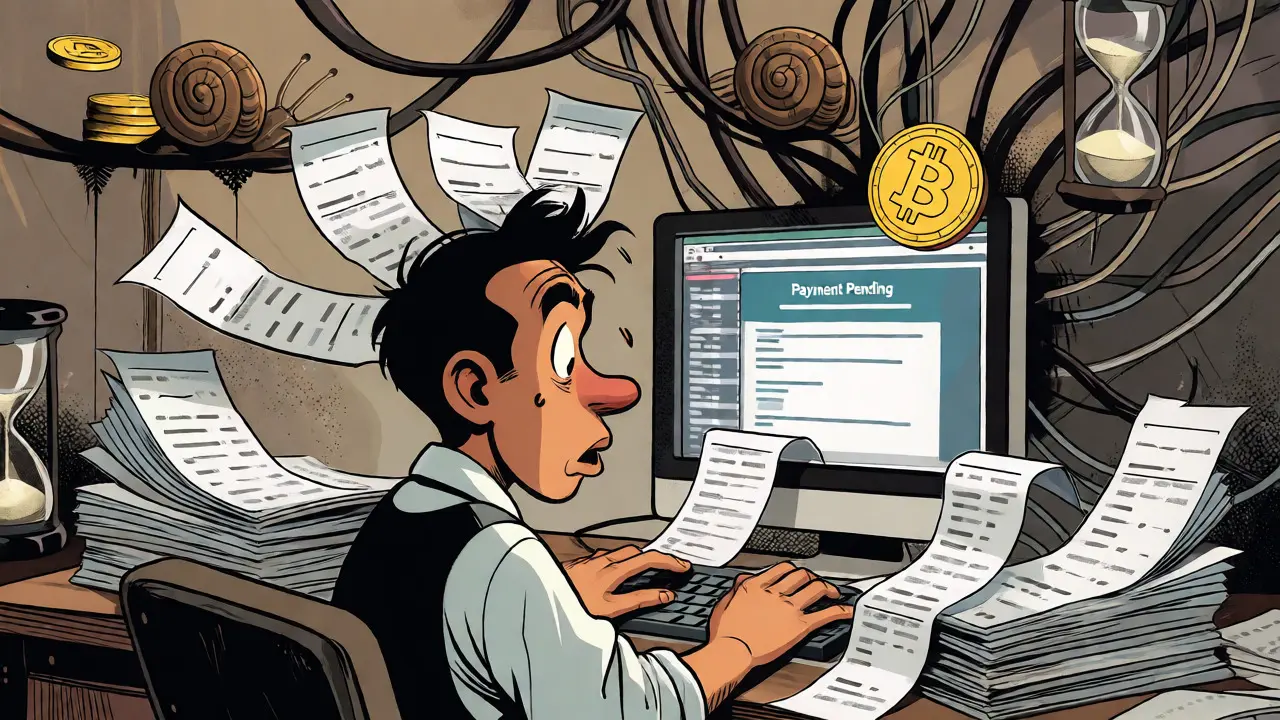
So, how does this affect you right now? First, consider cross-border transactions. Sending money internationally via traditional banks often involves high fees, poor exchange rates, and delays of several days. With digital currencies, you can send value anywhere in the world in minutes for a fraction of the cost. This is already transforming remittances for millions of families.
Second, think about financial inclusion. Billions of people lack access to traditional banking services. All you need to use digital currency is a smartphone and an internet connection. This opens up economic opportunities for unbanked populations, allowing them to save, invest, and transact without needing a physical branch nearby.
Third, volatility remains a challenge. While Bitcoin and other major cryptocurrencies have matured, prices can still swing dramatically. This makes them less suitable for everyday purchases like groceries unless you use stablecoins or instantly convert to fiat. Most users currently treat digital assets as part of a diversified investment portfolio rather than a primary medium of exchange.

Security and Responsibility
With great power comes great responsibility. In the fiat system, if your bank account is hacked, the bank typically reimburses you. In the crypto world, you are your own bank. If you lose your private keys or send funds to the wrong address, there is no customer support to call. Your funds are gone forever.
This requires a higher level of digital literacy. Users must learn to secure their wallets, recognize phishing scams, and verify transaction details carefully. Hardware wallets, which store keys offline, are recommended for significant holdings. As adoption grows, user-friendly interfaces and better educational resources are emerging, but vigilance remains essential.
Regulatory frameworks are also evolving. In 2026, many jurisdictions have clearer guidelines for crypto exchanges and tax reporting. This brings legitimacy and consumer protection but also reduces the anonymity that early adopters valued. Balancing innovation with regulation is an ongoing process that will shape the next decade of finance.
Future Outlook: Coexistence, Not Replacement
Will digital currency replace fiat entirely? Probably not anytime soon. Fiat remains deeply embedded in our economy, used for taxes, salaries, and daily commerce. Its stability and universal acceptance provide a foundation that digital assets are still building upon.
Instead, we are seeing a hybrid future. Fiat and digital currencies will coexist, serving different needs. Fiat will likely remain dominant for everyday small transactions and government functions. Digital currencies will thrive in areas requiring speed, borderless transfer, programmable features, and censorship resistance. CBDCs may bridge the two, offering digital convenience with fiat stability.
The shift is not about choosing one over the other but understanding the tools available and using them appropriately. Whether you are sending money to family abroad, protecting savings from inflation, or exploring decentralized finance applications, digital currency offers new possibilities. Staying informed and adapting to these changes will be key to navigating the financial landscape of the coming years.
Is digital currency safer than fiat currency?
Safety depends on context. Fiat is protected by government insurance and regulations, making it safe from theft if held in reputable banks. Digital currency is secured by cryptography, making it resistant to hacking and counterfeiting, but users bear full responsibility for securing their private keys. Loss of keys means permanent loss of funds.
What is the main difference between Bitcoin and a CBDC?
Bitcoin is decentralized, meaning no single entity controls it, and its supply is limited. A CBDC is centralized, issued and controlled by a national central bank, and acts as a digital version of existing fiat money. CBDCs offer stability but less privacy and autonomy compared to Bitcoin.
Can I use digital currency for everyday purchases?
Yes, but adoption varies. Major cryptocurrencies like Bitcoin are volatile, so merchants often convert them to fiat instantly. Stablecoins and some local digital currencies are gaining traction for daily transactions due to price stability. Payment processors are increasingly integrating crypto options.
How does blockchain ensure security without a central authority?
Blockchain uses consensus mechanisms like Proof-of-Work or Proof-of-Stake, where multiple computers validate transactions. Once recorded, data is cryptographically linked to previous blocks, making it nearly impossible to alter without controlling the majority of the network's computing power.
Will fiat currency disappear in the next decade?
Unlikely. Fiat remains essential for taxation, government operations, and mass commerce due to its stability and legal status. Digital currencies will complement rather than replace fiat, creating a multi-layered financial system where each serves specific use cases.



Lisa Chong
July 19, 2026 AT 15:46They are watching you through the screen right now. The digital ledger is not freedom it is a cage built by the elite to track every single breath of your economic life. You think you are safe with your private keys but the backdoors are already open for the deep state agents who control the servers. Fiat was bad because they could print more but crypto is worse because they can freeze your soul. Wake up sheeple before the grid goes down and your numbers vanish into the void. They want total surveillance and you are handing them the keys willingly. It is all part of the great reset agenda that has been brewing since 1993. Trust no one especially not the code.
Heather Austin
July 20, 2026 AT 06:05i mean look at the table in the post its pretty clear that speed is the main driver here not some grand conspiracy or moral imperative. most people just hate waiting three days for a wire transfer to clear when they could do it in seconds on chain. the cbdc section is interesting though because it shows governments trying to have their cake and eat it too by keeping control while adopting the tech. if you actually read the part about monetary policy you see why bitcoin appeals to people tired of inflation eating their savings. its not magic its just math and thats enough for me to pay attention.
Ran Tao
July 21, 2026 AT 16:56Oh please 🙄 this article is so incredibly basic it makes my eyes roll back in my head. Decentralization? Please. You still need electricity which is controlled by the same oligarchs who run the banks. And don't get me started on the 'trustless' nonsense 🤡. We trust the miners we trust the exchanges we trust the hardware manufacturers. It's a house of cards painted gold. I bet half the readers here don't even know how to seed a wallet properly. Pathetic. 😒
Ella Collinson
July 22, 2026 AT 06:05The semantic drift in the discourse surrounding CBDCs versus decentralized ledgers reveals a fundamental epistemological crisis in modern monetary theory. While the author posits a binary opposition between institutional fiat and algorithmic crypto, the reality is a complex symbiosis where regulatory arbitrage creates hybrid financial instruments. The notion that cryptographic proof supersedes institutional authority ignores the underlying geopolitical hegemony that enforces network consensus. Furthermore, the volatility cited as a barrier to adoption is merely a manifestation of market inefficiency that will be corrected through increased liquidity depth and institutional participation. We must analyze the second-order effects of programmable money on fiscal policy transmission mechanisms rather than getting lost in libertarian fantasy narratives.
Ray Arney
July 23, 2026 AT 20:52I guess you make some fair points about the complexity. It is definitely not just black and white.
Andrew Schneider
July 24, 2026 AT 22:17Y'all are sleeping on the real tea ☕️🔥. This whole fiat system is a zombie walking around pretending it's alive. Digital currency isn't just a tool it's a revolution wrapped in code. Sure there are scams and yes you can lose your keys but the idea that we should go back to trusting suits in towers is laughable. The future is bright and shiny and blockchain based ✨. Let the disruption happen.