Imagine filing a car accident claim and getting paid in minutes instead of weeks. Now imagine that same system making it nearly impossible to file the same claim twice or fake an injury. That is the promise of Blockchain a decentralized, immutable digital ledger technology originally created for Bitcoin in the insurance industry. For decades, insurers have lost billions to fraud because their data lives in isolated silos. You cannot easily check if someone else already paid for that surgery or that car repair. Blockchain changes this by creating a shared, tamper-proof record that everyone can trust but no single person can alter.
In 2026, this is no longer just theory. Major players like AXA, Allianz, and Ping An are using these systems live. But how does it actually work under the hood? And is it really worth the headache of implementation? Let's break down the mechanics, the real-world results, and the pitfalls you need to avoid.
The Core Problem: Siloed Data and Trust Gaps
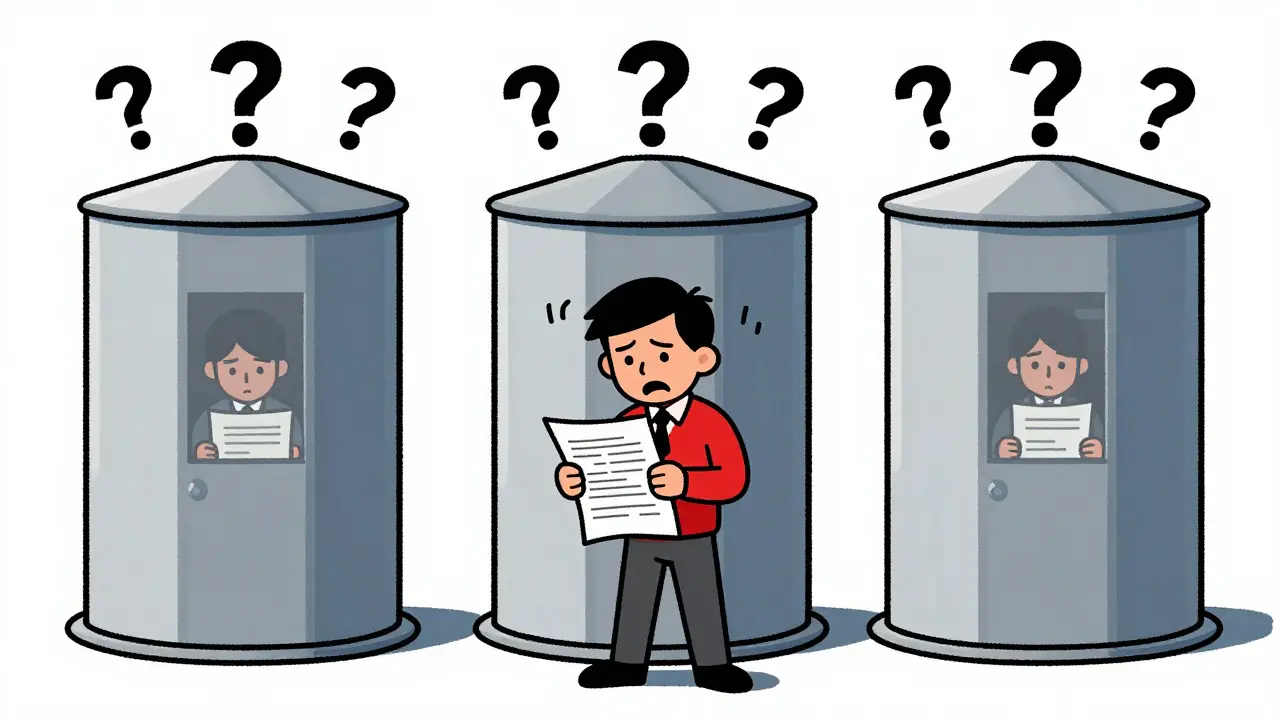
To understand why blockchain matters, you first have to see what’s broken. Traditional insurance relies on centralized databases. Company A doesn’t talk to Company B. If you get into a crash, your insurer checks their own records. They might not know you filed a similar claim with another provider last month. This information asymmetry is exactly where fraudsters thrive.
According to the Coalition Against Insurance Fraud, duplicate claims alone account for about 12% of undetected fraud cases. That means one in ten fraudulent submissions slips through simply because the data isn't connected. On top of that, manual verification takes forever. Adjusters spend days calling hospitals, police stations, and repair shops to verify facts. By the time they finish, the paper trail has grown long and expensive.
Decentralized Ledger Technology (DLT) a database shared across multiple nodes that ensures data consistency without a central administrator solves this by giving all authorized parties access to the same version of the truth. When a claim is submitted, it gets hashed-a cryptographic fingerprint-and added to the chain. Once there, it stays there. No one can go back and change the date of the accident or the amount of the damage without breaking the entire chain, which would be immediately obvious to everyone else on the network.
How It Works: Smart Contracts and Immutable Records
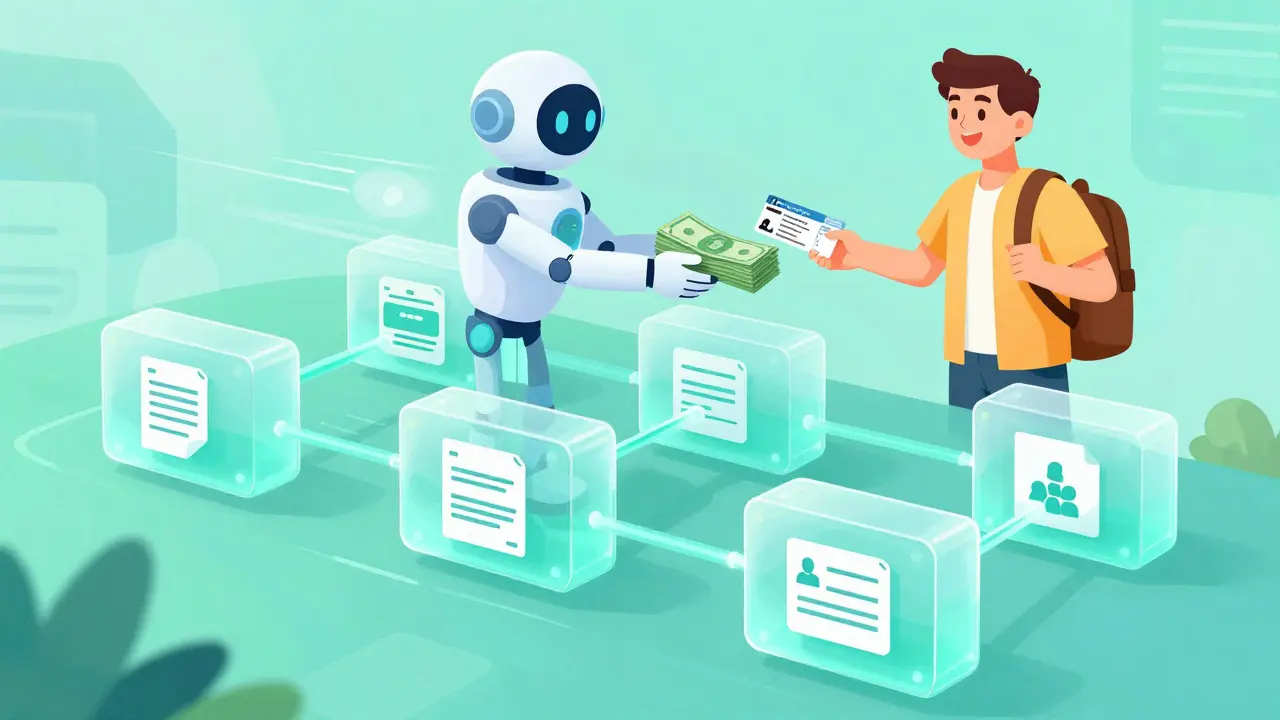
The magic happens through two main features: immutability and Smart Contracts self-executing contracts with the terms of the agreement directly written into code. Think of a smart contract as a vending machine. You put in the right input (proof of flight delay), and it automatically gives you the output (payout). No human needs to approve it.
Here is a simple example. You buy parametric travel insurance for a delayed flight. The smart contract connects to a trusted oracle-a data feed-that monitors flight schedules. If your flight is delayed by more than four hours, the oracle sends a signal. The smart contract verifies the signal against the policy conditions. If they match, it triggers the payment instantly. No forms, no phone calls, no waiting.
This automation drastically cuts down on operational costs. A 2023 McKinsey report noted that blockchain implementation can reduce operating costs by up to 30%. More importantly for fraud prevention, it removes the human element from routine payouts, reducing opportunities for internal collusion or error.
| Feature | Traditional System | Blockchain System |
|---|---|---|
| Data Structure | Siloed, Centralized | Shared, Decentralized |
| Verification Time | 30-45 Days | 2-3 Days (or instant for parametric) |
| Fraud Detection Accuracy | ~78% | ~85-92% (with AI integration) |
| Audit Trail | Easily Modified | Immutable, Cryptographically Secured |
| Cost Efficiency | High Administrative Overhead | 30% Reduction in Ops Costs |
Real-World Success Stories and Hard Lessons
It’s easy to get excited about the tech, but the real test is in the trenches. Some companies have seen massive wins. Take AXA’s 'Fizzy' product. It uses blockchain to automate flight delay insurance. The result? Verification times dropped from weeks to seconds. In China, Ping An Insurance ran a pilot that improved fraud detection accuracy by 37%. They used blockchain to create a unified view of patient data across hospitals, making it much harder to submit fake medical bills.
Then there’s the Blockchain Insurance Industry Initiative (B3i). This consortium of over 40 global insurers built a platform for marine cargo insurance. By allowing shippers, insurers, and banks to share real-time shipment data, they reduced fraudulent cargo claims by 42%. Imagine trying to steal goods when every port authority and insurer sees the exact same timestamped location data.
But it’s not all smooth sailing. A major US auto insurer tried a similar pilot in 2022 and scrapped it after 18 months. Why? Scalability. They couldn’t process more than 5% of their total claims volume on the blockchain. The network was too slow compared to their legacy databases. Another common complaint comes from IT teams. Onboarding new blockchain solutions often takes 11 months instead of the promised six due to complex integrations with old software. As one tech lead on Reddit put it, "Legacy systems hate distributed ledgers."
The Technical Reality: Speed, Scale, and Privacy
If you’re considering this for your business, you need to know the limits. Current blockchain networks handle about 1,000 to 1,500 transactions per second (TPS). Compare that to traditional databases like Oracle or SQL Server, which can handle 50,000+ TPS. For high-volume lines like auto or health insurance, this bottleneck is real.
Privacy is another huge hurdle. Insurance deals with sensitive personal health information (PHI) and financial data. Under regulations like GDPR, individuals have the "right to be forgotten." But blockchain is designed to never forget. How do you reconcile that?
The answer lies in newer techniques like Zero-Knowledge Proofs (ZKPs) cryptographic methods that allow one party to prove a statement is true without revealing the underlying data. ZKPs let you prove you meet the criteria for a claim (e.g., "I am over 21") without revealing your actual birthdate. The Monetary Authority of Singapore piloted this in 2024 with promising results. However, implementing ZKPs adds significant complexity and cost.
Also, don’t fall for the "garbage in, garbage out" trap. Blockchain secures the data once it’s on the chain, but it doesn’t verify if the initial data was true. If a doctor enters a fake diagnosis, the blockchain will permanently record that fake diagnosis. You still need strong identity verification processes at the entry point.
Implementation Strategy: Where to Start
Don’t try to boil the ocean. Most successful implementations start small. Here is a practical roadmap:
- Start with Parametric Insurance: These products rely on objective external data (weather, flight times) rather than subjective assessments. They are the easiest to automate with smart contracts.
- Join a Consortium: Building a blockchain network alone is expensive and pointless if no one else joins. Groups like B3i allow smaller insurers to share development costs and gain network effects.
- Choose the Right Platform: For enterprise use, permissioned blockchains like Hyperledger Fabric an open-source enterprise-grade permissioned distributed ledger framework are preferred over public chains like Ethereum. They offer better privacy controls and higher throughput.
- Invest in Training: Your staff needs new skills. Expect a 3-4 month training period for adjusters and IT teams to get comfortable with the new interface and logic.
Gartner estimates deployment timelines at 8-14 months for enterprise-scale solutions. Budget accordingly. You’ll also need specialized developers. In the US, blockchain engineers earn between $130,000 and $180,000 annually. It’s a premium skill set for a reason.
The Future: Hybrid Systems and Regulatory Shifts
By 2027, the market for blockchain in insurance is projected to hit $1.84 billion. But the biggest shift won’t be blockchain alone-it will be blockchain combined with Artificial Intelligence. AI is great at finding patterns in unstructured data, while blockchain is great at securing structured data. Together, they form a powerful duo. AI flags suspicious claims; blockchain provides the immutable audit trail to investigate them.
Regulators are catching up too. The National Association of Insurance Commissioners (NAIC) established a Blockchain Working Group in 2022, publishing model regulations in late 2023. This clarity helps insurers move from pilots to production. However, compliance remains tricky with 47 different regulatory approaches across US states and EU countries. Harmonization is still years away.
So, is blockchain the silver bullet for insurance fraud? No. It’s a tool. Like any tool, its value depends on how well you use it. If you’re still relying on fax machines and email chains for claims verification, blockchain will feel like a revolution. If you’re already digitized, it’s an evolution that demands careful planning, realistic expectations, and a willingness to collaborate with competitors for the greater good of the ecosystem.
Can blockchain completely eliminate insurance fraud?
No, it cannot completely eliminate fraud. Blockchain prevents specific types of fraud like duplicate claims and tampered records. However, it cannot stop fraud at the source if false data is entered initially (the "garbage in, garbage out" problem). It works best when combined with AI for pattern recognition and strict identity verification protocols.
What is the difference between public and private blockchain in insurance?
Public blockchains like Bitcoin or Ethereum are open to anyone and prioritize decentralization but lack privacy. Private (or permissioned) blockchains like Hyperledger Fabric restrict access to verified participants. Insurance companies prefer permissioned blockchains because they need to keep customer data confidential while sharing only necessary verification data with partners.
How long does it take to implement a blockchain solution?
For enterprise-scale solutions, expect 8 to 14 months. This includes integration with legacy systems, staff training, and regulatory compliance checks. Smaller pilots focusing on narrow use cases like parametric insurance can sometimes be deployed in 3 to 6 months.
Is blockchain compliant with GDPR?
It is challenging because blockchain is immutable, while GDPR grants the "right to be forgotten." Solutions include storing personal data off-chain and keeping only hashes on-chain, or using zero-knowledge proofs to verify data without storing it directly. Legal frameworks are still evolving to address this conflict.
Which insurance sectors benefit most from blockchain?
Healthcare insurance leads adoption (38% of implementations) due to high fraud rates and complex data sharing needs. Property/Casualty (29%) follows, particularly for auto and marine cargo where third-party verification is frequent. Life insurance (22%) benefits from faster death benefit payouts via verified digital certificates.