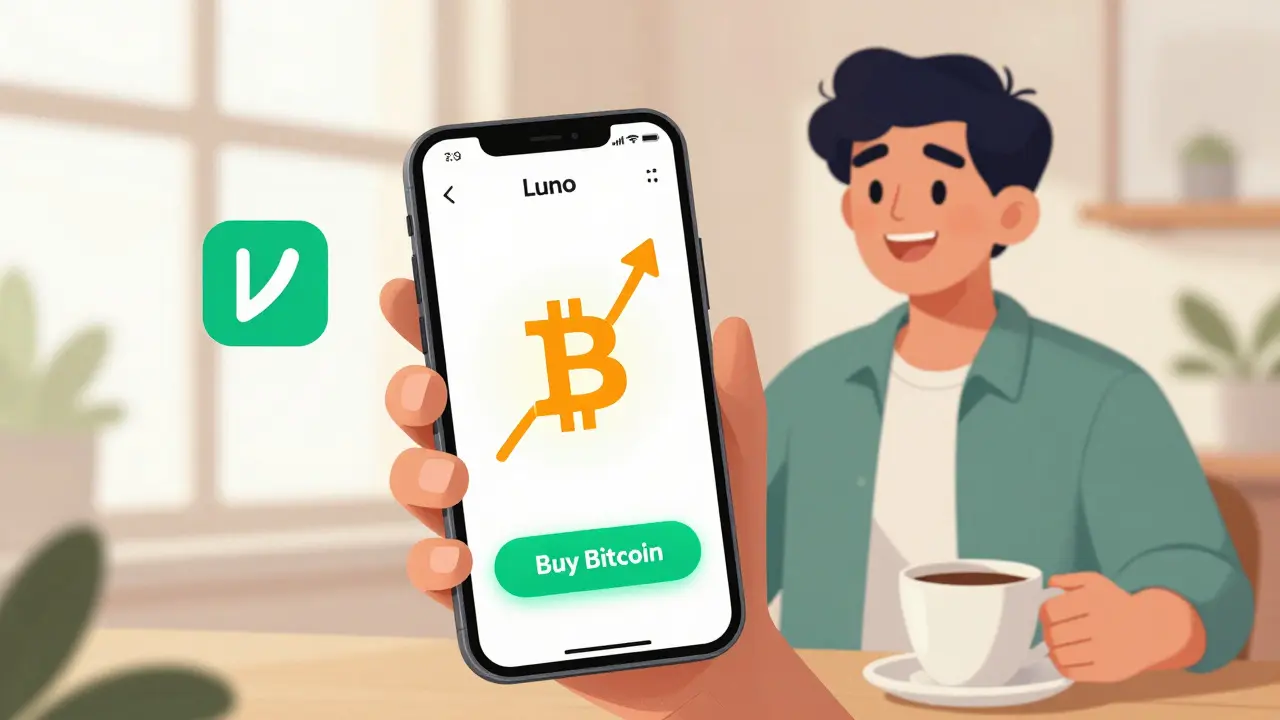
When you're just starting out with cryptocurrency and live in South Africa, Nigeria, Malaysia, or Indonesia, you don't need a complex trading platform. You need something that works with your bank, doesn't scare you with jargon, and actually lets you buy Bitcoin without a PhD in finance. That's where Luno comes in. It's not the biggest exchange in the world, and it won't let you trade futures or stake Solana. But if you're new to crypto and want to buy your first Bitcoin without getting lost in a maze of options, Luno might be the easiest and safest place to start.
What Is Luno, Really?
Luno isn't just another crypto exchange. Founded in 2013, it was built from the ground up for people in places where banks don't trust crypto and most people have never heard of a wallet. Its main job? Make buying Bitcoin feel as simple as sending a mobile money payment. That’s why it's the #1 crypto platform in South Africa, handling 87% of all crypto trading volume there. In Nigeria, before the central bank ban, it was the go-to for over 2 million users. Today, it still serves more than 12 million people across 10 regulated countries.
Unlike Binance or Coinbase, Luno doesn't try to be everything to everyone. It doesn't offer hundreds of coins, margin trading, or NFT marketplaces. Instead, it focuses on five core cryptocurrencies: Bitcoin (BTC), Ethereum (ETH), Litecoin (LTC), Ripple (XRP), and Bitcoin Cash (BCH). That’s it. No Dogecoin. No Solana. No Shiba Inu. If you're looking for meme coins, look elsewhere. But if you want to buy real, established crypto with your local bank account, Luno makes it possible.
How Easy Is It to Get Started?
Signing up takes less than 5 minutes. You just need an email, phone number, and a government ID. No complicated forms. No video calls. In South Africa, if you're using a local bank like Standard Bank, you can deposit money instantly. Withdrawals to the same bank? Sometimes as fast as 15 minutes. That’s unheard of on most global exchanges.
The mobile app-available on iOS and Android-is clean, bright, and simple. There’s a big “Buy Bitcoin” button. Tap it. Pick how much you want to spend. Confirm. Done. No need to understand order books, bid-ask spreads, or limit orders. You’re not trading. You’re buying. Like buying coffee.
According to Luno’s own data, 82% of new users complete their first purchase within 24 hours. That’s because the platform removes every barrier. No confusing charts. No trading terminals. Just a straightforward path from your bank account to your Bitcoin wallet.
Fees: What You Actually Pay
Fees are where Luno gets the most criticism-and where it also stands out.
If you use the instant buy/sell feature (which most beginners do), you’ll pay between 1.5% and 3.5%, depending on your country. In South Africa, it’s typically 1.5%. In Nigeria, it’s closer to 3.5% due to regulatory complexity. That’s higher than Coinbase’s 1.49%-3.99%, but lower than local competitors like Yellow Card, which charges up to 5%.
For traders who want to place their own orders, Luno uses a maker-taker model: 0.1% for makers (limit orders that add liquidity), 0.2% for takers (market orders that remove liquidity). That’s standard for most exchanges. But here’s the catch: most Luno users don’t trade. They buy and hold. So the real cost is the instant buy fee.
Some users complain about high transfer fees. One Reddit user said Luno charged 10% to move Bitcoin out of the wallet. That’s misleading. Luno doesn’t charge 10% to send Bitcoin. The 10% figure likely comes from users trying to convert crypto to fiat and failing-because Nigeria’s bank ban still blocks direct withdrawals. That’s not a Luno fee. That’s a regulatory problem.
Security: Why People Trust It
Luno’s biggest selling point isn’t its interface. It’s security.
95% of customer funds are stored offline in “deep freeze” cold wallets. These aren’t just locked boxes. They require multiple signatures from Luno and its partner, BitGo, to access. Even if Luno’s servers were hacked, most money would stay safe.
All accounts require two-factor authentication (2FA). You can use SMS or an authenticator app like Google Authenticator. The mobile app also supports fingerprint and face unlock. That’s not optional. It’s mandatory.
And unlike some exchanges that lost millions in hacks, Luno has never been breached. That’s not luck. It’s design. They treat crypto like bank deposits. If you lose your phone, they can freeze your account. If you forget your password, they can help you recover it. That’s why 78% of first-time crypto users in Sub-Saharan Africa pick Luno as their first exchange, according to the University of Cape Town.
What’s Missing? The Real Limits
Luno isn’t perfect. And if you’ve been using crypto for a while, you’ll feel its gaps.
- No advanced orders. No stop-loss. No trailing stops. You can’t set up automated buys or sells based on price triggers.
- No staking. You can’t earn interest on Ethereum or Cardano.
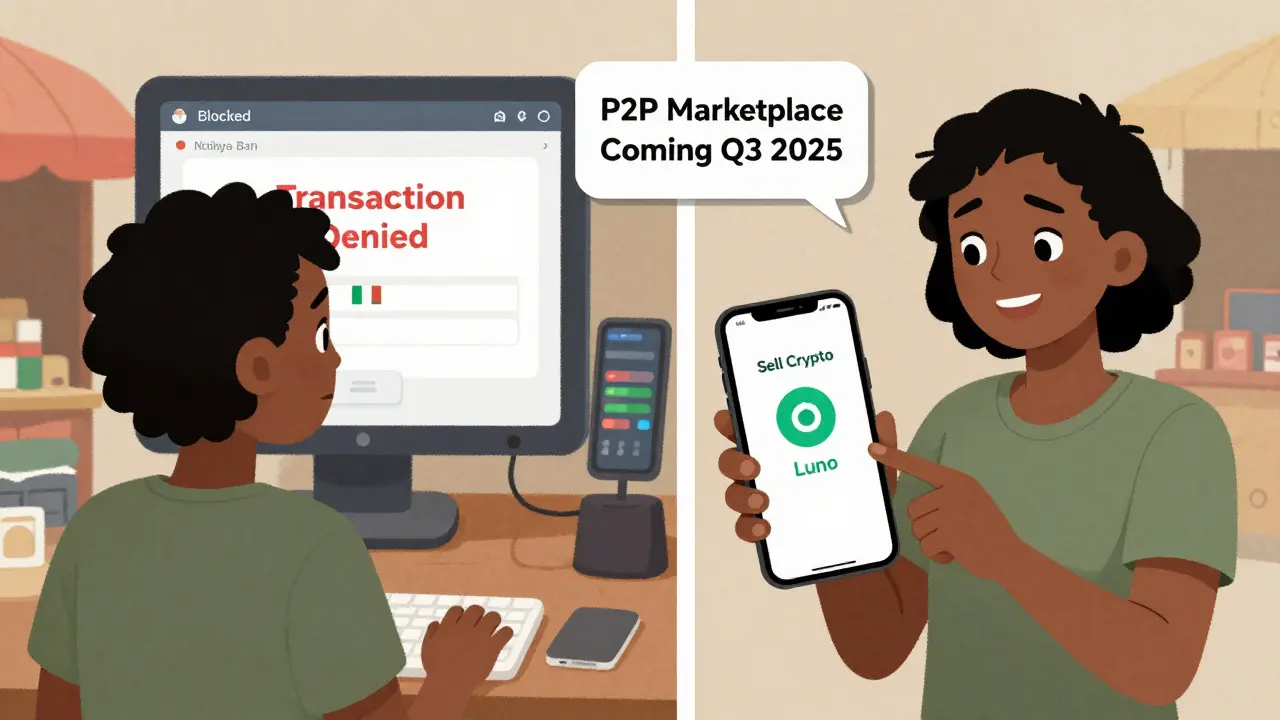
- No peer-to-peer trading. In Nigeria, after the 2022 bank ban, users couldn’t sell crypto to other Luno users. They had to rely on risky third-party platforms. Luno says a P2P marketplace is coming in Q3 2025-but it’s been delayed for over two years.
- No mobile wallet export. You can’t sweep your Luno wallet into a non-custodial wallet like Exodus or Trust Wallet. You’re stuck with Luno’s custody.
- Manual sales only. If you want to sell all your Bitcoin, you have to type the exact amount. There’s no “Sell All” button. That’s a design flaw that frustrates 37% of users.
And the coin selection? Stuck in 2020. While other exchanges added over 15 new coins in 2024, Luno only added Bitcoin Cash. No Dogecoin. No Solana. No Polygon. No Polkadot. If you want to invest in anything beyond the top five, you’ll need another exchange.
Who Is Luno Really For?
Luno isn’t for traders. It’s not for investors chasing DeFi yields. It’s not for people who want to trade 24/7.
Luno is for:
- First-time crypto buyers in Africa or Southeast Asia
- People who want to buy Bitcoin with their local bank account
- Those who value security over features
- Anyone who doesn’t want to figure out how to use MetaMask or a hardware wallet
If you’re in South Africa, Luno is the easiest way to start. If you’re in Nigeria, it’s still the most trusted-even with the withdrawal limits. In Malaysia and Indonesia, it’s the only exchange with full local licensing.
But if you’re in the U.S., Europe, or Australia? There are better options. Coinbase, Kraken, or Binance.US offer more coins, lower fees, and advanced tools. Luno doesn’t even operate in those markets.
What’s New in 2025?
Luno made a few quiet upgrades last year:
- Expanded coin list from 5 to 10 cryptocurrencies (added USDC, ADA, DOT, and others)
- Launched recurring purchases-you can now set up weekly buys as small as $1
- Added U.S. stock trading in select markets (yes, you can buy Apple or Tesla shares through Luno in South Africa)
- Improved customer support response time to under 18 minutes on chat
But the big promise? A peer-to-peer marketplace for Nigeria. If they deliver it, they’ll solve the biggest problem holding back users there. If they don’t, they risk losing their lead to local players like Yellow Card and Paxful.
Final Verdict: Should You Use Luno?
If you’re a beginner in an emerging market, Luno is one of the best places to start. It’s secure, simple, and backed by real regulation. You won’t find a smoother on-ramp anywhere else in Africa or Southeast Asia.
If you’re already experienced, or you want to trade altcoins, stake, or use advanced tools-skip Luno. Use Binance, Kraken, or Coinbase instead.
Luno isn’t trying to compete with the giants. It’s building something else: a bridge for people who’ve been left out of the crypto world. And for millions, that bridge is the only one that works.
Is Luno safe to use?
Yes, Luno is one of the safest crypto platforms for beginners. It stores 95% of customer funds in offline cold wallets with multi-signature security. It requires mandatory two-factor authentication and has never been hacked. It’s also fully regulated in 10 countries, including South Africa and Malaysia, meaning it follows strict financial rules.
Can I withdraw Bitcoin from Luno to another wallet?
Yes, you can send Bitcoin, Ethereum, and other supported coins from your Luno wallet to any external wallet address. But you can’t export your private keys or move your entire wallet to a non-custodial app. Luno holds your keys-you’re not in full control. That’s a trade-off for ease of use.
Does Luno support Dogecoin or Solana?
As of 2025, Luno does not support Dogecoin, Solana, or most other altcoins. It only offers Bitcoin, Ethereum, Litecoin, Ripple, Bitcoin Cash, and five others added in early 2025. If you want to trade meme coins or newer projects, you’ll need a different exchange.
Why are Luno’s fees so high?
Luno’s instant buy/sell fees (1.5%-3.5%) are higher than global exchanges because they include the cost of integrating with local banks, handling regulatory compliance, and supporting users with little tech experience. In Nigeria and other restricted markets, these costs are even higher. But compared to local alternatives like Yellow Card, Luno’s fees are often lower.
Is Luno available in the United States?
No, Luno is not available in the United States. It operates only in 10 regulated countries, mostly in Africa and Southeast Asia. U.S. users should use Coinbase, Kraken, or Binance.US instead.
Can I use Luno to sell crypto and get cash in my bank account?
Yes, but only in countries where Luno has direct bank integration. In South Africa, you can sell crypto and get cash in your bank account in as little as 15 minutes. In Nigeria, after the 2022 ban, direct bank withdrawals are blocked. Users there can only sell to other Luno users or wait for the upcoming P2P marketplace.
Does Luno offer staking or interest on crypto?
No, Luno does not currently offer staking, yield farming, or interest-bearing accounts. If you want to earn passive income on your crypto, you’ll need to use another platform like Binance or Coinbase.
How long does Luno verification take?
Verification usually takes 12 to 48 hours, depending on your country and how complete your documents are. In South Africa, it’s often faster. In Nigeria, delays are more common due to document verification challenges. Once verified, you unlock higher deposit and withdrawal limits.



Ryan Burk
February 28, 2026 AT 16:43Danny Kim
February 28, 2026 AT 21:11Cathy Sunshine
March 2, 2026 AT 18:16Jessica Carvajal montiel
March 3, 2026 AT 02:35Michelle Xu
March 4, 2026 AT 09:26Neeti Sharma
March 4, 2026 AT 11:13Elizabeth Smith
March 4, 2026 AT 16:24Cameron Pearce Macfarlane
March 4, 2026 AT 19:32