Imagine finding a digital currency that launched in 2016, promised security and value, but now sits on major exchange listings with zero trading volume. That is the current reality of SaluS, also known by its ticker symbol SLS. If you stumbled upon this name while scrolling through obscure market lists or heard it from an old forum thread, you likely have one question: Is this still a viable investment?
The short answer is no. SaluS is widely considered a "dead" or dormant cryptocurrency. While it technically exists on the blockchain, it lacks the liquidity, active development, and community engagement required for any practical use or financial gain. In this guide, we break down what SaluS actually is, why its data looks so confusing across different platforms, and what you should know before even thinking about touching it.
What Exactly is SaluS (SLS)?
To understand where SaluS stands today, we first need to look at its origins. SaluS was launched in January 2016, placing it in the second generation of cryptocurrencies following Bitcoin's early dominance. It positioned itself as a decentralized digital currency focused on providing a safe medium for transactions and creating user value.
Technically, SaluS operates on a hybrid consensus mechanism combining Proof of Work (PoW) and Proof of Stake (PoS). This means it originally relied on miners solving complex mathematical problems to secure the network, similar to Bitcoin, but later incorporated staking elements where holders could validate transactions. The underlying cryptographic algorithm used is Scrypt, which was popular among altcoins like Litecoin for being more memory-intensive than SHA-256.
However, there is a critical detail here: SaluS is not currently mineable. The project had no pre-mine, meaning all coins were distributed through initial mining efforts that have since ceased. With no new blocks being generated and no active mining pool, the supply dynamics are frozen. This lack of ongoing issuance usually signals that the network has stopped functioning effectively or that the developers have abandoned maintenance.
The Confusing Data: Market Cap and Supply Discrepancies
If you search for SaluS price data right now, you will encounter a chaotic landscape of conflicting information. This confusion is a hallmark of illiquid, low-cap assets. Different tracking platforms report wildly different figures, which can mislead inexperienced investors.
| Platform | Reported Price (USD) | Market Cap | Circulating Supply | 24h Volume |
|---|---|---|---|---|
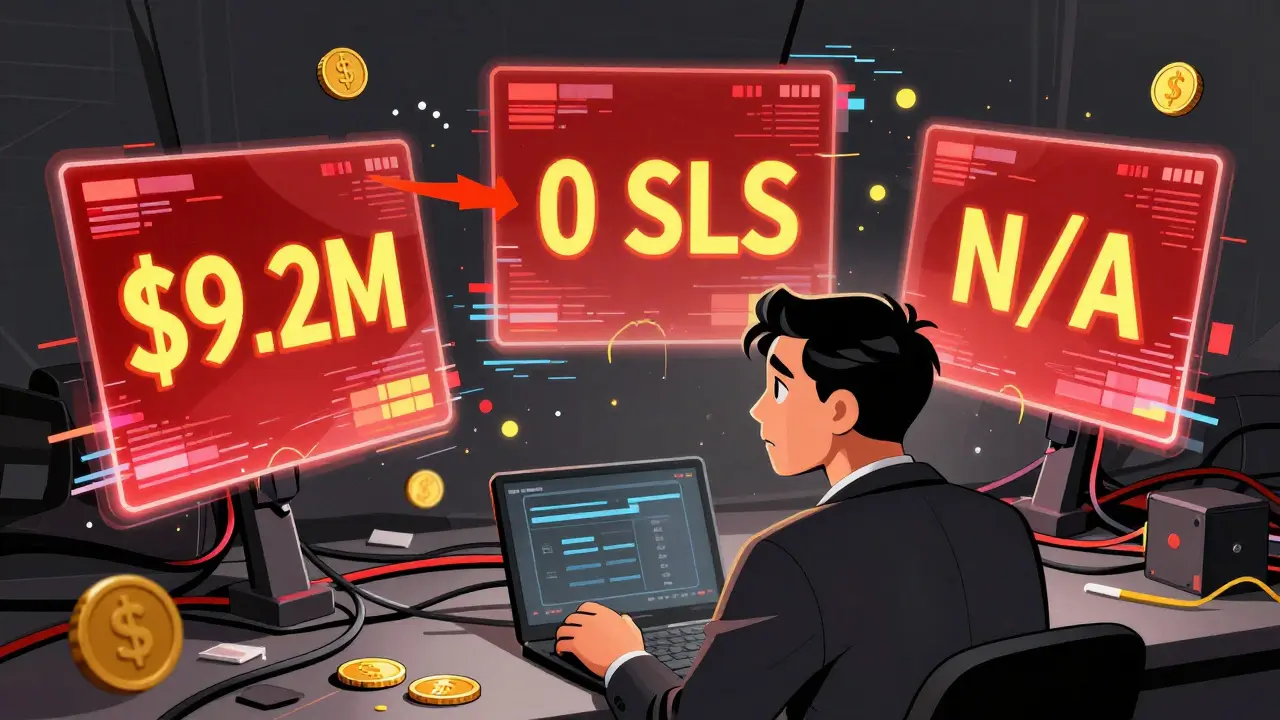
| CoinMarketCap | $8.63 | $9.22 Million | 0 SLS | $0.00 |
| Coinbase | $9.11 | $0.00 | 0 SLS | N/A |
| Crypto.com | $9.11 | N/A | N/A | N/A |
| WikiBit | N/A | ~$5 Million | ~1 Million | N/A |
Notice the contradiction. CoinMarketCap reports a circulating supply of zero, yet calculates a $9 million market cap based on a price of $8.63. How is that math possible? It isn't. These discrepancies arise because automated scrapers pick up stale data from defunct exchanges or peer-to-peer trades that haven't happened in years. The reported price of roughly $9 is likely a remnant of last traded values from small, inactive markets, not a reflection of real-time demand.
The total maximum supply of SaluS is capped at 1,012,265.27 coins. Because the coin is not mineable and there is no evidence of active burning or minting, the entire supply is theoretically in circulation, but the "zero" reported by some trackers suggests their data feeds are broken or disconnected from the actual blockchain nodes.
Price History: From $176 to Near Zero
One of the most striking aspects of SaluS is its historical price performance, which serves as a cautionary tale for crypto investors. During the speculative bubble of late 2017 and early 2018, many altcoins saw exponential gains regardless of utility. SaluS was no exception.
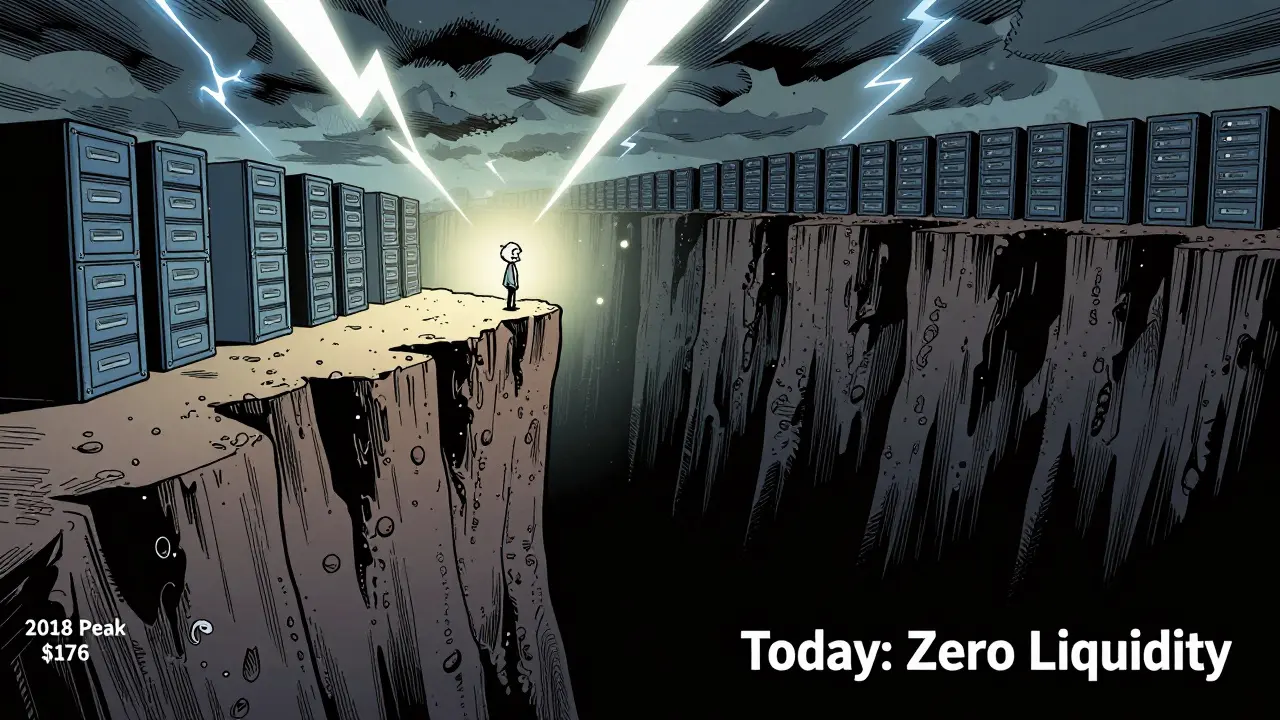
Data indicates that SaluS reached an all-time high (ATH) between $120.57 and $176.43 around January 2018. At that peak, each coin was worth significantly more than many established projects today. However, since then, the price has collapsed. Current data shows the price is approximately 95% below its all-time high.
This depreciation wasn't gradual; it was a cliff-like drop typical of projects that fail to deliver on their promises or lose community interest. The fact that the price remained unchanged over recent weeks according to sources like Investing.com further confirms that there is simply no trading activity. Without buyers and sellers, the price becomes a static number rather than a dynamic market indicator.
Why Can't You Buy SaluS on Major Exchanges?
You might expect to find SaluS on major platforms like Coinbase, Binance, or Kraken. You won't. SaluS is not listed on any top-tier cryptocurrency exchange. This exclusion is intentional and significant.
Exchanges perform rigorous due diligence before listing tokens. They look for:
- Active development teams
- Regular code updates and security audits
- A growing user base
- Liquidity depth to handle order books
SaluS fails all these criteria. The absence of major exchange listings means retail investors cannot easily buy or sell the asset using fiat currency or stablecoins. Any remaining trading happens on obscure, low-security decentralized exchanges or peer-to-peer platforms, which carry high risks of scams, slippage, and inability to withdraw funds.
The lack of accessibility is a primary reason why SaluS is classified as a "zombie coin." It exists on the ledger, but it does not function in the economy. For a cryptocurrency to be useful, it must be transactable. SaluS is effectively untransactable for the average person.
Security and Web3 Claims vs. Reality
In its early marketing materials, SaluS touted innovations in web3 security and transaction safety. The parent company claimed to focus on user value creation and rewarding transactions. However, without transparent technical documentation, open-source repositories, or regular developer updates, these claims remain unverified.
In the world of blockchain, security is not just about marketing slogans; it is about continuous patching of vulnerabilities. Since SaluS uses the Scrypt algorithm and a PoW/PoS hybrid, it requires active node maintenance to prevent attacks like 51% attacks or double-spending. With no visible mining activity or stake validation, the network's security is questionable. An abandoned blockchain is vulnerable to manipulation if anyone decides to spin up a node and rewrite history, although the low value of the asset makes such an attack financially unrewarding.
Risks of Holding or Buying SaluS Today
If you already hold SaluS from years past, or if you are tempted to buy it cheaply on a dark corner of the internet, consider these severe risks:
- Total Loss of Capital: There is no guarantee you can ever sell your SLS. Liquidity is near zero. You may own coins worth "millions" on paper according to broken calculators, but you cannot convert them to cash.
- No Development Support: Without active developers, bugs will never be fixed, and the protocol will become incompatible with modern operating systems and wallets over time.
- Scam Potential: Dead coins are often targets for phishing scams. Fraudsters may create fake websites or wallet plugins promising to "reactivate" SaluS or offer airdrops to steal your private keys.
- Opportunity Cost: Capital tied up in dead assets cannot be invested in productive projects with real utility, such as Ethereum smart contracts, Solana dApps, or Bitcoin ETFs.
The dramatic price decline from $176 to under $10 (and effectively lower due to illiquidity) illustrates the harsh reality of the crypto market: survival of the fittest. Thousands of coins launched in 2016 have vanished. SaluS is a ghost of that era.
Conclusion: What Should You Do?
SaluS (SLS) is a relic of the early cryptocurrency boom. While it has an interesting technical backstory involving Scrypt and hybrid consensus, it currently offers no utility, no liquidity, and no future growth potential. The conflicting data across tracking platforms is a red flag indicating that the ecosystem surrounding this coin has collapsed.
For investors, the advice is clear: avoid SaluS. Do not buy it hoping for a comeback. If you hold it, accept it as a sunk cost and a lesson in the importance of researching active development and exchange listings before investing. The crypto market moves fast, and staying in the past rarely pays off.
Is SaluS (SLS) a good investment in 2026?
No, SaluS is not a good investment. It has extremely low liquidity, no presence on major exchanges, and appears to have no active development. The risk of losing your entire capital is nearly 100%.
Where can I buy SaluS coin?
You cannot buy SaluS on major exchanges like Coinbase, Binance, or Kraken. Any available trading pairs are likely on obscure, unregulated platforms with high fees and security risks. We do not recommend attempting to purchase it.
Why is the SaluS price different on CoinMarketCap and other sites?
The discrepancies are due to outdated data feeds. Since there is almost no trading volume, aggregators pull stale prices from inactive markets or calculate metrics based on incorrect circulating supply numbers, leading to confusing and inaccurate valuations.
Can I mine SaluS (SLS) today?
No, SaluS is not currently mineable. The network relies on a hybrid Proof of Work/Proof of Stake model, but mining activities have ceased, and there are no active pools generating new blocks.
What happened to SaluS after its 2018 peak?
After reaching an all-time high of over $176 in 2018, SaluS suffered a massive loss of value and community interest. Like many altcoins from that period, it failed to maintain adoption, leading to a collapse in liquidity and eventual dormancy.
Is the SaluS website still active?
While the domain saluscoin.info may still exist, there is no evidence of active development, regular updates, or community engagement. The lack of recent news or technical documentation suggests the project is abandoned.