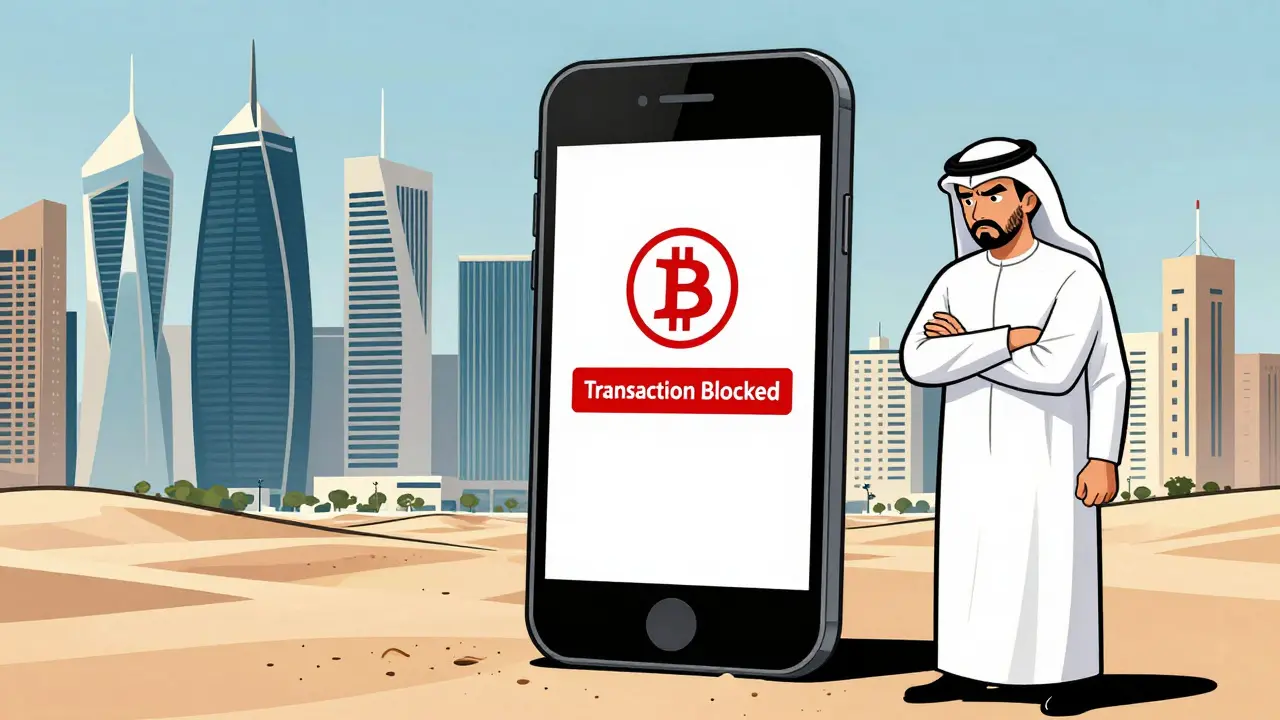
Imagine trying to buy Bitcoin with your salary in Doha or Riyadh. You open your banking app, select 'transfer,' and hit a wall. The transaction is blocked. Not because the internet is down, but because your bank is legally forbidden from touching cryptocurrency. This isn't a glitch; it's policy. Across the Middle East, specifically within the Gulf Cooperation Council (GCC), financial institutions face strict bans on engaging with digital assets. But here is the twist: these same governments are quietly building their own digital currencies.
If you are looking to move money into crypto from a traditional bank account in this region, you need to understand that the rules vary wildly from one border to the next. Some countries have total blackouts, while others offer narrow, heavily regulated lanes. This guide breaks down exactly where you stand, which banks will say no, and why regulators are banning private crypto while embracing blockchain technology.
The Patchwork Reality of GCC Regulations
You cannot treat the Middle East as a single block when it comes to crypto banking. The regulatory landscape looks more like a patchwork quilt, as researchers at the Carnegie Endowment describe it. Each country balances two competing goals: they want the economic benefits of financial innovation, but they are terrified of losing control over monetary stability and facing money laundering risks.
This tension creates a confusing environment for users. In one emirate, you might find a licensed exchange connected to a local bank. Two hundred miles away, that same action could get your account frozen. The core issue isn't whether the government likes blockchain-they generally do. The issue is whether they trust private entities to handle value without state oversight. Currently, most GCC central banks say "no" to private crypto banking unless there is a specific license, and even then, the scope is limited.
Saudi Arabia: Restricted but Strategic
Saudi Arabia sits in the middle of the spectrum. Cryptocurrency is not legal tender here. If you try to pay for coffee with Bitcoin, the merchant can't accept it, and your bank won't process the settlement. The Saudi Arabian Monetary Authority (SAMA) has been clear since 2019: banks and financial institutions are prohibited from engaging in cryptocurrency transactions unless they have explicit approval.
Does this mean Saudi Arabia hates crypto? Hardly. The kingdom is actively participating in the mBridge CBDC pilot, a massive project involving the UAE, China, Thailand, and Hong Kong. They are using blockchain to settle cross-border payments between central banks. The distinction is crucial. SAMA allows controlled experimentation through fintech sandboxes, but they keep the general public's banking channels closed to unregulated tokens. For the average user, this means you cannot simply withdraw fiat from a Saudi bank to a Binance or Coinbase account. You are forced to use peer-to-peer (P2P) methods or offshore accounts, which carries its own set of risks.
UAE: The Structured Exception
The United Arab Emirates (UAE) offers the clearest path, but it is still a gated community. Unlike its neighbors, the UAE has built a structured licensing framework. However, this structure applies primarily to licensed entities, not casual retail banking.
In the UAE, only approved tokens, such as Dirham Payment Tokens, are permitted for certain payment activities. Unlicensed crypto activities remain strictly prohibited for financial institutions. The Central Bank of the UAE distinguishes sharply between permitted institutional activities and restricted retail behaviors. While Dubai's Virtual Assets Regulatory Authority (VARA) has made it easier for exchanges to operate, connecting those exchanges to traditional UAE banks remains a hurdle. Many UAE banks still flag crypto-related transfers. The UAE is testing interoperability for cross-border CBDCs via Project Aber, signaling that they prefer state-controlled digital finance over private crypto rails. If you are a business, you can get licensed. If you are an individual, your bank may still hesitate to let you touch crypto directly.
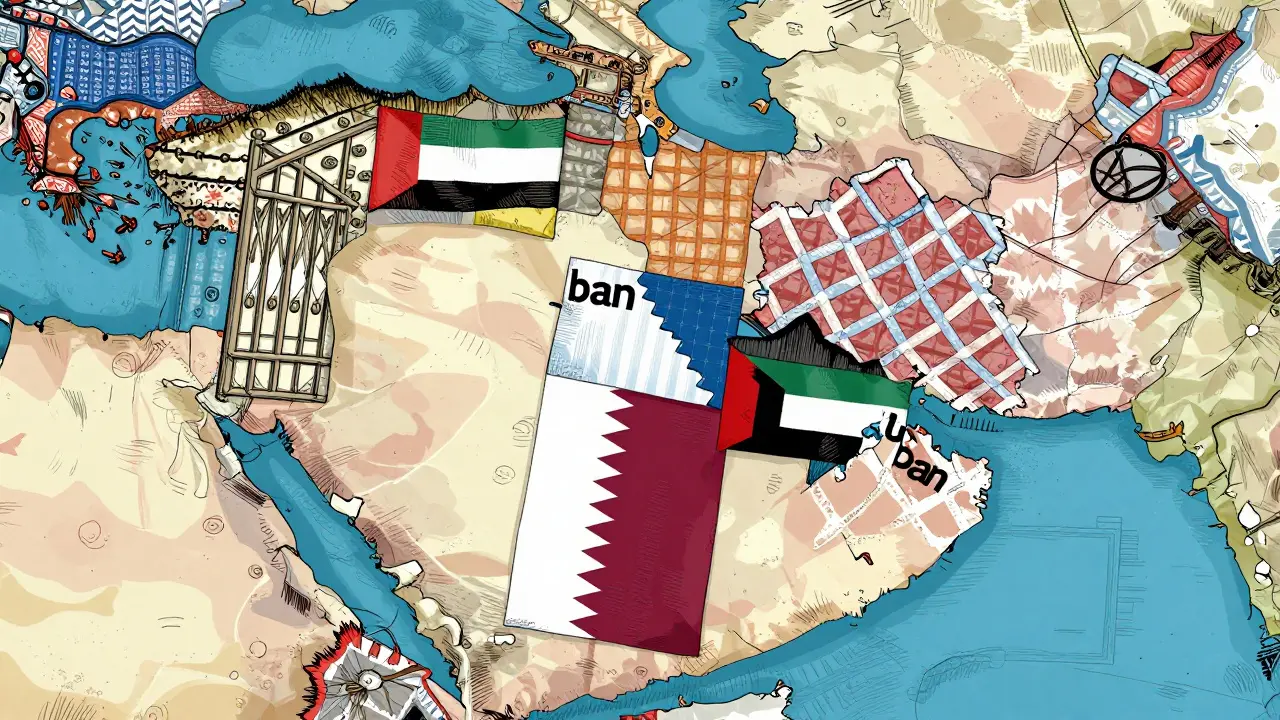
Qatar and Kuwait: The Hard Line
If you are in Qatar or Kuwait, the door is slammed shut. These two nations represent the most restrictive end of the spectrum.
In Qatar, the Qatar Financial Centre Regulatory Authority (QFCRA) maintains a comprehensive ban. As of September 2024, new Digital Asset Regulations legalized tokenized shares and bonds but explicitly designated cryptocurrencies and stablecoins as Excluded Tokens. This means financial institutions cannot touch them. There is no sandbox for retail crypto banking. The compliance framework for businesses is simple: don't do it. While Qatar is developing a regulatory zone for smart contracts by Q2 2025, this is for enterprise asset tokenization, not for letting citizens buy Dogecoin through their savings accounts.
Kuwait takes an even more aggressive enforcement stance. Crypto mining was strictly restricted, leading to a dramatic 55% drop in local electricity usage associated with mining farms. Kuwait deliberately excludes itself from crypto markets, maintaining that digital assets are not legal tender and pose significant risks. For residents, this means zero banking support. Any attempt to link a Kuwaiti bank card to an international exchange will likely result in a declined transaction or, worse, an account review for suspicious activity.
Bahrain and Oman: Licensing vs. Emerging Rules
Bahrain operates under a clearer licensing regime. The Central Bank of Bahrain introduced the Crypto-Asset (CRA) module, which determines what activities financial institutions can perform. If a bank or fintech firm gets licensed under this module, they can engage in approved crypto activities. Bahrain has conducted interoperability tests with JP Morgan, showing a willingness to integrate crypto into high-level finance. However, this is B2B focused. Retail banking access is still tightly controlled, though slightly more permissive than in Qatar.
Oman is following the broader GCC trend. Specific regulations are still emerging, but the direction is clear: alignment with structured frameworks. Oman participates in regional CBDC pilots, indicating that they are building the infrastructure for digital finance. Until specific retail banking guidelines are published, assume that unauthorized banking activities related to crypto are restricted. Expect Oman to move toward a model similar to Bahrain's licensing approach in the near future.
| Country | Banking Access | Regulatory Stance | Key Restriction |
|---|---|---|---|
| Saudi Arabia | Prohibited without approval | Restricted + Managed | SAMA bans direct crypto transactions for banks |
| UAE | Licensed entities only | Structured Framework | Unlicensed activities prohibited; Dirham tokens preferred |
| Qatar | Complete Ban | Conservative | Crypto/Stablecoins are Excluded Tokens |
| Kuwait | Complete Ban | Aggressive Enforcement | No legal tender status; mining restricted |
| Bahrain | Licensed via CRA Module | Permissive for Institutions | Requires specific Central Bank license |
| Oman | Emerging Regulations | Developing Framework | Aligned with regional CBDC trends |

Why Ban Private Crypto While Building CBDCs?
You might wonder why these countries ban private crypto banking while simultaneously investing billions in blockchain. The answer lies in sovereignty. According to Harvard researcher Ala'a Kolkaila, GCC countries view digital finance as central to reducing reliance on Western financial systems. They want the efficiency of blockchain without the volatility or lack of control associated with Bitcoin or Ethereum.
Central Bank Digital Currencies (CBDCs) allow governments to maintain full oversight. When a bank processes a CBDC transaction, the central bank sees it. When a bank processes a Bitcoin transaction, the chain is opaque to the regulator. By banning private crypto banking, these nations force liquidity into regulated channels. They are not anti-blockchain; they are anti-private-monetary-control. The mBridge project and national CBDC pilots are proof of this strategy. They are building the rails, but they insist on driving the train.
Practical Implications for Users and Businesses
For the average person, these bans create significant friction. You cannot easily convert fiat to crypto using local bank cards. This pushes users toward Peer-to-Peer (P2P) platforms, where they trade directly with other individuals. While this bypasses the bank, it introduces counterparty risk. If the other person scams you, your bank won't help you recover the funds because the underlying asset is banned.
For businesses, the path is clearer but expensive. You must navigate the licensing regimes. In the UAE, you apply to VARA or the Central Bank. In Bahrain, you seek a CRA module license. In Saudi Arabia, you enter the fintech sandbox. These processes require legal expertise, capital reserves, and ongoing compliance reporting. It is not a DIY setup.
The restrictions also limit liquidity. Because banks cannot hold crypto assets, local exchanges struggle to attract deep order books. This leads to higher slippage and wider spreads for traders who manage to operate within the gray areas. Institutional participation is low, which keeps the market fragmented.
What to Watch in 2026 and Beyond
The landscape is not static. Qatar's finalization of its digital asset framework in Q2 2025 (rolling into 2026 implementation) sets a precedent. Even though it bans crypto, it legitimizes tokenized securities. This suggests a future where "banking" for digital assets exists, but only for real-world assets (RWAs) like stocks and bonds, not speculative coins.
Regional standardization is another key trend. As mBridge expands, we may see harmonized rules for cross-border digital payments. If the GCC agrees on a common technical standard for CBDCs, it could pressure remaining holdouts to adjust their stances. However, expect private crypto banking to remain restricted for the foreseeable future. The goal is integration, not liberation. Governments want crypto to serve the economy, not disrupt the currency.
Can I use my Saudi bank card to buy Bitcoin?
No. SAMA prohibits banks from processing cryptocurrency transactions. Your card will likely be declined, and repeated attempts may trigger fraud alerts. You must use P2P methods or offshore banking solutions.
Is crypto legal in Qatar?
Holding crypto is not explicitly criminalized for individuals in all contexts, but providing services or banking for it is strictly banned. Under the 2024 Digital Asset Regulations, cryptocurrencies are classified as Excluded Tokens, meaning financial institutions cannot touch them.
Which GCC country is best for crypto businesses?
The UAE is currently the most favorable due to its established licensing frameworks through VARA and the Central Bank. Bahrain is a close second with its CRA module, offering a clear path for licensed financial institutions.
Will banking bans lift in the future?
Partial liberalization is likely for licensed institutions, especially around tokenized securities and CBDCs. However, unrestricted retail banking access to volatile cryptocurrencies like Bitcoin is unlikely due to regulatory concerns over monetary sovereignty and AML/KYC compliance.
What is the mBridge project?
mBridge is a multi-central bank digital currency (CBDC) pilot program involving Saudi Arabia, UAE, China, Thailand, and Hong Kong. It aims to facilitate faster, cheaper cross-border settlements using blockchain, demonstrating regional support for state-led digital finance.





Matthew Malone
June 4, 2026 AT 16:12typical western media trying to paint the gulf as some kind of crypto wasteland while ignoring that they are actually leading the charge on real financial innovation with cbdc's 🙄 you guys love your volatile scam coins but these nations want actual economic stability and sovereignty instead of letting random anons run their monetary policy
JEVON HALL
June 5, 2026 AT 06:18hey matt i get where youre coming from about the cbdc stuff its definitely a smarter play for long term infrastructure than just hoping bitcoin stays stable 😅 but honestly the ban on retail access is still pretty harsh for regular people who just wanna diversify their savings without jumping through hoops or using shady p2p markets which can be risky af
Matthew Malone
June 6, 2026 AT 03:13risky? try losing everything in a rug pull or dealing with exchange hacks lol at least the state controlled systems have oversight and legal recourse if something goes wrong unlike the wild west of decentralized finance that keeps promising utopia and delivering liquidation notices
aaliyah zahid
June 7, 2026 AT 14:49i think both sides have valid points here 🤷♀️ the uae is doing a cool job balancing regulation with innovation via vara but yeah it feels like a gated community for sure maybe we need more middle ground solutions rather than total bans or total freedom because neither seems to work perfectly for everyone yet
Dr Lynea LaVoy
June 9, 2026 AT 04:16it is really important to remember that financial regulations are often designed to protect consumers from fraud and money laundering even if it feels restrictive at first glance many people in these regions do not have the technical knowledge to navigate p2p markets safely so the banks are acting as a filter for safety which makes sense from a risk management perspective although it does limit personal freedom
Erik Kirana
June 9, 2026 AT 18:46the author fails to mention that this is essentially digital authoritarianism disguised as financial prudence 🧐 when governments control every transaction through cbdc's they can freeze assets instantly based on political dissent or behavior modification goals which is far worse than any market volatility associated with private cryptocurrencies
Meg Gran
June 11, 2026 AT 03:11ur missing the point entirely tho its not about politics its about economics and efficiency mbridge is huge for cross border trade why would you want slow expensive swift transfers when blockchain can do it in seconds for pennies? the tech doesnt care about your ideology it just works better thats why they are building it
Alexander DeVries
June 12, 2026 AT 06:11let us look at the bigger picture here folks! the gulf states are positioning themselves as the next global financial hubs by integrating blockchain into traditional banking structures this is a massive opportunity for businesses that can adapt to these new regulatory frameworks so stop complaining about the restrictions and start learning how to operate within them because that is where the future wealth will be generated 💪
Steven Jacobowitz
June 13, 2026 AT 19:18the liquidity fragmentation mentioned in the post is a critical issue that most casual observers overlook because when local exchanges cannot connect directly to bank rails they suffer from thin order books which leads to terrible slippage for traders this creates a two tier system where only those with offshore accounts or deep pockets can trade efficiently while the rest are stuck paying high premiums on p2p platforms which is economically inefficient and unfair