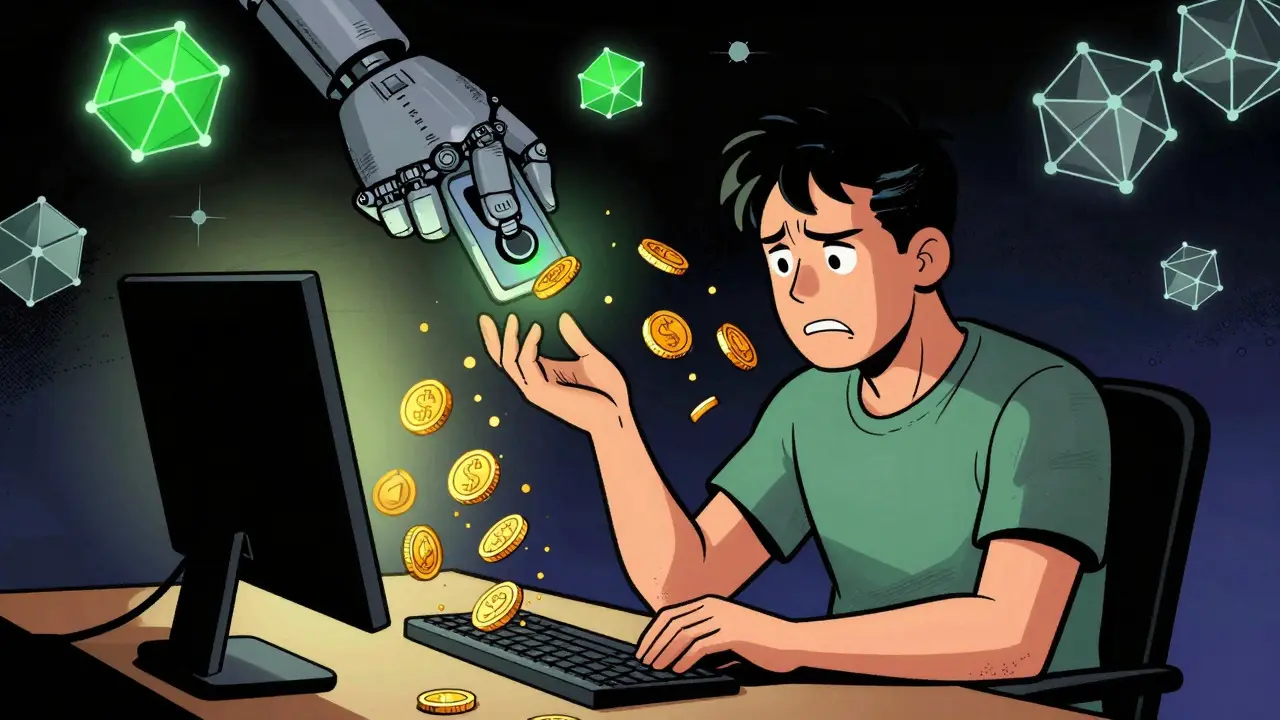
You minted an NFT collection with a 10% royalty rate. You expected that every time someone resold your work, you’d get paid. But then they sold it on a platform where the buyer could just turn that fee off. Suddenly, your passive income stream vanished. This is the core friction in the current NFT royalties landscape: the battle between guaranteed creator payments and free-market trading flexibility.
The debate isn't just philosophical; it’s technical, economic, and legal. It determines whether digital art can sustain artists long-term or if it remains a speculative asset class where creators are secondary to traders. As of mid-2026, the ecosystem has split into two distinct camps, each with valid arguments but significant trade-offs for anyone involved in digital ownership.
How NFT Royalties Actually Work Technically
To understand the conflict, you have to look under the hood. NFT royalties are not just suggestions; they are coded instructions within smart contracts on blockchain networks like Ethereum. When you mint a token using standards like ERC-721 or ERC-1155, you can embed a royalty percentage. The key standard here is ERC-2981, which allows marketplaces to read these royalty details directly from the blockchain.
However, reading the data is different from enforcing payment. There are two ways this happens:
- On-chain enforcement: The smart contract automatically deducts the fee before the transaction completes. The buyer must pay the full amount including the royalty, or the sale fails. This is the "mandatory" approach.
- Off-chain processing: The marketplace reads the suggested royalty but processes the payment through its own internal ledger. This gives the platform the power to override the setting, allowing buyers to set the royalty to zero. This is the "optional" approach.
Most major platforms still use off-chain mechanisms, which creates the loophole that fuels the current dispute. The average royalty rate across the industry hovers around 6%, but without enforcement, that number is purely aspirational.
The Case for Optional Royalties: Liquidity First
Platforms like Blur champion the optional model. Their argument is straightforward: fees kill volume. If you force a 5-10% tax on every secondary sale, you price out casual collectors and reduce the frequency of trades. In a high-velocity trading environment, liquidity is king. If the market dries up, even the creators who do get paid end up with lower total earnings because there are fewer sales happening.
Proponents of optional royalties view them as voluntary tips rather than contractual obligations. They argue that the true value of an NFT lies in its cultural significance and scarcity, not in a forced fee structure. By letting the market decide, you ensure that only collections with genuine community support retain their royalty revenue. If people don’t want to pay the artist, maybe the art isn’t valuable enough to warrant that ongoing cost. It’s a harsh reality check, but it keeps the trading floor active.
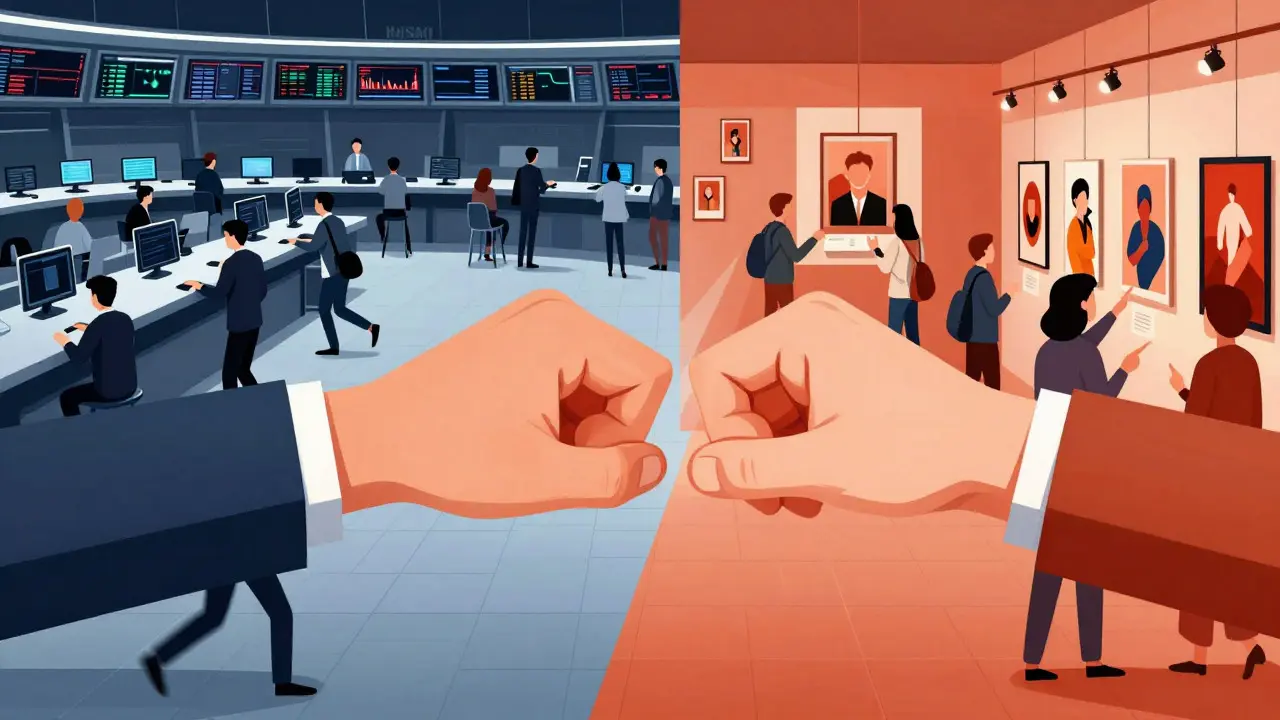
The Case for Mandatory Royalties: Creator Protection
On the other side of the fence, you have the creator-focused argument. OpenSea, historically the largest marketplace by volume, has moved aggressively toward enforcing royalties. Their stance is that the entire value proposition of NFTs was to give artists perpetual revenue-a benefit traditional physical art never offered. If you can bypass the fee, you’re back to square one: selling a piece once and hoping for the best.
Mandatory enforcement protects the supply side. It ensures that the initial investment in creating digital art yields a return over time, not just at launch. For established artists, this is critical. Without guaranteed royalties, large collections become volatile assets held primarily by speculators, not fans. The goal is to align the interests of the collector and the creator, ensuring that as the asset appreciates, the originator benefits too.
| Feature | Optional Model (e.g., Blur) | Mandatory Model (e.g., OpenSea) |
|---|---|---|
| Primary Goal | Maximize trading volume and liquidity | Guarantee creator revenue streams |
| Royalty Payment | Buyer chooses % (can be 0%) | Fixed % enforced by contract/platform |
| Impact on Price | Lower effective price for buyers | Higher effective price due to fees |
| Creator Risk | High (revenue depends on buyer goodwill) | Low (contractual guarantee) |
| Marketplace Strategy | Trader-centric, high velocity | Collector-centric, community focus |
The Marketplace War: Blur vs. OpenSea
This isn’t just a theoretical debate; it’s an active war between platforms. The tension escalated when OpenSea introduced tools to block certain collections from being listed on royalty-optional platforms unless those platforms honored the on-chain rates. In response, Blur urged creators to block OpenSea from their collections. It became a cat-and-mouse game where platforms competed for loyalty by picking sides in the royalty debate.
This fragmentation forces creators to make difficult choices. Do you list on the platform with the highest volume but no royalty guarantee? Or do you stick with a platform that enforces fees but might have lower daily activity? Many creators now adopt a hybrid strategy, listing on multiple platforms to capture both trader volume and loyal collector base, accepting that some revenue will leak while protecting the core community.

Legal Gray Areas and Expert Perspectives
Here’s where it gets tricky: are NFT royalties legally binding? Blockchain attorneys from firms like White and Case have noted that smart contracts are "not really contracts so to speak." While the code executes perfectly, the legal standing of that execution in traditional courts is still unclear. If a buyer refuses to pay a royalty via an off-chain mechanism, suing them for breach of contract is complex and expensive.
Digital artist Beeple, one of the most successful figures in the space, offers a pragmatic take: "There is zero way to force royalties technologically... creators will have to build a collector base that wants to honor these royalties." This suggests that technology alone won’t solve the problem. Community engagement, brand strength, and collector ethics play a massive role in whether royalties actually get paid, regardless of the platform rules.
Choosing the Right Strategy for Your Collection
If you’re an artist or project lead deciding how to handle royalties in 2026, consider these factors:
- Your Audience Type: Are your buyers mostly speculators looking for quick flips, or collectors holding for the long term? Speculators care about low fees; collectors care about supporting the artist.
- Collection Volume: High-volume collections benefit from optional models to maintain liquidity. Niche, high-value pieces may tolerate mandatory fees better.
- Brand Strength: Strong brands can demand higher royalties because collectors *want* to pay. Weak brands rely on enforcement to get any money at all.
- Platform Diversity: Don’t lock yourself into one marketplace. Use multi-platform strategies to balance volume and revenue protection.
The future likely holds a mix of both approaches. Regulatory clarity may eventually mandate specific protections, but until then, the market will continue to fragment. Creators who understand the mechanics of both models-and actively manage their presence across them-will be best positioned to sustain their careers in the digital art economy.
What is the standard NFT royalty percentage?
The industry standard typically ranges between 5% and 10%, with 6% being the most common average across major platforms. However, creators can set any percentage during the minting process, and on optional platforms, buyers can reduce this to zero.
Can I enforce NFT royalties legally?
Legally, it is difficult. Smart contracts are technically self-executing, but their status as binding legal contracts in traditional courts is ambiguous. Enforcement usually relies on marketplace policies and community pressure rather than litigation.
Which marketplace has the highest NFT trading volume?
Volume fluctuates, but OpenSea and Blur have consistently dominated the top spots. OpenSea focuses more on creator enforcement, while Blur prioritizes trader-friendly features like optional royalties.
Do ERC-2981 tokens guarantee royalty payments?
No. ERC-2981 allows the royalty information to be stored on-chain and read by marketplaces, but it does not force payment. If a marketplace uses off-chain settlement, they can ignore the ERC-2981 data and allow zero-royalty transactions.
Should new artists choose optional or mandatory royalties?
New artists often benefit from optional royalties to maximize initial visibility and volume. As the community grows and brand loyalty strengthens, transitioning to stricter enforcement or hybrid models can help secure long-term revenue.

alex fordy
August 25, 2026 AT 17:50I think we are all missing the human element here 🎨
It is not just about code or contracts, it is about trust between the creator and the collector.
When I buy art, I want to feel like I am supporting the vision, not just flipping an asset.
The optional model feels a bit cold, like a transaction without a handshake.
Mandatory royalties might seem rigid, but they ensure the artist can keep creating.
If the ecosystem becomes too focused on volume, we lose the soul of digital art.
Maybe the best path is for platforms to make honoring royalties a badge of honor.
Collectors who pay their fair share should be celebrated in the community.
It creates a positive feedback loop where loyalty is rewarded with status.
We need to move away from seeing buyers as adversaries to the creator.
They are partners in sustaining the culture of digital ownership.
Let us hope that by 2026, empathy wins over pure speculation. 💖
SHIV SHANKAR KANTA
August 27, 2026 AT 11:40this whole debate is just a symptom of the industry's moral bankruptcy
you cannot have freedom without responsibility
the artists are bleeding out while traders party
it is a tragedy of the commons in its purest form
we are destroying the very foundation of value creation
who cares about liquidity if there is nothing left to trade
the system is rigged against the ones who actually do the work
a harsh truth that no one wants to hear
Marco Maldonado
August 27, 2026 AT 16:29honestly the EU is already trying to fix this mess with new regs so why are we still arguing like its 2021? US needs to step up and stop letting these tech bros play god with our economy. The mandatory model is the only way to protect American artists from being squeezed out by foreign trading bots. If you dont support enforcement you basically support a free ride on hard work. Its simple math.
Darren Moon
August 29, 2026 AT 00:46One must observe that the dichotomy presented herein is somewhat reductive given the complex interplay of market microstructure dynamics and tokenomic variables at play.
The notion of 'mandatory' enforcement is fraught with regulatory peril, particularly when considering the extraterritorial reach of blockchain protocols which operate in a quasi-legal vacuum.
Furthermore, the liquidity premium associated with zero-fee transactions cannot be understated; to impose a frictional cost upon secondary markets is to invite capital flight to more permissive jurisdictions.
However, the long-term sustainability of creator revenue streams does indeed warrant rigorous empirical analysis beyond mere ideological posturing.
Perhaps a hybrid mechanism, wherein royalty rates are dynamically adjusted based on price appreciation thresholds, might offer a more nuanced equilibrium.
Until such models are widely adopted, the current fragmentation will likely persist, creating inefficiencies for both parties involved in the transaction lifecycle.
Dianne Ritter
August 30, 2026 AT 01:33I see valid points on both sides. Maybe the solution isn't choosing one over the other but letting the community decide what works best for each specific collection. Some projects thrive on high volume and low fees, others on deep loyalty and higher support. It really depends on the project's goals.
OLIVER CHRISTIAN
August 30, 2026 AT 12:51Great point about community dynamics. From a technical standpoint, ERC-2981 is a great start but it’s just data. The real enforcement has to come from the marketplace layer or through off-chain agreements. For new artists, I’d suggest starting with a lower mandatory rate to build trust, then increasing it as your brand grows. Don’t let the platform war stress you out. Focus on building a community that *wants* to support you. That’s the most durable protection you can have. Also, keep an eye on L2 solutions; they’re changing the fee structures in ways that might make royalty enforcement cheaper and more accessible. Stay adaptable!
Teri W
August 30, 2026 AT 15:54You people are so naive thinking technology will save us. It’s about ethics! If a buyer doesn’t want to pay, they don’t deserve the NFT. Period. We need to shame them into compliance. Social pressure is the only real law in this space. Anyone who argues for 'liquidity' is just arguing for greed. Let the artists eat first. Always. 🙄