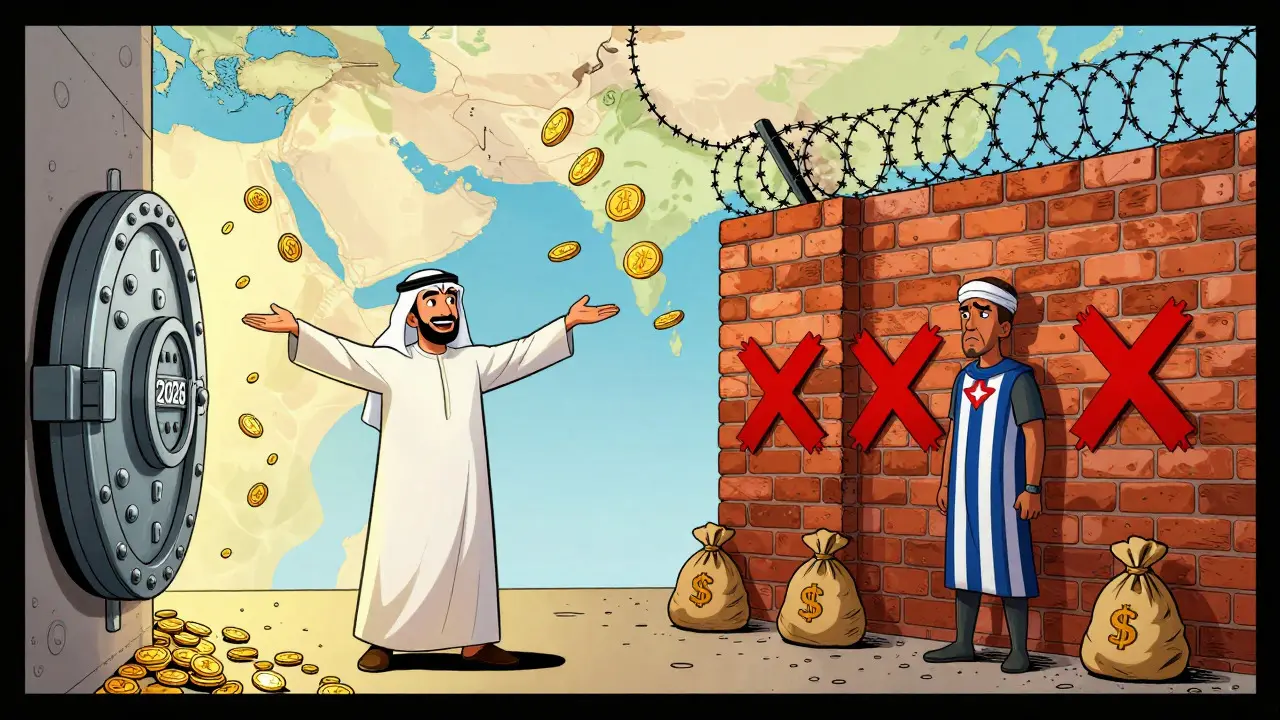
Imagine trying to send money across borders while half the world watches your every move. For years, that was daily life for businesses and individuals dealing with Syria is a country in the Middle East that faced comprehensive U.S. sanctions since 2004 until they were largely revoked in July 2025 and Cuba is a Caribbean nation subject to strict U.S. embargo laws known as the Cuba Assets Control Regime (CACR). But if you missed the headlines from mid-2025, you might be operating on outdated rules. The landscape shifted dramatically under the Trump administration’s latest executive orders. While Syria saw a massive opening of its financial doors, Cuba slammed them shut even tighter. This divergence creates a confusing maze for anyone looking to use cryptocurrency or traditional banking in these regions today.
The Great Shift: What Changed in July 2025?
To understand where we stand in 2026, you have to look at what happened on July 1, 2025. That date marks the effective start of Executive Order 14312 is a directive issued by President Trump that revoked six previous executive orders imposing comprehensive sanctions on Syria. This wasn’t just a minor tweak; it was a complete overhaul. The order terminated the national emergency declared in 2004, which had been the legal backbone for banning exports, investments, and services related to Syria.
At the same time, the administration did the exact opposite for Cuba. Through National Security Presidential Memorandum 5 (NSPM-5) is a policy document that strengthened Cuba sanctions and reversed previous relaxations, reasserting a hardline approach, the U.S. government pulled back any recent leniency. If you thought things were getting easier for Cuban traders, think again. The goal now is clear: isolate Cuba economically while reintegrating Syria into specific global markets, provided certain conditions are met.
Syria: A New Era of Financial Access
For Syrian banks and businesses, July 1, 2025, felt like a dam breaking. The Office of Foreign Assets Control (OFAC) is the U.S. Treasury agency responsible for administering and enforcing economic and trade sanctions removed all Syrian financial institutions from the Specially Designated Nationals (SDN) List. This included the Central Bank of Syria. Suddenly, U.S. banks could open correspondent accounts with Syrian banks without needing special licenses. It sounds simple, but after two decades of isolation, this change allows capital to flow in ways previously impossible.
However, don’t let the optimism blind you. The relief is broad but not total. Targeted sanctions remain in place for specific groups. You can still get hit with penalties if you deal with:
- Members of the Assad family and former high-ranking officials of the previous regime.
- Individuals involved in the illicit captagon drug trade, which has become a major source of revenue for some factions.
- Persons accused of serious human rights abuses or threats to regional stability.
This means due diligence is more important than ever. Just because Syria is off the SDN list doesn’t mean every entity there is safe to touch. You need to verify who you are paying. One wrong transaction with a sanctioned individual can freeze your assets overnight.
Cuba: The Walls Go Higher
While Syria opens up, Cuba faces a crackdown. The Cuba Assets Control Regime (CACR) is the set of U.S. regulations governing transactions involving Cuba, known for its extraterritorial reach is fully intact and enforced aggressively. A key feature of CACR is that it applies to non-U.S. subsidiaries of U.S. persons. This catches many multinational companies off guard. Even if your subsidiary is registered in Delaware or Panama, if it’s owned by a U.S. person, it must follow Cuban sanctions rules.
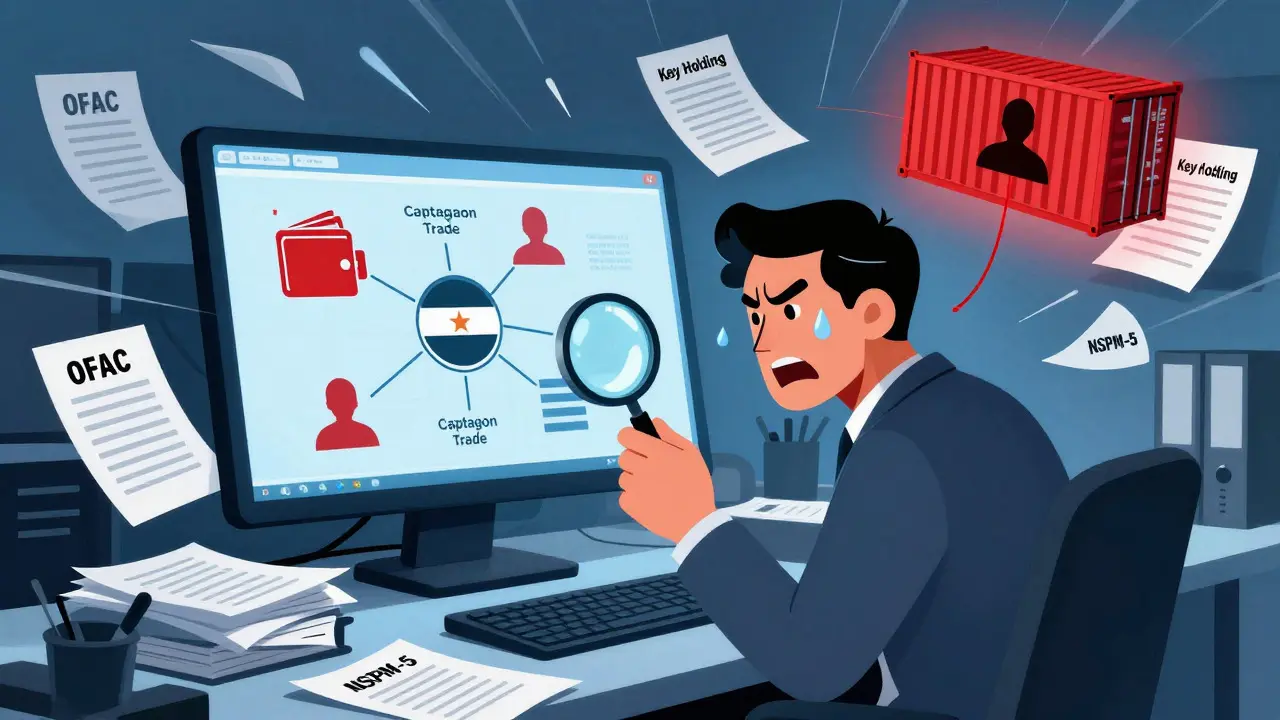
Take the case of Key Holding, LLC, a logistics company based in Delaware. In July 2025, they settled with OFAC for $608,825. Why? Because a subsidiary managed freight shipments from Colombia to Cuba. The violations weren’t even egregious-they were voluntarily disclosed-but the penalty was steep. This sends a clear message: ignorance is not an excuse. If you are moving goods or money near Cuba, assume you are being watched. The administration wants to maximize pressure, and compliance teams are working overtime to ensure no loopholes exist.
Cryptocurrency in the Gray Zone
So, where does crypto fit into this mess? In Syria, the answer is complicated. As of 2026, Syria has no specific laws that explicitly permit or forbid cryptocurrency. It exists in a legal gray area. Before July 2025, using crypto was risky because U.S. sanctions blocked access to major exchanges. Now that sanctions are lifted, platforms like Binance have made trading more accessible for Syrians. People can buy Bitcoin or USDT to save value against inflation or send remittances home.
But here’s the catch: the lack of local regulation means you’re navigating through existing Anti-Money Laundering (AML) frameworks. Banks and payment processors are cautious. They know that while broad sanctions are gone, targeted ones remain. If a bank sees a large crypto withdrawal going to a wallet linked to a sanctioned individual, they will freeze the account. The friction is real. Transactions can be delayed or rejected simply because the intermediary bank doesn’t want the headache of enhanced due diligence.
In Cuba, crypto is even harder to use legally. With NSPM-5 tightening restrictions, most international crypto exchanges avoid listing Cuban users to stay compliant with U.S. law. Locals often rely on peer-to-peer (P2P) markets or informal networks. These methods work but carry high risks of fraud and confiscation. There is no official pathway for Cuban citizens to easily convert crypto to fiat currency through regulated channels.
| Feature | Syria | Cuba |
|---|---|---|
| General Sanctions Status | Lifted (Broad embargo ended) | Tightened (Hardline enforcement) |
| Banking Access | U.S. banks can establish relationships | Strictly prohibited for most entities |
| Crypto Legal Status | Undefined/Gray Area | Restricted/High Risk |
| Key Regulatory Body | OFAC (Targeted lists only) | OFAC (CACR full regime) |
| Recent Enforcement Trend | Focus on human rights/drug traffickers | Aggressive pursuit of all violations |
Navigating Compliance: Practical Steps
If you are a business owner or investor looking at these markets, you need a strategy. Relying on old news is dangerous. Here is how to approach operations in 2026:
- Conduct Enhanced Due Diligence (EDD): Don’t just check names against the SDN list. Use specialized screening tools that update in real-time. For Syria, check for links to the captagon trade or former Assad officials. For Cuba, ensure your entire corporate structure, including foreign subsidiaries, is clean.
- Understand Extraterritorial Reach: Many people think if they operate from Europe or Asia, U.S. sanctions don’t apply. This is false for Cuba. If you use U.S. dollars, U.S. servers, or have any U.S. nexus, you are likely subject to OFAC jurisdiction. Assume the worst-case scenario.
- Use Specialized Payment Infrastructure: Companies like Lightspark are building solutions for these exact problems. Their Grid Switch uses the Lightning Network as a settlement layer for cross-border fiat transfers. This allows regulated institutions to move money without direct crypto exposure, reducing compliance risk. Look for partners who offer similar "compliance-first" tech stacks.
- Monitor Policy Changes Weekly: Sanctions policy is volatile. The revocation of al-Nusrah Front’s terrorist designation in July 2025 showed how quickly geopolitical shifts happen. Subscribe to updates from firms like Steptoe or Alaco, who track these changes closely.
The Bigger Picture: Regional Dynamics
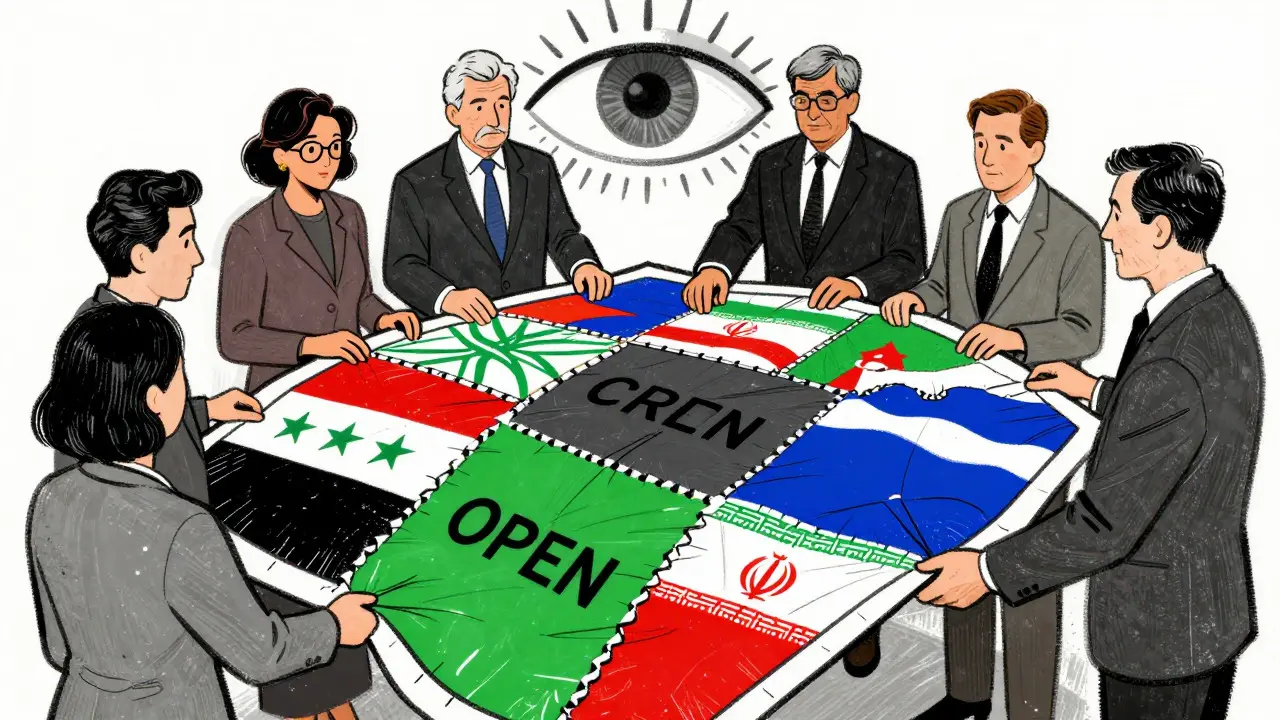
These changes didn’t happen in a vacuum. They reflect a broader shift in U.S. foreign policy. While Syria and Cuba are treated differently, Iran remains under maximum pressure. In July 2025, OFAC sanctioned entities smuggling Iranian oil disguised as Iraqi oil. This shows that the administration is willing to use sophisticated enforcement tactics against adversaries. Cryptocurrency is increasingly seen as a tool for evasion, so expect regulators to focus heavily on digital asset trails in all sanctioned jurisdictions.
Meanwhile, the European Union continues its own saga with Russia, extending sanctions packages despite internal disagreements. This fragmentation means global compliance is becoming a patchwork quilt. What works in London might fail in New York. Businesses must adapt to a world where regulatory alignment is rare and conflict is common.
What Comes Next?
Looking ahead, the trend is clear: precision over breadth. The U.S. is moving away from blanket embargoes (as seen with Syria) toward targeted strikes against specific actors (as seen with Cuba and Iran). For crypto users, this means greater opportunity but also higher scrutiny. Exchanges will likely implement stricter Know Your Customer (KYC) checks for users in formerly sanctioned countries to protect themselves from secondary sanctions.
If you are entering these markets, do it with eyes wide open. The barriers are lower for Syria, but the traps are still there. For Cuba, the walls are higher, and climbing them requires expert legal advice. Stay informed, verify your counterparties, and never assume that a lack of local law means a lack of global consequence.
Are U.S. sanctions on Syria completely gone?
No, they are not completely gone. While the broad embargo was lifted by Executive Order 14312 in July 2025, targeted sanctions remain. Specific individuals, such as members of the Assad family, former officials, and those involved in drug trafficking or human rights abuses, are still sanctioned. Businesses must perform due diligence to avoid these specific targets.
Can I legally use cryptocurrency in Syria in 2026?
There is no specific law in Syria that bans or permits cryptocurrency, creating a legal gray area. However, following the lifting of U.S. sanctions, accessibility on major exchanges like Binance has improved. Users should be aware that banks may still flag transactions due to enhanced due diligence requirements and the lack of clear local regulatory guidance.
How do U.S. sanctions affect non-U.S. companies dealing with Cuba?
The Cuba Assets Control Regime (CACR) has extraterritorial reach. It applies to non-U.S. subsidiaries of U.S. persons. This means if a foreign company is owned by U.S. citizens or entities, it must comply with Cuban sanctions. Violations can result in significant fines, as seen in the July 2025 case of Key Holding, LLC.
What is NSPM-5 and why does it matter for Cuba?
National Security Presidential Memorandum 5 (NSPM-5) is a directive that strengthened sanctions on Cuba, reversing previous relaxations. It signals a return to a hardline approach, increasing enforcement risks for businesses and individuals attempting to engage with the Cuban market. It matters because it clarifies that the current administration intends to maintain strict economic pressure.
Did the removal of Syria from the SDN list help crypto adoption?
Yes, indirectly. Removing Syrian financial institutions from the Specially Designated Nationals (SDN) List allowed U.S. banks to resume relationships, reducing the overall stigma and friction associated with Syrian transactions. This made it easier for global crypto exchanges to serve Syrian users without fear of immediate U.S. regulatory backlash, though operational challenges remain.