
You’ve probably seen the buzz. Maybe it was a tweet promising free tokens, a Discord DM claiming you’re "eligible," or a headline shouting about the next big thing in decentralized finance. The subject? The HUSL airdrop. If you are looking for a quick guide on how to claim your share of this new cryptocurrency, you have come to the right place-but you also need to stop and read carefully. The reality of The HUSL airdrop is far more complex, and significantly riskier, than most promotional posts suggest.
In the world of crypto, "airdrop" often means opportunity. But with obscure tokens like The HUSL (HUSL), it frequently signals danger. Based on current market data and available project information, here is everything you need to know before you connect your wallet or sign up for anything related to this token.
What Is The HUSL Token?
Before we talk about giving away tokens, we need to understand what is actually being given away. The HUSL token is a cryptocurrency that currently holds a very modest position in the broader digital asset ecosystem. According to data from major tracking platforms like CoinMarketCap, HUSL ranks around #3445 globally. To put that in perspective, there are thousands of cryptocurrencies; ranking in the mid-3000s indicates a micro-cap asset with extremely low liquidity and visibility.
As of recent data, the market capitalization sits at approximately $10,574 USD. That is not a typo. This is not a multi-million dollar protocol; it is a tiny project with minimal trading volume. In the last 24 hours, the price showed a negligible increase of 0.11%. These numbers tell a story: HUSL is not yet a mainstream player. It lacks the infrastructure, user base, and institutional interest that characterize successful projects like Ethereum or Solana.
Why does this matter for an airdrop? Because the value of an airdropped token is directly tied to the health and legitimacy of the underlying project. If the project has no users, no utility, and no significant market presence, the tokens you receive might be worth fractions of a cent-or worse, they might be impossible to sell.
The Missing Details: Why Information Is Scarce
If you have tried to find official documentation regarding the HUSL airdrop, you likely hit a wall. There are no comprehensive whitepapers detailing distribution mechanics. There are no verified announcements from reputable crypto news outlets like CoinDesk or Cointelegraph. There is no clear timeline for when tokens will be distributed, nor are there transparent eligibility criteria published by a recognizable development team.
This silence is a red flag. Legitimate airdrops-think of the early days of Uniswap, Arbitrum, or even recent examples like Jupiter’s planned distribution of 7 billion JUP tokens-are heavily documented. They publish snapshots, explain their tokenomics, and list exactly which actions qualify users for rewards. The absence of such details for The HUSL suggests one of two things:
- The project is in its infancy: The team may still be planning the launch, meaning any "airdrop" claims you see online are premature or speculative.
- The project is illegitimate: Scammers often create fake airdrop pages for unknown tokens to harvest private keys or trick users into paying gas fees for worthless transfers.
It is crucial to distinguish between these scenarios. However, without official verification from the developers, you must assume the worst-case scenario to protect your assets.
Beware of Confusion: The NBA Top Shot Distraction
One common source of confusion for newcomers is the similarity in names. You may have heard of a "Hustle & Show" reward pack associated with NBA Top Shot, a platform for digital basketball collectibles. In March 2025, collectors who locked specific sets were eligible for reward packs. This is entirely unrelated to The HUSL cryptocurrency token.
Scammers love to leverage name similarities. They might use imagery from popular sports collectibles to make their fraudulent crypto schemes look legitimate. Always verify the domain name and the official social media channels of the project you are interacting with. If a message mentions "Hustle" but asks for your Ethereum private key, it is a scam. Period.
How Real Airdrops Work vs. Fake Ones
To navigate this safely, you need to understand the mechanics of legitimate airdrops compared to predatory ones. Let’s look at some real-world examples from the 2025-2026 landscape to set a benchmark.
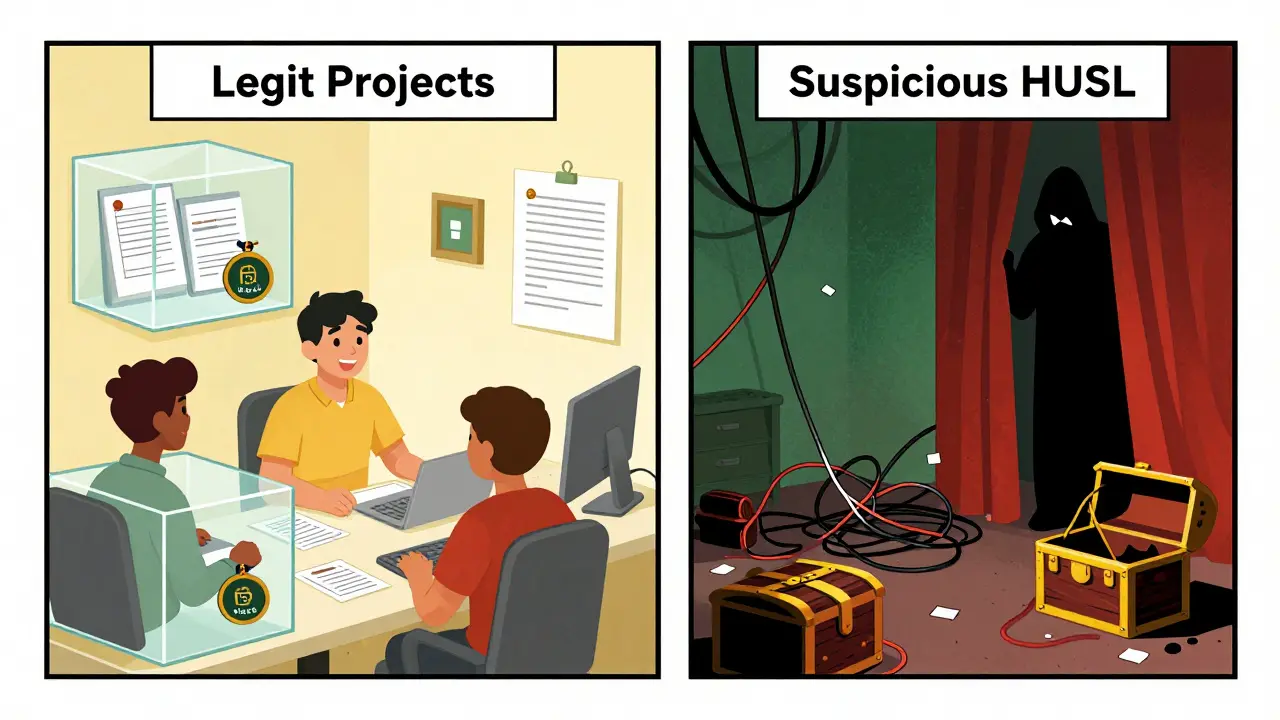
| Feature | Legitimate Projects (e.g., Optimism, Jupiter) | Suspicious/Low-Cap (e.g., Unverified HUSL claims) |
|---|---|---|
| Documentation | Detailed whitepapers, clear tokenomics, public GitHub repos. | Vague promises, missing technical docs, anonymous teams. |
| Eligibility | Based on past usage (swaps, staking) verified on-chain. | Requires signing arbitrary transactions or connecting wallets to unknown sites. |
| Cost to Participate | Free (except standard network gas fees). | May ask for upfront payments, "verification fees," or excessive approvals. |
| Market Presence | High volume, listed on major exchanges (Binance, Coinbase). | Micro-cap ($10k-$50k), listed only on obscure DEXs. |
| Community | Active, moderated Discords/Forums with verified devs. | Spam-filled Telegram groups, bot-like engagement. |
Notice the pattern? Trustworthy projects do not hide. They build in public. When a token like HUSL has a market cap under $11,000 and no clear roadmap, it falls squarely into the high-risk category. Any airdrop associated with it carries the risk of being a "honeypot"-a token you can buy or receive but cannot sell because the contract code prevents outgoing transactions.
Security Risks: Protecting Your Wallet
If you decide to investigate The HUSL further, you must prioritize security above all else. The goal of many fake airdrops is not to give you tokens; it is to drain your existing holdings. Here is how they operate:
- Phishing Links: You click a link claiming to be the "Official HUSL Claim Page." The site looks professional but is hosted on a newly registered domain.
- Malicious Smart Contracts: To "claim" your tokens, you are asked to interact with a smart contract. This contract may contain hidden functions that approve unlimited spending of your ETH, USDT, or other valuable assets.
- Private Key Harvesting: Some scams ask you to input your seed phrase or private key to "verify identity." Never do this. No legitimate service will ever ask for this information.
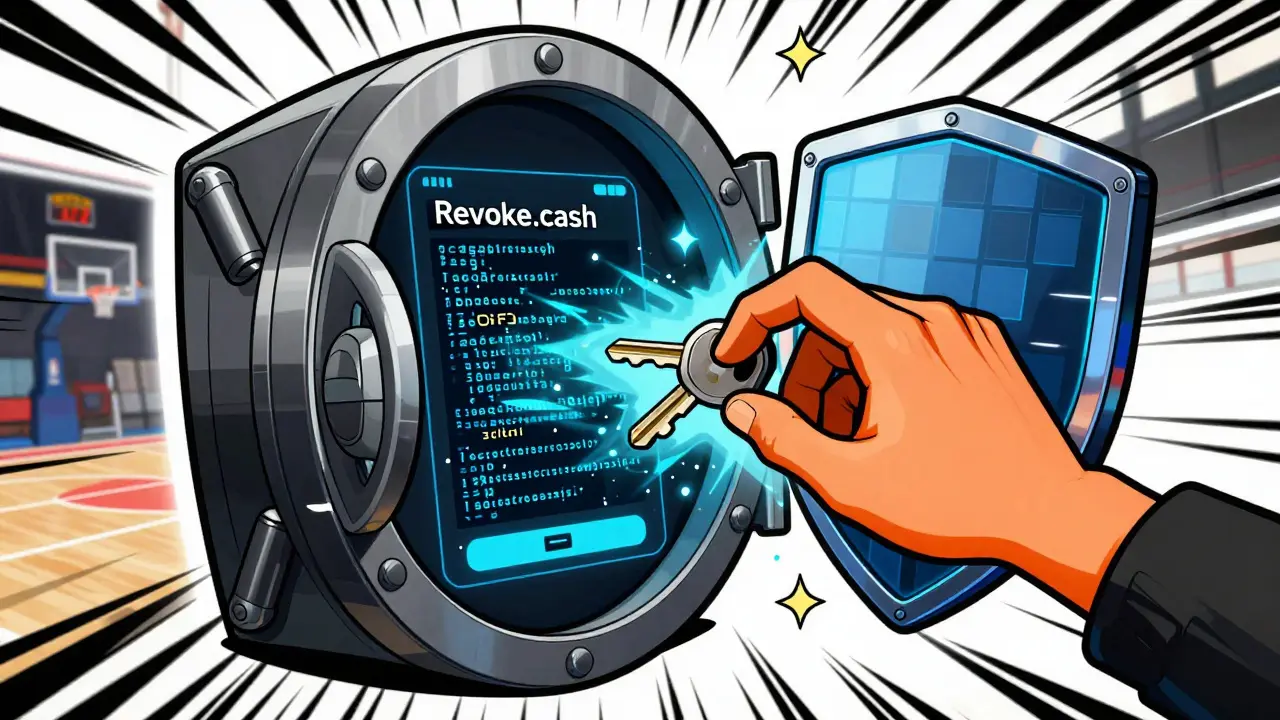
To stay safe, use a burner wallet-a separate hardware or software wallet with minimal funds-for any interaction with unknown tokens. Never connect your primary investment wallet to unverified dApps. Additionally, revoke token approvals regularly using tools like Revoke.cash to ensure old permissions don’t become vulnerabilities.
Is There Any Potential Value?
Let’s be fair. Not every low-cap coin is a scam. Some projects start small and grow into giants. However, the odds are statistically against you. For The HUSL to succeed, it needs:
- A Clear Utility: What problem does HUSL solve? Is it a governance token? A payment method? A staking asset? Without a defined use case, demand remains non-existent.
- Developer Activity: Are commits being made to the codebase? Is the team active on GitHub? Silence usually means abandonment.
- Community Growth: Organic growth takes time. Sudden spikes in followers often indicate bought bots.
Currently, none of these indicators are strongly present for The HUSL. While the 0.11% price increase shows *some* trading activity, it is too volatile and thin to rely on as a signal of health. Compare this to projects like Monad or Abstract, which have raised hundreds of millions in venture capital and have massive developer ecosystems behind them. The disparity in resources is vast.
Next Steps: How to Proceed Safely
If you are still interested in exploring The HUSL, follow this strict checklist:
- Verify Official Channels: Find the project’s official Twitter/X account and website. Cross-reference links with multiple sources. Do not trust DMs.
- Check Contract Address: Look up the HUSL token address on Etherscan or BscScan. Check if the contract is verified. If the code is obfuscated, walk away.
- Search for Reviews: Look for independent analysis on Reddit or specialized crypto forums. Be wary of paid shills.
- Start Small: If you do participate, use the smallest possible amount of capital. Treat it as a lost expense.
Remember, the crypto market is filled with noise. Just because something is trending doesn’t mean it’s trustworthy. With The HUSL, the lack of transparency is the loudest signal you will receive. Proceed with extreme caution, keep your main funds secure, and never invest more than you can afford to lose completely.
Is The HUSL airdrop legit?
There is no definitive proof that The HUSL airdrop is legitimate. The project lacks official documentation, has a very low market capitalization (~$10,500), and shows little public activity. Many similar low-cap projects turn out to be scams or honeypots. Exercise extreme caution.
How do I check if a crypto airdrop is safe?
Check for official announcements from the project’s verified social media accounts. Look for detailed whitepapers and transparent tokenomics. Verify the smart contract on block explorers like Etherscan. Never share your private keys or seed phrases, and avoid clicking links from unsolicited messages.
What is the difference between HUSL and NBA Top Shot Hustle & Show?
They are completely unrelated. NBA Top Shot’s "Hustle & Show" is a reward pack for digital basketball collectibles. The HUSL token is a separate cryptocurrency project. Scammers may confuse the two names to mislead users.
Can I sell HUSL tokens if I receive them?
Not necessarily. Due to the low liquidity and potential for malicious contract code, some tokens cannot be sold (known as honeypots). Always test with a small amount first and check the contract code for transfer restrictions before attempting to trade larger quantities.
Why is there so little information about The HUSL project?
The lack of information suggests the project is either in very early stages, abandoned, or intentionally opaque to avoid scrutiny. Legitimate projects typically publish roadmaps, team details, and audit reports to build trust with investors.

Terry Hyland
June 17, 2026 AT 00:19People are so stupid they fall for every scam that comes along. It is disgusting how greedy humans have become. You connect your wallet to these fake sites and wonder why you lose everything. The system is rigged against the poor and honest people like me. I see through all this crypto nonsense. They want your keys and your money. Stay away from this trash before it ruins your life.
It makes me sick to watch people beg for free tokens while ignoring the obvious signs of fraud. Just block out the noise and protect what you have.
Monica Pathammavong
June 18, 2026 AT 00:37i mean look at the tokenomics its a joke really. who even made this thing? there is no whitepaper nothinng. just some random guy on twitter probably. i checked the contract and its full of red flags. you guys shouldnt be connecting wallets to unverified contracts ever. its basic security 101. also why does nobody read the comments before posting? so lazy.
plus the market cap is like 10k bucks. thats nothing. its basically worthless. dont waste your time on this garbage project.
Tim Lefebvre
June 18, 2026 AT 00:59hey guys just wanted to add some info here. i looked into the smart contract on etherscan and yeah it looks sketchy. the ownership is not renounced which means the devs can pause trading or blacklist addresses anytime. thats a huge risk. also make sure you use a burner wallet if you must check it out but honestly i wouldnt bother.
just keep your main funds safe and ignore the hype. most of these low cap coins are honeypots where you cant sell. better safe than sorry right?
Nick Rice
June 19, 2026 AT 18:22Listen up everyone because I am going to say this once. This post is absolutely correct about the risks involved with projects like HUSL. You need to take control of your financial destiny by avoiding these predatory schemes. Do not let fear drive your decisions but do let logic guide you. If a project has no documentation and a tiny market cap it is not an investment opportunity it is a trap.
I challenge each of you to verify every single claim before engaging. Check the official channels. Cross reference the data. Do not rely on DMs or unsolicited messages. We must build a community that values transparency and security above quick gains. Stand firm in your principles and reject anything that smells like a scam. Your future self will thank you for being vigilant today.
Andrea Burd
June 19, 2026 AT 23:40ugh another boring warning post. like we dont know scams exist. the article is too long and repetitive. nobody wants to read all that fluff about tokenomics. just tell us if its good or bad. but obviously its bad because its obscure. typical reddit crowd acting like they are experts when they barely understand blockchain basics. whatever. i lost interest already.
Akeem Whittaker
June 20, 2026 AT 04:59You need to understand that safety is non-negotiable in this space. Many users ignore the warnings because they are chasing the dream of easy money. That mindset leads to disaster. I advise you to stick to established protocols with verified audits and active development teams. Projects like HUSL lack the fundamental pillars of trust required for legitimate participation.
Do not engage with unknown contracts. Do not share your seed phrase under any circumstances. Use hardware wallets for significant holdings. Be assertive in your approach to security and do not let FOMO dictate your actions. Protect your assets with the same intensity you would protect your physical property.
Manish Prajapat
June 20, 2026 AT 19:38I think we should consider the broader context of why such projects emerge. The desire for financial inclusion drives many to seek opportunities in decentralized finance. However, without proper education and regulation these spaces become breeding grounds for exploitation. It is important to reflect on our collective responsibility to support only those initiatives that contribute positively to the ecosystem.
The lack of information surrounding HUSL suggests a disregard for community trust. We must prioritize projects that value transparency and ethical practices. By doing so we foster a healthier environment for innovation. Let us encourage dialogue around security and due diligence rather than simply dismissing new entrants. Knowledge is power and sharing it helps everyone stay safe.