
Most crypto coins are just digital bets - speculative assets with no real use. But Atlas Navi (NAVI) is different. It’s not just another meme coin or a token with a fancy whitepaper. It’s built around a working app that millions of drivers already use - and it pays you in crypto just for driving.
If you’ve ever used Google Maps or Waze, you know how useful real-time traffic updates are. Now imagine that same app, but instead of just showing you the fastest route, it gives you cryptocurrency every time you drive. That’s Atlas Navi. And the token behind it - NAVI - is what keeps the whole system running.
How Atlas Navi Works: Drive, Earn, Upgrade
The Atlas Navi app is free to download on iPhone and Android. Once installed, it acts like a smart navigation tool that uses your phone’s camera and AI to detect road conditions in real time. It doesn’t just show you traffic jams - it spots potholes, construction zones, parked police cars, and even open parking spots. Then it reroutes you automatically to save time.
Here’s the twist: every mile you drive with the app active, you earn NAVI tokens. It’s not a gimmick. The system tracks your movement, confirms you’re actually driving (not just sitting in your driveway), and credits your wallet accordingly. So far, over 400,000 people have downloaded the app. That’s not a startup fantasy - that’s real user adoption.
But here’s the catch: the more you earn, the more you need to spend.
The NAVI Token: More Than Just Rewards
NAVI isn’t just a reward token. It’s the fuel for the entire ecosystem. Think of it like a game where you earn coins, but you need those same coins to unlock better gear.
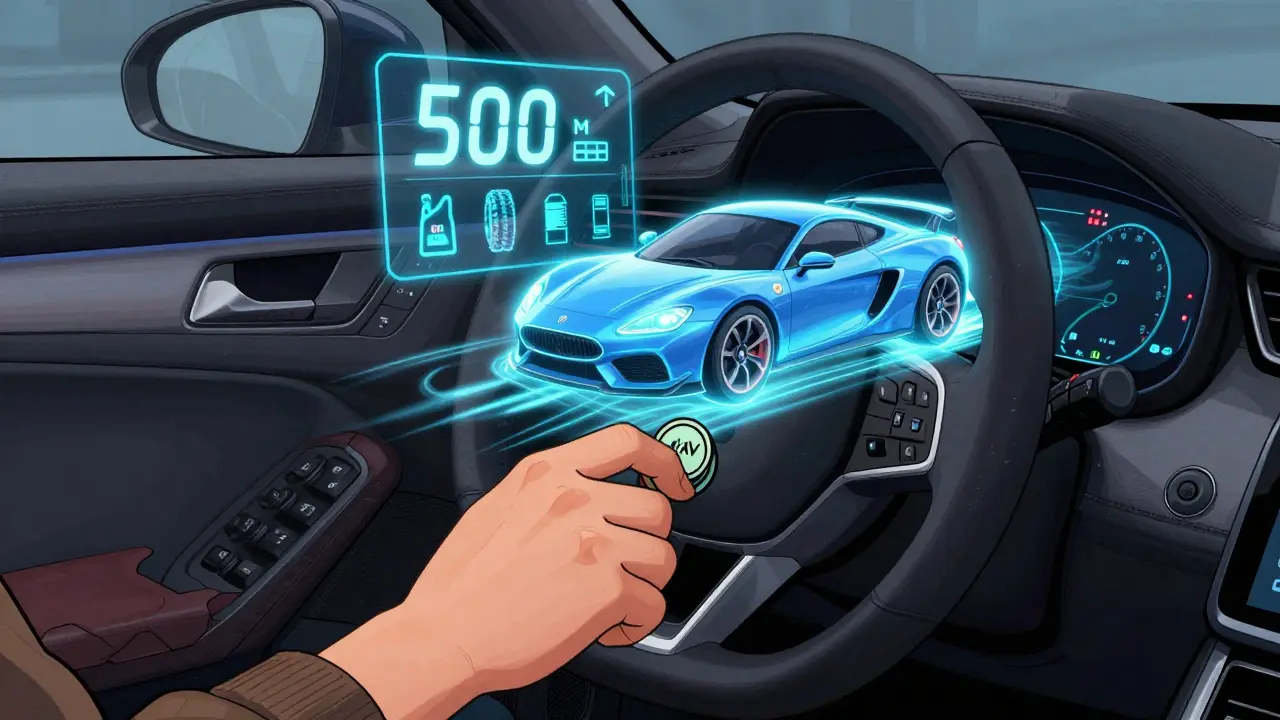
To get higher rewards, you must buy a vehicle NFT using NAVI tokens. These aren’t just pictures - they’re 3D digital models of real cars, licensed from automotive brands. Each NFT gives you a multiplier on your driving rewards. A basic sedan might boost your earnings by 1.2x. A rare sports car? Maybe 3.5x. The rarer the vehicle, the more you earn per mile.
But owning the NFT isn’t free forever. Every 500 miles, your vehicle needs maintenance - oil change, tire rotation, battery check - and you pay for it in NAVI tokens. It’s not optional. If you don’t pay, your earnings drop. This creates a constant, built-in demand for NAVI tokens. You can’t just hoard them and wait for the price to go up. You have to keep using them.
And if you don’t want to use NAVI to buy NFTs or maintenance? You can pay for premium features in USD. But here’s the smart part: every time someone pays in dollars, Atlas Navi uses that money to buy NAVI tokens on the open market. That means even fiat users are indirectly supporting the token’s price.
Supply and Value: Controlled Release, Real Demand
There are 300 million NAVI tokens total. Only 160 million are in circulation right now. The rest are being released slowly - at a steady daily rate over 18 months. This isn’t a dump. It’s a deliberate strategy to avoid flooding the market.
Why does this matter? Because demand is being built from the ground up. People aren’t buying NAVI just because they think it’ll go up in value. They’re buying it because they need it to:
- Unlock better earning multipliers with NFT vehicles
- Maintain their digital cars
- Access premium navigation features
- Participate in voting on future updates
There’s no central company deciding how much NAVI to print. The system is designed so that every user action - driving, maintaining, upgrading - creates a need for more tokens. And every time someone pays in USD, the company buys more NAVI to keep the economy balanced.
Where NAVI Is Traded and How It’s Performing
As of March 7, 2026, NAVI was trading at around $0.00597. That’s low - but remember, it’s a micro-cap token. Its market cap is just over $1 million. For comparison, Bitcoin is worth over $1 trillion. NAVI is tiny, but it’s not worthless.
It’s listed on major exchanges like MEXC, Crypto.com, Bybit, and CoinMarketCap. Daily trading volume hovers between $135,000 and $144,000. That’s not huge, but for a project this young, it’s solid.
Price movements have been choppy. One week, it dropped 7.6%. The next, it rose 10.5%. That’s normal for emerging tokens. What’s not normal is that it’s not just swinging on hype. The price is tied to real activity - people buying NFTs, paying for maintenance, upgrading their apps. That’s what makes NAVI different from most altcoins.
How It Compares to Google Maps, Waze, and Other Crypto Projects
Google Maps doesn’t pay you. Waze gives you badges. Apple Maps doesn’t care if you drive or not.
Other crypto projects offer rewards for watching ads, clicking links, or staking tokens. But none of them combine real-world behavior - actual driving - with blockchain mechanics.
Atlas Navi sits at a unique intersection:
- Navigation tech - AI-powered, camera-based road detection
- Crypto rewards - earning tokens just for driving
- Digital collectibles - NFT vehicles with rarity tiers
- DAO governance - token holders vote on new features
No other project does all four. That’s why it’s being called the first true "drive-to-earn" platform.

What’s Next for Atlas Navi?
The team is finishing up smart contract development and has hired Certiq to audit the code. That’s a good sign - serious projects get audited before going live.
They’re also planning to let independent 3D artists design new vehicle NFTs. If your design gets picked, you get paid in NAVI. That could turn the app into a marketplace for digital car collectors.
There are talks with real car manufacturers to license official models - think Tesla, BMW, or Ford NFTs. Imagine driving your real Tesla and earning NAVI, while your digital twin races on the app. That’s the vision.
And the DAO? It’s not just a buzzword. Token holders will soon vote on whether to add electric vehicle charging station maps, integrate with ride-sharing apps, or even launch a loyalty program with gas stations.
Is NAVI Worth Your Time?
Is it a surefire investment? No. Crypto is risky. But if you’re someone who drives every day - commuting, running errands, road trips - then Atlas Navi gives you a reason to use your navigation app more than ever.
You’re not gambling. You’re earning. You’re not just consuming a service - you’re helping shape it. You’re not paying for ads. You’re being paid for driving.
Download the app. Start driving. See how much NAVI you earn in a week. Buy one cheap NFT. Pay for maintenance. Watch how the system works in real time. That’s more than most crypto projects offer.
NAVI isn’t here to make you rich overnight. It’s here to turn your daily commute into a small, steady crypto income. And that’s something no other coin has done yet.
What is the Atlas Navi (NAVI) token used for?
The NAVI token powers the entire Atlas Navi ecosystem. Users earn NAVI by driving with the app active. They use NAVI to purchase 3D vehicle NFTs that increase their earning potential, pay for vehicle maintenance (like oil changes and tire rotations), buy premium navigation features, and participate in DAO voting to shape future updates. NAVI is also used in liquidity farming and staking to generate additional yield.
Can I earn NAVI without buying anything?
Yes. You can download the Atlas Navi app for free and start earning NAVI tokens just by driving. The first 50 million miles driven across the entire platform pay 0.10 NAVI per mile. After that, rewards decrease gradually. You don’t need to spend money to start earning - but to earn more, you’ll eventually need to buy a vehicle NFT using NAVI tokens.
How does the vehicle NFT system work?
Vehicle NFTs are digital 3D models of real cars, licensed from automotive brands. Each NFT gives you a multiplier on your driving rewards - for example, a rare sports car might boost earnings by 3x. You must purchase these NFTs using NAVI tokens. Once owned, they’re stored in your wallet and require regular maintenance (paid in NAVI) to keep their full earning potential active.
Is NAVI listed on major exchanges?
Yes. NAVI is listed on several major exchanges including MEXC, Crypto.com, Bybit, CoinMarketCap, and TradeSanta. You can buy and sell NAVI tokens on these platforms using other cryptocurrencies like USDT or ETH. It’s also tracked on CoinGecko under #1980 as of March 2026.
Why does the NAVI price go up and down so much?
NAVI is a micro-cap token with a small market cap (~$1 million), so it’s naturally more volatile than larger coins. Price swings are influenced by trading volume, user demand for NFTs and maintenance, and overall crypto market trends. Unlike speculative coins, NAVI’s value is tied to real usage - more drivers mean more demand for tokens, which can push the price up over time.
Is Atlas Navi a scam?
There’s no evidence it’s a scam. The app has over 400,000 downloads, real AI-powered navigation features, and a transparent tokenomics model. The team hired Certiq for smart contract audits, and NAVI is listed on reputable exchanges. The project is still in development, but the core functionality - earning crypto for driving - already works. As with any crypto project, do your own research before investing.
Can I use NAVI to pay for gas or car repairs in the real world?
Not yet. Right now, NAVI is only used within the Atlas Navi app ecosystem - for NFT purchases, maintenance fees, and premium features. However, the team has hinted at future partnerships with gas stations and repair shops where NAVI could be accepted as payment. These partnerships are still in early talks and not active as of March 2026.
How many NAVI tokens are there?
There is a maximum supply of 300 million NAVI tokens. As of March 2026, 160 million are in circulation. The remaining tokens are being released slowly at a daily rate over 18 months to avoid flooding the market and to create sustained demand from users who need NAVI to unlock features and maintain their NFT vehicles.




Chelsea Boonstra
March 12, 2026 AT 05:15This is the most ridiculous thing I’ve ever seen. You’re telling me I should download an app that uses my camera to detect potholes-while I’m driving-and then rewards me with a token I can’t even spend? That’s not innovation; that’s surveillance with a side of crypto gambling.
Jenni James
March 13, 2026 AT 05:25While I appreciate the ambition, the tokenomics here are fundamentally flawed. You claim NAVI has intrinsic value because users must spend it on maintenance and NFTs-but that’s not value creation; that’s forced consumption. A system that requires you to burn currency to maintain utility is not sustainable-it’s a Ponzi with a dashboard. The fact that fiat inflows are used to buy back tokens only masks the underlying collapse of demand. Real utility doesn’t require artificial scarcity enforced by mandatory spending. This is economic theater.
Alex Thorn
March 13, 2026 AT 19:27There’s something profoundly human here, isn’t there? We spend so much of our lives moving-from work, to errands, to quiet drives with no destination-that we forget the rhythm of motion itself has value. Atlas Navi doesn’t just monetize driving; it acknowledges it. It says: your time, your miles, your attention to the road-they matter. The NFTs? The maintenance? The voting? These aren’t gimmicks; they’re rituals. Rituals that turn a mundane act into something that belongs to you. Maybe it’s not about getting rich. Maybe it’s about feeling seen, even by a blockchain.
Julie Tomek
March 14, 2026 AT 03:19Let me break this down with clarity, because this is one of the most misunderstood crypto projects I’ve seen in years. First, the 400,000+ downloads are not vanity metrics-they’re proof of behavioral adoption. People aren’t downloading this because they want to flip tokens; they’re downloading it because it makes their daily commute smoother, safer, and slightly more rewarding. Second, the vehicle NFT system isn’t a pay-to-win mechanic-it’s a tiered incentive structure that aligns user behavior with ecosystem growth. The more you drive, the more you need to invest, and the more you contribute to network stability. Third, the fiat-to-token buybacks create a natural floor under price volatility. Unlike meme coins that collapse when hype fades, NAVI’s demand is anchored in real, repeatable actions: driving, maintaining, upgrading. This isn’t speculation; it’s a behavioral economy. And yes, the price is volatile-it’s a micro-cap. But volatility isn’t weakness; it’s the birth cry of something new. If you’re a daily driver, this isn’t crypto. It’s a side hustle with a soul.
Brandon Kaufman
March 14, 2026 AT 15:26I downloaded this app last week just to see what it was like. I drove to work, got 0.12 NAVI, bought a basic sedan NFT for 15 NAVI, paid 3 NAVI for maintenance after 500 miles. It’s not life-changing-but it’s real. I didn’t feel scammed. I felt like I was part of something. Not because I made money, but because the app actually works better than Google Maps. It flagged a hidden speed trap I’d never seen before. That’s worth something. Maybe NAVI won’t make me rich. But it made my commute better. And that’s more than most apps do.
Craig Gregory
March 16, 2026 AT 13:31The entire premise is a logical fallacy wrapped in a whitepaper. You cannot create value by forcing users to consume a token they did not voluntarily demand. The NFT maintenance fees are a tax disguised as utility. The fiat buybacks are a liquidity illusion. The 300 million supply cap is meaningless when 140 million are locked in user wallets that will never be spent. This isn’t a token economy-it’s a closed loop of self-referential inflation. The fact that it’s listed on MEXC and Bybit doesn’t validate it; it merely means those exchanges are desperate for volume. The real scam isn’t fraud-it’s the illusion of participation. You’re not building a community. You’re building a Skinner box with a navigation screen.