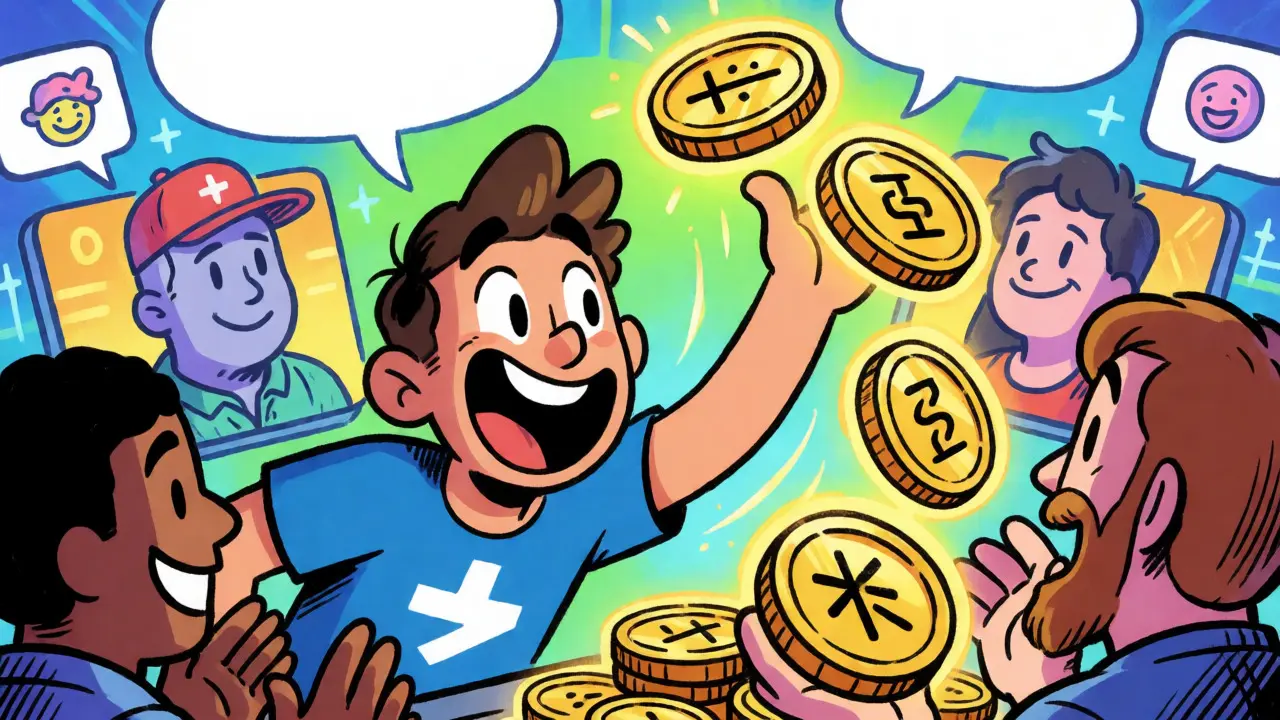
Imagine a cryptocurrency that started not with a whitepaper or a venture capital pitch, but as a joke in a decentralized social media channel. That’s Degen (DEGEN). It began life on Farcaster, a protocol often called the "Web3 Twitter," where users tipped each other for funny memes and sharp takes. Fast forward to August 2026, and this meme coin has evolved into something far more substantial: the native gas token of Degen Chain, its own Layer-3 blockchain.
If you’ve seen DEGEN trending or wondered why people are throwing tokens at strangers online, you’re in the right place. We’ll break down exactly what DEGEN is, how it works technically, and why it matters in the broader Base ecosystem. No jargon walls-just clear answers about one of the most unique experiments in modern crypto.
The Origin Story: From Meme to Movement
To understand DEGEN, you have to go back to early 2024. The Farcaster protocol was gaining traction among crypto natives who wanted a censorship-resistant alternative to traditional social networks. Within Farcaster, there was a specific channel called /degen. This wasn’t an official feature; it was a community hub where users posted memes, shared alpha, and engaged in high-energy banter.
On January 8, 2024, the community launched DEGEN as an ERC-20 token on Base, Coinbase’s Layer-2 scaling solution for Ethereum. It wasn’t issued by a central authority. Instead, it was distributed via a points-based airdrop. If you liked posts, reposted content, or held certain community NFTs, you earned "Degen points." One point equaled one DEGEN token. This mechanism aligned incentives perfectly: good content got rewarded, and the token gained value through usage rather than just speculation.
This grassroots launch is key. Unlike many projects that raise millions before writing code, DEGEN grew organically. By May 2024, it had already transitioned from a simple tipping currency to a critical piece of infrastructure. When Farcaster announced a $150 million funding round, DEGEN’s price surged 17% in a single day. Why? Because investors saw that DEGEN wasn’t just a toy-it was becoming the economic backbone of a growing social network.
How Degen Chain Works: The Layer-3 Revolution
Here is where things get technical but stay interesting. Most memecoins live on existing blockchains like Ethereum or Solana. They pay fees in ETH or SOL. DEGEN broke the mold by launching its own blockchain: Degen Chain.
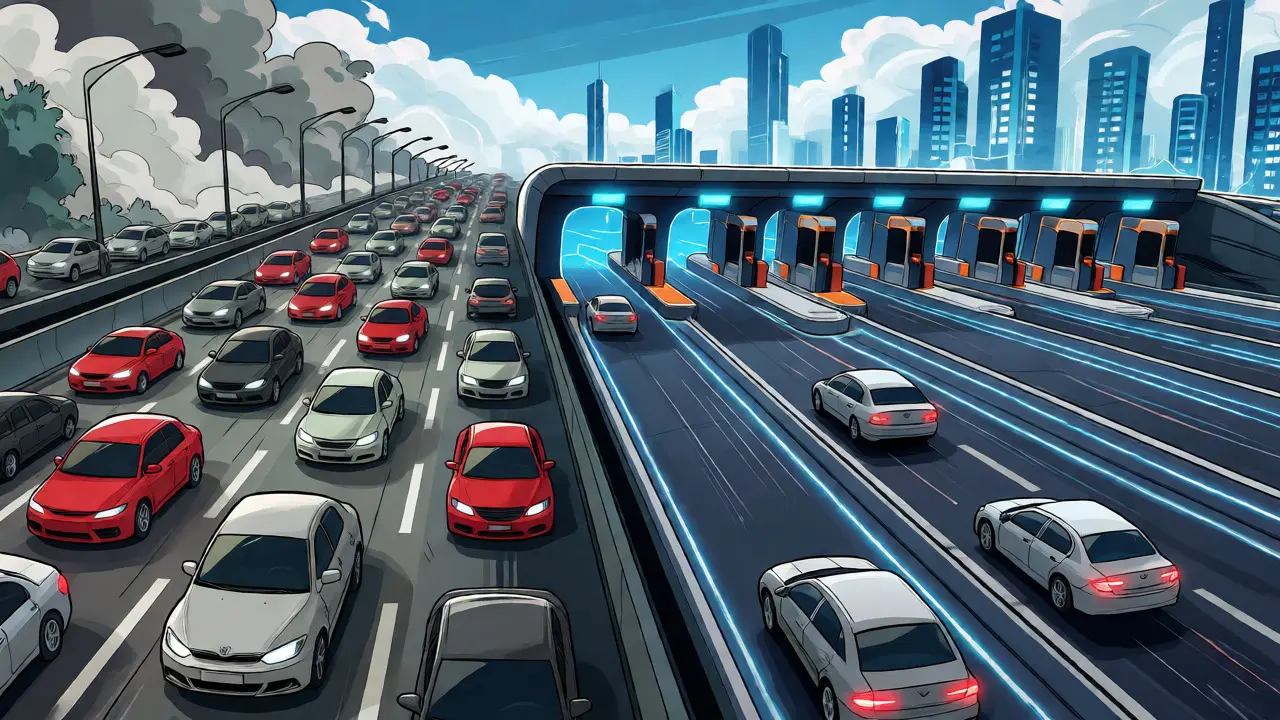
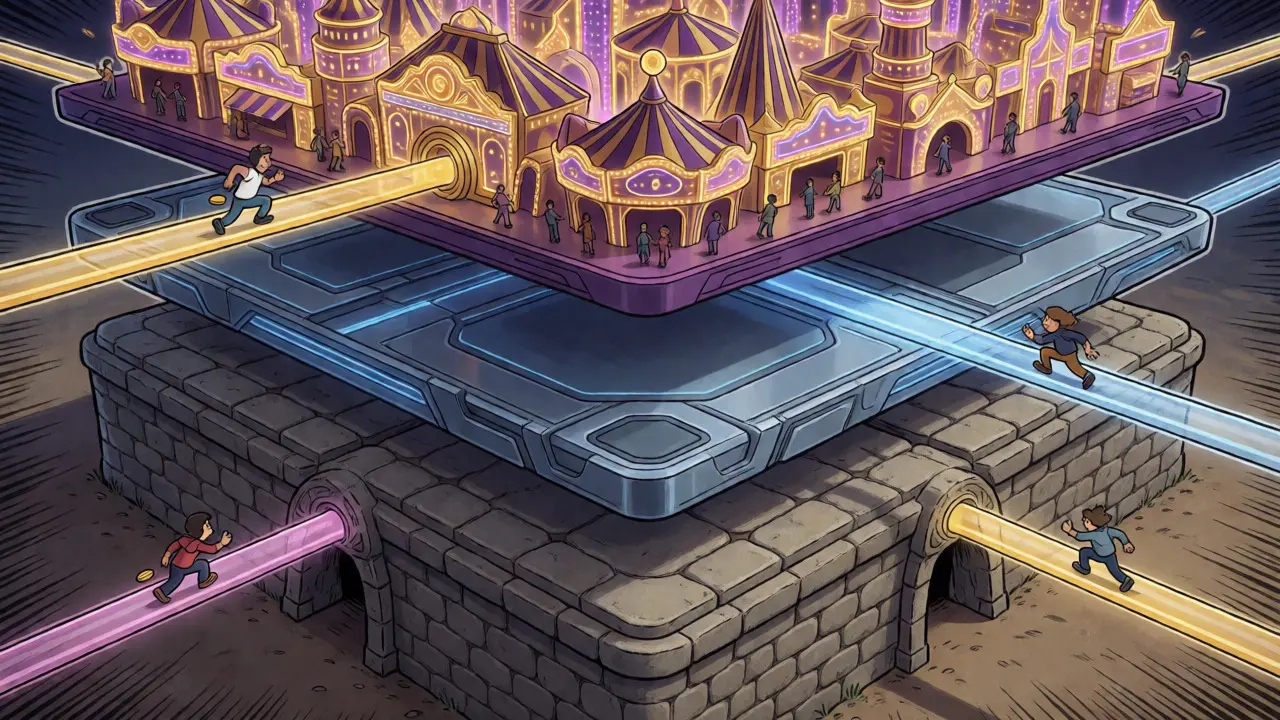
Degen Chain is a Layer-3 (L3) network built using Arbitrum Orbit technology. Think of it this way: Ethereum is Layer 1. Base is Layer 2, sitting on top of Ethereum to make transactions cheaper and faster. Degen Chain sits on top of Base, making it Layer 3. It settles its final state on Base but handles execution separately. This architecture allows for incredibly low transaction fees, which is essential for micro-transactions like tipping someone $0.01 worth of crypto.
Gate.io analysts have dubbed Degen Chain the "Las Vegas of blockchains." It’s a high-risk, high-reward environment focused entirely on SocialFi (Social Finance) applications. Every time you swap tokens, mint an NFT, or tip a creator on Degen Chain, you pay gas fees in DEGEN. This creates a constant demand sink for the token. You can’t use the chain without holding DEGEN, which ties the token’s utility directly to the network’s activity.
Tokenomics: Supply and Distribution
Understanding the supply helps you grasp the potential upside and downside. DEGEN has a fixed maximum supply of approximately 37 billion tokens. There are no new tokens being minted, which protects against inflation-a common issue with some other altcoins.
The initial distribution was heavily weighted toward the community. About 70% of the Genesis supply went to Farcaster users through three airdrop rounds. This ensured that the people actually using the network owned the majority of the tokens. Another 15% was reserved for ecological development, locked up for over four years to prevent dumping. The remaining 15% covered liquidity rewards and team allocations.
| Allocation Category | Percentage | Purpose |
|---|---|---|
| Community Airdrops | 70% | Rewarding Farcaster engagement and early adopters |
| Ecosystem Development | 15% | Funding future growth, locked for 4+ years |
| Liquidity & Team | 15% | Providing exchange liquidity and supporting core contributors |
As of mid-2026, the circulating supply hovers around 14 billion tokens. The rest remains locked or vested. This structure suggests that while there is still some unlock pressure coming, the majority of the token supply is already in the hands of active users, not insiders waiting to sell.
Utility Beyond the Meme: What Can You Do With DEGEN?
Is DEGEN just a speculative asset, or does it have real uses? The answer is both. Its primary function remains social. On Farcaster, users tip "Casters" (the term for Farcaster users) with DEGEN for quality content. It gamifies social interaction. If you post a thread that gets lots of likes and reposts, you earn Degen points, which convert to DEGEN. It turns attention into equity.
But the utility extends beyond Farcaster. Because DEGEN is the gas token for Degen Chain, developers build apps that require DEGEN balances. These include:
- Tipping Bots: Automated tools that distribute DEGEN to top commenters.
- Meme Games: Play-to-earn games where entry fees and prizes are in DEGEN.
- NFT Minting: Creating and trading digital collectibles specifically within the Degen ecosystem.
- DeFi Swaps: Exchanging other Base tokens for DEGEN and vice versa on decentralized exchanges.
This multi-layered utility distinguishes DEGEN from typical memecoins like Dogecoin or Shiba Inu, which rely almost exclusively on community hype. DEGEN has a functional role in a dedicated blockchain’s economy.
How to Buy and Store DEGEN
Getting your hands on DEGEN is straightforward, but you need the right setup. Since it lives on Base, you need an EVM-compatible wallet like MetaMask or Rabby. Make sure your wallet is configured for the Base network.
You can acquire DEGEN in two main ways:
- Centralized Exchanges (CEXs): Major platforms like Coinbase, Binance, and Gate.io list DEGEN. This is the easiest route for beginners. You buy with USD or USDC, then withdraw to your self-custody wallet if you want to interact with Degen Chain.
- Decentralized Exchanges (DEXs): Platforms like Uniswap or Aerodrome on Base allow you to swap ETH or USDC directly for DEGEN. This keeps you fully in control of your keys but requires you to manage gas fees in ETH on Base.
Always verify the contract address before adding the token to your wallet. The official DEGEN contract address on Base is 0x4ed4e862860bed51a9570b96d89af5e1b0efefed. Scams are common in crypto, so double-check this string to ensure you’re interacting with the real asset.
Risks and Volatility: The Memecoin Reality
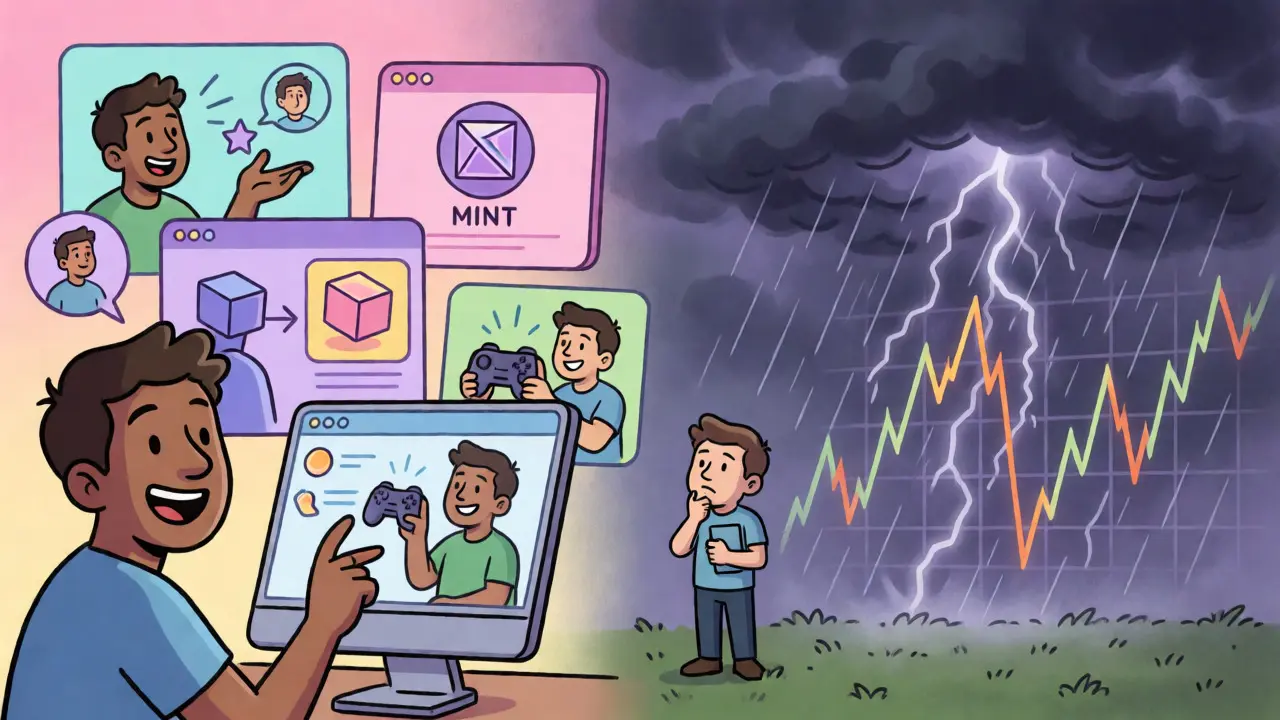
Let’s be honest: DEGEN is volatile. It trades at fractions of a cent (around $0.000684 as of February 2026). This low price point makes it accessible, but it also means small changes in market sentiment can cause massive percentage swings. A 10% move might mean pennies per token, but it translates to significant gains or losses depending on your position size.
The biggest risk is narrative dependence. DEGEN’s value is tied to the health of Farcaster and the popularity of SocialFi. If user activity on Farcaster drops, or if a new social platform steals the spotlight, demand for DEGEN could plummet. Unlike Bitcoin, which benefits from institutional adoption and scarcity, or Ethereum, which powers a vast DeFi ecosystem, DEGEN is niche. It thrives when the culture thrives.
Additionally, regulatory uncertainty looms over all memecoins. While DEGEN has utility, regulators may still classify it primarily as a security or speculative asset. Always invest only what you can afford to lose, especially in high-beta assets like this.
FAQ
Is Degen (DEGEN) a good investment?
DEGEN is considered a high-risk, high-reward asset. It has strong community backing and unique utility as a gas token for Degen Chain, but it is highly volatile and dependent on the continued growth of the Farcaster social network. It suits investors who understand memecoin dynamics and believe in the long-term viability of SocialFi.
What is the difference between DEGEN and Farcaster?
Farcaster is the decentralized social protocol itself, similar to how Twitter is a platform. DEGEN is a community-created token used within that protocol for tipping and rewards. Farcaster does not have its own native governance token; DEGEN serves as the de facto economic layer for the community.
Can I stake DEGEN?
Staking options vary by platform. Some decentralized finance (DeFi) protocols on Base or Degen Chain offer staking pools where you can earn yield on DEGEN holdings. However, since DEGEN is primarily a gas and tipping token, staking mechanisms are less standardized compared to proof-of-stake coins like ETH or SOL.
Where can I buy DEGEN?
You can buy DEGEN on major centralized exchanges like Coinbase, Binance, and Gate.io, as well as decentralized exchanges on the Base network such as Uniswap and Aerodrome.
Why is DEGEN called a Layer-3 token?
DEGEN is the native gas token for Degen Chain, which is a Layer-3 blockchain built on top of Base (Layer 2), which itself is built on Ethereum (Layer 1). This hierarchical structure allows for specialized, low-cost applications focused on SocialFi.