You've probably seen a ticker for Sneed is a cryptocurrency token launched in 2024 that runs on the Internet Computer Protocol (ICP) blockchain and wondered if it's the next big thing or just another flash in the pan. In a market saturated with millions of tokens, SNEED stands out for one very specific reason: it has an incredibly tiny supply. But when you start digging into the data, the picture gets blurry. Prices vary wildly between exchanges, and the project's actual purpose is shrouded in mystery.
The Basics: What Exactly is SNEED?
To understand SNEED, you first have to look at where it lives. It doesn't use Ethereum or Solana; instead, it operates on the Internet Computer Protocol (also known as ICP), a blockchain designed to replace traditional cloud services with a decentralized web. This means SNEED leverages the high speed and scalability that the ICP network provides.
The most striking attribute of SNEED is its scarcity. While most coins launch with billions of tokens, SNEED has a fixed maximum supply of only 10,000 tokens. This level of scarcity is almost unheard of in the crypto world. In theory, a low supply can drive prices up if demand increases, but in reality, it can also lead to extreme volatility because even a few small trades can swing the price significantly.
Analyzing the Market Data and Volatility
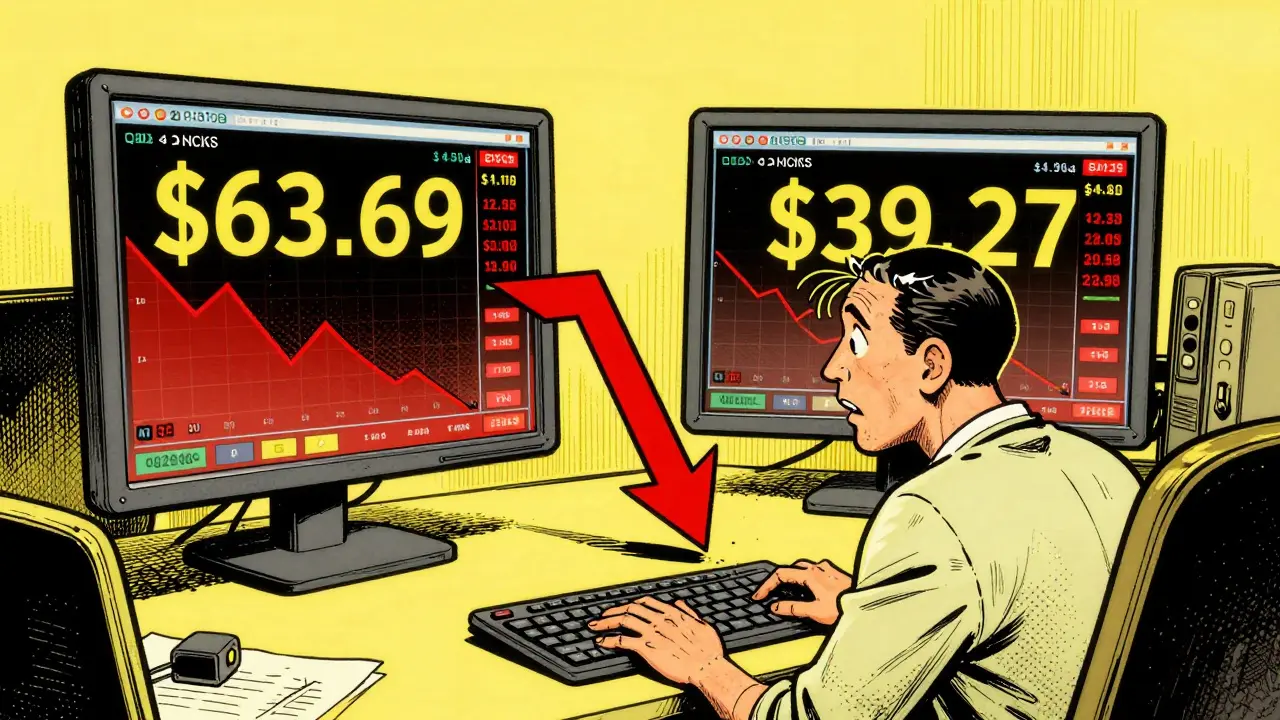
If you try to check the price of SNEED, you'll notice something weird: different platforms aren't agreeing. For example, you might see one tracker listing it at $63.69 while another says $39.27. This isn't a glitch in your browser; it's a sign of low liquidity. When there aren't many people buying and selling, the "current price" becomes a guessing game based on the last trade that happened on a specific exchange.
The recent trend for SNEED hasn't been great. If we look at the 90-day window, the token has seen a price drop of over 52%. This downward slide is consistent across several timeframes, with a 44% drop over 60 days. This suggests that the initial hype from its 2024 launch has cooled off, and the market is currently struggling to find a stable floor for the token's value.
| Metric | Value / Detail | Observation |
|---|---|---|
| Max Supply | 10,000 SNEED | Extremely low scarcity |
| Network | Internet Computer (ICP) | Decentralized web infrastructure |
| 90-Day Performance | -52.42% | Strong bearish trend |
| Price Range | $39.27 - $63.69 | High discrepancy across platforms |
The Identity Crisis: SNEED vs. Sneedcoin Classic
One of the biggest pitfalls for new investors is the "copycat" problem. While we are talking about the ICP-based SNEED token, there is another entity floating around called "Sneedcoin Classic." This version runs on the Ethereum network and is priced at a tiny fraction of a cent (around $0.000000000418).
These are two completely different animals. One is a high-priced, low-supply token on ICP; the other is a micro-cap token on Ethereum. If you're looking to trade, double-check the contract address and the blockchain. Buying the wrong one is a mistake that's almost impossible to undo once the transaction is confirmed on the ledger.
The Utility Gap: What Does it Actually Do?
Here is where things get tricky. Usually, when you look at a coin, you look for a "Whitepaper"-a document explaining the tech, the goal, and the roadmap. SNEED is surprisingly quiet. There is very little public documentation explaining what the token is actually used for. Does it grant access to a specific app? Is it used for governance? Is it just a speculative asset?
Without a clear utility, the token relies entirely on speculation. Some optimistic predictions suggest the price could hit $271.44 by 2030, but these numbers aren't backed by a technical roadmap or a partnership announcement. In the crypto world, a price target without a reason is just a wish. To move from a speculative token to a legitimate project, SNEED would need to introduce a functional use case that encourages people to hold the token rather than just flipping it for a quick profit.
Evaluating the Community and Risks
A healthy crypto project usually has a loud community on X (formerly Twitter), Reddit, or Discord. For SNEED, the silence is deafening. There are no major community hubs or active developer discussions available in the public domain. While sites like Crypto.com provide sentiment polls, there isn't a robust ecosystem of users sharing tutorials, success stories, or warnings.
The risks here are classic "micro-cap" dangers. Low liquidity means you might buy the tokens but find it impossible to sell them if there are no buyers. The pricing discrepancies we mentioned earlier are a direct result of this. Furthermore, the lack of a known team or a transparent development process means there is no accountability if the project simply disappears.
Final Verdict: Should You Be Interested?
SNEED is a high-risk, high-reward gamble. On one hand, you have a token with a tiny supply on a powerful network like ICP. If the project suddenly finds a purpose or gains a cult following, the scarcity could send the price skyrocketing. On the other hand, the lack of transparency, missing utility, and declining price trend are massive red flags.
If you're a seasoned trader who likes playing with low-cap tokens, the volatility might be attractive. But for the average person looking for a stable investment, the missing pieces of the puzzle-the team, the use case, and the community-make this a very dangerous bet. Always remember that in the world of Sneed crypto coin, the distance between a "hidden gem" and a "dead coin" is very thin.
What blockchain does SNEED use?
SNEED operates on the Internet Computer Protocol (ICP) blockchain. This platform is designed to allow developers to build decentralized applications that run at web speed without relying on traditional cloud providers.
How many SNEED tokens exist?
The maximum supply of SNEED is fixed at 10,000 tokens, which is exceptionally low compared to most cryptocurrencies.
Why is the price different on different websites?
This is due to low liquidity. Because there are very few trades happening, each exchange reports the price based on its own last recorded transaction, leading to discrepancies between platforms like Binance, CoinMarketCap, and Crypto.com.
Is SNEED the same as Sneedcoin Classic?
No. SNEED is on the ICP blockchain and has a higher value and lower supply. Sneedcoin Classic is an Ethereum-based token with a significantly lower price and different market dynamics.
What is the predicted price for SNEED in 2030?
Some long-term projections suggest it could reach $271.44 by 2030, however, these predictions lack supporting technical data or official project roadmaps to justify such growth.





Joshua Aldrich
April 5, 2026 AT 09:20Basically just another low liqudity trap. I've seen a dozen coins like this on ICP and they usually end up as ghosts because nobody actually builds anything on top of the token. The math of a 10k supply is just bait to make the price look high per unit but without a real use case its just a gambling den. Most peopel dont realize that low supply doesnt equal value if nobody wants to buy the asset. Its a classic psychology trick used by devs to attract retail traders who think they found a rare gem before it moons. In reality you're just buying a ticket to a party where the host disappeared with the snacks. Honestly just stay away from these mystery tokens until there is a git hub with actual commits and a team that isnt hiding behind anime avatars. The risk to reward ratio here is absolutely terrible for any sane investor.
Hugo Lopez
April 5, 2026 AT 10:29That sounds like a very stressful situation for anyone holding it! 😬 It is always better to be cautious when the data is so inconsistent across exchanges. ✨
alex rodea
April 7, 2026 AT 01:00Stay safe everyone.
Carmelita Gonzales
April 8, 2026 AT 06:19its scary how many fake versions of the same coin exist these days. really makes you think about the need for better verification tools so people dont lose their savings by mistake
Nicholas Whooley
April 8, 2026 AT 23:48It is perhaps worth considering that while the current trajectory is bearish, the underlying technology of the Internet Computer Protocol remains quite promising. One could hope that a dedicated team might eventually find a way to implement a sustainable utility for such a scarce asset. While caution is certainly the most prudent approach, it is always encouraging to see new experiments in tokenomics, even if they serve primarily as cautionary tales for the broader community. I believe that these early failures often pave the way for more sophisticated and successful projects in the future. It would be beneficial for the developers to engage more transparently with the public to rectify the current lack of trust. Patience and thorough research are the keys to success in this volatile environment. We should all strive to support projects that prioritize transparency over speculation. Perhaps this is simply a learning phase for the project. I maintain a hopeful outlook that the industry will move toward more utility-driven assets. It is an interesting case study in scarcity. Let us hope for a positive evolution.