Imagine a cryptocurrency built not on smart contracts or DeFi yield, but on a wild internet theory: that the creator of Bitcoin, Satoshi Nakamoto, is actually hiding in plain sight as Yonatan Sompolinsky, a prominent cryptographer and co-founder of the Kaspa blockchain. That is the entire premise behind Yotoshi (YOTO). If you’ve stumbled upon this token while scrolling through obscure crypto lists, you’re probably wondering if it’s the next big thing or just another digital dust bunny.
Here’s the short version: YOTOSHI is a satirical memecoin. It doesn’t promise to revolutionize finance. It doesn’t have a complex utility protocol. Its "value" comes from the community’s shared amusement over the "Yoto is Satoshi" conspiracy. But before you connect your wallet and buy in, you need to understand the massive risks involved with tokens this small. This guide breaks down exactly what YOTO is, where it lives technically, and why its price action looks more like a ghost story than a growth chart.
The Origin Story: Why Yoto Might Be Satoshi
To get YOTOSHI, you first have to get the joke. In the early days of crypto, when Bitcoin was born, its creator vanished. Years later, researchers noticed striking similarities between Satoshi’s writing style, coding habits, and academic background and those of Yonatan Sompolinsky. Sompolinsky is a brilliant computer scientist who helped design the GHOSTDAG protocol, which powers Kaspa’s high-speed block creation.
The YOTOSHI project leans hard into this coincidence. Their marketing materials present "circumstantial evidence"-like suspicious timing of releases and similar philosophical views on decentralization-as proof that Sompolinsky is Nakamoto. It’s playful, it’s niche, and it requires you to already know who Sompolinsky is. If you don’t follow the Kaspa ecosystem closely, the meme might just look like gibberish. This specificity is both the coin’s charm and its biggest hurdle to mainstream adoption.
Technical Confusion: Is YOTOSHI on Kaspa or Solana?
One of the most confusing aspects of YOTOSHI is its technical home. Depending on where you look, you’ll find conflicting information about which blockchain hosts the token. This ambiguity matters because it affects how you trade it and the fees you pay.
CoinMarketCap lists YOTOSHI as "the first kaspa meme token," linking it directly to the Kaspa ecosystem. They provide a specific contract address associated with Kaspa’s network. However, other platforms like CoinSwitch describe YOTO as a Web3 coin built on Solana. Solana is known for low fees and high speed, which makes sense for a memecoin, but Kaspa offers even faster confirmation times due to its DAG structure.
| Source Platform | Claimed Blockchain | Key Feature Highlighted |
|---|---|---|
| CoinMarketCap | Kaspa | First Kaspa meme token; ties to Sompolinsky |
| CoinSwitch | Solana | High-speed, low-cost transactions |
| TradeSanta | Unspecified/Micro-cap | Extreme volatility focus |
This discrepancy suggests that either there are multiple versions of the token, or data aggregators haven’t fully verified the underlying infrastructure yet. For a trader, this means you must double-check the contract address before sending any funds. Buying the wrong version could mean holding an illiquid asset on a chain you didn’t intend to use.
Market Reality: Tiny Numbers and High Risk
Let’s look at the cold, hard numbers. As of late 2025 and early 2026 data, YOTOSHI is a micro-cap token with a market capitalization hovering around $70,000. To put that in perspective, Dogecoin has a market cap in the billions. YOTOSHI represents roughly 0.0002% of the total memecoin market.
Its daily trading volume is often less than $100. Some days, it barely sees $80 in trades. This extreme illiquidity creates two major problems:
- Slippage: If you try to sell $50 worth of YOTO, you might crash the price by 10-20% just because there aren’t enough buyers on the other side.
- Exit Difficulty: You can buy easily, but selling without moving the market significantly is tough. Many holders end up "stuck" with their bags because the order books are empty.
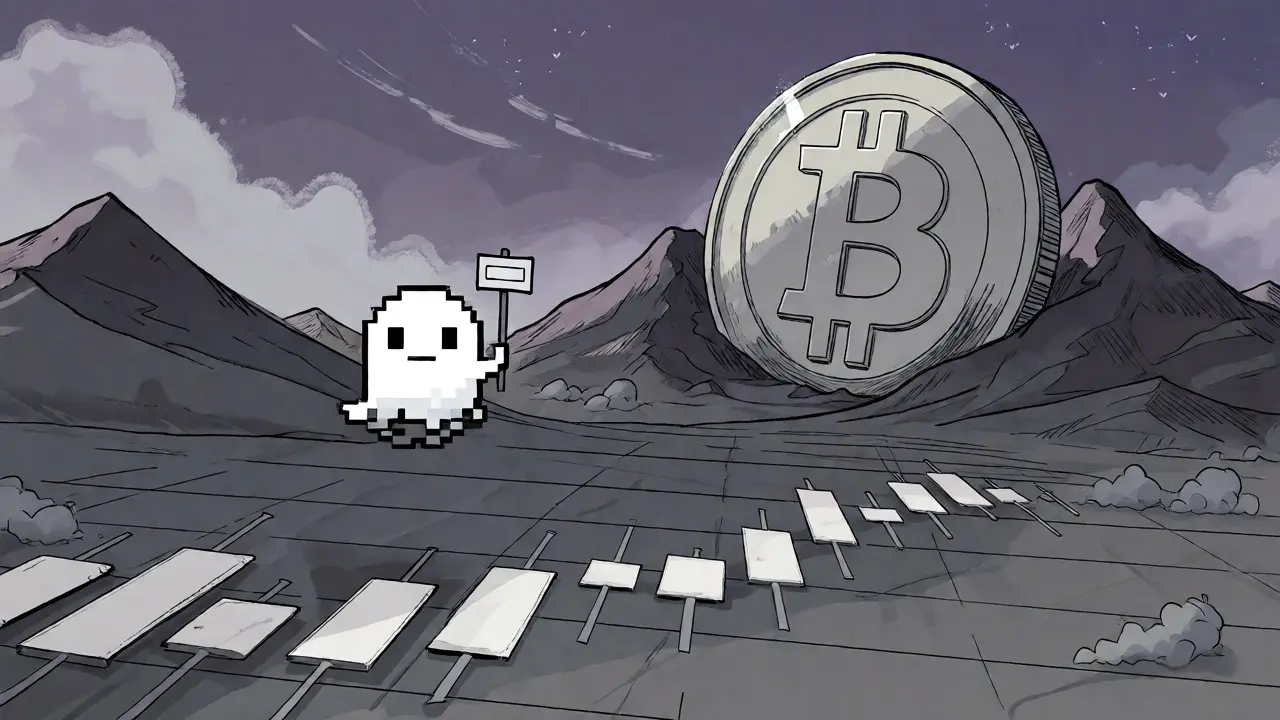
Analysts at CoinGecko have noted that tokens with market caps under $100,000 and daily volumes under $1,000 have a historical failure rate of nearly 99% within 18 months. YOTOSHI fits squarely into this danger zone. It hasn’t shown signs of breaking out into a larger liquidity pool, and its price trend remains bearish according to technical indicators like the MACD.
Tokenomics: Supply and Distribution
YOTOSHI has a fixed total supply of 280 billion tokens. Unlike Bitcoin, which has a capped supply of 21 million, YOTOSHI’s massive number is typical for memecoins, designed to make individual tokens feel cheap (e.g., costing fractions of a cent). There is no maximum supply beyond this initial mint, meaning all tokens exist from day one.
There is no official whitepaper detailing how these tokens were distributed. No public GitHub repository shows active developer commits. This lack of transparency is common in the memecoin space, but it raises red flags for investors looking for long-term viability. Without a clear roadmap or team announcements, the token relies entirely on community hype to maintain interest.
Community and Utility: What Do You Actually Do With YOTO?
So, what’s the point of holding YOTOSHI? Currently, there is no practical utility. You can’t use it to pay for coffee, stake it for yield in a major DeFi protocol, or access exclusive gaming features. Its primary function is speculative trading and participating in the "Satoshi is Yoto" meme.
Community engagement appears minimal. While Kaspa’s official Discord has tens of thousands of members, discussions about YOTOSHI are sparse. There are no viral Twitter threads or TikTok trends driving mass adoption. The user base seems limited to a small group of crypto-natives who enjoy the inside joke. If you’re looking for a coin with a robust ecosystem like Shiba Inu’s ShibaSwap or Dogecoin’s merchant acceptance, YOTOSHI isn’t it.
Should You Invest in YOTOSHI?
If you’re considering buying YOTOSHI, treat it as entertainment money, not investment capital. Here’s a quick decision framework:
- Do you know who Yonatan Sompolinsky is? If no, the meme won’t resonate, and you’ll likely hold a dead asset.
- Can you afford to lose 100%? Given the low liquidity and high failure rate of micro-caps, assume the money is gone once you buy.
- Are you comfortable with ambiguity? The confusion over whether it’s on Kaspa or Solana adds technical risk. Ensure you are interacting with the correct contract.
For most retail investors, established memecoins with higher liquidity offer better exit opportunities. YOTOSHI is a niche curiosity, perfect for a $10 experiment but risky for serious portfolio allocation.
Is Yotoshi (YOTO) the same as Kaspa (KAS)?
No. Kaspa (KAS) is the native coin of the Kaspa blockchain, a high-performance Layer 1 network. Yotoshi (YOTO) is a memecoin inspired by Kaspa’s co-founder, Yonatan Sompolinsky. While they are related by theme and potentially by blockchain infrastructure, they are distinct assets with different values and purposes.
Why is the YOTO price so low?
The price is low primarily due to its massive total supply of 280 billion tokens and extremely low demand. With a market cap of only around $70,000 spread across billions of tokens, each individual unit costs a fraction of a cent. Low trading volume also prevents price discovery from pushing the value higher.
Where can I buy Yotoshi (YOTO)?
YOTOSHI is typically traded on decentralized exchanges (DEXs) compatible with its underlying blockchain (likely Kaspa or Solana, depending on the specific token version). Due to low liquidity, it may not be listed on major centralized exchanges like Binance or Coinbase. Always verify the contract address on CoinGecko or CoinMarketCap before trading.
Is Yotoshi a scam?
It is not necessarily a "scam" in the traditional sense of stealing funds immediately, but it carries high risk. It lacks a whitepaper, active development updates, and significant utility. The term "rug pull" applies if developers abandon the project or dump large amounts of tokens, which is common in micro-cap memecoins with no locked liquidity or transparent team.
Does Yotoshi have a future?
Predicting the future of micro-cap memecoins is difficult. Historical data suggests that 98% of tokens with such low volume fail within 18 months. Unless the "Yoto is Satoshi" narrative goes viral globally or receives significant backing from the Kaspa community, YOTOSHI will likely remain a niche, low-liquidity asset with limited price appreciation potential.