Imagine trying to buy a cup of coffee with Bitcoin in Quito. It’s not just awkward; it’s technically illegal for the merchant to accept it as payment. But here is the twist: you can legally own that Bitcoin, trade it on your phone, and hold it in a wallet without going to jail. This paradox defines the cryptocurrency landscape in Ecuador. The country operates under a unique set of rules where digital assets are neither fully banned nor officially recognized, creating a "gray zone" that frustrates investors but keeps the banks happy.
If you live in Ecuador or plan to move there, understanding these nuances is critical. You aren’t dealing with a simple "yes" or "no" answer. You are navigating a financial system built entirely around the US Dollar since 2000, where any attempt to introduce alternative money is viewed with deep suspicion by regulators. Let’s break down exactly what you can do, what you can’t, and why the banks might freeze your account if you aren’t careful.
The Legal Status: Not Money, But Not Contraband
To understand the restrictions, you have to look at the law. The Central Bank of Ecuador (BCE) issued a clear statement in August 2024: cryptocurrencies are not legal tender. They are not an authorized means of payment. This stems from Article 94 of the Organic Monetary and Financial Code, which explicitly bars any currency other than the US Dollar from circulating as official money.
Does this mean owning Bitcoin is illegal? No. The law prohibits using crypto to pay for goods and services within the formal economy. It does not prohibit private individuals from buying, selling, or holding digital assets. Think of it like collecting rare coins. You can buy them, sell them to friends, and store them in your safe. But you cannot walk into a supermarket and try to pay with them. If you try, the cashier has to refuse because accepting them would violate monetary regulations.
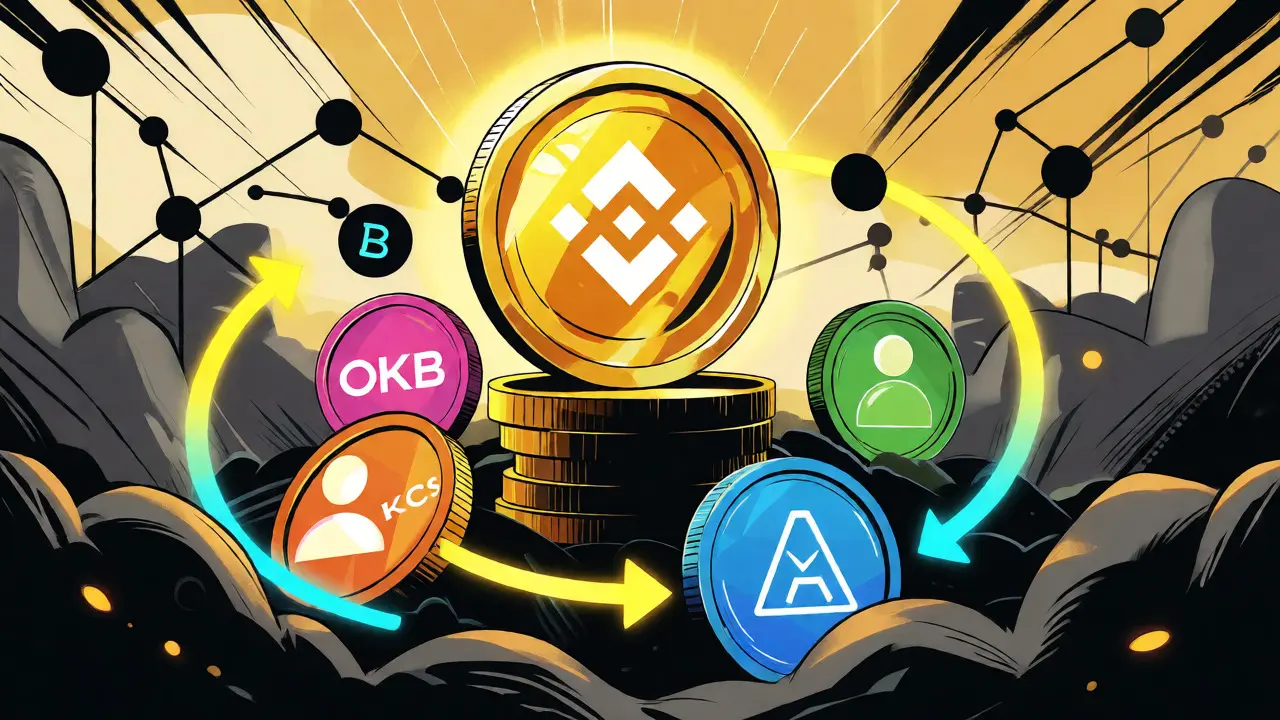
This distinction creates a specific operational reality. You can use global platforms like Binance or OKX to trade. However, you cannot use those tokens to settle debts formally. The government sees crypto as a speculative asset class, similar to stocks or gold, rather than a currency. This stance protects the integrity of dollarization, ensuring that no parallel currency undermines the stability of the national economy.
Banking Hurdles: Why Your Transfer Might Get Blocked
Here is where things get tricky for most users. While trading is legal, moving money through the traditional banking system is fraught with friction. Banks, insurers, and payment processors are legally mandated to refuse cryptocurrency-related transactions unless they have explicit licensing, which almost none do. The Superintendency of Banks (SB) maintains a list of unauthorized entities, and major international exchanges often appear on it.
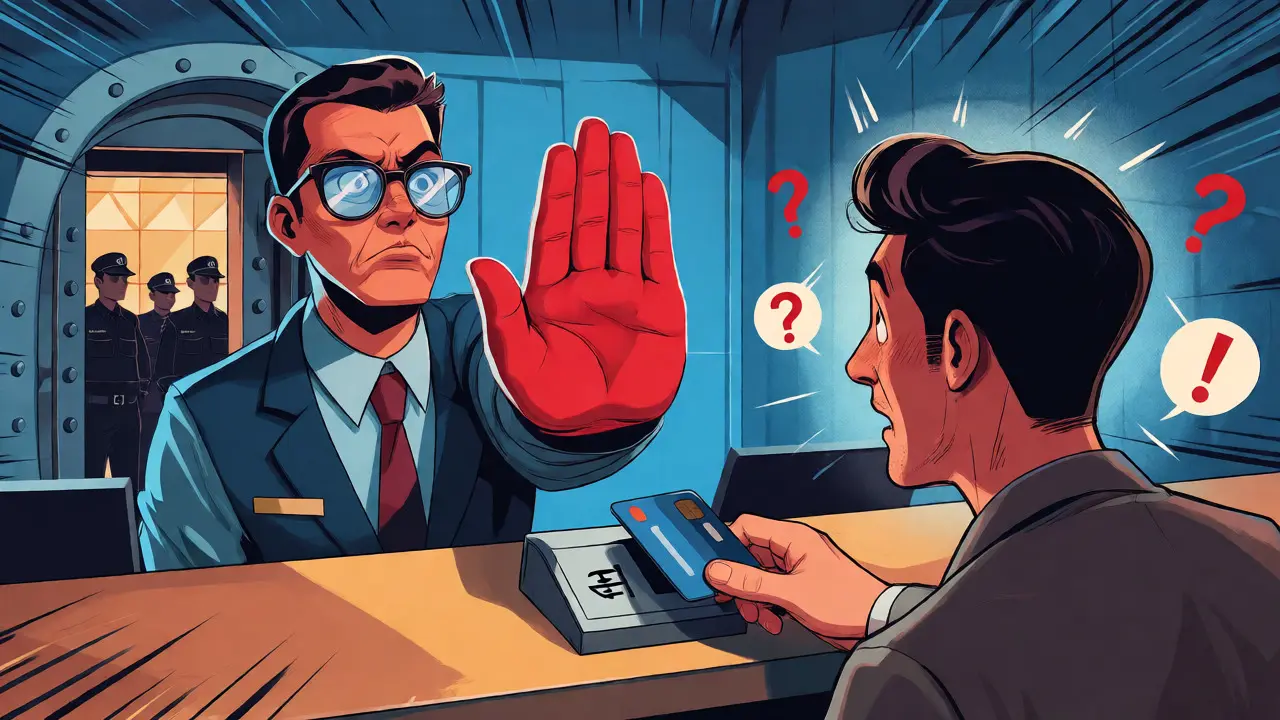
What does this look like in practice? If you try to transfer funds from your local bank account to a crypto exchange via a standard wire transfer or debit card purchase, the transaction often gets flagged. Card acquirers view crypto exchanges as high-risk operations. Many users report having their credit or debit cards blocked for making purchases on platforms like Coinbase or Binance. In some cases, accounts have been frozen temporarily while the bank investigates the nature of the transfers.
| Method | Legality | Risk Level | Typical Fees/Premiums |
|---|---|---|---|
| Direct Bank Transfer to Exchange | Legal but often blocked | High (Account freezes) | Standard bank fees + FX rates |
| Credit/Debit Card Purchase | Legal but often declined | Medium-High (Card blocking) | 1-3% card processing fee |
| Peer-to-Peer (P2P) Cash Trades | Legal (Private transaction) | Low-Medium (Counterparty risk) | 8-12% premium over market price |
| OTC Desks / Telegram Groups | Unregulated gray area | Medium (No consumer protection) | Negotiable, often cash-based |
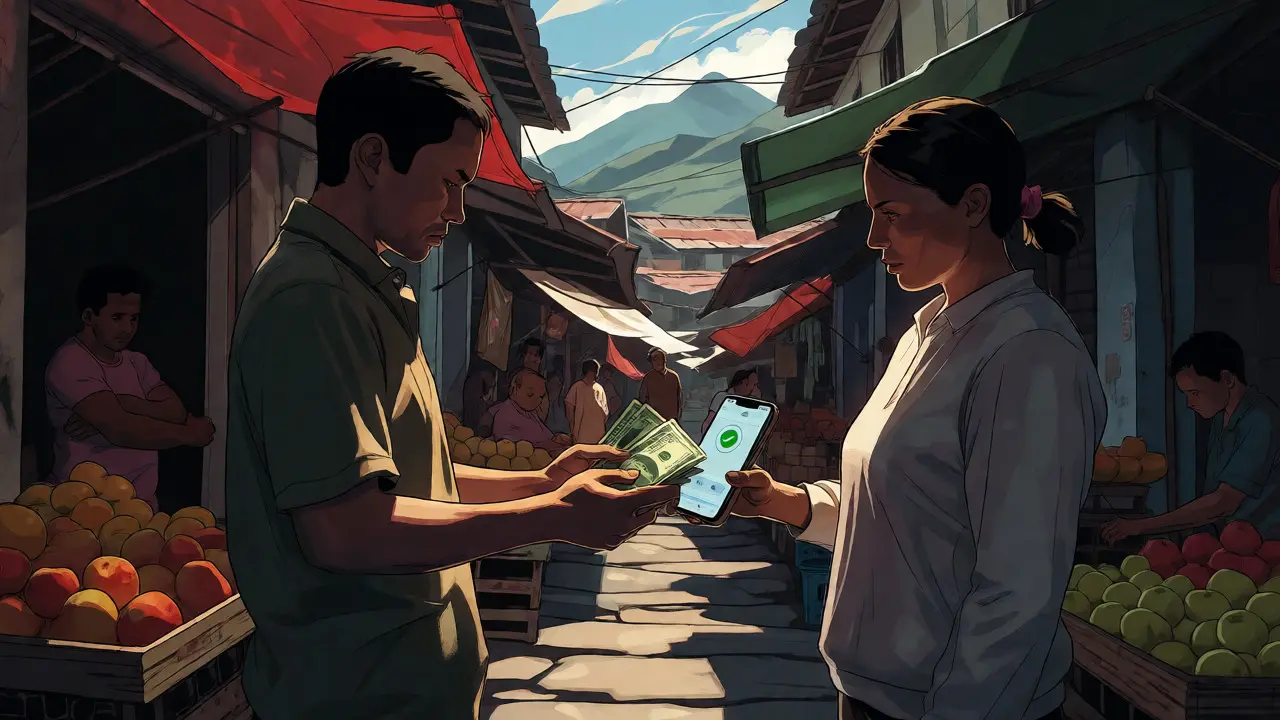
Because direct routes are unreliable, many Ecuadorians turn to Peer-to-Peer (P2P) markets. Platforms like Mercado Bitcoin or Binance P2P allow you to send USD directly to another user’s bank account, who then releases the crypto to your wallet. This bypasses the exchange’s need to interact with the local banking system directly. However, this method comes with its own costs. Due to low liquidity and high demand, buyers often pay a premium of 8-12% above the global market price when purchasing with cash or local transfers.
Taxation: Paying Up on Profits
A common misconception is that because crypto isn't money, it isn't taxed. That is incorrect. The Internal Revenue Service (SRI) treats realized gains from cryptocurrency sales as income sourced in Ecuador. If you buy Bitcoin at $30,000 and sell it at $40,000, that $10,000 profit is subject to income tax.
For individuals, these gains are taxed at progressive rates that can reach up to 35%. For corporations, the rate is generally 25%. The key trigger for taxation is the realization event-selling the asset for fiat currency (USD). Simply holding Bitcoin and seeing its value rise on your screen does not create a taxable event until you convert it back to dollars or spend it (though spending is restricted).
You must keep meticulous records. Since banks don't provide detailed statements linking crypto trades to your income, you are responsible for tracking every purchase and sale. Failure to report these gains can lead to penalties during annual audits. Given that only about 50% of adults in Ecuador have bank accounts, many crypto users operate in the informal economy, but those with formal status should treat crypto profits like any other investment income.
Mining and Infrastructure Challenges
Is mining profitable in Ecuador? Technically, yes, it is not prohibited. Practically, it is difficult. Mining requires cheap electricity and stable infrastructure. Ecuador’s average industrial electricity tariff hovers around $0.145 per kWh, which is about 23% higher than the Latin American average. Additionally, the Andean grid experiences frequent outages, averaging nearly 15 hours of downtime per month in some regions according to recent data.
These factors limit large-scale mining operations. Most activity consists of small-scale residential setups, often concentrated in the suburbs of Quito or coastal areas. Import duties on computing equipment add another layer of cost, with tariffs reaching 35% on specialized hardware. As a result, Ecuador contributes less than 0.0001% of the global Bitcoin hash rate. If you are looking to mine, you need to factor in high energy costs and potential power interruptions before expecting a return on investment.
Regional Context: How Ecuador Compares
Ecuador’s approach stands in stark contrast to its neighbors. While countries like Paraguay have passed laws regulating crypto payments and mining, and Mexico has established a licensing framework for virtual assets, Ecuador remains one of the most restrictive environments in Latin America. There is no formal pathway for crypto businesses to obtain licenses. This pushes activity into unregulated channels, increasing risks for consumers who lack legal recourse if an exchange fails.
The primary argument for this strictness is monetary sovereignty. In a dollarized economy, allowing private currencies could theoretically undermine the central bank's control over money supply. However, critics argue that this rigidity stifles innovation. With 50% of the population unbanked, many see crypto as a tool for financial inclusion, particularly for receiving remittances. Currently, sending money to Ecuador costs an average of 6.3%, well above the UN target of 3%. Crypto could lower these costs, but regulatory uncertainty prevents widespread adoption of these solutions.
Practical Tips for Users in Ecuador
If you decide to navigate this landscape, preparation is key. Here are a few heuristics to keep you safe:
- Use P2P for entry: Avoid direct bank transfers to exchanges initially. Start with P2P trades where you send USD to a verified user. This reduces the chance of your bank flagging the transaction as suspicious.
- Verify OTC partners: Only 12% of advertised OTC services are considered trustworthy by local communities. Stick to platforms with escrow services or highly rated local traders.
- Expect premiums: Don't be surprised if you pay more than the spot price. Liquidity is low, and sellers charge for the convenience of converting USD to crypto.
- Keep tax records: Save screenshots of every trade confirmation. The SRI may ask for proof of source and destination of funds.
Community support is vital. Resources in Spanish are scarce, so joining Telegram groups or Reddit communities like r/CryptoEcuador can help you find reliable local contacts. Always test with small amounts first. The learning curve is steep, and mistakes can be costly when banks are quick to freeze accounts.
Frequently Asked Questions
Can I pay for groceries with Bitcoin in Ecuador?
Generally, no. Cryptocurrencies are not legal tender in Ecuador. While some private merchants might unofficially accept them, they cannot legally require customers to pay in crypto, and most formal businesses will refuse to avoid regulatory issues with the Central Bank.
Do I have to pay taxes on Bitcoin held in Ecuador?
You do not pay tax on unrealized gains (holding value increases). However, when you sell Bitcoin for USD (realized gain), that profit is considered income and is subject to progressive income tax rates up to 35% for individuals.
Why did my bank block my transfer to Binance?
Ecuadorian banks are required to monitor transactions for compliance with monetary codes. Transfers to crypto exchanges are often flagged as high-risk or unauthorized payments. The bank may block the transaction or freeze the account pending an explanation of the funds' origin and purpose.
Is cryptocurrency mining legal in Ecuador?
Yes, mining is not expressly prohibited. However, it faces practical hurdles such as high electricity costs ($0.145/kWh average), import duties on hardware, and occasional grid instability, making large-scale commercial mining less viable than in neighboring countries.
Are there any licensed crypto exchanges in Ecuador?
As of late 2024, there are no domestic cryptocurrency exchanges holding an official license to operate within the formal financial system. Users rely on international platforms accessed via P2P networks or offshore APIs.