
Searching for the FLTY Fluity airdrop? You might be mixing up two very different things. There is no official "Fluity Paddle" campaign running on CoinMarketCap right now. Instead, you are likely looking at either the native distribution of the FLTY token by Fluity Protocol or a separate, unrelated project called Paddle. Confusion here is common because both names float around in crypto Twitter and aggregator sites, but they do not share the same wallet or roadmap.
Let's clear the fog. Fluity Protocol is a specific DeFi project on Binance Smart Chain. It is a fork of Liquity, meaning it offers interest-free borrowing against collateral. The token is FLTY. Paddle is a different entity, often associated with gaming or other utility tokens. CoinMarketCap is just the tracker where you see prices and sometimes list airdrops, but it does not create these projects. Understanding this distinction saves you from sending money to the wrong address or waiting for a reward that never comes.
What Is Fluity Protocol (FLTY)?
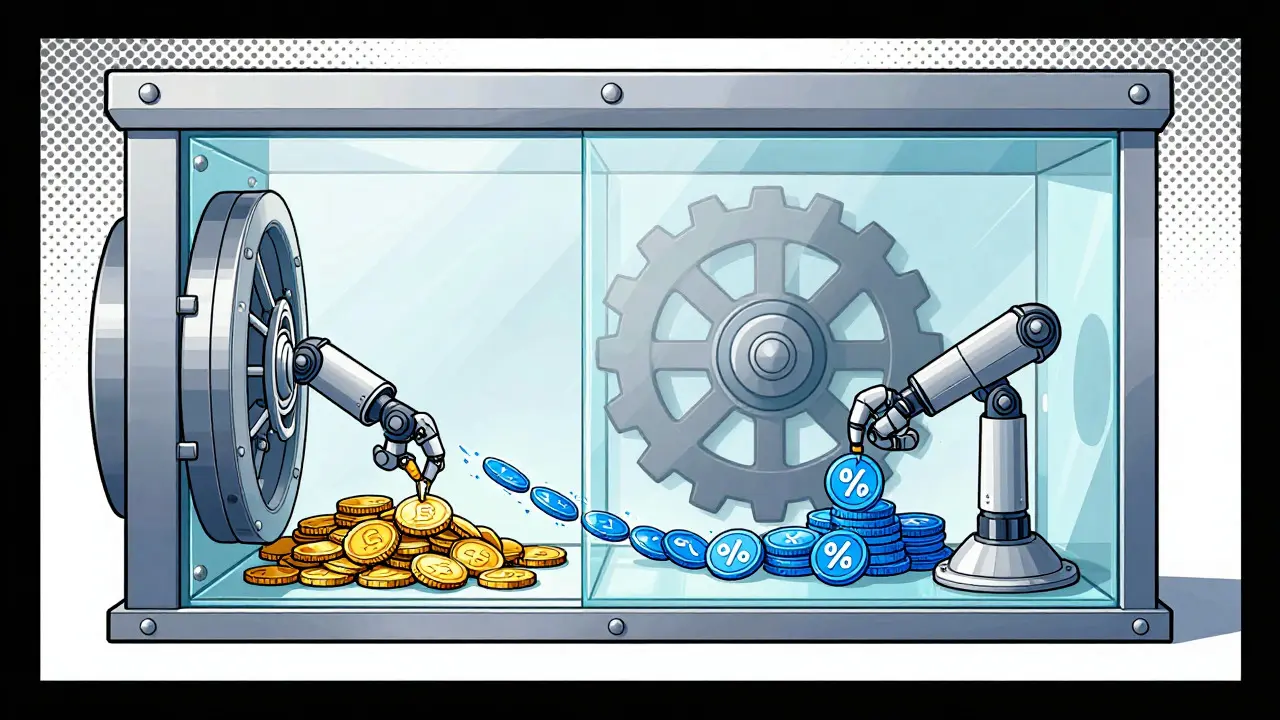
Fluity Protocol is a decentralized lending protocol deployed on Binance Smart Chain that functions as a friendly fork of Liquity Protocol. Its primary goal is to provide stablecoin issuance without charging interest on loans. Think of it like a savings account where you lock up assets to borrow stablecoins, but you pay zero percent interest over time.
The token powering this ecosystem is FLTY, which serves as the governance and incentive token. As of mid-2026, the total supply is capped at 100 million tokens, with roughly 44.73 million currently circulating. The smart contract lives at address 0x83b3...7BCf31 on the BSC network. This technical setup mirrors its parent project, Liquity, but adapts it for the faster, cheaper transaction environment of BNB Chain.
Why does this matter for an airdrop? Because Fluity’s value proposition relies on capital efficiency. If you hold FLTY, you participate in the protocol's growth through staking rewards or governance votes. Unlike typical marketing airdrops that give you free coins to hype a price, Fluity’s distribution is tied to actual usage of the platform. You don't get FLTY just for following a Twitter account; you get it by engaging with the borrowing mechanics or participating in early-stage incentives defined by the community.
The "Paddle" Confusion Explained
So, where did "Paddle" come from? In the crypto world, names can collide. Paddle is a term used by several unrelated projects, including payment processors and gaming platforms. When people search for "Fluity Paddle," they are usually clicking on SEO-heavy articles that try to bundle keywords together to rank higher. There is no official partnership between Fluity Protocol and a major entity named Paddle that would result in a joint airdrop.
If you saw a claim saying "Complete Paddle tasks to earn FLTY," check the source carefully. Scammers often use legitimate-sounding names to lure users into fake dApps. Always verify the contract address on BscScan before interacting with any new interface. The real Fluity Protocol communicates primarily through its own Discord and Twitter channels, not through third-party task platforms unless explicitly announced by the core team.
CoinMarketCap's Role in Airdrops
CoinMarketCap is a leading cryptocurrency market data aggregator that tracks prices, volumes, and airdrop campaigns. Many users assume CoinMarketCap runs all airdrops, but that’s not true. They act as a hub. Their airdrop page lists active campaigns, but as of August 2026, their direct airdrop section shows zero active or upcoming major campaigns of their own making.
However, CoinMarketCap does host "Learn and Earn" programs. These are educational quizzes where you learn about a project and receive a small amount of tokens for passing. For example, they have previously run campaigns for tokens like Sonic (S) or KernelDAO (KERNEL). If there were a major FLTY campaign, it would likely appear here first. Since it doesn’t, the chances of a massive, public-facing CoinMarketCap-hosted FLTY airdrop are low right now.
Instead, CoinMarketCap serves as your verification tool. Before you join any FLTY-related opportunity, check if the token is listed on their site. Look at the trading volume. Currently, FLTY has very low recorded volume, which suggests the market is still in an early accumulation phase rather than a hype-driven explosion. This context helps you decide if the risk/reward ratio makes sense for your portfolio.
How to Verify Legitimate FLTY Opportunities
Given the lack of a single, giant airdrop event, you need a checklist to navigate the smaller, more nuanced opportunities that might exist within the Fluity ecosystem. Here is how to approach them safely:
- Check the Official Channels: Only trust announcements from the verified Fluity Protocol Twitter and Discord. If a link isn’t posted there, treat it with suspicion.
- Verify the Contract Address: Compare the token contract on BscScan with the one listed on CoinMarketCap or the official docs. Mismatched addresses are the #1 red flag.
- Look for Utility, Not Just Hype: Does holding FLTY give you voting rights? Can you stake it for yield? If the token only exists to be sold, the long-term value is questionable.
- Monitor the Circulating Supply: With 44.73 million out of 100 million tokens in circulation, watch for unlock schedules. Large unlocks can dump on the price, affecting your potential returns.
Remember, in DeFi, "airdrops" often look more like "rewards for liquidity provision" or "governance participation." Don't expect a magic button that gives you thousands of dollars for free. Expect to put in work-like providing liquidity or staking-to earn your allocation.
Comparing Fluity to Similar Protocols
To understand where FLTY fits, let's compare it to its closest relative, Liquity, and another BSC-based DeFi project, PancakeSwap. This helps clarify what unique value Fluity brings to the table.
| Feature | Fluity Protocol (FLTY) | Liquity (LQT) | PancakeSwap (CAKE) |
|---|---|---|---|
| Primary Function | Interest-free borrowing on BSC | Stablecoin issuance on Ethereum | DEX and Yield Farming on BSC |
| Network | Binance Smart Chain | Ethereum Mainnet | Binance Smart Chain |
| Token Utility | Governance & Staking | Governance & Staking | Fees, Governance & Farming |
| Interest Rate | 0% (Protocol level) | Variable (User set) | N/A (Trading fees apply) |
| Current Status (2026) | Early adoption, low volume | Mature, high TVL | Dominant DEX on BSC |
This table highlights that Fluity is a niche player. It takes the proven Liquity model and moves it to BSC to capture lower gas fees. However, it competes directly with established giants like PancakeSwap for user attention on the same chain. Your edge as an investor or participant is understanding that Fluity is betting on capital efficiency as its main selling point, rather than sheer volume or variety of tokens.

Risks and What to Watch Out For
Every DeFi project carries risk, and FLTY is no exception. The biggest risk here is liquidity. With near-zero trading volume reported recently, getting in and out of large positions can be difficult. Slippage could eat into your profits if you sell too much at once.
Another risk is the "fork fatigue" factor. Fluity is a fork of Liquity. While forks can succeed, they often struggle to attract developers and users who are already loyal to the original. If Liquity improves its technology or lowers costs, Fluity needs to offer something distinctly better to stay relevant. Keep an eye on developer activity on GitHub. If commits stop, the project might be stalling.
Finally, beware of rug pulls disguised as airdrops. If a website promises "10,000 FLTY for free" and asks for your seed phrase, close the tab immediately. Legitimate airdrops never ask for your private keys. They only require your wallet address to send tokens.
Next Steps for Investors
If you are interested in FLTY, start small. Connect your wallet to the official Fluity site (double-check the URL) and explore the borrowing interface. See how the mechanics work. Then, decide if you want to hold the token based on your belief in its future utility.
Set alerts on CoinMarketCap for FLTY. If the trading volume spikes or a new listing appears on a major exchange, that’s a signal to reassess. For now, patience is key. The crypto market moves fast, but good fundamentals take time to build. Don't chase the noise; focus on the protocol's actual performance.
Is there an official Fluity Paddle airdrop?
No, there is no confirmed joint airdrop between Fluity Protocol and a project called Paddle. This is likely a keyword confusion. Check official Fluity channels for any standalone FLTY distributions.
Where can I track FLTY token data?
You can track FLTY on CoinMarketCap or CoinGecko. Use these platforms to monitor price, volume, and circulating supply. Also, check BscScan for on-chain contract activity.
What is the maximum supply of FLTY?
The maximum supply of FLTY is capped at 100 million tokens. As of 2026, approximately 44.73 million are in circulation.
Does CoinMarketCap host FLTY airdrops?
CoinMarketCap hosts "Learn and Earn" campaigns for various tokens. If a FLTY campaign exists, it would be listed on their airdrop page. Currently, no major FLTY-specific campaign is active there.
How is Fluity different from Liquity?
Fluity is a fork of Liquity deployed on Binance Smart Chain instead of Ethereum. This allows for lower transaction fees and faster processing times, targeting users who prefer the BNB Chain ecosystem.





Jennifer Ulmer
August 21, 2026 AT 00:26It is interesting how names can collide in this space. The distinction between the protocol and the aggregator is quite clear here.
Calliope Clio
August 21, 2026 AT 05:55Finally someone who actually reads the contract before clicking! 🙄 Most people just see "airdrop" and think free money, not realizing it's just a liquidity trap for the whales. The volume on FLTY is so low it’s basically a ghost town, but sure, let's pretend it's the next big thing because of some SEO article about "Paddle." Classic. 😂
OLIVER CHRISTIAN
August 22, 2026 AT 21:38Great breakdown. To add to the verification point: always check the token decimals and symbol on BscScan. Scammers love to clone the name but change the supply or owner permissions. If you see a 'mint' function that isn't disabled, run. Also, keep an eye on the GitHub commits as mentioned; if the last push was six months ago, the dev team might have moved on to their next fork project.
Zothana Pachuau
August 23, 2026 AT 07:48Oh, wonderful. Another fork of Liquity on BSC. Because we didn't have enough stablecoin protocols fighting for scraps. I bet the TVL is lower than my cat's water bowl. But hey, at least the gas fees are cheap, right? That must be worth something. 📉
Nikki keller
August 23, 2026 AT 22:15I appreciate the clarity on the CoinMarketCap role. It is often misunderstood as a creator of value rather than a tracker. The advice to monitor volume before entering is very prudent given the current market conditions for niche DeFi projects.
miranda gamboa
August 24, 2026 AT 22:34Let's talk APYs! If you're looking at the borrowing mechanics, the zero-interest model is huge for capital efficiency. We need to maximize our yield farming strategies here. Don't sleep on the staking rewards, folks! The governance utility is key to long-term hold potential. Let's pump this narrative! 🚀
Kelsey Anne
August 25, 2026 AT 11:33You are wrong. It is not a scam. It is a beta test. You should have bought in 2021. Now you complain about volume. Be grateful they listed on CMC. Most tokens don't get that far. Stop being lazy and do your own research instead of reading Reddit threads.
Mike Baca
August 26, 2026 AT 19:52honestly i thnk the real risk here isnt the tech its the attention span of the crowd. ppl forget these forks in like 3 weeks. but if u look at the code its solid enough. maybe its a sleeper hit? who knows. the uncertainty is kinda exciting tbh. feels like a gamble but a smart one if u watch the github.
Phelan Deihl
August 27, 2026 AT 14:45The point about slippage is important. I tried selling a small amount of a similar low-liquidity token last month and lost almost 5% just in spread. For FLTY, with such low volume, even a modest sell order could move the price significantly against you. Patience really is the only strategy that works here.
Tasha Davis
August 29, 2026 AT 09:35This is SO true! I was literally about to click on a fake link yesterday. Thanks for the warning! Let's stay safe out there everyone! 💪