Imagine having a direct say in how a billion-dollar financial protocol operates. No boardroom politics, no opaque executive decisions-just you, your tokens, and a vote that actually counts. This isn't a hypothetical scenario for early adopters; it's the daily reality for holders of governance tokens. These digital assets have evolved from simple speculative instruments into powerful tools that grant real authority over decentralized ecosystems. If you're wondering why anyone would hold these tokens beyond hoping their price goes up, you're asking the right question. The value proposition goes far deeper than market speculation.
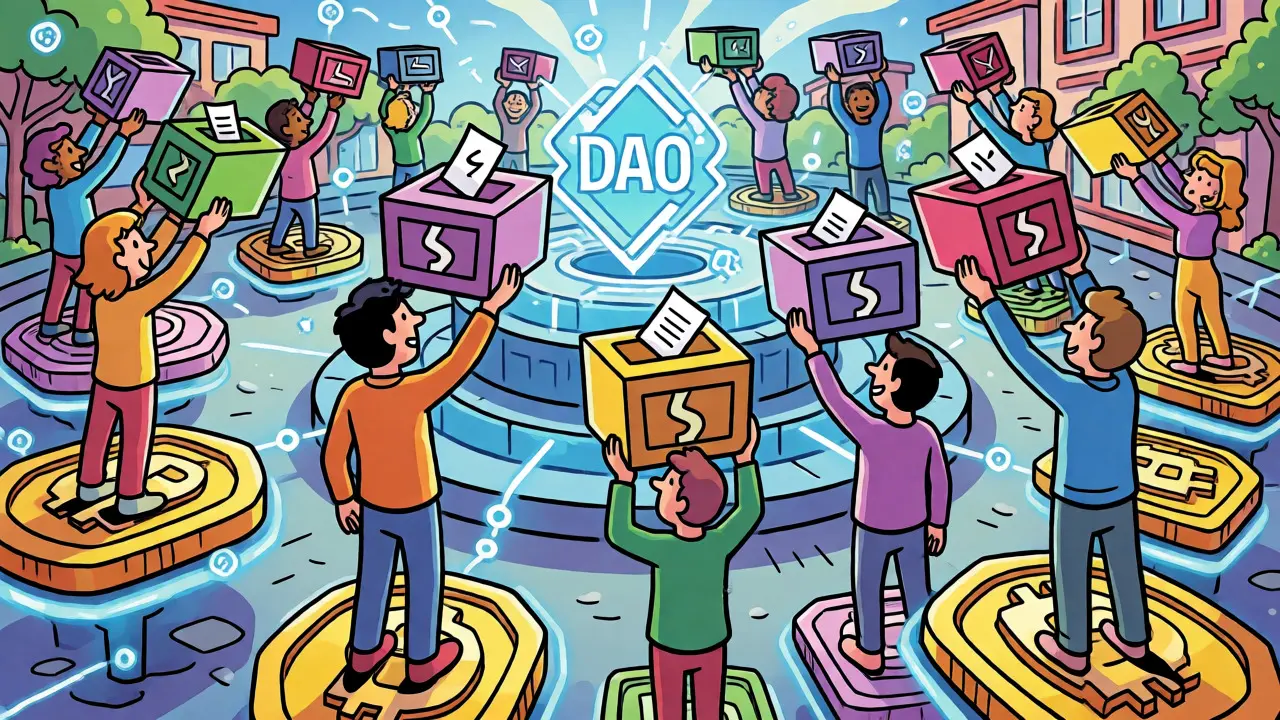
Governance tokens are cryptocurrencies specifically designed to give holders voting rights within a Decentralized Autonomous Organization (DAO) or a specific DeFi protocol. Unlike standard utility tokens that merely grant access to a service, governance tokens act as "voting chips" on the blockchain. When you hold them, you aren't just an investor; you become a stakeholder with the power to shape the project's future. This shift from passive ownership to active participation is what makes them unique in the crypto landscape.
Voting Power: Your Voice in Protocol Development
The most immediate benefit of holding governance tokens is political power. In traditional finance, shareholders might get one vote per share at an annual meeting, but those votes rarely influence day-to-day operations. In the world of DeFi, governance tokens allow users to vote on critical proposals directly on-chain. This includes everything from adjusting transaction fees and changing interest rates to allocating treasury funds and upgrading smart contracts.
Consider MakerDAO, one of the earliest examples of this model. Its MKR token holders have historically voted on changes to collateral types and stability fees, directly impacting the economic health of the DAI stablecoin. Similarly, Uniswap’s UNI token allows holders to decide how to spend millions of dollars from the protocol’s treasury. In March 2022, UNI holders voted to allocate $160 million to the Uniswap Community Growth Fund. That decision wasn’t made by a CEO in a closed office; it was made by the community. If you hold the token, you had a seat at that table.
This mechanism ensures that the protocol evolves according to the needs of its users rather than just the desires of its founders. It aligns incentives between developers and the community. If the team proposes a change that hurts users, the token holders can vote it down. This check-and-balance system reduces the risk of rug pulls or mismanagement, adding a layer of security that purely centralized projects often lack.
Economic Incentives: Staking and Fee Sharing
Voting is cool, but let’s be honest: money talks. Many governance tokens come with tangible economic benefits that go beyond potential price appreciation. One common feature is staking rewards. Protocols like Aave and Compound allow token holders to stake their governance tokens to secure the network or simply to earn yield. By locking up your tokens, you help stabilize the ecosystem, and in return, you receive additional tokens or a share of the protocol’s revenue.
Some protocols implement fee-sharing models where a portion of the trading fees generated by the platform is distributed back to governance token holders. This creates a direct link between the success of the protocol and your personal wallet. If more people use the exchange, fees go up, and your passive income increases. This turns governance tokens into productive assets rather than idle holdings. You’re not just waiting for the chart to turn green; you’re earning while you wait.
| Token | Primary Protocol | Key Governance Rights | Economic Benefit |
|---|---|---|---|
| UNI | Uniswap | Treasury allocation, protocol upgrades | Speculative growth, community fund voting |
| AAVE | Aave | Risk parameters, new asset listings | Staking rewards via Safety Module |
| MKR | MakerDAO | Collateral types, stability fees | Buy-back and burn mechanisms |
| COMP | Compound | Interest rate models, oracle updates | Proposal creation rights, COMP distribution |
Early Access and Innovation Exposure
Holding governance tokens often acts as a ticket to the front row of innovation. Many protocols offer exclusive perks to token holders, such as early access to new features, beta testing opportunities, or whitelist spots for upcoming NFT drops or token sales. Because governance tokens are tied to the core community, projects want to reward loyal supporters who are likely to stick around through market volatility.
This early exposure can be financially lucrative. For instance, if a protocol launches a new product that becomes popular, the increased usage drives up the value of the native token. As a holder, you’ve already captured that upside before the general public even knows about the product. Furthermore, being part of the governance process gives you insider knowledge of upcoming changes. You know about fee adjustments or new partnerships before they hit the news headlines, allowing you to adjust your strategy accordingly.
Community Belonging and Network Effects
Beyond the code and the cash, there’s a social component. Holding a governance token connects you to a global community of like-minded individuals. Discord servers, Telegram groups, and forum discussions are filled with passionate advocates debating the merits of each proposal. This sense of belonging can be surprisingly powerful. When you feel invested in a project’s success-not just financially, but emotionally-you’re more likely to advocate for it, create content, and bring in new users.
This strengthens the network effects. A vibrant, engaged community attracts developers, partners, and investors. The more people participate in governance, the more robust the protocol becomes. It’s a virtuous cycle: better engagement leads to better decisions, which leads to better outcomes, which attracts more users. As a holder, you’re fueling this engine.

The Risks: Plutocracy and Voter Apathy
It’s not all sunshine and high yields. There are significant downsides to consider. The biggest criticism of current governance models is plutocracy-the rule of the rich. Since voting weight usually corresponds to the number of tokens held, whales (large holders) can dominate votes. A single entity with 5% of the supply can swing a close vote, potentially overriding the will of thousands of smaller holders.
Another issue is voter apathy. Studies show that participation rates in many DAOs hover below 5%. Most holders buy tokens for speculation and never bother to vote. This low turnout means that a small, organized group can easily push through proposals that benefit themselves at the expense of the broader community. If you plan to hold governance tokens, you need to be prepared to actually read the proposals and cast your vote, otherwise, you’re letting others make decisions for you.
How to Get Involved: Practical Steps
Ready to exercise your rights? Here’s how to start participating in governance:
- Connect Your Wallet: Most governance interfaces require a Web3 wallet like MetaMask or Rabby. Ensure you have enough ETH (or the relevant native coin) for gas fees to submit votes.
- Check Eligibility: Some protocols require you to delegate your tokens or lock them for a certain period before you can vote. Read the rules carefully.
- Read the Proposals: Don’t just click "Yes." Read the technical details. Understand how a proposed fee change affects your yield or how a new treasury allocation impacts liquidity.
- Vote On-Chain: Submit your vote. Note that this costs gas fees, so batch your votes if possible to save money.
- Monitor Results: Track how the community votes. This helps you gauge sentiment and anticipate future market movements.
Remember, governance is a marathon, not a sprint. The protocols that survive long-term are those with active, informed communities. By holding and using your governance tokens, you’re not just investing in a cryptocurrency; you’re investing in a new way of organizing human cooperation.
Do I lose my tokens when I vote?
No, you do not lose your tokens. Voting typically requires you to sign a transaction with your wallet, which consumes a small amount of gas fees, but your token balance remains intact. However, some protocols may require you to stake or lock your tokens to gain voting power, meaning they are temporarily unavailable for trading until unlocked.
What happens if I don't vote?
If you don't vote, your tokens effectively abstain from the decision. In many systems, non-voting tokens are ignored, and the outcome is determined solely by those who did participate. This can lead to scenarios where a minority of active voters dictates the direction of the protocol, potentially against the interests of passive holders.
Are governance tokens considered securities?
The regulatory status varies by jurisdiction. In the US, the SEC has suggested that tokens marketed primarily for profit or tied to central management may be classified as securities. However, pure governance tokens that offer only voting rights and no expectation of profit derived solely from the efforts of others are generally viewed differently. Always consult a legal professional for specific advice.
Can I sell my governance tokens after voting?
Generally, yes. Unless the protocol has specific lock-up periods or vesting schedules attached to the tokens you received, you are free to trade them on secondary markets immediately after casting your vote. Liquidity depends on the exchange and the specific token's trading volume.
What is the difference between a governance token and a utility token?
A utility token grants access to a specific function or service within a platform (like paying for transactions). A governance token grants decision-making power over the protocol itself. While some tokens serve both purposes, the defining characteristic of a governance token is the ability to vote on proposals, not just use the service.