Mining Pool Earnings Calculator
Calculate Your Bitcoin Earnings
Estimate your potential monthly Bitcoin earnings based on your mining setup and pool fees.
Fee Impact
Five years ago, mining Bitcoin with a home rig was still possible. Today, it’s not just hard-it’s practically impossible. The network difficulty has skyrocketed, and solo miners are outgunned by corporate-scale operations using thousands of ASICs. That’s why mining pools aren’t just popular anymore-they’re the only way most people earn Bitcoin at all. If you’re mining today, you’re in a pool. And the pool you choose could mean the difference between profit and loss.
Why Mining Pools Are No Longer Optional
Back in 2015, you could mine a block with a decent GPU. Now, the Bitcoin network’s hashrate is over 800 EH/s. That’s 800 quintillion calculations per second. No individual miner, no matter how many rigs they own, can compete alone. Mining pools solve this by combining hashpower from thousands of participants. When the pool finds a block, rewards are split based on how much work each miner contributed. It’s not about luck anymore. It’s about consistency. Pools deliver steady payouts-often daily-instead of waiting months for a solo win. For hobbyists, that’s the only way to make mining financially viable. For big operators, it’s about risk management. A single miner might go weeks without a reward. A pool with 10 EH/s? They’re finding blocks every few hours.The New Players: Neopool, ViaBTC, and the Battle for Dominance
The mining pool market used to be dominated by a few giants: AntPool, F2Pool, and Slush Pool. But 2025 changed everything. New entrants are stepping up with smarter tech, better transparency, and aggressive growth tactics. Neopool, for example, hit 15 EH/s in early 2025 and didn’t stop there. Their CEO, Andrei Kapeikin, says their goal isn’t to match the market-it’s to lead it. They’ve rolled out custom algorithms that optimize payout timing based on network congestion and miner location. They also offer real-time hashrate dashboards with zero lag, something older pools still struggle with. ViaBTC, meanwhile, went all-in on trust. In March 2025, they became the first major pool to pass SOC 2 Type I audit-a global standard for data security and operational controls. That’s huge. Miners used to pick pools based on fees and uptime. Now, they’re asking: "Do they have audited security? Can I trust them with my data?" ViaBTC’s move paid off. Their user base grew 27% in Q2 2025.It’s Not Just About Hashrate Anymore
The competition isn’t just about who has the most power. It’s about what else they offer. F2Pool didn’t just upgrade their software-they expanded into staking. In May 2025, they partnered with stake.fish to let miners stake ETH, SOL, NEAR, CFX, and even BTC (via Babylon Network) directly from their mining dashboard. That’s a game-changer. Instead of switching platforms to earn yield on idle coins, miners can manage everything in one place. AntPool ran a 90-day zero-fee promotion for new ASIC buyers. If you bought an ANTMINER S23 Hyd. or S23 Imm., you got zero pool fees for three months. That’s not just a discount-it’s a way to lock in users before they even start mining. It’s a loyalty play disguised as a promotion. Pools are also competing on UX. Older platforms still feel like 2018. New ones have mobile apps, multi-language support, AI-driven payout forecasts, and even community gamification. ViaBTC’s "Complete the Puzzle, Unlock $69,999" campaign in June 2025 wasn’t just a giveaway. It turned mining into a daily habit. Users checked in, answered trivia, voted on pool features. Engagement went up 40%.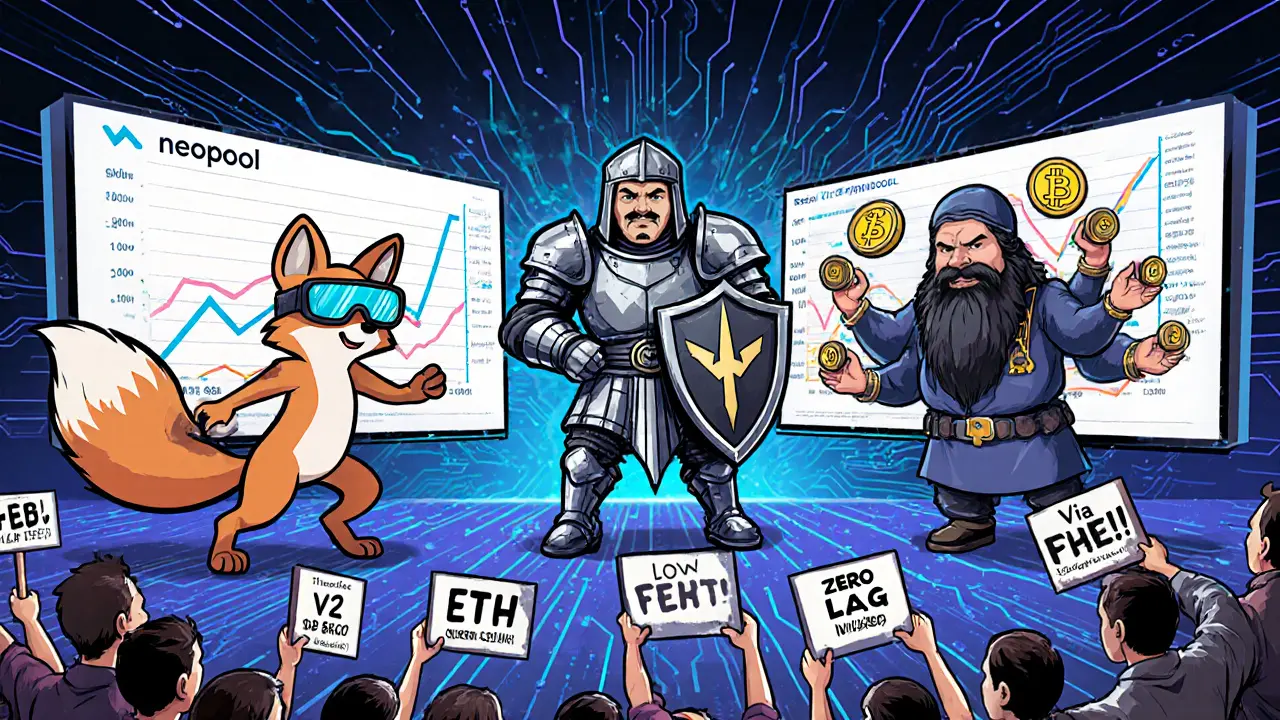
Hardware Is Changing Too-And So Are the Pools
The ANTMINER S23 Hyd. and S23 Imm. aren’t just faster. They’re quieter, cooler, and use 30% less power than last year’s models. That means new mining farms can run in places where older rigs couldn’t-urban warehouses, repurposed data centers, even cold-storage facilities in Scandinavia. Pools are adapting. Neopool now has dedicated server clusters optimized for the S23 Imm.’s unique cooling profile. F2Pool updated their payout algorithm to account for the higher efficiency of these new ASICs. If your rig is more efficient, you get a slight bonus in your share. It’s a subtle incentive-but it keeps miners loyal. Even more interesting: some pools are now partnering with hardware manufacturers. Neopool has a direct deal with MicroBT to offer pre-configured S23 units with their pool software already installed. No setup. No config files. Just plug in and mine. It’s turning mining from a tech project into a plug-and-play utility.The Rise of the Smart Miner
Today’s miner doesn’t just pick a pool based on the lowest fee. They’re doing research. They’re testing. They’re switching. A miner in Texas might start with AntPool because of the zero-fee promo. After 30 days, they notice F2Pool’s payouts are more consistent during Bitcoin halving cycles. They switch. They run a two-week test. They check the payout history, server latency, and fee structure. They look at whether the pool supports their preferred payout method-PPLNS, FPPS, or SOLO. This isn’t casual anymore. It’s strategic. The difference between a 1.5% fee and a 2.5% fee might seem small. But if you’re mining 100 TH/s, that’s $120 a month. That’s a laptop. Or a new ASIC fan. Or a month’s electricity bill. Smart miners now track pool performance over time. They use third-party tools like MiningPoolStats and Poolin’s analytics to compare uptime, payout frequency, and fee structures. They don’t just pick a pool-they audit it.Energy, Sustainability, and the Next Wave of Investment
Bitcoin mining has been under fire for years over energy use. But in 2025, the narrative is shifting. New mining farms are built with renewable energy in mind. Neopool’s latest facility in Iceland runs entirely on geothermal. ViaBTC’s Canadian site uses hydroelectric power. Even AntPool’s Texas operations now source 60% of their energy from wind farms. Institutional investors are coming back. Bitcoin’s price recovery since June 2025-up 45% from its mid-year low-has reignited interest. Hedge funds, family offices, and even university endowments are allocating capital to mining infrastructure. But they’re not buying rigs. They’re buying pool shares. Why? Because pools are becoming infrastructure. They’re predictable. They’re audited. They’re scalable. And unlike holding Bitcoin, mining gives you a steady cash flow. That’s appealing to investors who want yield, not just speculation.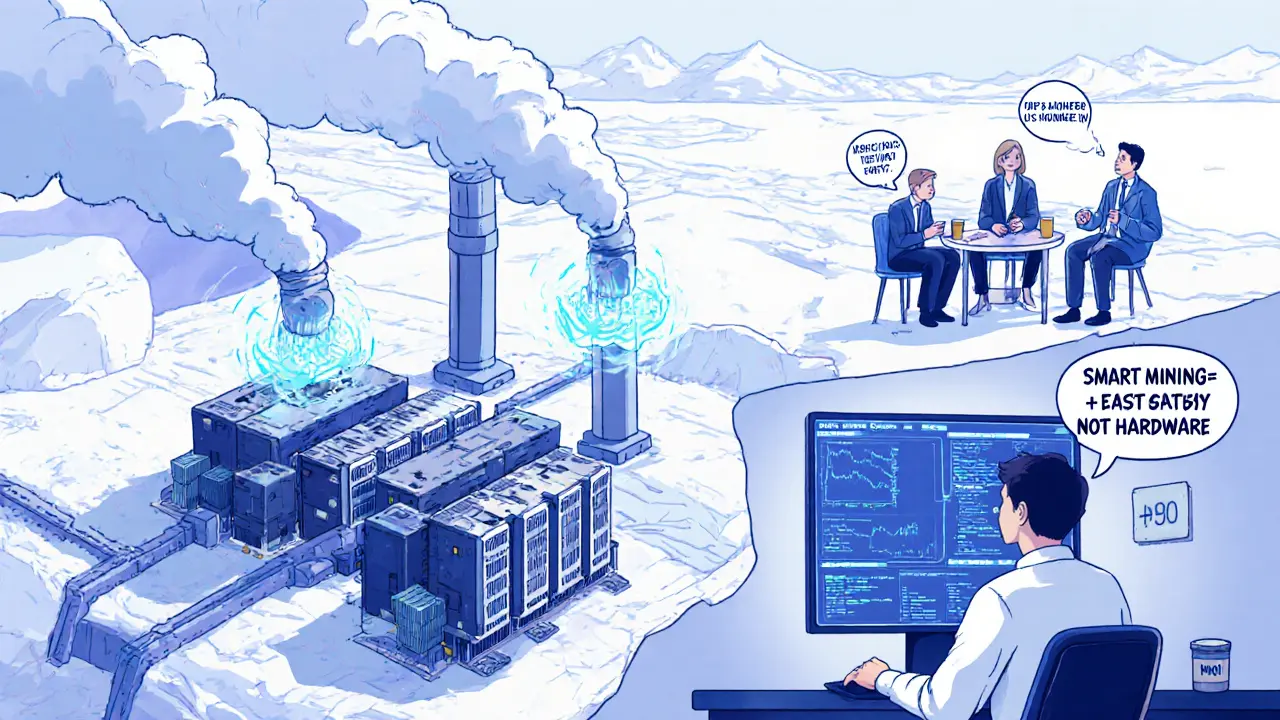
What’s Next? Automation, AI, and Remote Mining
The future of mining pools isn’t just about more power. It’s about smarter power. AI-driven hashrate management is already live in a few pools. Neopool’s system predicts network difficulty spikes 72 hours in advance and adjusts miner allocation automatically. If a surge is coming, they shift resources to regions with cheaper power. If a blackout is forecasted, they pause non-critical rigs. Remote operations are growing. Unstaffed mining farms in Canada, Kazakhstan, and Georgia are monitored from offices in Boulder, Berlin, and Singapore. Data scientists optimize energy use. AI engineers tweak payout algorithms. Technicians fix hardware via remote diagnostics. The human side of mining is changing too. The job isn’t about lifting heavy rigs anymore. It’s about reading dashboards, analyzing data, and writing scripts. Younger workers are joining the industry-not because they love crypto, but because it’s a high-tech field with remote work options.How to Choose the Right Pool in 2025
If you’re mining-or thinking about it-here’s what to look for:- Fee structure: Look for pools under 1.8%. Anything over 2.5% is hard to justify unless they offer unique features.
- Payout method: PPLNS is common but volatile. FPPS gives steady payouts but costs more. SOLO is risky unless you’re running massive hashrate.
- Server locations: Pick a pool with servers near you. Lower latency = fewer rejected shares = more profit.
- Security: Has the pool been audited? Do they use two-factor auth? Do they store private keys on cold wallets?
- Extra features: Staking? Mobile app? Real-time analytics? These aren’t gimmicks-they’re value-adds that save time and money.
The Bottom Line
The mining pool industry isn’t slowing down. It’s accelerating. The players are bigger. The tech is smarter. The stakes are higher. If you’re still mining solo, you’re not just behind-you’re wasting electricity. The future belongs to those who understand that mining isn’t about hardware anymore. It’s about strategy. It’s about ecosystem. It’s about choosing the right pool-and staying flexible enough to switch when needed. The next big winner won’t be the pool with the most hashpower. It’ll be the one that understands miners best-offering reliability, transparency, and tools that make mining easier, not harder.Are mining pools still worth it in 2025?
Yes, absolutely. Solo mining is no longer viable for anyone except the largest corporate operations. Mining pools let individual miners earn consistent Bitcoin rewards by combining hashpower. Without a pool, your chances of earning a block are less than 0.0001% per day. With a pool, you earn daily payouts based on your contribution.
Which mining pool has the lowest fees in 2025?
As of mid-2025, Neopool and F2Pool offer the lowest standard fees at 1.5%. AntPool offers 0% fees for 90 days to new ASIC buyers, but reverts to 2.0% afterward. Always check if there are hidden costs like minimum payout thresholds or extra charges for certain payout methods.
Is it safe to join a mining pool?
It’s as safe as the pool you choose. Reputable pools like ViaBTC and Neopool have passed SOC 2 audits and use cold storage for funds. Never give your private keys to a pool. They only need your Bitcoin address for payouts. Avoid pools that ask for login credentials to your wallet or require KYC unless you’re comfortable with the privacy trade-off.
Can I mine multiple coins on one pool?
Yes. F2Pool and ViaBTC now support multi-coin mining and staking. You can mine Bitcoin and stake Ethereum, Solana, or NEAR all from the same dashboard. This is especially useful if you want to earn yield on coins you don’t want to sell. Just make sure the pool supports your preferred coins and has low fees for each.
How do I know if my mining pool is reliable?
Check three things: payout history (look for consistent daily payouts), uptime (99%+ is standard), and community feedback on forums like BitcoinTalk or Reddit. Use tools like MiningPoolStats to compare metrics across pools. If a pool has frequent downtime, delayed payouts, or hidden fees, it’s not worth the risk.
Should I switch mining pools if I find a better one?
Yes, if the benefits outweigh the costs. Switching pools can mean higher payouts, lower fees, or better features. The only downside is a small delay in your next payout-usually 12 to 24 hours. Most miners switch every 3 to 6 months based on performance. Don’t stay loyal to a pool just because you started there.



Vance Ashby
November 27, 2025 AT 03:19Casey Meehan
November 28, 2025 AT 14:53Tom MacDermott
November 30, 2025 AT 02:37Puspendu Roy Karmakar
December 1, 2025 AT 22:41Christina Oneviane
December 2, 2025 AT 21:50Shelley Fischer
December 4, 2025 AT 03:05SHIVA SHANKAR PAMUNDALAR
December 5, 2025 AT 09:48Michael Fitzgibbon
December 5, 2025 AT 21:56Felicia Sue Lynn
December 7, 2025 AT 07:30