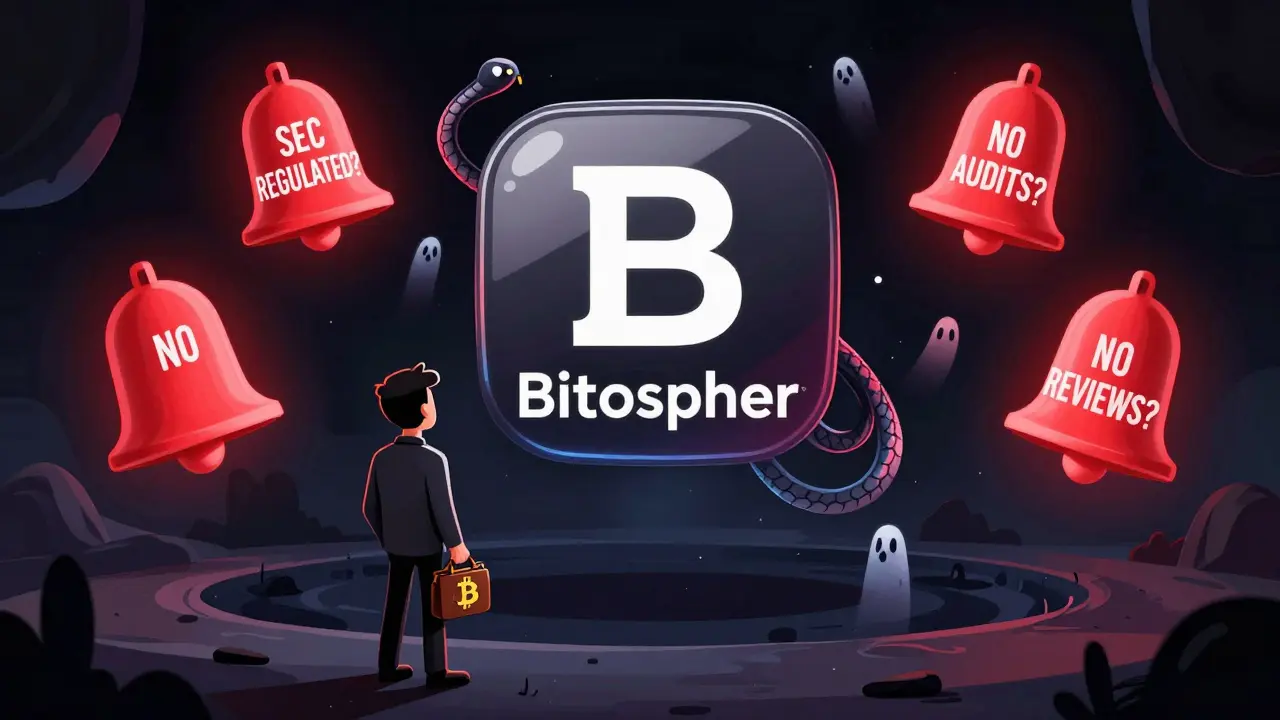
When you hear a crypto exchange claims to be SEC-regulated, your alarm bells should ring - not because regulation is bad, but because no major crypto exchange has ever been fully approved by the SEC. Bitospher says it is. That’s the first red flag in this review. If you’re considering depositing funds into Bitospher, you need to know what’s real, what’s exaggerated, and what’s likely fake.
What Bitospher Claims - And What’s Missing
Bitospher markets itself as a secure, compliant, user-friendly crypto exchange. According to its promotional materials, it offers:- Zero fees on deposits and withdrawals
- 0.25% trading fee for both makers and takers
- SEC regulation status
- 95%+ of funds stored in cold storage
- 24/7 customer support
- Mobile app and multiple payment methods
The SEC Regulation Claim: A Red Flag
The U.S. Securities and Exchange Commission (SEC) does not “approve” crypto exchanges like it does stock exchanges. Instead, it sues them. In 2023, the SEC filed lawsuits against Coinbase and Binance for operating as unregistered securities exchanges. Since then, the SEC has continued to crack down - not to regulate, but to shut down. As of October 2025, not a single crypto exchange has received SEC registration as a national securities exchange. So when Bitospher says it’s SEC-regulated, it’s either lying, misinformed, or using misleading language. It might hold a state money transmitter license (like many exchanges do), but that’s not the same as SEC regulation. The difference? One means you’re legally allowed to move money. The other means you’re legally allowed to trade securities - a whole different level of oversight that no crypto exchange has achieved.Trading Fees: Competitive, But Not Best
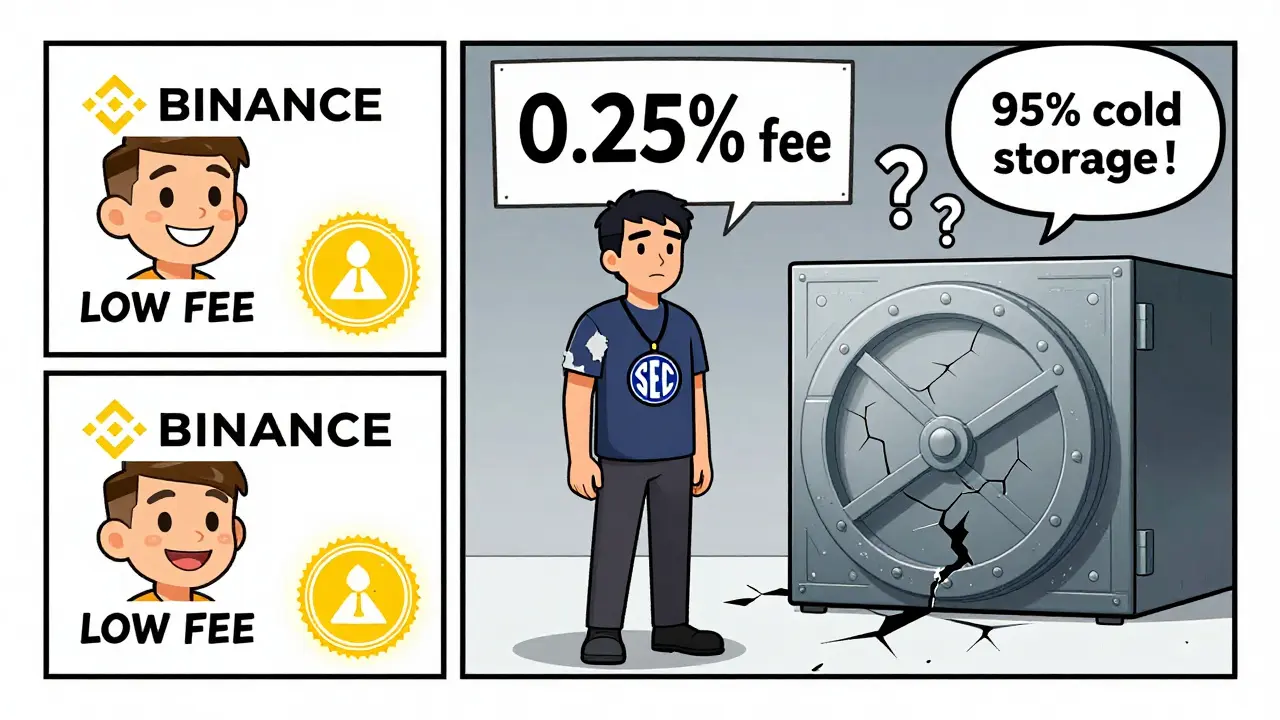
Bitospher charges 0.25% per trade, regardless of whether you’re buying or selling. That’s higher than most top exchanges:| Exchange | Taker Fee | Maker Fee |
|---|---|---|
| Bitospher | 0.25% | 0.25% |
| Binance | 0.10% | 0.02% |
| Coinbase Advanced Trade | 0.40% | 0.05% |
| Kraken | 0.16% | 0.00% |
Security: Cold Storage Sounds Good - But Is It Real?
Bitospher says it keeps 95-98% of funds in cold storage. That’s the industry gold standard. Exchanges that do this reduce hacking risks by up to 85%, according to Curtin University’s 2018 research. But cold storage only matters if you can prove it. No exchange has ever published a proof-of-reserves report for Bitospher. That means no one - not even a third-party auditor - has verified that the coins they say they hold actually exist. Compare that to Binance, which publishes monthly proof-of-reserves audits done by independent firms. Or Coinbase, which discloses its reserve ratios quarterly. Bitospher also claims SSL encryption, firewalls, and intrusion detection. All of those are basic requirements. Every exchange has them. The real test is two-factor authentication (2FA). Does Bitospher require it? Can you use Google Authenticator or YubiKey? Can you enable biometric login? The answer? Unknown. No details. No screenshots. No documentation.Customer Support and User Experience
Bitospher says it offers 24/7 customer support. That’s great - if it’s true. But where are the reviews? Where’s the Trustpilot page? The Reddit threads? The YouTube unboxings? The complaints about delayed withdrawals? The silence is deafening. Coinbase has over 18,500 Trustpilot reviews. Binance has hundreds of thousands of forum posts. Bitospher? Nothing. Not one verified user testimonial. That’s not normal. It’s suspicious. The mobile app? Supposedly exists. But no screenshots, no App Store or Google Play links, no feature list. No API documentation for traders. No educational content for beginners. If you’re new to crypto, you’re on your own.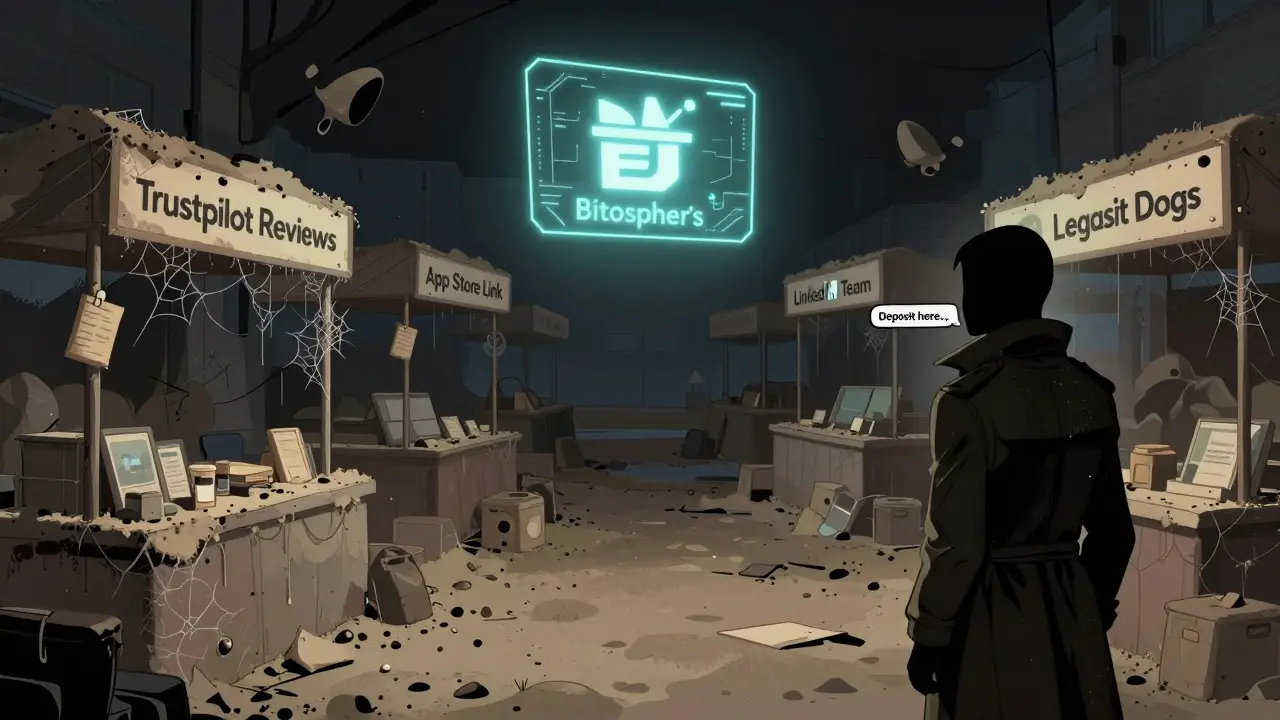
The Bigger Picture: Why This Matters
In 2023, crypto exchanges lost $2.38 billion to hacks and scams. Most of those were new or obscure platforms with vague claims and zero transparency. Bitospher fits that profile perfectly. If you’re thinking about using Bitospher, ask yourself: Why hasn’t a single major crypto news outlet covered it? Why does its website look like a template from 2020? Why are there no LinkedIn profiles for its founders? Why is there no mention of its legal entity, jurisdiction, or incorporation date? The crypto industry is full of scams. Some are obvious - fake coins, pump-and-dumps, Telegram bots. Others are quiet. They look professional. They use real-sounding terms like “SEC-regulated” and “cold storage.” They promise low fees. They don’t ask for much - just your money.Final Verdict: Avoid Bitospher
Here’s the truth: Bitospher might be real. But there’s zero proof. No transparency. No verification. No history. No user base. No third-party audits. No regulatory filings. Until Bitospher publishes:- A clear SEC or state license number
- Monthly proof-of-reserves reports
- Independent security audit results
- Real user reviews from multiple sources
- Details about its team and legal structure
Is Bitospher really SEC-regulated?
No. The U.S. Securities and Exchange Commission (SEC) has never approved any cryptocurrency exchange as a registered securities exchange. The SEC has sued major exchanges like Coinbase and Binance for operating without registration. Bitospher’s claim of SEC regulation is misleading at best and fraudulent at worst. Always verify regulatory claims with official government sources, not third-party blogs.
Are Bitospher’s trading fees competitive?
Bitospher charges 0.25% for both makers and takers, which is higher than top exchanges like Binance (0.10% taker, 0.02% maker) and Kraken (0.16% taker, 0.00% maker). While it offers zero fees for deposits and withdrawals - which is rare - the trading fee alone makes it expensive for active traders. You’ll pay more over time than on most major platforms.
Can I trust Bitospher’s security claims?
No - because there’s no proof. Bitospher says it uses cold storage, firewalls, and SSL encryption, but none of these are verified. No proof-of-reserves, no audit reports, no details on two-factor authentication (2FA) options. Exchanges that don’t publish security details are high-risk. Always assume your funds are at risk until proven otherwise.
Why are there no user reviews for Bitospher?
The absence of reviews on Trustpilot, Reddit, or other platforms is a major red flag. Established exchanges have tens of thousands of user reviews. Bitospher has none. That doesn’t mean it’s a scam - but it means you’re being asked to trust a platform with zero public track record. In crypto, that’s a dangerous gamble.
What should I do instead of using Bitospher?
Use established, transparent exchanges like Coinbase, Kraken, or Bitstamp. They publish proof-of-reserves, have verified regulatory licenses, and maintain public customer support channels. If you want lower fees, Binance (outside the U.S.) is still the most competitive. Never deposit funds into an exchange you can’t verify through multiple independent sources.



Sherry Kirkham
March 8, 2026 AT 11:54Bitospher’s ‘SEC-regulated’ claim is a classic scam tactic. They’re not regulated-they’re exploiting confusion. The SEC doesn’t ‘approve’ crypto exchanges. It sues them. If they were legit, they’d list their license number. They don’t. That’s not negligence. That’s fraud.
And zero withdrawal fees? Cute. But if they’re absorbing costs, where’s the revenue? Hidden fees? Pump-and-dump coins? Either way, it’s a trap. Don’t be the sucker who loses money because they believed a website that looks like it was built in 2012.
Jennifer Pilot
March 10, 2026 AT 04:05One must, however, pause-before one hastily condemns this so-called 'Bitospher'-to consider the profound epistemological void that characterizes contemporary digital finance. The very notion of 'regulation' has been rendered semantically hollow by neoliberal technocratic hegemony. One wonders: if the SEC, an institution steeped in bureaucratic inertia, cannot comprehend decentralized ledgers, then perhaps the real fraud lies not in Bitospher's claims-but in the archaic, ossified structures that refuse to evolve?
...and furthermore, the punctuation here is atrocious. Why are there no em-dashes? Or proper serial commas? This is an affront to language itself.
Sharon Tuck
March 10, 2026 AT 18:17Hey everyone, I get how scary this sounds-but let’s not panic. There are legit new platforms out there that just haven’t had time to build a reputation yet. Maybe Bitospher is one of them?
Still, the lack of transparency is weird. If you’re thinking of trying it, start small. Like, $10. See how withdrawals go. If it takes 3 days, walk away. If it’s instant and smooth, maybe it’s worth a second look. But don’t go all-in. Safety first, always.
Cerissa Kimball
March 11, 2026 AT 07:14Bitospher no proof of reserves no audit no team info no reviews no nothing. SEC dont regulate crypto exchanges they sue them. Binance and coinbase got sued because they were selling securities without registration. Bitospher claiming SEC regulated is like claiming NASA approved your backyard rocket. Its nonsense.
Also 0.25 fee is high. Kraken maker fee is 0.00. You literally pay more to trade here than on other platforms. Why? No reason given. Red flag red flag red flag.
Emily Pegg
March 12, 2026 AT 11:03OMG I literally just lost my life savings on this thing 😭
They said 'SEC-regulated' so I thought it was safe. I deposited $8k. Now their site is down. Their 'support' email bounces. I checked their 'license number' on the state website-it doesn't exist. I feel so stupid. Please don't trust anyone who says 'SEC-regulated' unless they link you to the actual SEC filing. I'm crying right now. I need a hug.
Christina Young
March 13, 2026 AT 03:13Steven Lefebvre
March 13, 2026 AT 18:53Interesting take. I’ve been tracking new exchanges for a while. Bitospher’s fee structure is odd but not unheard of-some regional platforms do similar things to attract users. But the lack of transparency? Yeah that’s bad. I checked their domain registration-registered 3 months ago under a privacy shield. That’s a red flag. Also no SSL certificate from a trusted CA. Just a self-signed cert. That’s not even basic security.
Leah Dallaire
March 14, 2026 AT 17:43What if the SEC is the scam? What if the entire regulatory system is a trap to make you trust centralized authorities while they quietly control the market? What if Bitospher is the real decentralized alternative… and they’re being silenced? The media ignores them because they’re owned by the same banks that want to control crypto.
Think deeper. The truth is hidden. Always.
prasanna tripathy
March 15, 2026 AT 05:35Bro I saw this exchange last week. I was curious so I dug a bit. Their 'contact us' page had a Gmail address. Their 'team' section had stock photos from Shutterstock. Their 'security' page had the same text as a random blog from 2021.
I tried to withdraw $10 just to test. Took 72 hours. No update. No reply. I gave up.
Don't waste your time. Stick to Kraken or Coinbase. They're boring. But they're real. And in crypto? Boring is the safest bet. 😌