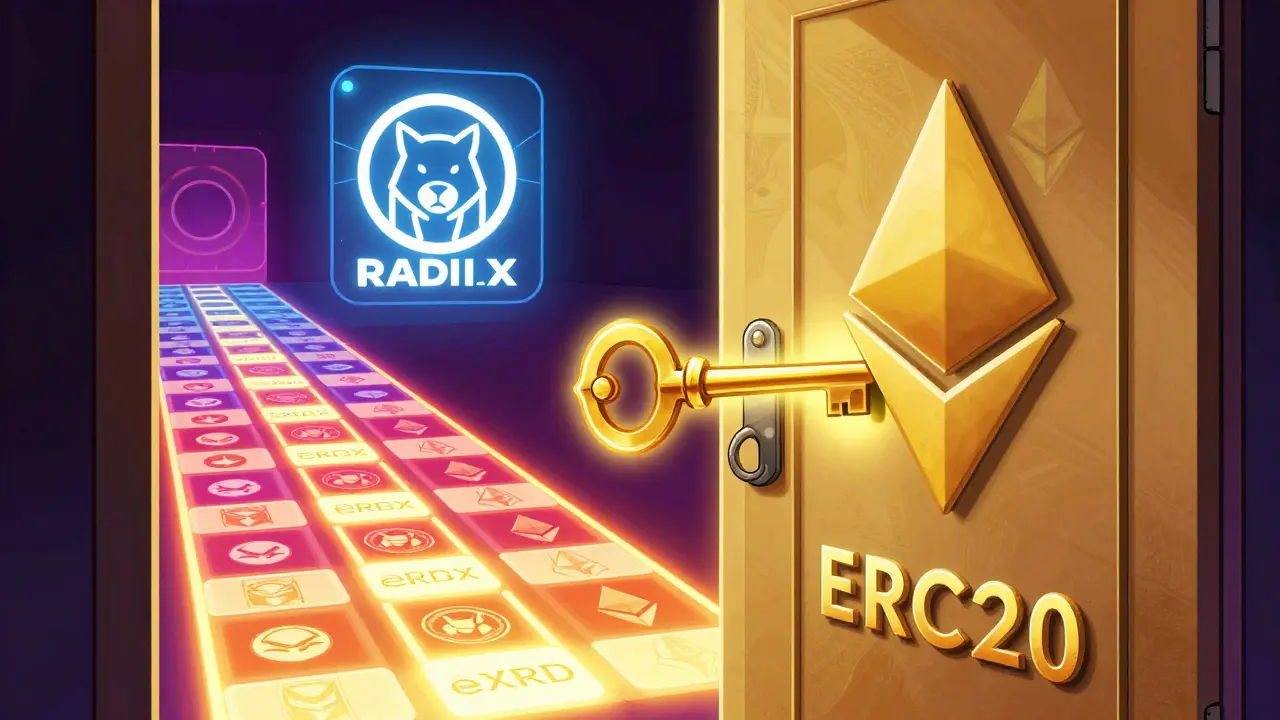
When you hear about e-Radix (EXRD), it’s easy to assume it’s just another crypto coin. But that’s not quite right. e-Radix isn’t a standalone blockchain. It doesn’t mine. It doesn’t validate transactions on its own. Instead, it’s a bridge - a digital key that lets you use the Radix network’s native token, XRD, inside the Ethereum ecosystem. Think of it like wrapping a gift so it fits in a different box. The gift is still the same. The box just changed.
eXRD is an ERC20 token, meaning it runs on Ethereum. It was created in November 2020, before the actual XRD token even launched. That wasn’t an accident. The Radix team wanted to get XRD into the hands of as many people as possible before staking began. By releasing eXRD first, they could distribute tokens through Ethereum-based wallets, exchanges, and DeFi apps - all without waiting for the Radix network to go live. This gave early adopters a way to get involved, trade, and stake even before the mainnet was ready.
How e-Radix Works: The 1:1 Bridge
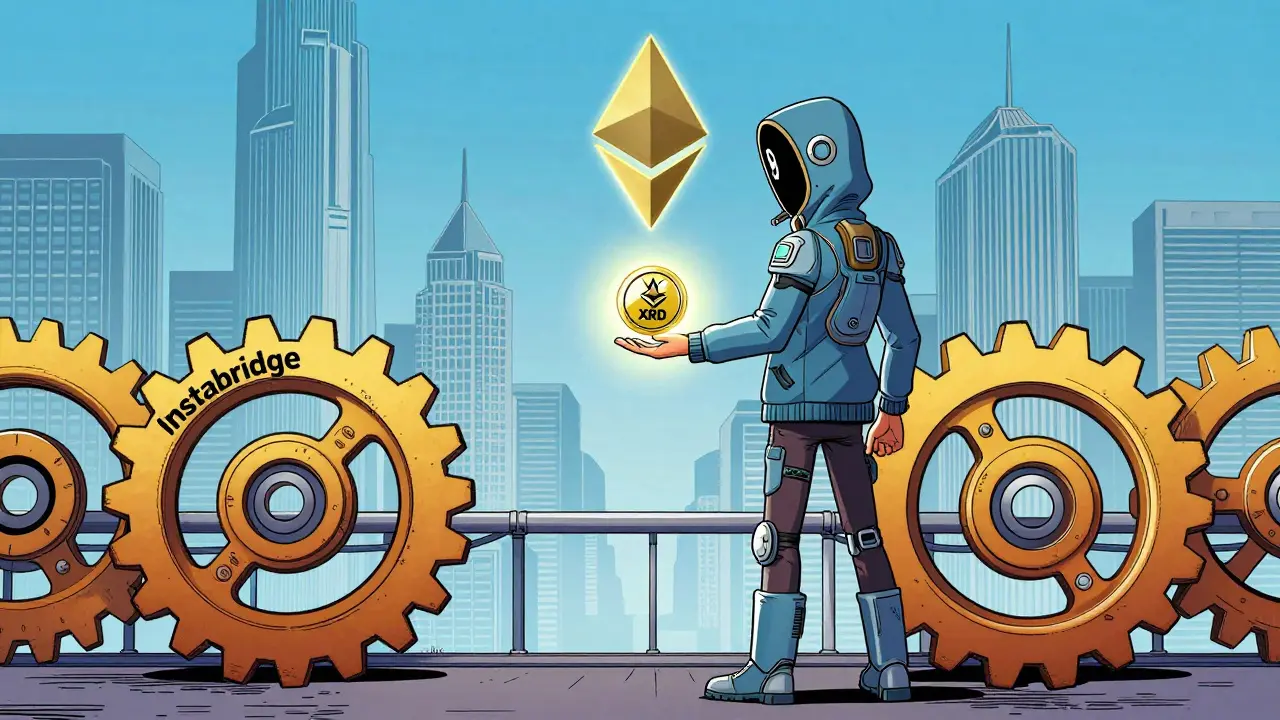
Every single eXRD token is backed one-for-one by an XRD token locked in secure custody. This is handled by Instabridge, a service built specifically for this job. When you convert XRD to eXRD, your XRD gets locked up. In return, you get an equal amount of eXRD on Ethereum. When you want to go back, you send eXRD to Instabridge, and it unlocks your original XRD. No loss. No gain. Just a swap.
This 1:1 ratio is locked in by design. If eXRD ever trades for more than XRD on an exchange, traders will rush to buy XRD, wrap it into eXRD, and sell it for profit - pushing the price back down. The same happens if eXRD drops below XRD. That’s called arbitrage, and it’s what keeps the two tokens roughly in sync. Of course, small differences can happen due to delays, gas fees, or low liquidity on certain exchanges. But over time, they tend to even out.
Why Does This Matter? The Radix Network Behind It
eXRD only has value because of what it represents: the Radix network. Radix isn’t another Ethereum clone. It’s a completely new kind of blockchain built from the ground up to solve the big problems most blockchains struggle with: slow speeds, high fees, and limited scalability.
Radix uses something called the Cerberus consensus algorithm. Unlike proof-of-work or even most proof-of-stake systems, Cerberus allows transactions to be processed in parallel across many shards - like having dozens of lanes on a highway instead of one. This means the network can handle thousands of transactions per second without slowing down. It’s designed to scale linearly, which is rare. Most blockchains get slower as more people use them. Radix doesn’t.
It also has Scrypto - a programming language built for DeFi apps. It’s not just easier to write smart contracts with; it’s safer. The Radix Engine, which runs these contracts, treats assets like real objects you can move around, not just numbers on a ledger. This makes complex DeFi systems like lending, staking, and yield farming easier to build and less risky.
eXRD lets you tap into all of this - even if you’re only using Ethereum wallets or DeFi platforms like Uniswap. You don’t need to learn Radix’s wallet, understand its unique address format, or deal with its native network. You just use eXRD like any other ERC20 token.
How to Get e-Radix (EXRD)
You can buy eXRD on several exchanges. Bitfinex, LBank, and Gate.io all list it. You can also trade it directly against USDC on Uniswap in the eXRD/USDC liquidity pool. If you’re already holding XRD, you can wrap it into eXRD using Instabridge. That’s the cleanest way - no middleman, no risk of losing tokens to a bad exchange.
Another way to earn eXRD is by providing liquidity. If you add eXRD and USDC to a Uniswap pool, you get LP tokens. Then, you can stake those LP tokens on the Radix Community Incentives site to earn more eXRD as a reward. It’s like getting paid to help keep the market liquid. Just remember: every transaction on Ethereum costs gas. You’ll pay ETH fees to wrap, swap, or stake - so it’s not free.
Current Market Stats (as of March 2026)
As of now, there are 697.68 million eXRD tokens in circulation - that’s the same as the total supply. The price is around $0.002389 USD. That gives eXRD a market cap of roughly $1.52 million. It’s ranked #1707 on CoinMarketCap, which puts it in the small-cap tier. The 24-hour trading volume is about $15,584. That’s low compared to major coins, but it’s steady. There’s no sudden spike or crash - just quiet, consistent activity.
There are over 13,770 unique wallet addresses holding eXRD. Over 218,000 transfers have happened on Ethereum since its launch. That’s not massive, but it’s real. People are using it. Not just speculating - they’re staking, swapping, and adding liquidity.

Is e-Radix a Good Investment?
There’s no easy answer. eXRD isn’t a currency you spend. It’s not a store of value like Bitcoin. It’s a utility token - a gateway. Its value is tied directly to the success of the Radix network. If Radix grows, attracts developers, and becomes a go-to platform for DeFi, then eXRD will likely rise in demand. If Radix fades into obscurity, eXRD will too.
Right now, Radix is still early. It’s not on every exchange. Few people outside crypto builders know about it. But its tech is solid. The Cerberus algorithm, Scrypto, and the DeFi Engine are real innovations - not just marketing buzzwords. And by using eXRD, you’re betting on that tech finding a home in Ethereum’s existing DeFi world.
If you’re already active in Ethereum DeFi, eXRD gives you exposure to a promising layer-1 blockchain without leaving your familiar ecosystem. If you’re new, it’s a low-risk way to explore Radix. You can buy a few eXRD, try staking, or add liquidity - and if it doesn’t work out, you can always unwrap it back to XRD and move on.
Why e-Radix Won’t Expire
Unlike some wrapped tokens that come with expiration dates or time-limited bridges, eXRD is permanent. There’s no sunset. No cutoff. You can swap eXRD for XRD - or vice versa - at any time, forever. That’s intentional. Radix isn’t trying to replace Ethereum. It’s trying to work with it. And that means building something that lasts.
This permanence makes eXRD more than a temporary bridge. It’s a long-term asset. If you hold eXRD today, you’ll still be able to convert it to XRD ten years from now - even if the Radix network evolves. That kind of reliability is rare in crypto.


Bonnie Jenkins-Hodges
March 3, 2026 AT 16:01Melissa Ritz
March 4, 2026 AT 01:44jack carr
March 5, 2026 AT 12:20James Burke
March 5, 2026 AT 18:28Ian Thomas
March 6, 2026 AT 04:16Austin King
March 6, 2026 AT 11:01Bryanna Barnett
March 8, 2026 AT 06:26Josh Moorcroft-Jones
March 9, 2026 AT 16:33Rachel Rowland
March 10, 2026 AT 00:58