Russian Crypto Transfer Calculator
Calculate Your Crypto Transfer Costs
This calculator shows how much you'd pay in fees to convert rubles to USDT through sanctioned networks like the Garantex ecosystem. Based on data from September 2025, current fees range from 1% to 1.5%.
Critical Risk Warning
Using these networks carries significant legal and financial risks:
- No customer service or chargebacks
- Funds may disappear if contacts vanish
- Foreign banks may freeze your accounts
- Tied to criminal activity and sanctions evasion
When the U.S. Treasury sanctioned Garantex in April 2022, Russian crypto traders thought it was the end. They were wrong. By August 2025, after a second wave of sanctions targeting Garantex’s role in ransomware and darknet market transactions, the exchange didn’t disappear-it evolved. Today, Garantex isn’t a single platform. It’s a network. A ghost system built on Telegram bots, Hong Kong shell companies, and crypto bridges that slip through international banking nets. For Russian traders, it’s still the fastest way to move money out of the country without triggering bank flags.
What Garantex Actually Does Now
Garantex Europe OU started as a regular crypto exchange based in Estonia but run out of Moscow. It let users trade Bitcoin, Ethereum, and USDT. Simple. But after sanctions hit, it didn’t shut down. It split. The original site is gone. The servers are seized. The founders? One arrested in India, another still at large with a $5 million bounty on his head. But the service? It’s alive-and growing. What replaced Garantex? Platforms like Grinex, Exved, and MKAN Coin. These aren’t just clones. They’re specialized tools in a larger laundering machine. Grinex handles the crypto side. Exved moves money across borders using fake export invoices. MKAN Coin operates out of Dubai, running on Telegram, where users send rubles and get USDT in return-no bank account needed. The system works like this: A Russian trader sends rubles to Feilian Company Limited, a Hong Kong entity with an account at Alfa-Bank. Feilian converts the rubles into dollars or USDT, then sends the crypto to an overseas recipient. The entire chain hides the crypto trail. Russian banks never see the crypto. Foreign banks see only a "payment for electronics" or "consulting services." The crypto part? Invisible.Why Russian Traders Still Use It
There are over 18.7 million Russian crypto users as of June 2025. That’s up 22% from last year. Why? Because traditional banks won’t let them send money abroad. Visa and Mastercard are blocked. SWIFT is restricted. The Central Bank of Russia limits dollar transfers. Crypto is the only open door. One user on the Russian Telegram channel CryptoNews put it bluntly: "Even after sanctions, I can still convert rubles to USDT and send them abroad in 24 hours without my Russian bank flagging anything." That’s the real value. Speed. Privacy. Access. The fees have gone up-from 0.1% to as high as 1.5% since March 2025. But even at 1.5%, it’s cheaper than wire transfers through shell banks. And unlike banks, there’s no paperwork. No KYC. No questions asked. Just a Telegram bot that says "send rubles here, get USDT there."How the System Evaded Law Enforcement
In March 2025, the FBI, German police, and Finnish authorities seized three Garantex domains and froze $26 million in crypto. They thought that was it. But the platform had already moved. Transparency International Russia’s September 2025 report found that Garantex’s infrastructure was designed to fail gracefully. When one node gets hit, another takes over. Exved, headquartered in Moscow-City, handles the fiat side. MKAN Coin handles the crypto side. Grinex acts as the fallback. All three are linked by shared code, shared operators, and shared Telegram channels. The key? Decentralization. No single server. No central support team. No official website. Instead, there are hundreds of Telegram groups, each with a few hundred users. New users get onboarded by veterans who’ve been doing this for years. Onboarding used to take a week. Now it takes 3-4 weeks because the system is more cautious. Documentation is worse. Support is bot-only. But it works.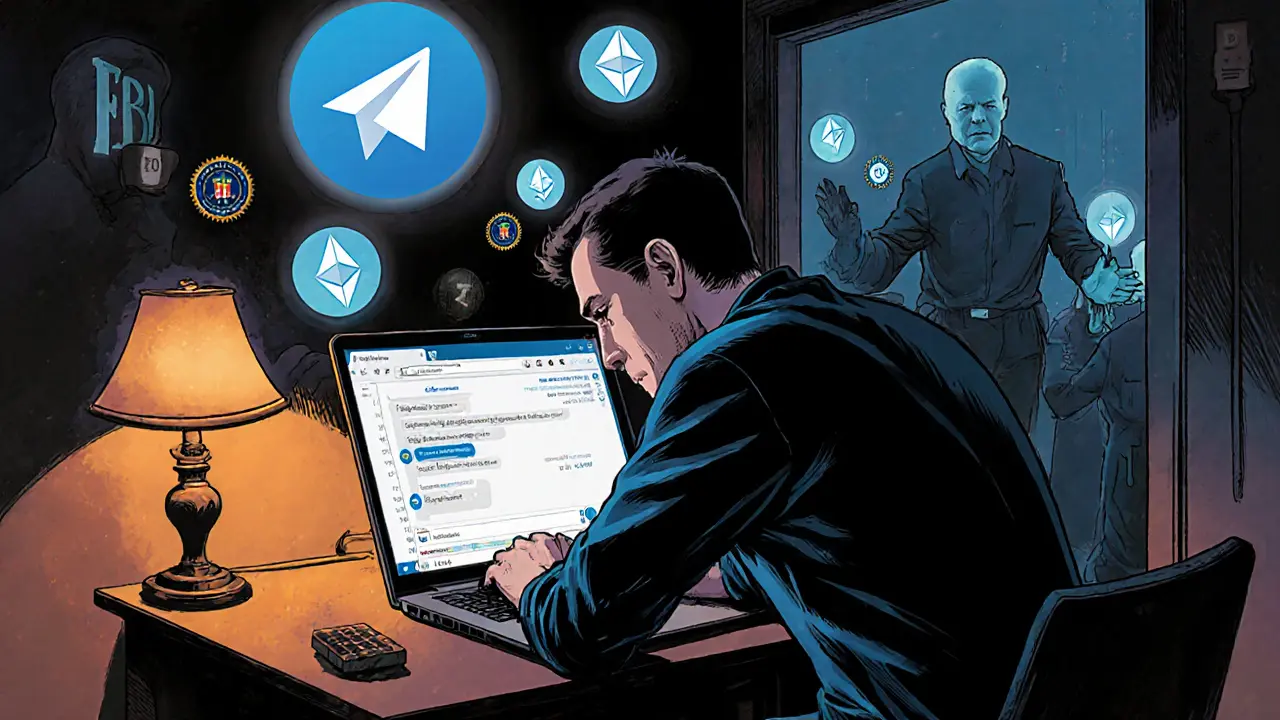
The Criminal Link
This isn’t just about personal savings. The U.S. Treasury says Garantex processed over $100 million in transactions tied to ransomware and darknet markets since 2019. In August 2025, they named names: a Russian ransomware-as-a-service group and one of the world’s largest darknet marketplaces. The money didn’t just disappear-it funded cyberattacks on hospitals, schools, and energy grids. The FBI’s 2024 report showed crypto fraud hit $9.8 billion globally, with Russia responsible for about 12% of that. Garantex’s network handles roughly $300 million a month. That’s 15% of all Russian crypto-based international transfers. This isn’t a fringe operation. It’s a pillar of Russia’s sanctions evasion economy.What This Means for Global Finance
The U.S. thought sanctions would cut Russia off. Instead, they forced it to build a parallel financial system. Garantex didn’t break the rules-it rewrote them. It turned crypto from a speculative asset into a lifeline for sanctioned economies. Community banks in the U.S. are sounding alarms. The Independent Community Bankers of America warned in August 2025 that crypto scams are growing faster than regulations can keep up. They’re seeing more suspicious transfers tied to Russian-linked entities. But they don’t have the tools to trace them. Chainalysis CEO Michael Gronager said it best: "Sanctions are creating more sophisticated, harder-to-track money laundering systems rather than eliminating them." The old model-freeze an exchange, shut it down-isn’t working anymore. The new model is a spiderweb: cut one thread, ten more appear.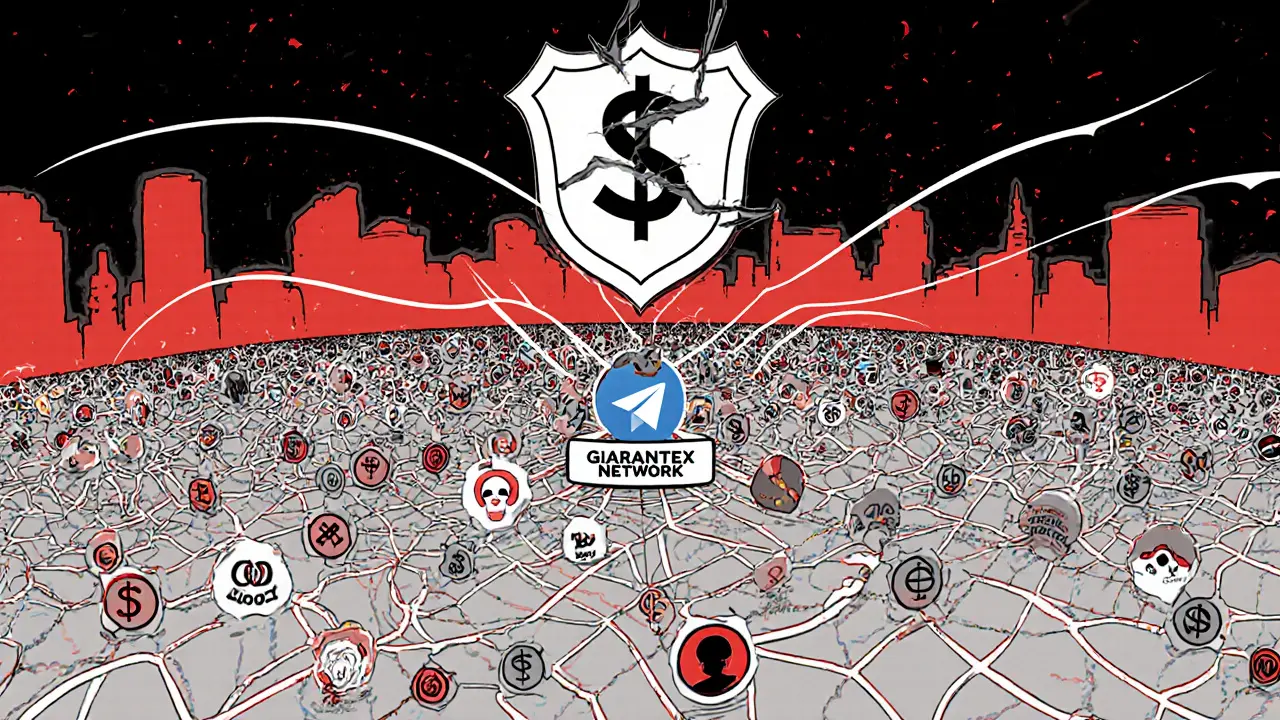
What Russian Traders Should Know Now
If you’re a Russian trader using this system, here’s the reality:- Fees are rising. Expect 1-1.5% on every conversion. No more cheap transfers.
- Onboarding is harder. You’ll need a referral. You’ll need patience. You’ll need to learn Telegram bots inside out.
- There’s no safety net. If your contact disappears, your money disappears. No customer service. No chargebacks.
- Legal risk is real. Even if you’re just moving personal funds, you’re part of a network tied to criminals. Foreign banks may freeze your accounts if they spot the pattern.
The Bigger Picture
Garantex isn’t an anomaly. It’s a prototype. If Russia can build a sanctions-proof crypto network using Telegram, Hong Kong shell companies, and decentralized exchanges, so can others. Venezuela. Iran. North Korea. The playbook is out there. Western regulators are scrambling. New tools are being developed. AI-driven blockchain analysis. Cross-border data sharing. But the gap is widening. The system is faster, cheaper, and more resilient than ever. For Russian traders, Garantex isn’t dead. It’s just invisible now. And that’s the real win-for them, and for the criminals who built it.Is Garantex still operating as a website?
No. The original Garantex website and domains were seized by U.S. and European authorities in 2025. What remains is a decentralized network of successor platforms like Grinex, Exved, and MKAN Coin, which operate via Telegram bots and offshore entities. There is no official site or customer support anymore.
Can Russian users still send crypto abroad using Garantex’s system?
Yes. Thousands of Russian traders still use the Garantex ecosystem to convert rubles into USDT and send funds overseas. The process involves transferring rubles to Hong Kong-based intermediaries like Feilian Company Limited, which then send dollars or crypto to foreign recipients. This bypasses Russian bank restrictions and avoids detection by Western financial systems.
Why did the U.S. sanction Garantex again in August 2025?
The August 2025 sanctions targeted Garantex’s direct role in facilitating cybercrime, including ransomware attacks and darknet market transactions. Treasury officials stated the platform processed over $100 million in illicit funds since 2019 and was used by notorious criminal groups. The re-designation under Executive Order 13694 signaled a shift from general financial sanctions to specific counter-cybercrime action.
How much money does the Garantex network move each month?
According to Transparency International Russia’s September 2025 report, the Garantex ecosystem-including its successor platforms-processes approximately $300 million per month. This represents about 15% of all Russian cryptocurrency-based international transfers, making it one of the largest sanctions evasion channels in the world.
Are there safer alternatives for Russian crypto traders?
There are no truly safe alternatives. Centralized exchanges like Binance or Kraken have cut off Russian users. Peer-to-peer platforms like LocalBitcoins are heavily monitored. The only functioning systems left are underground networks like the Garantex ecosystem-which carry high legal, financial, and operational risks. Users who choose them must accept that their funds are vulnerable, unregulated, and potentially linked to criminal activity.



Michael Labelle
November 27, 2025 AT 02:02And the worst part? It's probably just the tip of the iceberg.
Vance Ashby
November 28, 2025 AT 19:21But every time someone sends USDT from Feilian, the blockchain leaves a breadcrumb trail bigger than a Walmart receipt. Chainalysis doesn't need to know your name-they just need to see the same wallet address ping-ponging between 7 different exchanges every 3 hours. It's not invisible. It's just lazy.
SHIVA SHANKAR PAMUNDALAR
November 29, 2025 AT 13:32Shelley Fischer
November 30, 2025 AT 22:58Regulators must shift from enforcement to prevention: incentivizing transparent on-ramps, penalizing jurisdictional arbitrage, and collaborating with non-Western financial institutions that still operate under rule-of-law frameworks.
Puspendu Roy Karmakar
December 1, 2025 AT 02:30