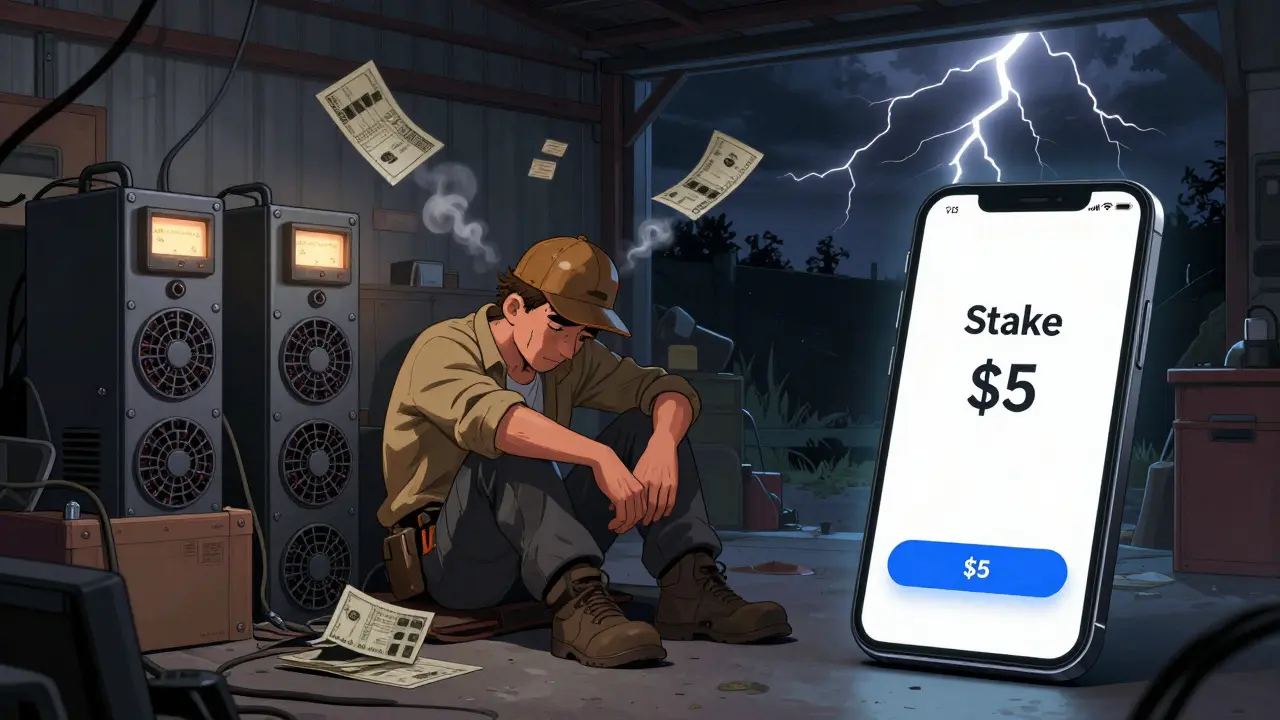
When you hear about blockchain networks securing themselves, you might picture miners in warehouses full of flashing hardware. Or maybe you’ve heard someone say, "Just stake your crypto and earn rewards without lifting a finger." Both are real - but they’re nothing alike. Staking and mining are two completely different ways blockchains validate transactions and reward participants. One burns electricity. The other locks up money. One is old. The other is the future. Let’s break down exactly how they work, what they cost, and who they’re really for.
How Mining Works: Power, Hardware, and Competition
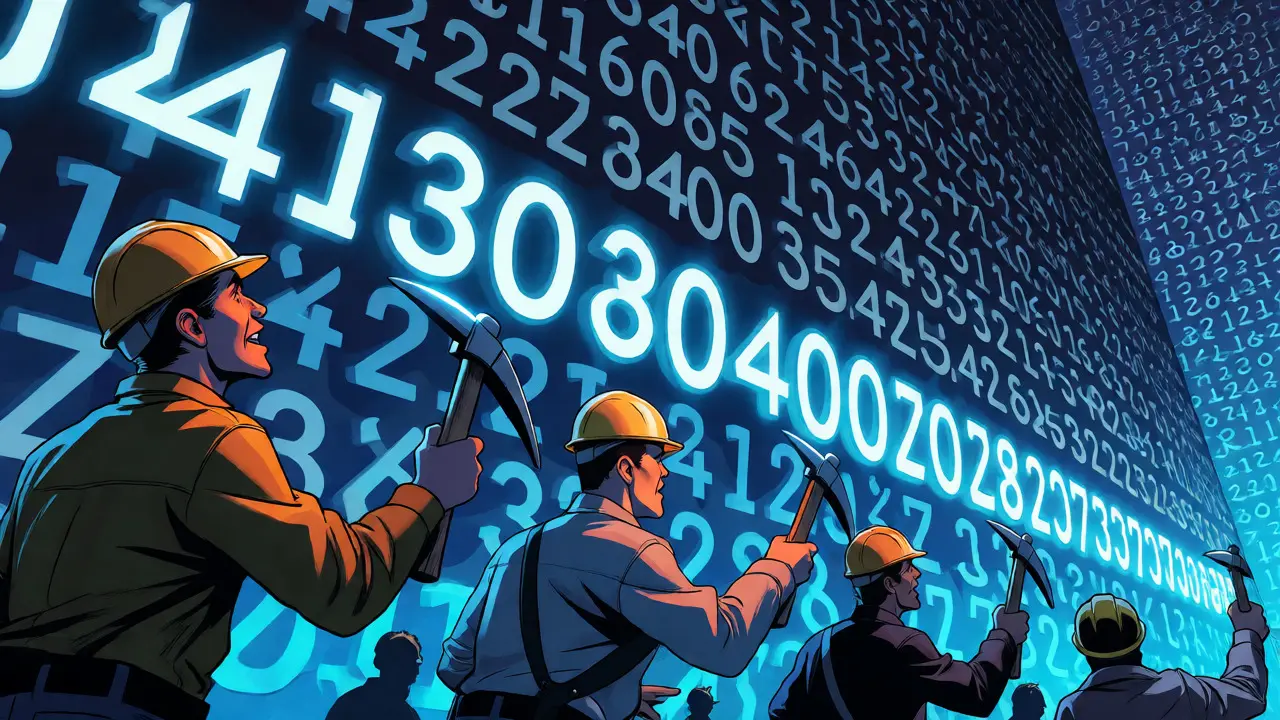
Mining is the original way blockchains like Bitcoin keep themselves honest. It’s called proof-of-work (PoW). Miners use powerful computers to solve complex math puzzles. The first one to solve it gets to add the next block of transactions - and earns new cryptocurrency as a reward. It’s like a global competition where the prize is money, and the only way to win is to use more electricity than everyone else.
Bitcoin miners don’t use regular PCs. They rely on ASICs - custom chips built for one thing: mining. The Bitmain Antminer S19 XP Hyd, for example, can do 255 trillion calculations per second. It costs around $4,500 and uses 3,060 watts of power. That’s more than your entire home fridge, TV, and AC combined. And it’s not even the most powerful model out there.
But here’s the catch: mining isn’t just about buying hardware. You need cheap electricity. If your power bill is over $0.08 per kilowatt-hour, you’re probably losing money. That’s why mining farms cluster in places like Texas, Iceland, and Kazakhstan - where energy is cheap or renewable. Even then, profitability is a rollercoaster. In 2023, a home miner with a six-GPU rig spent $1,800 on electricity over 18 months and earned only $6,400 in Bitcoin. After factoring in hardware depreciation, they lost over $4,600.
And the competition keeps getting harder. Bitcoin’s network difficulty - a measure of how tough the puzzles are - hit 63.2 trillion in March 2023. That means it’s now harder to mine Bitcoin than it was five years ago. Only big operations with thousands of machines can stay profitable. For most people, mining Bitcoin at home isn’t just hard - it’s nearly impossible.
How Staking Works: Lock It Up, Earn It Back
Staking is the newer, cleaner alternative. It’s called proof-of-stake (PoS). Instead of using electricity to solve puzzles, you lock up (or "stake") your own cryptocurrency as collateral. The network picks validators at random based on how much they’ve staked. If you do your job right - verifying transactions honestly - you earn rewards. If you cheat or go offline, you lose part of your stake.
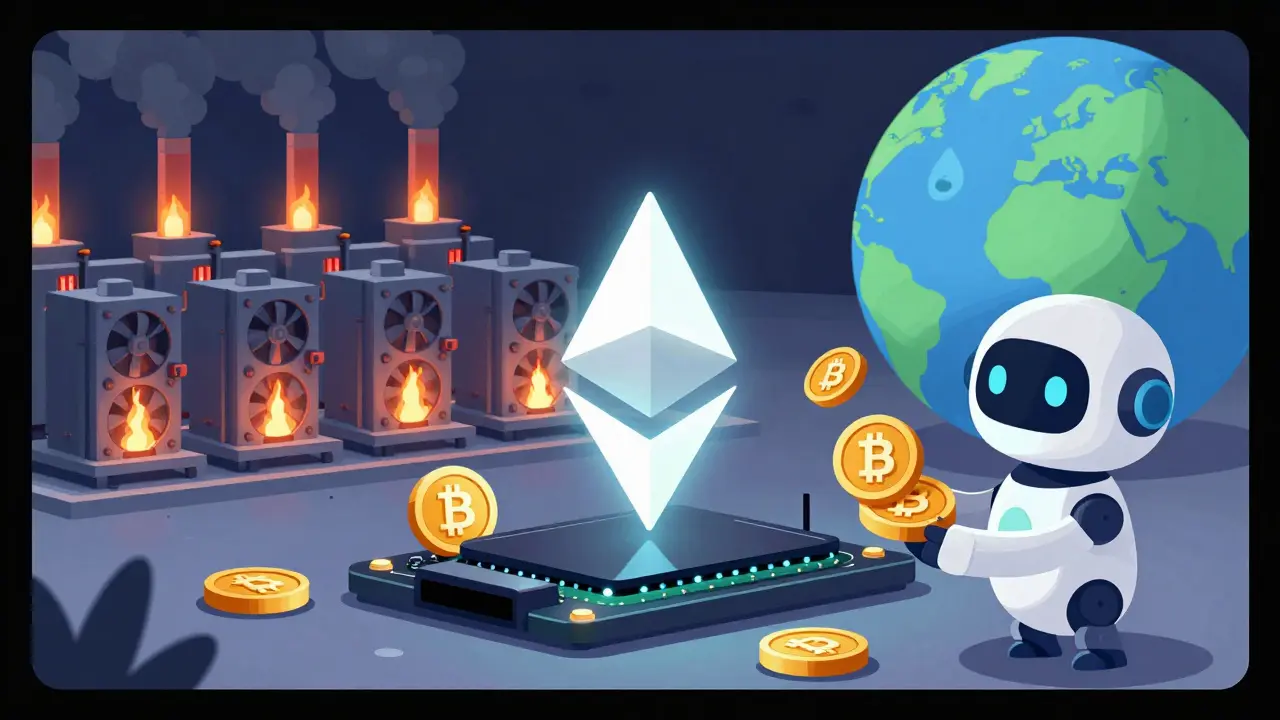
The biggest shift happened in September 2022, when Ethereum - the second-largest blockchain - switched from mining to staking. That single move cut its energy use by 99.95%. Before, Ethereum used as much power as Norway. After? Less than a single U.S. household.
To run a solo Ethereum validator, you need 32 ETH. At $1,840 per ETH in late 2023, that’s $58,880. Sounds expensive? It is. But you don’t need to put up that much. Services like Lido, Coinbase, and Rocket Pool let you stake smaller amounts - even $5 - and still earn rewards. They pool your ETH with others and run the validator for you. In return, you get a token like stETH, which represents your share and can be traded or used in other DeFi apps.
Staking rewards vary. Ethereum offers 3-4.2% APY. Solana gives 6-8%. Some liquid staking platforms on Solana, like Marinade, have offered over 10% APY. That’s better than most savings accounts - and without the bank fees.
Energy Use: The Starkest Difference
This is where staking and mining can’t be more different.
Bitcoin mining consumed over 120 terawatt-hours (TWh) of electricity in 2023. That’s more than Argentina or Norway. Every time you send a Bitcoin transaction, it uses roughly as much energy as three U.S. households do in a day.
Ethereum, after staking, uses just 0.0026 TWh per year. That’s less than a single data center. The difference isn’t small - it’s planetary. Gartner predicts that by 2025, 80% of new enterprise blockchains will use staking because of environmental, social, and governance (ESG) pressures. Investors, regulators, and even consumers are starting to care.
Even Bitcoin’s supporters admit the energy use is a problem. But they argue it’s the price of security. Bitcoin’s annual security budget - the total value paid out in mining rewards - is around $10 billion. Ethereum’s is about $500 million. Some security experts say PoW’s energy cost makes attacks astronomically expensive. Others say staking’s $50 billion in locked ETH is just as secure - because attacking it means buying up a third of the entire network.
Hardware and Setup: Plug In or Click Through
Mining demands hardware. You need ASICs or GPU rigs, cooling systems, noise-proof rooms, and technical know-how. Setting up a mining operation takes 40-60 hours for a beginner. You’re managing firmware, pool connections, power usage, and hardware failures. And your gear becomes obsolete in 18-24 months. An ASIC that cost $6,000 in 2022 might be worth $1,500 a year later.
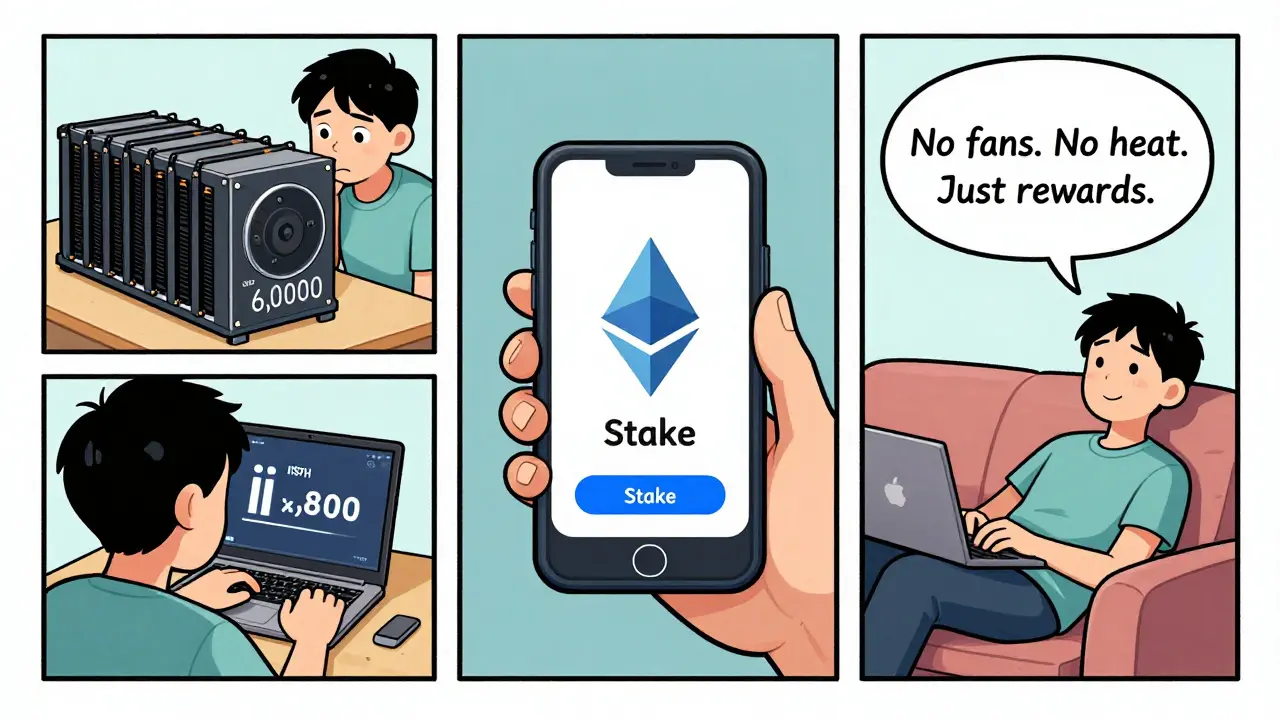
Staking? You need a laptop, a phone, or even a $50 Raspberry Pi. Setting up solo staking on Ethereum takes 5-10 hours - mostly reading documentation. Using Coinbase or Lido? It takes five minutes. You click "Stake," confirm your wallet, and you’re done. No fans, no heat, no noise.
But staking isn’t totally risk-free. If your validator goes offline for too long, you get slashed - meaning you lose a portion of your staked ETH. In Q1 2023, Ethereum slashed over 1,700 ETH from validators. Most of those weren’t hackers - they were just people who didn’t update their software or lost internet.
Accessibility and Centralization Risks
Mining was once something individuals could do. Now? Just 10 mining pools control 65% of Bitcoin’s hash rate. If you’re not in a big mining operation, you’re just paying for electricity and hoping for scraps.
Staking has its own centralization issue. As of 2023, three entities - Lido, Coinbase, and Kraken - controlled over 31% of all staked Ethereum. That’s a problem if one of them gets hacked or goes offline. But unlike mining, where you’re locked into hardware, staking lets you move your funds. You can unstake, switch platforms, or use different protocols. That flexibility matters.
And then there’s liquid staking. Products like stETH let you stake while still using your crypto in DeFi apps. You earn rewards, and you can trade your stETH on exchanges. It’s like having your cake and eating it too. But it’s new - and risky. In March 2023, stETH briefly lost its peg to ETH, causing panic in DeFi markets.
Costs, Risks, and Rewards Compared
| Factor | Mining (PoW) | Staking (PoS) |
|---|---|---|
| Primary Requirement | Computational power (ASICs/GPUs) | Cryptocurrency collateral (e.g., 32 ETH) |
| Energy Use | Extremely high (Bitcoin: 120+ TWh/year) | Negligible (Ethereum: 0.0026 TWh/year) |
| Hardware Cost | $2,000-$10,000+ (and depreciates fast) | $0-$200 (just a computer or phone) |
| Setup Time | 40-60 hours | 5-10 hours (solo) or 5 minutes (exchange) |
| APY Range | Varies wildly; often negative after costs | 3-12% depending on network and protocol |
| Primary Risk | Hardware failure, rising electricity costs | Slashing penalties, exchange insolvency |
| Entry Barrier | High - requires technical skill and capital | Low - anyone with a wallet can participate |
Who Should Choose What?
If you’re a hobbyist with $1,000 and no technical background - staking is your only realistic option. You can start with $5 on Coinbase and earn rewards without touching a single wire.
If you’re a tech-savvy investor with $50,000+ and want to run your own validator? Staking still wins. You’ll save tens of thousands in electricity and hardware costs compared to mining.
Mining only makes sense if you have access to near-free electricity - like a data center in Iceland or a solar-powered facility in Texas. Even then, you’re betting on Bitcoin’s price going up enough to cover your losses. Most retail miners end up losing money.
And if you’re holding Ethereum, Solana, or Cardano? You’re already on a staking chain. Not staking your coins is like leaving money on the table.
The Future Is Staking - But Mining Isn’t Dead
Over 25 million ETH is staked on Ethereum. Total value staked across all blockchains hit $295 billion in 2023 - up from $28 billion in 2021. That’s a 954% increase. Meanwhile, Bitcoin mining still exists - but it’s shrinking as a retail activity. New blockchains? Almost all are launching with PoS.
Regulators are catching up. The EU’s MiCA law treats staking rewards as taxable income. The U.S. SEC is watching centralized staking services like they’re unregistered securities. Meanwhile, states like New York have banned new PoW mining operations.
Bitcoin mining isn’t disappearing - it’s becoming industrialized. Companies like Marathon Digital and Riot Blockchain are building megafarms powered by wind and solar. They’re not trying to be eco-friendly - they’re trying to survive. But for everyday users? The choice is clear.
Staking isn’t perfect. It has risks. It’s not as battle-tested as Bitcoin’s PoW. But it’s faster, cheaper, greener, and far more accessible. For most people, it’s not just the better option - it’s the only practical one.
Can I still mine Ethereum after The Merge?
No. Ethereum officially switched from proof-of-work to proof-of-stake in September 2022. Any Ethereum mining software or hardware you have won’t work on the main Ethereum network. You can still mine Ethereum Classic (ETC), which is a separate blockchain that kept PoW - but it’s not the same as Ethereum.
Do I need 32 ETH to start staking?
No. You need 32 ETH to run your own validator node. But you can stake any amount - even $5 - through centralized exchanges like Coinbase or Kraken, or decentralized protocols like Lido and Rocket Pool. These services combine your ETH with others and run the validator for you. You’ll get a token (like stETH) that represents your share and earns rewards.
Is staking safer than mining?
It depends. Mining risks hardware failure and electricity costs - you can lose money if your ASIC breaks or power prices rise. Staking risks slashing (losing part of your stake if you go offline) or exchange failure (if you stake through Coinbase and they get hacked). Both have risks, but staking has fewer moving parts. For most users, staking is simpler and less likely to result in total loss.
Which gives better returns: staking or mining?
For most people, staking gives better returns. Bitcoin mining today often results in net losses after electricity and hardware costs. Ethereum staking offers 3-4.2% APY with minimal effort. Solana staking can offer 6-12% APY. Even with liquid staking fees, you’re still earning more than you’d lose in mining costs. Unless you have access to free electricity and own your own mining farm, staking wins.
Can I stake Bitcoin?
Not directly. Bitcoin uses proof-of-work, so it doesn’t have native staking. But some services offer "wrapped Bitcoin" staking - where you lock BTC and receive a token (like stBTC) that earns rewards on PoS chains. These aren’t true staking - they’re DeFi products that lend your BTC to earn interest. They come with extra risks, including smart contract bugs and counterparty failure.
What happens if I unstake my ETH?
Ethereum has a withdrawal queue. If you request to unstake, you’ll wait in line. As of mid-2023, the queue was over 16,000 validators long, with a processing time of about 15 days. You can’t instantly cash out. But if you stake through Lido or Coinbase, you get liquid tokens (like stETH) that you can sell or trade anytime - giving you instant liquidity while still earning rewards.
What’s Next?
If you’re thinking about getting into crypto, skip mining. It’s a dead end for retail users. Focus on staking. Pick a network you believe in - Ethereum, Solana, or Cardano - and start small. Use a trusted exchange. Learn how slashing works. Understand the difference between staking and lending. The future of blockchain isn’t about mining rigs - it’s about locking up value and earning rewards. And that’s something anyone with a smartphone can do.



John Fuller
March 3, 2026 AT 02:00Staking wins. No debate. Mining is just electricity waste with extra steps.
Lucy Simmonds
March 3, 2026 AT 05:47Wait wait wait-so you’re telling me the government and big crypto firms are secretly pushing staking so they can freeze your funds?? I read a guy on Telegram who said stETH is basically a backdoor for the Fed to track your wallet!! And what about that time stETH dipped 15%?? That wasn’t market noise-that was a coordinated attack!! I’m not staking anything until we get transparency!!
Maggie House
March 3, 2026 AT 20:47Hey I just started staking 5 bucks on Coinbase and I’m so excited!! I didn’t think I could do anything with crypto but now I’m earning like 0.0003 ETH a week?? It feels like magic. I even told my mom and she said ‘that’s nice honey’ and I cried a little. Thank you for making this feel possible!!
Dana Sikand
March 5, 2026 AT 06:42Let me tell you something real-staking isn’t just about rewards it’s about participation in a new kind of economy. You’re not just holding crypto you’re helping secure the network. That’s power. And yeah sure there’s slashing but guess what mining has slashing too-your hardware dies and you’re out $5k. Staking you can unstake and move. You have agency. And liquid staking? That’s the future. You get yield AND liquidity. That’s not a feature that’s a revolution. Stop thinking of it like a savings account. Think of it like owning a piece of infrastructure. And if you’re still mining on a GPU rig in 2024 you’re not a pioneer you’re just stubborn.
Cameron Pearce Macfarlane
March 6, 2026 AT 09:46Staking is a scam. The whole PoS thing is just centralized exchanges holding your coins and pretending to be validators. They’re not nodes they’re middlemen. And you think Ethereum’s energy use dropped 99.95%? That’s a lie. The miners just moved to other chains. You’re being gaslit by the same people who told you Bitcoin was digital gold. Wake up.
Elizabeth Smith
March 7, 2026 AT 16:42People don’t realize how dangerous this is. We’ve traded one form of centralized control for another. Instead of banks we have Lido and Coinbase. Instead of physical power plants we have algorithmic control over who gets rewarded. This isn’t progress this is surrender. And you call it green? What about the environmental cost of all these new tokens and DeFi apps running on top? You’re not saving the planet you’re just making it more complicated.
Robert Kromberg
March 8, 2026 AT 06:46I get both sides. Mining has this romantic idea of decentralized competition but it’s clearly unsustainable. Staking feels too corporate but it’s the only way regular people can even participate. Maybe the answer isn’t picking one over the other but accepting that different networks serve different needs. Bitcoin stays PoW for security. Ethereum went PoS for scale. And that’s okay. We don’t need one rule for all chains.
Daisy Boliaan
March 10, 2026 AT 05:28OMG I JUST UNSTAKED MY ETH AND IT TOOK 16 DAYS AND I WAS SO NERVOUS I CRIED AND MY CAT JUMPED ON MY LAP AND I FELT SO VALIDATED AND THEN I RE-STAKED IT BECAUSE I MISS THE REWARDS AND NOW I HAVE STETH AND I USE IT IN UNISWAP AND I’M LITERALLY A BLOCKCHAIN NINJA I SWEAR TO GOD