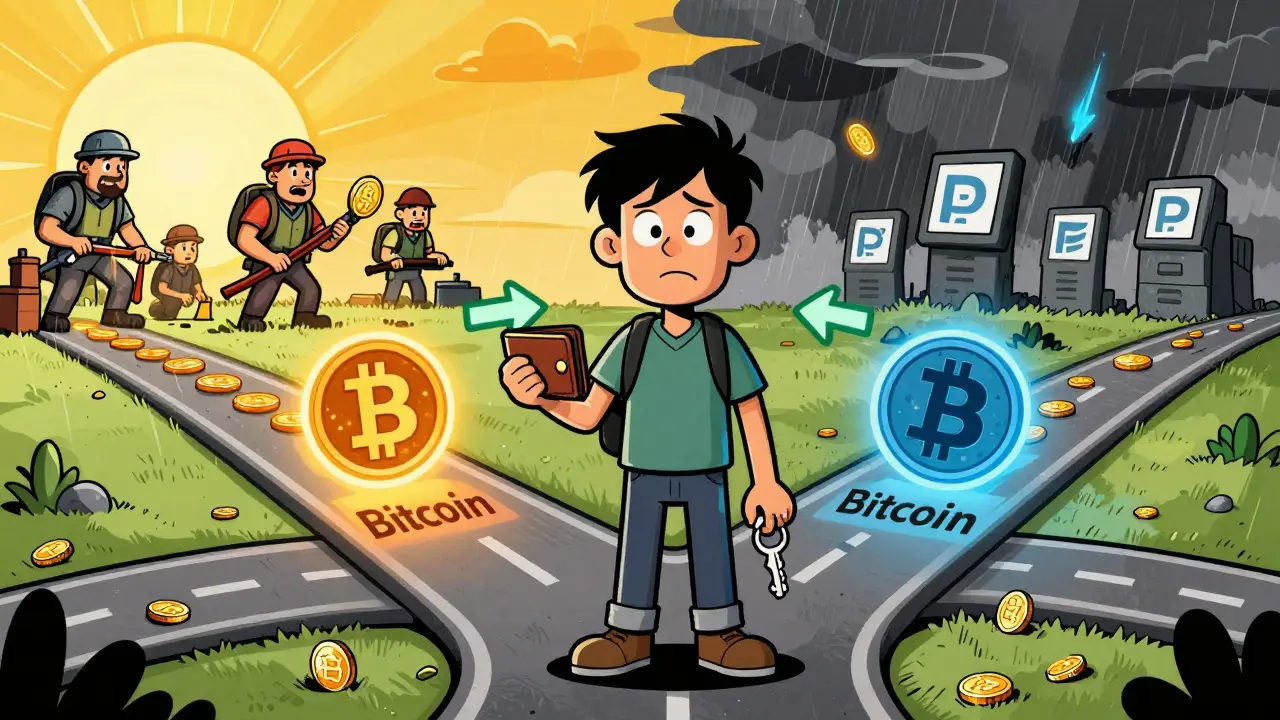
When a blockchain hard forks, it doesn’t just change the code-it changes your money. If you held Bitcoin when Bitcoin Cash split off in 2017, you suddenly had two coins instead of one. But if you didn’t know what was happening, you might’ve lost access to one of them forever. Hard forks aren’t just technical upgrades. They’re financial events that can make you richer-or leave you stranded.
What Exactly Is a Hard Fork?
A hard fork is a major change to a blockchain’s rules that breaks compatibility with the old version. Think of it like upgrading your phone’s operating system, but instead of just updating your device, the entire network splits in two. One group keeps using the old system. The other switches to the new one. Neither can talk to the other anymore.
This isn’t a soft fork, where everyone can still talk to each other. A hard fork forces a choice. Nodes (computers running the blockchain) must upgrade to the new software. If they don’t, they’re left on a dead-end chain. That’s why hard forks are rare. They only happen when there’s serious disagreement-about block size, transaction speed, or even philosophy.
The most famous example? Bitcoin’s 2017 split into Bitcoin and Bitcoin Cash. Some developers wanted bigger blocks to handle more transactions. Others believed Bitcoin should stay small and secure. The community couldn’t agree. So it split. And suddenly, every Bitcoin holder got Bitcoin Cash for free.
How Hard Forks Create New Money (and Confusion)
Here’s the thing: when a hard fork happens, your wallet doesn’t vanish. It just gets duplicated. If you owned 5 BTC at the moment the fork activated, you now own 5 BTC and 5 units of the new coin-say, Bitcoin Cash. It’s not a gift. It’s a mirror. The same amount of coins appears on both chains.
But here’s where it gets messy. Not all exchanges or wallets support both chains. If you kept your Bitcoin on Coinbase in 2017, you got Bitcoin Cash automatically. If you held it in a non-supported wallet, you still owned the new coin-but couldn’t access it. You needed to move your private keys to a wallet that recognized the forked chain. Otherwise, your coins were locked away.
And even if you did everything right, you still had to figure out what to do with the new coin. Did you sell it? Hold it? Trade it? Bitcoin Cash quickly hit $300. Then $500. Then crashed. Some people doubled their money. Others watched their new coins drop 80% in a week.
The Hidden Dangers: Replay Attacks and Lost Funds
One of the scariest risks in a hard fork is a replay attack. Because both chains have identical transaction histories up to the fork point, a transaction on one chain can be copied-and repeated-on the other.
Imagine this: you send 1 BTC to a friend on the original chain. The transaction goes through. But because the new chain (Bitcoin Cash) still has the same history, that same transaction gets replayed on the Bitcoin Cash chain. Your friend now gets 1 BCH too-even though you only meant to send BTC.
Worse, if you try to send 1 BTC back, the same replay could steal your BCH. Cybercriminals exploit this by watching for transactions and then copying them to drain both chains. That’s why experts always say: don’t move coins during a fork. Wait until exchanges and wallets release tools to protect against replay attacks.
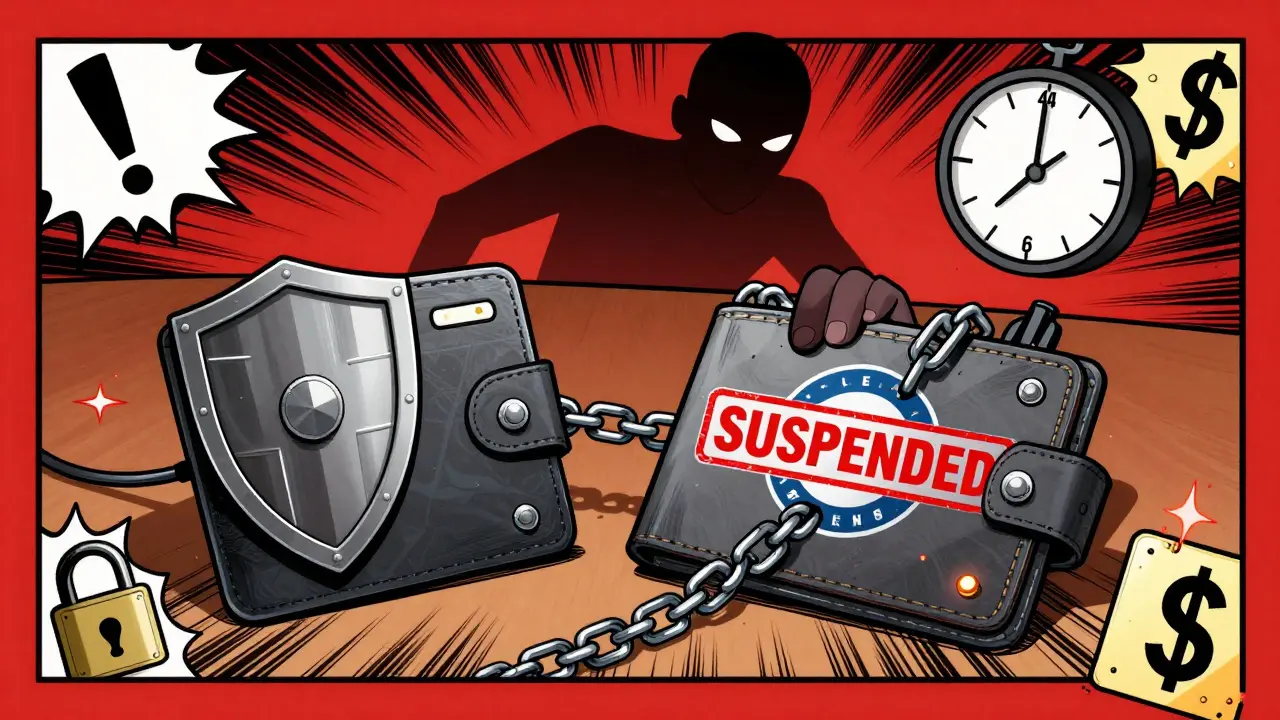
And if you’re using a custodial wallet-like one on an exchange-you’re at their mercy. If the exchange doesn’t support the fork, you lose access to the new coins. If they do, they might freeze your funds for weeks. Some exchanges suspended trading for a month after major forks. No access. No trading. No control.
What Happens to Your Wallet?
Your wallet type determines your risk level.
- Exchange wallets: You’re dependent on the exchange’s decision. If they support the fork, you get the new coin. If not, you don’t. You have zero control.
- Hardware wallets: These are safest. As long as you have your recovery phrase, you can import your private keys into a wallet that supports the new chain. You own the coins, no matter what.
- Software wallets: Some support forks automatically. Others don’t. Check before the fork date. If your wallet doesn’t update, you risk losing access.
The golden rule? Control your keys, control your coins. If you don’t hold your private keys, you don’t own your crypto. You’re just borrowing it.
Market Chaos and Community Splits
Hard forks don’t just split the blockchain-they split the community.
After Bitcoin Cash launched, supporters of the original Bitcoin called it a "fraud". Bitcoin Cash fans said Bitcoin had become too slow and expensive. Each side believed they were protecting the real vision. That kind of division hurts adoption. Investors get nervous. Developers split teams. Mining power gets divided.
And the market reacts violently. In the days before a hard fork, prices often spike as speculators bet on the new coin. After the fork, prices usually crash. Why? Because the total market cap doesn’t double. It gets split. Bitcoin was worth $10,000 before the fork. After, Bitcoin was $8,000 and Bitcoin Cash was $2,000. The sum was the same. But now you had to manage two assets instead of one.
Some forks die. Bitcoin Gold? Worth less than $1. Super Bitcoin? Gone. Others, like Bitcoin Cash and Ethereum Classic, stuck around. But even the survivors face long-term challenges. Development slows. Liquidity dries up. The original coin often ends up stronger.
What Should You Do Before, During, and After a Fork?
Here’s your checklist:
- Before: Move your coins to a wallet you control. Don’t leave them on exchanges. Check if your wallet supports the fork. Read the fork proposal. What’s changing? Why?
- During: Don’t send or receive any coins. Wait until after the fork stabilizes. Replay attacks are most common in the first 48 hours.
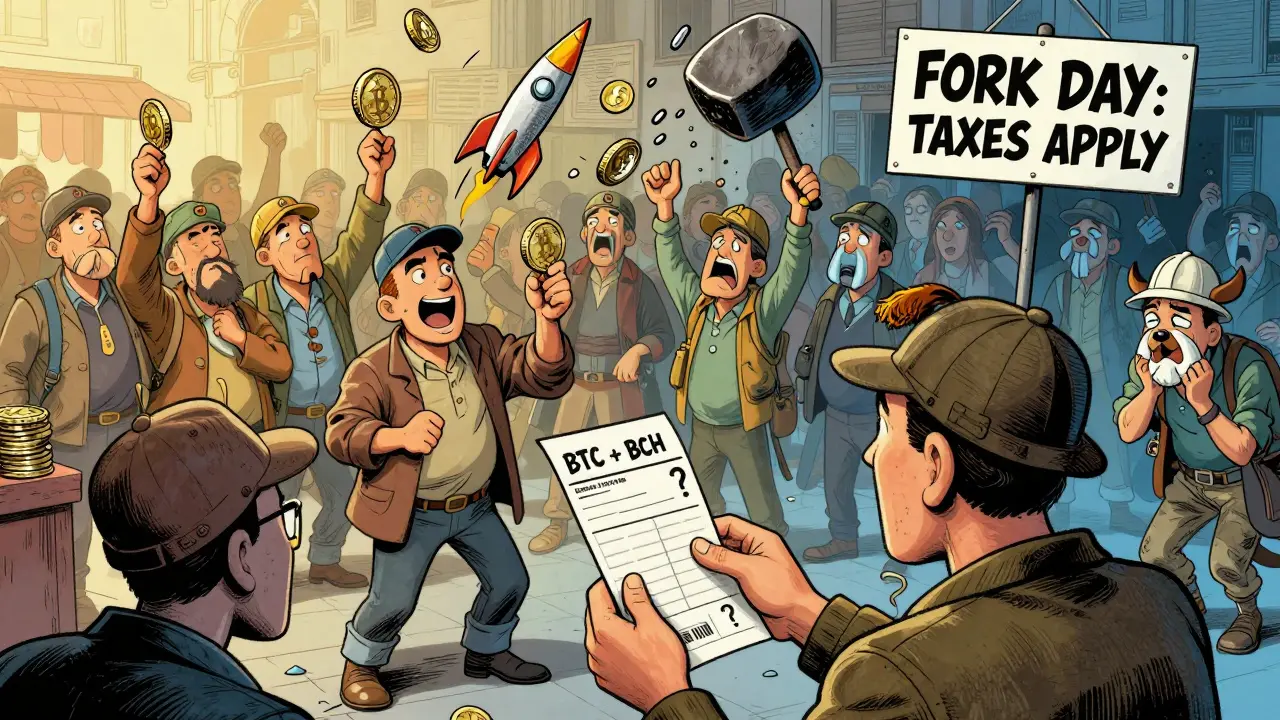
- After: If you got a new coin, move it to a wallet that supports it. Decide whether to hold, sell, or trade. Track taxes-many countries treat forked coins as taxable income.
And always assume the next fork is coming. Ethereum has debated hard forks for years. Solana, Polygon, and others have had them too. If you’re serious about holding crypto, you need to be ready.
Long-Term Reality: More Forks, More Complexity
Hard forks aren’t going away. They’re how blockchains evolve when consensus fails. And as crypto grows, so will the number of forks.
Every fork adds another asset to your portfolio. Another wallet to manage. Another tax form to fill out. Another decision: which chain has the future? Which one has the developers? Which one has the users?
Some holders thrive on this. They see forks as free money. Others get overwhelmed. The truth? Managing crypto isn’t just about buying and holding. It’s about staying informed, staying in control, and staying prepared.
If you don’t understand how forks work, you’re not just risking your coins-you’re risking your entire strategy. The blockchain doesn’t care if you’re confused. It just splits. And you’re the one left holding the pieces.
Do I automatically get new coins after a hard fork?
You get the new coins only if you controlled your private keys at the exact moment of the fork. If your coins were on an exchange that didn’t support the fork, you likely won’t receive them. Always move your crypto to a personal wallet before a fork is announced.
Are hard forks safe for my crypto?
Hard forks themselves aren’t dangerous-but the period around them is. Replay attacks, exchange freezes, and wallet incompatibility can lead to lost funds. The safest move is to wait until the dust settles and use trusted wallets that have confirmed support for both chains.
What’s the difference between a hard fork and a soft fork?
A soft fork is backward-compatible. All nodes can still communicate, even if some haven’t upgraded. A hard fork is not backward-compatible-it splits the network permanently. Soft forks are used for minor upgrades. Hard forks are for major changes-and they always create two chains.
Do I have to pay taxes on forked coins?
In most countries, including the U.S., receiving new coins from a hard fork is considered taxable income. You owe taxes based on the fair market value of the new coin at the moment you receive it. Keep records of the fork date and value to avoid issues with tax authorities.
Can a hard fork destroy my original cryptocurrency?
Not directly. The original chain continues to run unless the majority of miners and users abandon it. But if the new fork gains more support-more miners, more developers, more users-the original coin can lose value, liquidity, and relevance. Bitcoin Cash didn’t kill Bitcoin, but it did split its community and reduce its market focus.
Jesse VanDerPol
March 8, 2026 AT 00:04jonathan swift
March 8, 2026 AT 20:00Lydia Meier
March 10, 2026 AT 08:29jay baravkar
March 10, 2026 AT 17:15Ian Thomas
March 12, 2026 AT 14:49