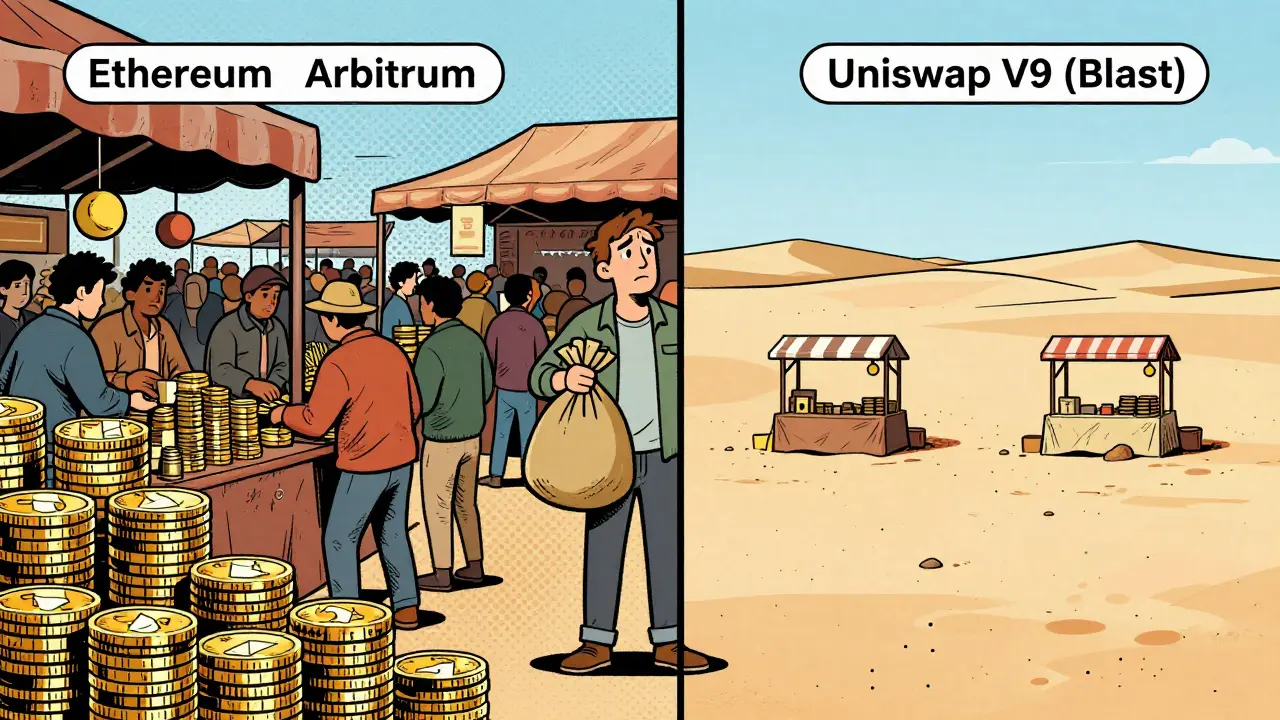
Most traders assume that if a platform carries the Uniswap name, it automatically offers deep liquidity, instant execution, and rock-bottom fees. That assumption works for Ethereum mainnet or Arbitrum. It does not work for Uniswap V3 (Blast), which is a specific deployment of the Uniswap protocol on the Blast Layer 2 network. Launched in 2024, this version is still finding its footing. You won’t find thousands of trading pairs here yet. Instead, you get a niche environment designed for users who care more about yield generation than high-frequency trading.
If you are looking to swap massive volumes of obscure tokens without slippage, this might frustrate you. But if you want to park capital in concentrated liquidity ranges while benefiting from Blast’s native interest mechanisms, there is real value here. Let’s look at what actually happens when you interact with this platform today.
The Current State of Liquidity
The first thing you notice on Uniswap V3 (Blast) is the limited selection. As of early 2026, the platform supports only two primary coins and four trading pairs. This is not a mistake; it is a consequence of being a new deployment on a specialized chain. Most of the volume you see on the broader Uniswap ecosystem comes from Ethereum, Polygon, and Optimism. The Blast deployment is still building its base.
This scarcity affects how you trade. With fewer pairs, the order book depth is shallow. The platform ranks in the 15th percentile for combined orderbook depth among decentralized exchanges. What does that mean for you? If you try to move large amounts of capital quickly, you will face higher slippage. The average bid-ask spread sits at 0.68%. For comparison, established DEXs often offer spreads below 0.1% for major pairs like ETH/USDC. On Blast, you pay a premium for the convenience of accessing these specific assets within this ecosystem.
However, the low volume also means less competition for liquidity providers. If you are providing liquidity rather than just swapping, the tighter spreads can sometimes translate into better fee capture per unit of volume, provided the market doesn’t crash through your price range.
How Blast Changes the Game
Why deploy Uniswap on Blast instead of sticking to Arbitrum or Base? The answer lies in Blast’s unique value proposition. Blast is an Ethereum Layer 2 solution built with a focus on yield. Unlike other L2s that primarily aim to reduce gas fees, Blast integrates native interest-bearing capabilities directly into its infrastructure.
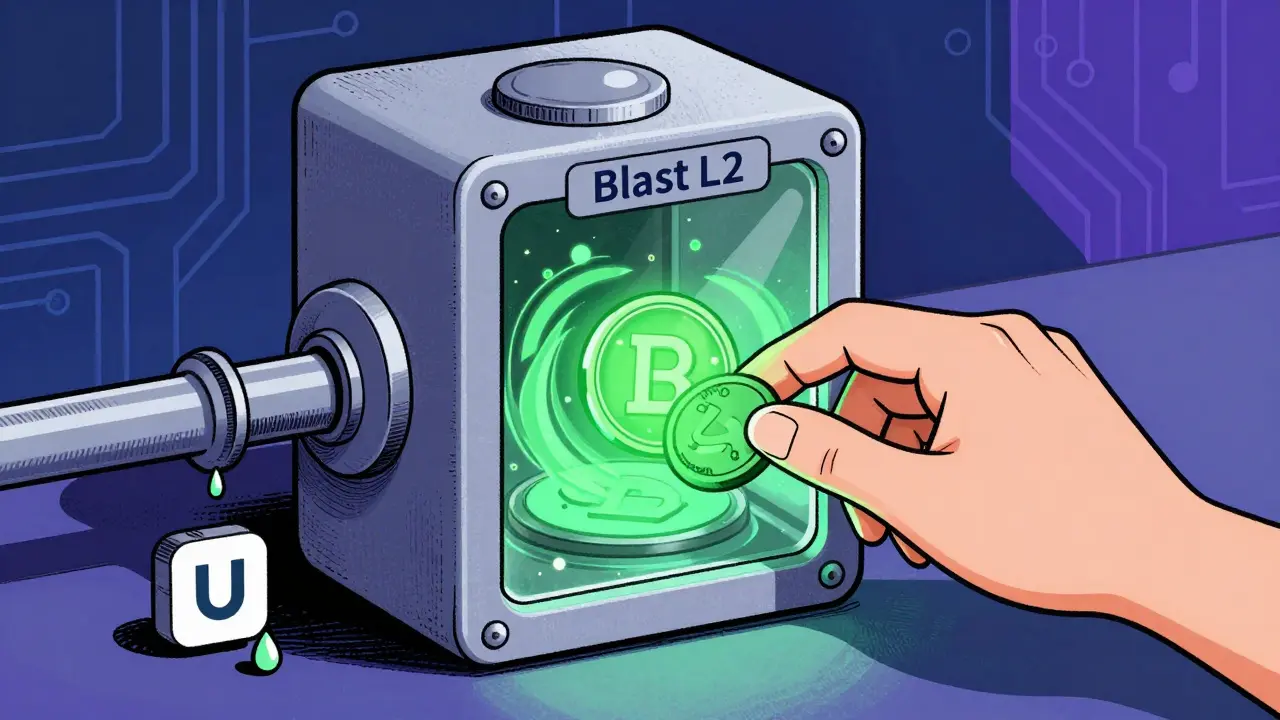
When you deposit assets into Uniswap V3 pools on Blast, those underlying assets may accrue yield passively. This creates a dual-income stream for liquidity providers: you earn trading fees from swaps, plus you benefit from the native yield generated by the Blast network itself. This feature is particularly attractive during periods of high interest rates or stablecoin demand.
Blast Network is an Ethereum Layer 2 scaling solution designed to enhance user yields through native interest mechanisms. While this sounds complex, the experience is seamless for the user. You don’t need to wrap your tokens in separate yield protocols. The yield is baked into the layer where your swap happens. This integration reduces friction and lowers the risk of smart contract interactions across multiple platforms.
Fees and Costs
Cost is always the deciding factor in DeFi. Uniswap V3 uses a tiered fee structure depending on the volatility of the asset pair. Standard pairs typically charge 0.30%, while highly volatile pairs might go up to 1%. On Blast, you generally see the standard 0.30% maker and taker fees. There are no hidden market maker fees, and the platform operates without margin trading capabilities.
But the fee isn’t just the percentage charged by the protocol. You must consider gas costs. Because Blast is a Layer 2, transaction fees are significantly lower than Ethereum mainnet. You can expect to pay fractions of a cent per transaction, making small swaps economically viable. In contrast, executing the same swap on Ethereum mainnet could cost $5 to $50 in gas alone, wiping out any profit from a small trade.
Here is a quick breakdown of the cost structure:
- Protocol Fee: Typically 0.30% for standard pairs.
- Gas Fees: Minimal, often under $0.01 per transaction.
- Slippage: Higher due to limited liquidity (average spread 0.68%).
- Yield Benefit: Passive income on deposited assets via Blast’s native mechanism.
If you are a casual trader moving small amounts, the low gas fees make Blast attractive. If you are a high-volume trader, the wider spreads might eat into your margins compared to deeper markets like Uniswap on Arbitrum.
User Experience and Accessibility
Using Uniswap V3 on Blast requires a compatible wallet. MetaMask is the most widely used non-custodial wallet that supports multi-blockchain functionality. MetaMask automatically detects Blast as a network, so setup is straightforward. You connect your wallet, switch networks, and start swapping. No account creation, no KYC, no email verification. This aligns with the core philosophy of decentralized finance: permissionless access.
However, the interface assumes a certain level of knowledge. You need to understand concepts like concentrated liquidity, impermanent loss, and price ranges. Uniswap V3 allows you to specify exactly where your liquidity sits. If you set a narrow range around the current price, your capital efficiency increases, but so does the risk of impermanent loss if the price moves outside your range. On a newer platform like Blast, where price discovery is still happening, this risk is amplified.
For beginners, this learning curve is steep. There is no customer support team to call if you make a mistake. Transactions are irreversible. If you send funds to the wrong address or approve a malicious contract, your funds are gone. The platform relies entirely on community documentation and self-service tools. This lack of hand-holding is a feature for experts, but a bug for newcomers.
Comparison with Other Uniswap Deployments
To understand where Uniswap V3 (Blast) fits, we need to compare it to its siblings. The broader Uniswap ecosystem processes between $1 billion and $2 billion in daily volume across all chains. The Blast deployment is a tiny fraction of this total. Here is how it stacks up against other major deployments:
| Feature | Uniswap V3 (Ethereum) | Uniswap V3 (Arbitrum) | Uniswap V3 (Blast) |
|---|---|---|---|
| Liquidity Depth | Very High | High | Low |
| Trading Pairs | Thousands | Hundreds | 4 Primary Pairs |
| Gas Fees | High ($5-$50+) | Low (<$0.10) | Very Low (<$0.01) |
| Native Yield | No | No | Yes (via Blast) |
| Best For | Large Trades, Stability | Balanced Trading | Yield Seeking, Niche Assets |
The table highlights the trade-offs. Ethereum offers the deepest liquidity but at a prohibitive cost for small trades. Arbitrum strikes a balance with good liquidity and low fees. Blast offers the lowest fees and unique yield benefits but suffers from thin liquidity. Your choice depends on your goal. If you want to move $100,000 instantly, stay away from Blast. If you want to park $1,000 and earn passive yield while swapping occasionally, Blast makes sense.
Risks and Limitations
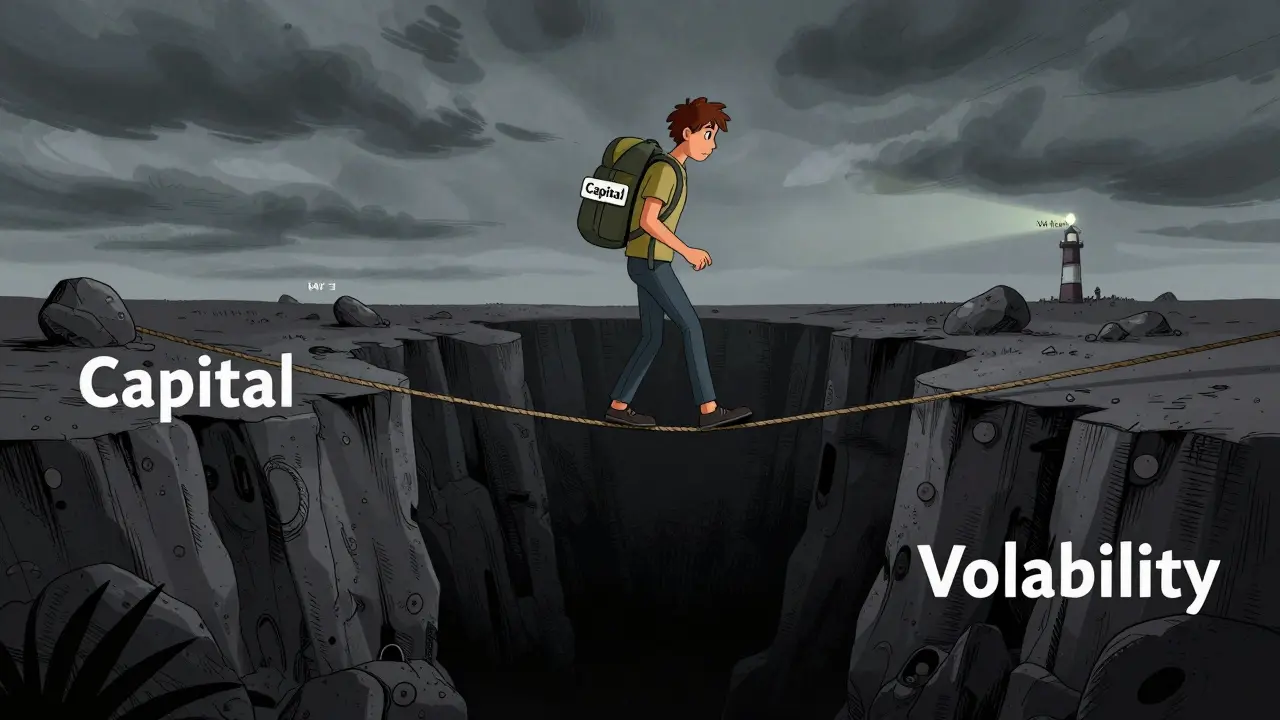
No DeFi platform is without risk. Uniswap V3 (Blast) faces several challenges. First, there is the regulatory uncertainty. Like most decentralized exchanges, Uniswap operates without government regulation. This means no insurance on your funds and no recourse if something goes wrong. The SEC and other bodies continue to scrutinize DeFi protocols, and future regulations could impact accessibility or functionality.
Second, there is the risk of smart contract vulnerabilities. While Uniswap’s code is heavily audited, the integration with Blast’s native yield mechanisms introduces additional complexity. Any bug in the underlying Blast infrastructure could affect your assets. Always check audit reports and stay informed about security updates.
Third, there is the risk of impermanent loss. This is inherent to providing liquidity on Uniswap V3. If the price of the assets in your pool diverges significantly, you may end up with less value than if you had simply held the assets in your wallet. On a newer platform with volatile price action, this risk is heightened. Use stop-losses or wide price ranges to mitigate this.
Finally, there is the risk of adoption failure. If Blast fails to attract users, liquidity will dry up, spreads will widen further, and the yield benefits may disappear. Keep an eye on Blast’s total value locked (TVL) and daily active users to gauge health.
Who Should Use Uniswap V3 (Blast)?
This platform is not for everyone. It suits specific types of users. If you are an experienced DeFi participant who understands liquidity provision, impermanent loss, and Layer 2 dynamics, Blast offers a compelling opportunity. The combination of low fees and native yield can boost returns compared to traditional staking.
It is also suitable for users holding Blast-specific assets who need to swap them without bridging back to Ethereum. Bridging incurs time and cost delays. Staying on-chain is faster and cheaper.
However, if you are a beginner, stick to established platforms like Coinbase or Kraken until you gain confidence. If you are a high-frequency trader, the limited liquidity on Blast will hurt your performance. Look for deeper markets on Arbitrum or Base instead.
Future Outlook
The future of Uniswap V3 (Blast) hinges on two factors: Blast’s growth and Uniswap’s evolution. The broader Uniswap ecosystem is already moving toward V4, which introduced Hooks functionality allowing custom logic in liquidity pools. V4 has processed over $100 billion in cumulative volume since its early 2025 launch. Eventually, Blast may upgrade to V4, bringing even more flexibility and efficiency.
In the meantime, Uniswap V3 (Blast) serves as a testing ground for yield-integrated trading. As more projects build on Blast, liquidity should deepen, spreads should tighten, and the platform will become more competitive. Watch for announcements regarding new trading pairs and partnerships. These signals indicate growing confidence in the ecosystem.
Layer 2 solutions now account for 67.5% of daily DEX volume. The trend is clear: users prefer speed and low cost over mainnet prestige. Blast positions itself at the intersection of this trend and yield optimization. If executed well, Uniswap V3 (Blast) could become a go-to destination for yield-focused traders.
Is Uniswap V3 (Blast) safe to use?
Like any DeFi platform, it carries risks. The Uniswap protocol is audited and battle-tested, but the Blast network is newer. Always verify smart contracts, use hardware wallets for large amounts, and never invest more than you can afford to lose. There is no insurance or customer support to recover lost funds.
What are the fees on Uniswap V3 (Blast)?
Standard trading fees are 0.30% for most pairs. Gas fees are negligible, often less than $0.01 per transaction. However, slippage can be higher due to limited liquidity, effectively increasing the cost of large trades.
Can I provide liquidity on Uniswap V3 (Blast)?
Yes. You can create concentrated liquidity positions by specifying price ranges. This maximizes capital efficiency but increases the risk of impermanent loss. You also benefit from Blast’s native yield mechanisms on your deposited assets.
Do I need KYC to use Uniswap V3 (Blast)?
No. Uniswap is a non-custodial, permissionless platform. You only need a compatible wallet like MetaMask. No identity verification is required for direct swaps or liquidity provision.
How does Blast differ from other Layer 2 networks?
Blast focuses on native yield generation. Unlike Arbitrum or Optimism, which primarily reduce gas fees, Blast integrates interest-bearing capabilities directly into its infrastructure, allowing users to earn yield on assets simply by holding them on-chain.
Is Uniswap V3 (Blast) regulated?
No. Uniswap operates as a decentralized protocol without central authority or government regulation. Users are responsible for their own compliance with local laws and tax obligations.
What tokens can I trade on Uniswap V3 (Blast)?
Currently, the platform supports a limited number of assets, primarily focusing on ETH and USDB (Blast’s native stablecoin). Additional pairs may be added as the ecosystem grows. Check the official Uniswap interface for the latest available pairs.
Should I bridge my assets from Ethereum to Blast?
Only if you plan to use them on Blast. Bridging involves time and potential risks. If you are just swapping occasionally, consider using cross-chain bridges or aggregators that handle routing automatically. For long-term yield farming, bridging directly is more efficient.