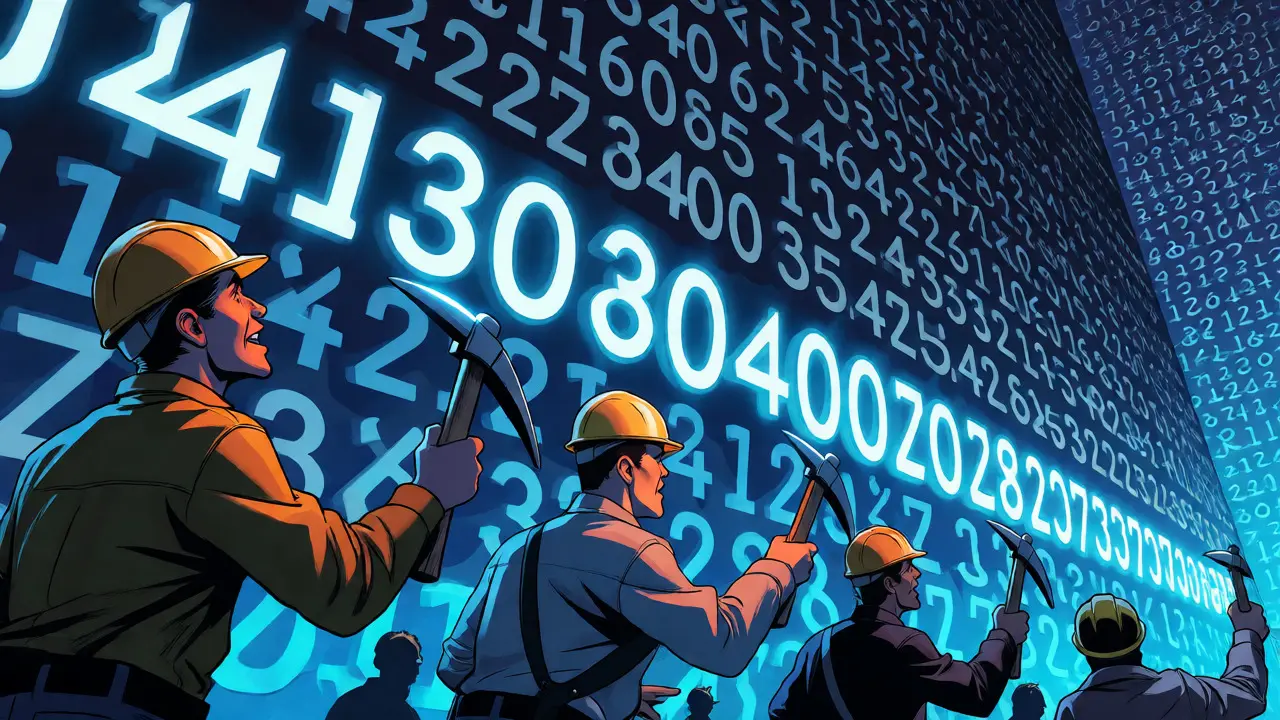
Fraud thrives in the dark. It hides behind closed doors, buried in private databases, or lost in the chaos of fragmented records. When you can't see what's happening, it’s easy for someone to tweak a number, forge a signature, or claim they never received a package. That’s where blockchain transparency is a technological approach that uses distributed, immutable ledgers to make transactions visible and verifiable by all authorized parties, thereby preventing fraudulent activities. It doesn’t just promise security; it forces honesty by making every action part of a permanent, public record.
You don’t need to be a tech wizard to understand why this matters. Imagine a world where you could trace every step of a product’s journey from factory to shelf, or verify a house deed without calling three different lawyers. Blockchain does exactly that. By removing the "black box" nature of traditional systems, it creates an environment where cheating isn’t just hard-it’s nearly impossible to hide.
The Core Mechanism: Why You Can’t Cheat the Ledger
To get how blockchain stops fraud, you first have to look at how it stores data. Unlike a standard database held on one server (which a hacker can break into or an employee can alter), a blockchain is distributed across a network of thousands of computers, known as nodes, each holding a copy of the entire transaction history. This means there is no single point of failure. If one computer crashes or gets hacked, the rest of the network keeps the truth alive.
But distribution alone isn’t enough. The real magic lies in immutability through cryptographic hashing, which links each block of data to the previous one, ensuring that any attempt to alter past records would require changing every subsequent block simultaneously across the majority of the network. Think of it like a digital chain. Each link (or "block") contains a unique fingerprint (hash) of the link before it. If someone tries to change a transaction in Block 10, the fingerprint changes. Suddenly, Block 11 doesn’t match anymore. Then Block 12 fails. And so on, all the way to the end of the chain.
To pull off a fraud, a bad actor wouldn’t just need to hack one computer. They’d need to control more than 51% of the entire network’s computing power simultaneously to rewrite history. For major networks, this is computationally expensive and practically impossible. This is why blockchain is often called a "trustless" system-you don’t need to trust the person on the other side; you trust the math.
Real Estate: Stopping Title Fraud Before It Starts
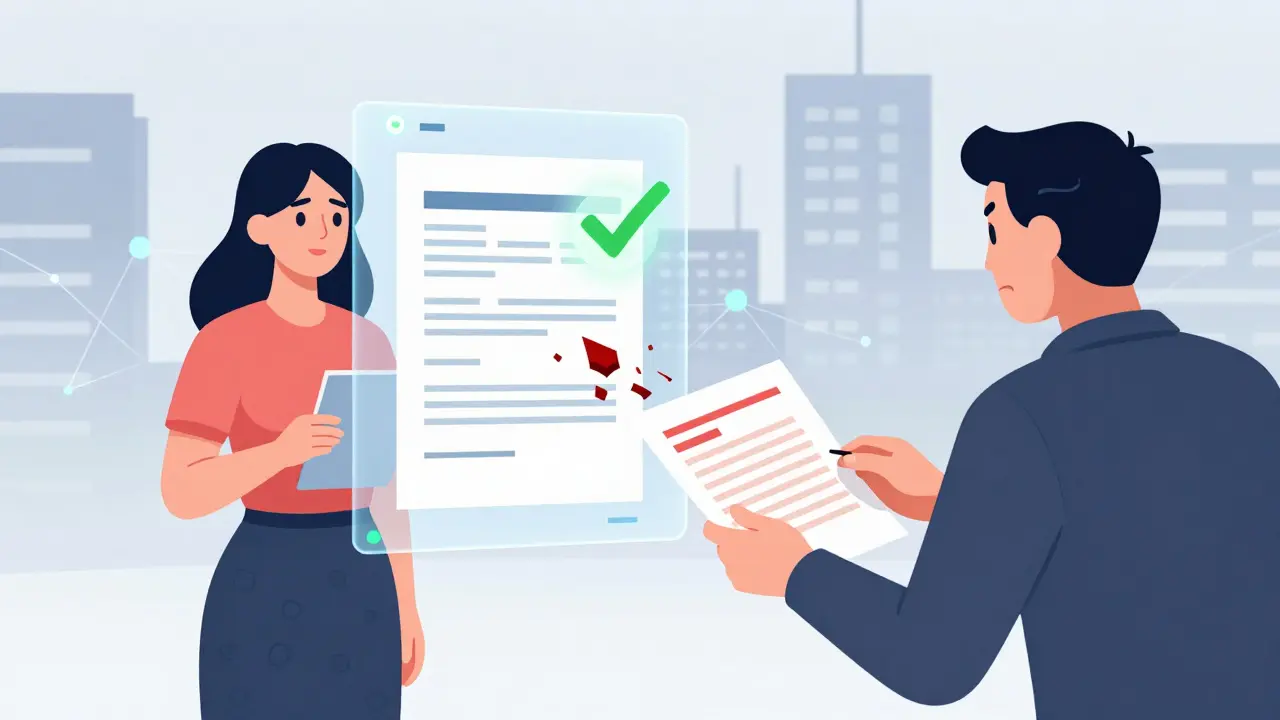
Nowhere is the cost of fraud higher than in real estate. Every year, billions of dollars are lost to title fraud, where criminals forge documents to steal property ownership or secure loans against homes they don't own, exploiting gaps in centralized land registry systems. In traditional systems, land titles are stored in local government offices. These records are often paper-based, siloed, and vulnerable to human error or malicious alteration.
Blockchain changes the game here. By moving title records onto a transparent ledger, every transfer of ownership becomes a permanent, timestamped event. Here’s how it works in practice:
- Single Source of Truth: Instead of multiple agencies holding conflicting records, everyone-from buyers and sellers to banks and insurers-sees the same updated ledger.
- Instant Verification: You can verify ownership instantly without waiting weeks for background checks. The history of the property is clear and unalterable.
- Preventing Impersonation: Digital signatures tied to cryptographic keys ensure that only the legitimate owner can authorize a sale. No more forged deeds slipping through the cracks.
Countries like Georgia and Sweden have already piloted blockchain land registries. The result? Drastic reductions in processing time and near-elimination of title disputes. It turns a messy, opaque process into a clean, auditable trail.
Supply Chains: From Farm to Fork with Proof
Have you ever bought "organic" produce only to wonder if it really was? Or purchased luxury goods fearing they might be counterfeits? Supply chains are notoriously complex, involving dozens of handoffs between farmers, manufacturers, shippers, and retailers. At each step, information can be lost, faked, or obscured.
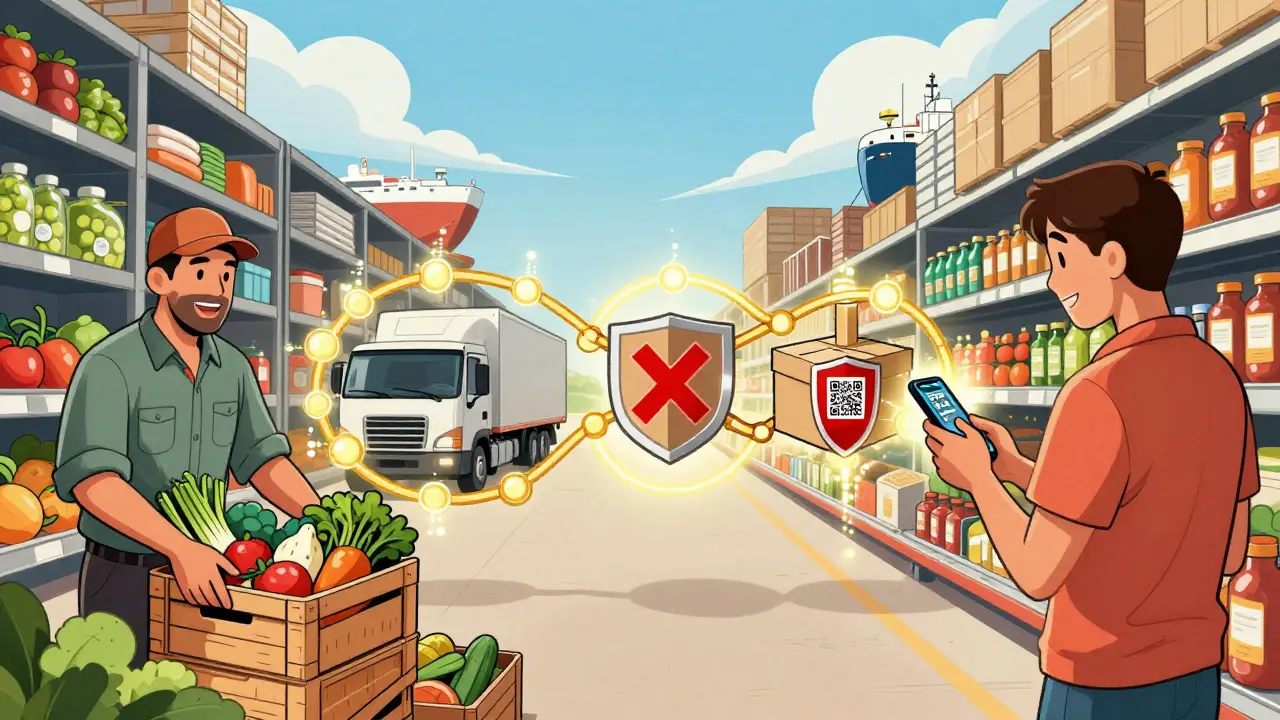
Supply chain transparency via blockchain technology enables end-to-end tracking of goods, recording every movement and transaction on an immutable ledger to verify authenticity and prevent counterfeiting. Let’s look at a concrete example. Walmart partnered with IBM to use blockchain for tracing leafy greens. Previously, finding the source of an E. coli outbreak took days. With blockchain, they traced the source in 2.2 seconds.
This speed saves lives, but it also stops fraud. Counterfeiters struggle to insert fake products into a chain where every scan, shipment, and handoff is recorded publicly. If a bottle of wine claims to be from a specific vineyard, the blockchain shows its entire journey. If that data doesn’t exist or breaks the chain, the product is flagged immediately. Consumers get proof, not just promises.
Financial Services: Killing Double-Spending and Money Laundering
In finance, fraud often looks like double-spending (using the same digital asset twice) or money laundering (hiding the origin of illicit funds). Traditional banking relies on intermediaries to check these things, which is slow and prone to errors.
Blockchain prevents double-spending natively. Because the ledger is shared and updated in real-time, the network knows instantly if an asset has already been spent. There’s no lag time for a hacker to exploit.
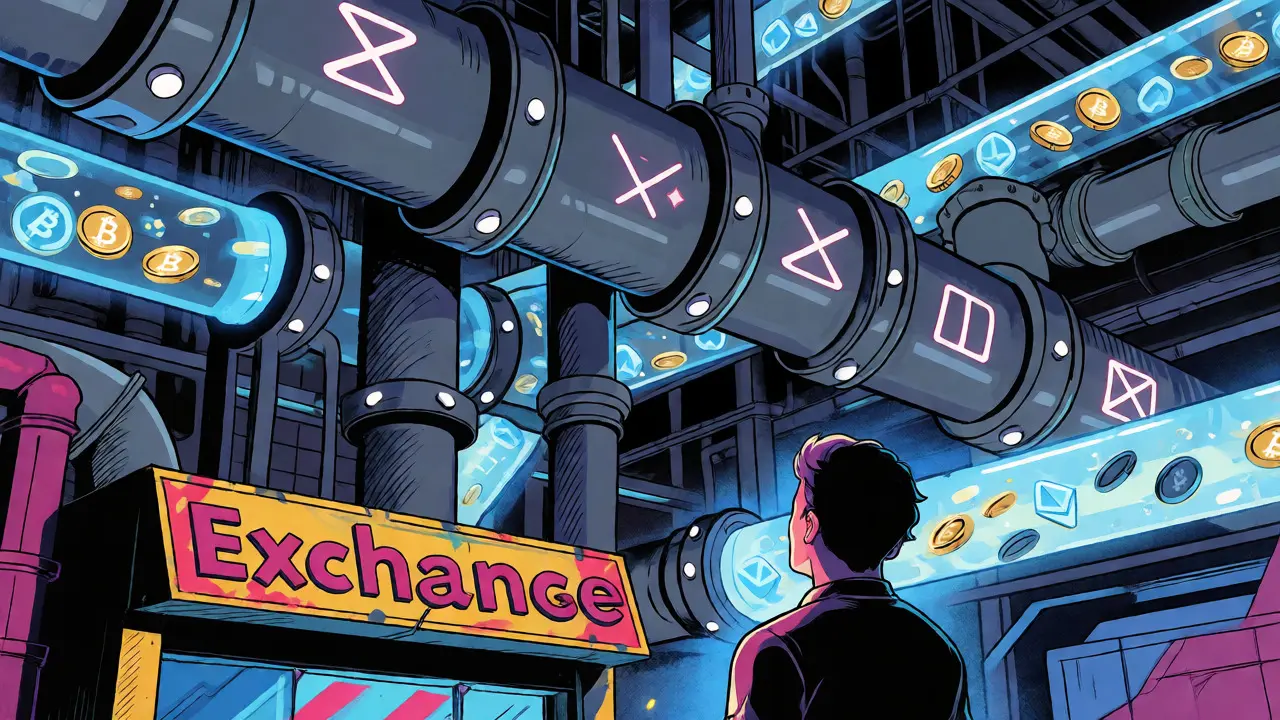
For money laundering, transparency is the enemy of criminals. While some cryptocurrencies offer privacy features, most public blockchains are pseudonymous, not anonymous. Every transaction is visible. Regulatory bodies like the Financial Action Task Force (FATF) enforce global standards requiring Virtual Assets Service Providers (VASPs) to comply with Anti-Money Laundering (AML) rules, including Know Your Customer (KYC) identity verification.
The EU’s Fifth Anti-Money Laundering Directive (5AMLD) now treats crypto exchanges like banks. They must report suspicious activity and verify user identities. This means that while the blockchain itself is transparent, the people behind the wallets are increasingly identifiable. Criminals can’t easily move dirty money through a system where every hop is recorded and regulated entities are watching.
| Feature | Traditional Database | Blockchain Ledger |
|---|---|---|
| Data Control | Centralized (single entity) | Distributed (network consensus) |
| Alteration Risk | High (admin access required) | Near Zero (requires 51% attack) |
| Audit Trail | Often incomplete or delayed | Permanent and real-time |
| Trust Model | Trust the institution | Trust the code/math |
| Transparency | Opaque to outsiders | Visible to all participants |
The "Garbage In, Garbage Out" Problem
Here’s the catch that skeptics love to point out: blockchain is only as good as the data entered into it. This is known as the oracle problem. If a warehouse worker scans a box of fake diamonds and logs them as real on the blockchain, the ledger will permanently record that lie. The blockchain guarantees the data hasn’t changed since entry, but it doesn’t guarantee the initial entry was true.
This doesn’t mean blockchain fails at preventing fraud. It means we need to combine it with other technologies. Sensors, IoT devices, and biometric scanners can automate data entry, reducing human manipulation. For instance, a temperature sensor in a shipping container can automatically log data to the blockchain, proving the medicine stayed cold. No human needed to press a button, so no human could lie about it.
Also, remember that transparency acts as a deterrent. Even if bad data enters, the moment it conflicts with other verified sources on the chain, it stands out. In a transparent system, inconsistencies are easier to spot than in a closed one.
Smart Contracts: Automating Trust
Smart contracts are self-executing agreements with terms directly written into code, which automatically trigger actions when predefined conditions are met, eliminating manual intervention and potential manipulation. They take transparency a step further by removing the middleman entirely.
Imagine an insurance claim. Traditionally, you file a form, wait for an adjuster, hope they don’t lose your paperwork, and pray they approve it. With a smart contract, the agreement is coded: "If flight delay > 4 hours, pay $200." An external data feed confirms the delay. The payment happens automatically. No one can deny the claim, no one can embezzle the funds, and no one can lose the evidence. It’s fraud-proof because there’s no human discretion to abuse.
Is Blockchain Right for Your Business?
Not every problem needs a blockchain solution. If you’re running a simple internal inventory list, a spreadsheet might suffice. But if you’re dealing with high-value assets, cross-border transactions, or industries plagued by counterfeit goods, blockchain offers a competitive edge.
The key is adoption. Blockchain’s value grows exponentially as more people join the network. A single company using blockchain internally gains efficiency, but an industry-wide standard creates undeniable trust. As regulations tighten around digital assets and supply chain ethics, early adopters will find themselves ahead of the curve.
Fraudsters are adapting too. They’re getting smarter, faster, and more digital. Static security measures won’t cut it anymore. You need dynamic, transparent systems that leave no room for shadows. Blockchain provides that light.
Can blockchain be hacked to commit fraud?
While individual wallets or exchanges can be hacked due to poor security practices, the blockchain protocol itself is extremely resistant to hacking. To alter the ledger, an attacker would need to control over 51% of the network's computing power, which is prohibitively expensive for large networks like Bitcoin or Ethereum. Therefore, the core transparency mechanism remains secure.
Does blockchain transparency violate privacy?
Public blockchains are transparent, meaning anyone can view transaction histories. However, they are pseudonymous, not anonymous. Users are identified by wallet addresses, not names. For sensitive business data, private or permissioned blockchains allow only authorized participants to view details, balancing transparency with confidentiality.
How does blockchain prevent identity theft?
Blockchain enables self-sovereign identity solutions. Instead of storing personal data on vulnerable central servers, individuals hold their credentials on a blockchain. They can share only necessary proofs (like age verification) without revealing underlying data, reducing the risk of mass data breaches and identity theft.
What is the "oracle problem" in blockchain?
The oracle problem refers to the challenge of ensuring that real-world data fed into the blockchain is accurate. Since blockchain cannot verify external events on its own, it relies on trusted third-party services (oracles) to input data. If the oracle is compromised, false data becomes immutable on the chain. Solutions include using multiple decentralized oracles and automated IoT sensors.
Is blockchain useful for small businesses?
Yes, especially those involved in supply chains or high-trust environments. Cloud-based blockchain platforms offer affordable entry points. Small businesses can benefit from streamlined audits, reduced fraud losses, and increased consumer trust by providing verifiable product origins. However, the full benefit is realized when partners and suppliers also adopt the technology.