The Great Escape: Why Nigerians are Swapping Naira for Crypto
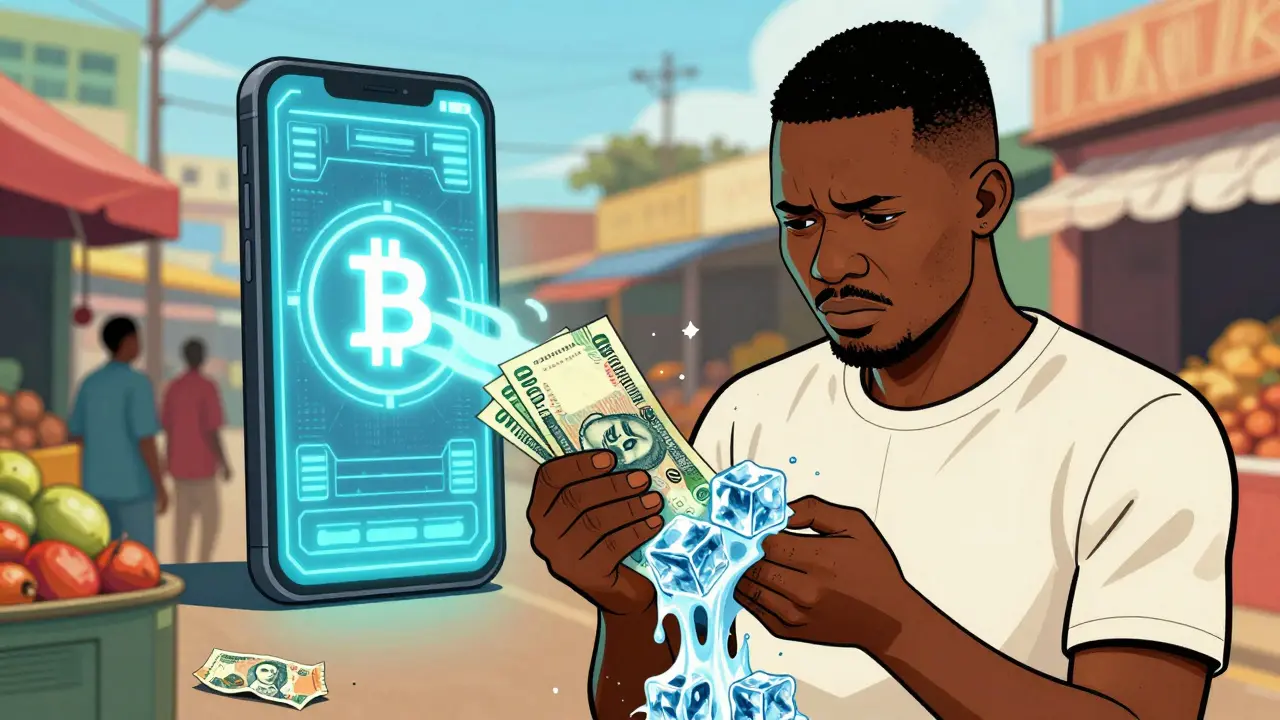
People aren't buying Bitcoin because they want to get rich quick; they're doing it to survive. When inflation hits over 24%, as it did in 2023, holding naira is like holding a melting ice cube. The Central Bank of Nigeria the apex monetary authority responsible for maintaining the external value of the naira (CBN) has historically tried to control exchange rates manually rather than letting the market decide. This created a gap between the official rate and the actual street value, pushing people toward decentralized options. For many, the appeal is simply about preserving what they have. A huge chunk of this activity isn't speculative. About 43% of transactions under $1 million are done using USDT a stablecoin pegged to the US Dollar, providing a digital proxy for dollar-denominated value. By holding Tether (USDT), a trader in Lagos can effectively hold "digital dollars," protecting their purchasing power from the volatility of the local currency.How Trading Activity Directly Weakens the Currency
How does clicking a button on a smartphone actually affect a national currency? It comes down to demand. In a healthy economy, people want to hold the local currency to buy goods, pay taxes, and save. But when millions of people convert their naira into crypto, they are essentially saying, "I don't want this currency anymore." This massive sell-off increases the supply of naira in the market while decreasing the demand for it, which naturally drives the value down. Then there is the issue of capital flight. Traditionally, if you wanted to move money abroad, you had to go through a bank. Now, with peer-to-peer (P2P) transfers, money moves from a digital wallet in Abuja to one in London in seconds, bypassing the formal banking system entirely. This means the CBN loses its ability to track and regulate the flow of money, making its monetary policy tools almost useless.| Feature | Traditional Banking | Cryptocurrency (P2P) |
|---|---|---|
| Avg. Transaction Fees | Up to 8% | Significantly lower |
| Speed of Transfer | Days (due to approvals) | Minutes/Seconds |
| Currency Control | Strict CBN limits | Decentralized / No limits |
| Access Requirement | Bank Account (36% unbanked) | Smartphone & Internet |
The Role of the Unbanked and the Youth
One of the most striking parts of this story is who is doing the trading. About 36% of Nigerian adults are completely unbanked, meaning they've never had a formal bank account. For them, a crypto wallet is their first real experience with a financial tool that allows them to save and trade globally. It's not just a luxury; it's a primary financial infrastructure. Moreover, the demographic shift is undeniable. Over half of the crypto investors in Nigeria are under 30. This generation is digitally native and far less patient with the bureaucratic hurdles of traditional banking. When the government blocked bank accounts during the End SARS protests, it didn't stop the movement-it just proved to a whole generation that digital assets like Bitcoin the first decentralized cryptocurrency that serves as a censorship-resistant store of value are the only way to ensure financial autonomy free from government interference.
From Bans to Regulation: A Change in Strategy
For years, the government tried to fight a digital fire with a physical blanket. In 2017, the CBN told banks to stop processing crypto transactions. They even fined six commercial banks a total of ₦1.31 billion in 2022 for ignoring these rules. But you can't ban a piece of code that people are using to save their life savings. The prohibition actually backfired, pushing activity into the shadows of P2P markets where the government had zero visibility. Everything changed with the Nigerian Investment and Securities Act legislation passed in 2025 that officially recognizes digital assets as securities. This was a white flag of sorts. The government realized that the grassroots adoption was too deep to reverse. By bringing crypto into a regulatory framework, they're attempting to move the activity from the "dark" P2P markets back into a system where they can at least monitor the impact on the naira.The Ripple Effect on the Broader Economy
While the pressure on the naira is the main headline, the crypto surge is creating other weird economic side effects. On one hand, it's a lifeline for the youth. Many young Nigerians now earn in USD or stablecoins by freelancing for global companies, which brings foreign currency into the country. On the other hand, because so many people are using crypto as a hedge, the official naira exchange rate becomes a fiction. It's a "ghost rate" that doesn't reflect how people actually trade. This creates a dangerous feedback loop. As the naira drops, the cost of importing basic goods-like food and medicine-rises. This fuels more inflation, which makes the naira even less attractive, which pushes more people into crypto. Unless the underlying macroeconomic issues, like the chronic shortage of foreign exchange and high unemployment, are fixed, the pressure from crypto will only increase.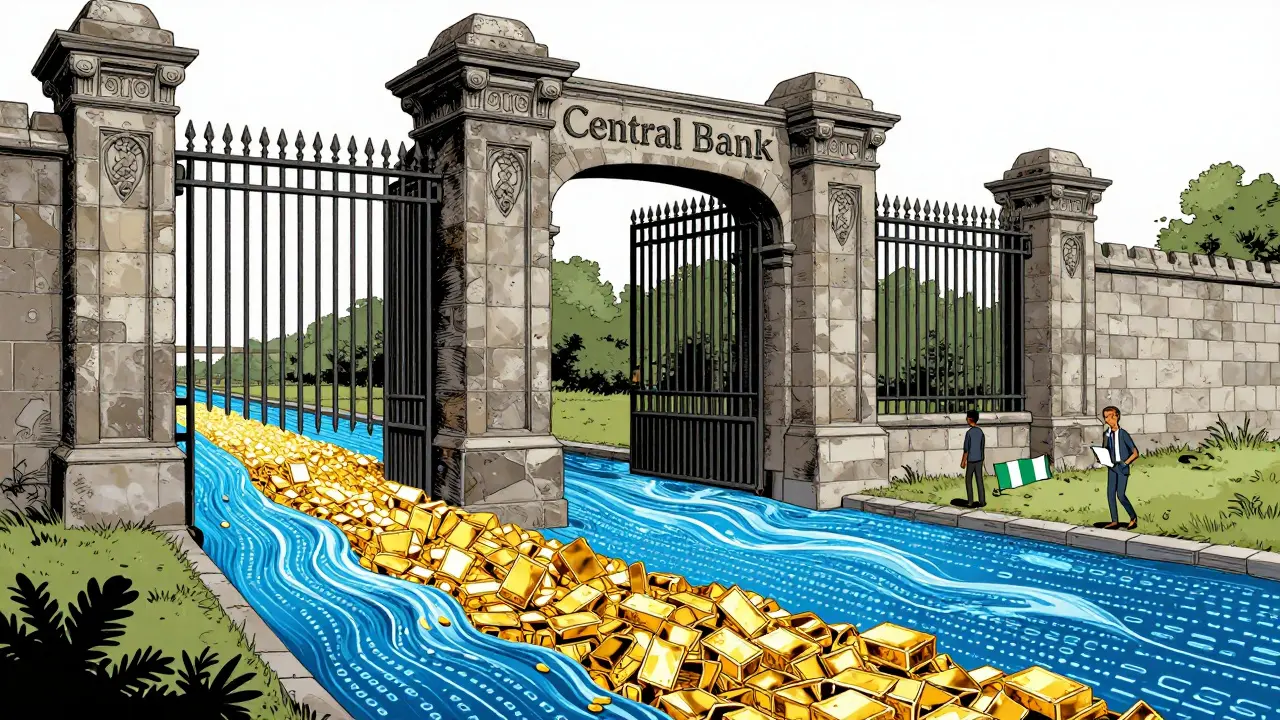
What the Future Holds for the Naira
Looking ahead to 2026, the numbers don't suggest a slowdown. User penetration is expected to hit 11.83%, with nearly 29 million users. The cryptocurrency market in Nigeria is projected to generate billions in revenue, but this growth is a double-edged sword. It brings innovation and financial inclusion to the unbanked, but it continues to drain the demand for the domestic currency. If the government can successfully integrate blockchain into other sectors-like agriculture or education-they might find a way to make the technology work for the economy rather than against the currency. But for now, as long as the naira remains unstable, Nigerians will continue to treat their digital wallets as the only safe harbor in a financial storm.Does crypto trading actually cause the naira to lose value?
It's more of a symptom and a catalyst. The naira loses value primarily due to inflation and poor monetary policy. However, when millions of people sell their naira to buy crypto, they increase the supply of naira and decrease its demand, which accelerates the currency's decline.
Why is USDT so popular in Nigeria compared to Bitcoin?
Bitcoin is volatile, which makes it a risky way to store daily expenses. USDT is a stablecoin pegged to the US Dollar. For Nigerians, it provides the stability of the dollar without needing a foreign currency bank account, making it the perfect hedge against naira devaluation.
Is cryptocurrency legal in Nigeria now?
Yes, the landscape shifted significantly with the Nigerian Investment and Securities Act of 2025. While the CBN previously restricted banks from handling crypto, the new law recognizes digital assets as securities, moving the country from a policy of prohibition to one of regulation.
How do people trade crypto if banks are restricted?
Most Nigerians use Peer-to-Peer (P2P) platforms. Instead of sending money to an exchange, they send naira directly to another person's bank account, and that person releases the cryptocurrency to them via a digital wallet. This bypasses the bank's ability to block the transaction.
Can the government stop the naira pressure by banning crypto again?
It's unlikely to work. Past bans only pushed the activity into decentralized P2P markets. Because the drive to use crypto is based on economic necessity (saving wealth from inflation), a ban doesn't remove the demand; it just removes the government's ability to see and tax the activity.
Next Steps for Different Users
- For Casual Savers: If you're worried about inflation, look into stablecoins like USDT, but be aware of the regulatory shifts in the 2025 Securities Act to stay compliant.
- For Business Owners: Consider diversifying your treasury into digital assets to protect your import costs from sudden naira devaluations.
- For Freelancers: Focus on platforms that allow you to receive payments in stablecoins, which can be converted to naira only when you need it, avoiding unnecessary losses.



Omotola Balogun
April 14, 2026 AT 01:32The analyss is mostly correct but it misses the deeper nuance of how the P2P market actually operates in the streets of Lagos. Most people don't even use the fancy apps anymore, they have trusted vendors they've known for years who handle the swaps manually. The 2025 Act is a start, but the government is still playing catch-up with a technology that moves faster than their bureaucracy could ever dream of. It's simply a matter of economic survival when your local currency behaves like a lottery ticket with losing numbers.
7stargee Emmanuel Obani
April 15, 2026 AT 14:26Typical government failure lol 🤡. They try to ban it, it fails, then they pretend to be innovative by regulating it. The naira is dead anyway 📉
Amanda Faust
April 17, 2026 AT 10:52obviously the cbn failed because they tried to fight a decentralized ledger with centralized rules. basic economics 101. you cannot force a peg when the market knows the asset is worthless
Rob Mitchell
April 18, 2026 AT 22:37Stablecoins are a game changer for global trade.
Surender Kumar
April 20, 2026 AT 01:46really cool to see how tech helps ppl save money in hard times... hope things get bettr for nigeria soon
Lela Singh
April 20, 2026 AT 05:38Absolute brilliance! This digital pivot is a total powerhouse move for the youth to reclaim their financial destiny from crumbling systems!
Prasanna Shembekar
April 21, 2026 AT 04:51my heart breaks for everyone just trying to buy food while the money disappears its so unfair
Stanly Hayes
April 23, 2026 AT 04:34Let's be real here. If the government actually cared about the people, they wouldn't have spent years fighting a tool that literally allows the unbanked to survive. It's pathetic that they only recognized digital assets as securities once they realized they couldn't stop the bleed. We see this all the time where policy lags behind reality by a decade because some officials are too proud to admit they were wrong about the internet. The real issue isn't crypto, it's the systemic incompetence of the monetary authority that manages to kill a currency while the rest of the world is moving toward digitization. You can't just put a bandage on a severed limb and call it a recovery. The P2P markets didn't create the problem; they provided the only viable solution to a disaster created by the state. If you want the naira to be strong, stop pretending you can control the exchange rate with a magic wand and actually fix the production side of the economy. Until then, Bitcoin is the only honest money left in that region and anyone trying to ban it is just trying to keep people poor and dependent on broken banks.
Terrance Hausmann
April 24, 2026 AT 19:39It's a tough spot to be in, but seeing the youth embrace this tech shows a lot of resilience and adaptability. I truly believe that if the integration into agriculture and education actually happens, we could see a massive leapfrog effect where Nigeria bypasses traditional banking failures entirely to create a new model for emerging markets, which is honestly a very hopeful prospect when you consider the global struggle with inflation and the need for more inclusive financial systems that don't rely on a centralized authority to grant permission to save your own hard-earned money.
Emily H
April 25, 2026 AT 04:56The transition toward a regulated framework is a most prudent step for ensuring long-term stability. By integrating these assets into the legal system, the government can foster an environment where innovation flourishes while simultaneously mitigating the risks associated with total currency abandonment. It is heartening to observe the adaptability of the Nigerian populace in the face of such adversity, and one can only hope that these digital tools provide a sustainable bridge toward a more prosperous and economically stable future for all citizens involved in this transition.