If you're looking for a place to trade crypto futures, you've probably seen a few platforms pop up in your feed promising high leverage and "secure operation." But here is the cold truth: not everything that looks like an exchange actually is one. HyperPay Futures is a cryptocurrency derivatives trading platform that claims to provide futures contracts and deep liquidity. However, a closer look at the data reveals a massive gap between what they promise and what they actually deliver. In short, this is a platform you should avoid if you value your capital.
The Red Flags You Can't Ignore
When you evaluate any exchange, the first place to look is the data. Legitimate platforms like Binance Futures or Bybit report billions in daily volume. HyperPay Futures, on the other hand, is listed as an "Untracked Listing" on CoinMarketCap. For those who aren't familiar, an untracked status means the service doesn't verify their volume because the data is either non-existent or completely unreliable. As of late 2025, their page shows "No data is available now" for trading pairs. Why would a platform claiming seven years of secure operation have zero verifiable market data?
The technical side is even more worrying. Real exchanges provide detailed API documentation and clear server protocols. HyperPay provides almost nothing. While they claim to integrate with Bitcoin, Ethereum, and Solana, these connections seem limited to their wallet service rather than an actual trading engine. Most alarming is that the exchange functionality is often pushed through strange subdomains like h5.trade, which have been flagged in global scam databases.
Comparing HyperPay to the Pros
To understand how far HyperPay falls short, you have to look at the industry standard. A real futures exchange gives you real-time metrics: open interest, funding rates, and liquidation prices. For instance, OKX Futures publishes open interest figures in the billions. HyperPay offers none of this transparency. They operate in a black box, which is a classic sign of a "phantom" exchange where the numbers you see on your screen aren't actually tied to a real market.
| Feature | HyperPay Futures | Tier-1 Exchanges (e.g., Binance, OKX) |
|---|---|---|
| Volume Verification | Untracked / No Data | Verified (Billions daily) |
| Transparency | Opaque / Hidden | Real-time Open Interest & Funding |
| Regulatory Status | None / Flagged as Scam | Licensed in multiple jurisdictions |
| Withdrawal Process | Excessive / Notarized reqs | Standard KYC / Automated |
| Customer Support | Telegram only (Slow) | Multi-channel / 24-hour response |
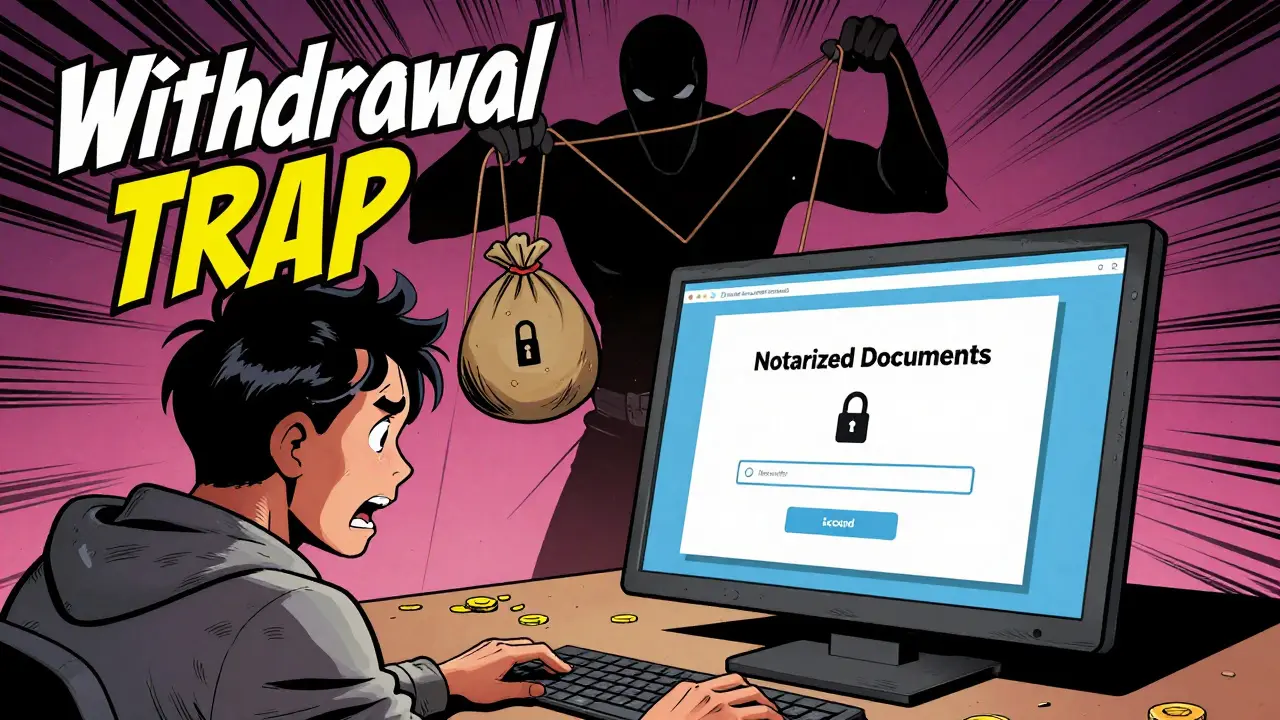
The "Withdrawal Trap" and User Experiences
The most consistent horror story coming from HyperPay users is the withdrawal freeze. On Trustpilot, the platform holds a dismal 2.3/5 rating. Users report a specific pattern: they can make small withdrawals at first, which builds a false sense of trust. But the moment they try to take out a significant amount, the platform hits them with "aggressive KYC" requests. We're talking about demands for notarized proof of address and video verification for amounts as low as $1,000-requirements that far exceed standard global regulations.
Community discussions on Reddit, specifically in r/CryptoScams, tell an even darker story. Dozens of users have reported losing hundreds of thousands of dollars in a pattern known as "pig butchering." This is where scammers build a relationship with the victim, encourage them to deposit more money into a fake platform, and then vanish or freeze the funds entirely once the balance hits a certain peak. When you combine this with the fact that cryptolegal.uk has explicitly listed HyperPay as a fraudulent investment company, the picture becomes very clear.
Technical Red Flags and "Exit Scam" Patterns
If you dig into the code and infrastructure, the warnings get louder. Analysis of GitHub repositories associated with the platform shows that while the basic wallet might work, the actual exchange components mirror those used in known exit scams. An exit scam happens when a platform collects as much user deposit as possible and then abruptly shuts down, stealing all the funds.
Another warning sign is their token, Hyper Pay (HPY). Market sentiment is overwhelmingly bearish, with predictions showing a steady decline. More importantly, the platform stopped adding new trading pairs in early 2025 but continued to aggressively recruit new users. This is a classic "pump and abandon" strategy: keep the new money coming in while the actual product development has completely stalled.

How to Spot a Fake Exchange
Since there are so many platforms like this, you need a mental checklist to protect yourself. If you're looking at a new exchange, ask yourself these questions:
- Does it have a verified volume ranking on a trusted site like CoinMarketCap or CryptoCompare? If it's "untracked," be careful.
- Can I see a real-time order book with actual depth? If the prices look too perfect or the liquidity vanishes during execution, it's likely a simulation.
- Are the withdrawal requirements insane? Notarized documents for small amounts are a huge red flag.
- Is the support only on Telegram? Legitimate firms have ticket systems, emails, and official help centers.
- Does the company have a verifiable license from a real regulator like the CFTC or SAMA?
In the case of HyperPay, the answer to all these is a resounding "no." They claim a connection to Saudi Arabia, but the Saudi Central Bank (SAMA) has not licensed them. They operate through obscure subdomains and have been blacklisted by fraud databases globally.
Is HyperPay Futures a legitimate trading platform?
No. Based on evidence from CoinMarketCap's untracked status, fraud reports from cryptolegal.uk, and numerous user reports of withdrawal freezes, HyperPay Futures shows all the hallmarks of a fraudulent operation. It is widely categorized as a scam company.
Why is my withdrawal from HyperPay Futures being delayed?
Scam platforms often use "compliance" or "KYC" as a excuse to block withdrawals. By demanding excessive documentation like notarized papers, they buy time or try to trick users into depositing more money to "unlock" their accounts. This is a common tactic in pig butchering scams.
Can I trust the HyperPay Wallet?
While some users report that the basic wallet functionality works, the overall association with a fraudulent exchange makes it high-risk. Using a wallet tied to an entity flagged for rug pulls and fraud puts your private keys and assets at significant risk.
What should I do if I already deposited money into HyperPay?
Stop depositing money immediately. Do not pay any "taxes" or "activation fees" to get your money out, as this is just another layer of the scam. Document all your transactions and communications, and report the activity to your local financial authorities and cybercrime units.
Does HyperPay Futures have any regulatory licenses?
There is no evidence of any valid regulatory licenses. Despite claims of being based in Saudi Arabia, they are not licensed by the Saudi Central Bank (SAMA), nor do they hold designations from major regulators like the CFTC.
What to do next
If you're looking for actual futures trading, stick to the giants. Platforms like Coinbase Derivatives are regulated and provide the transparency you need. If a platform asks you to move your funds to a strange URL or demands a video of you holding your passport just to withdraw your own money, walk away. The crypto world is full of opportunities, but it's also full of traps. Don't let the promise of high leverage blind you to the lack of basic transparency.