
When Nigeria banned banks from handling cryptocurrency transactions in 2021, it seemed like the end of the road for digital assets in the country. But that ban didn’t stop millions of Nigerians from trading Bitcoin, Ethereum, and other coins. In fact, Nigeria became the world’s top country for peer-to-peer crypto trading. Why? Because people didn’t wait for permission - they built their own systems. Now, in 2026, the government has finally caught up. The legal status of cryptocurrencies in Nigeria isn’t about whether they’re allowed - it’s about how they’re regulated, taxed, and monitored.
Bitcoin and Crypto Are Not Illegal - But They’re Not Legal Tender
You can still buy, sell, and hold Bitcoin in Nigeria. There’s no law that says owning crypto is a crime. But here’s the catch: cryptocurrency is not legal tender. That means you can’t walk into a shop in Lagos and pay for rice with Bitcoin. The Nigerian naira is still the only official currency for government transactions, taxes, and bank payments.
This isn’t unique to Nigeria. Most countries treat crypto like property or an asset, not money. In Nigeria, that means crypto is treated as a security under the new Investments and Securities Act (ISA 2025) a comprehensive law signed into effect on March 25, 2025, that reclassified digital assets as securities under Nigerian capital market rules. This shift is huge. It’s not about banning crypto - it’s about bringing it into the same legal space as stocks, bonds, and mutual funds.
The SEC Now Has Full Control Over Crypto Exchanges
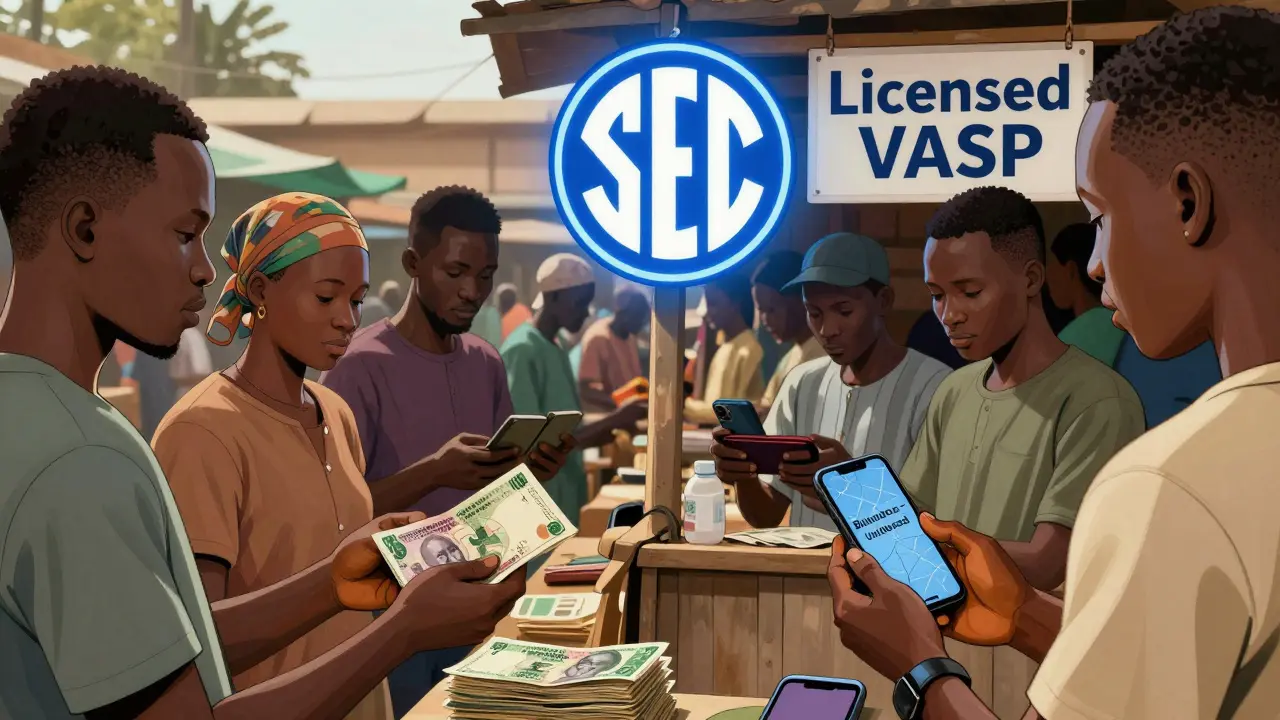
Before 2025, the Securities and Exchange Commission (SEC) Nigeria’s primary regulator for capital markets, now granted authority over all crypto trading platforms, token issuances, and investment-related digital assets had no real power to stop shady crypto businesses. Now, it does. Under ISA 2025, every crypto exchange, wallet provider, or trading platform operating in Nigeria must register with the SEC as a Virtual Asset Service Provider (VASP) any entity that facilitates the transfer, exchange, or custody of digital assets, now legally required to obtain SEC licensing.
Companies like Quidax and Busha got their licenses early. Others are still waiting. The SEC isn’t just rubber-stamping applications - it’s doing deep background checks. They’re looking at who owns the company, where the money comes from, how user data is protected, and whether the platform has real anti-fraud systems. If you’re running a crypto business in Nigeria and you haven’t applied, you’re operating illegally now.
The SEC can shut down platforms, freeze assets, remove executives, and fine companies up to ₦500 million. That’s serious. And it’s not just about big exchanges. Even small P2P platforms that let users trade crypto for naira must now comply.
Multi-Agency Oversight: Who’s Really in Charge?
Nigeria didn’t just give one agency more power. It built a whole new system. The SEC works hand-in-hand with three other agencies:
- Central Bank of Nigeria (CBN) Responsible for monetary policy and banking regulations, now coordinates with SEC to ensure crypto activities don’t destabilize the naira or banking system
- Economic and Financial Crimes Commission (EFCC) Investigates crypto-related fraud, scams, and money laundering, with new access to telecom records to trace transactions
- Nigerian Financial Intelligence Unit (NFIU) Monitors all VASPs for suspicious activity, ensuring compliance with anti-money laundering and counter-terrorism financing rules
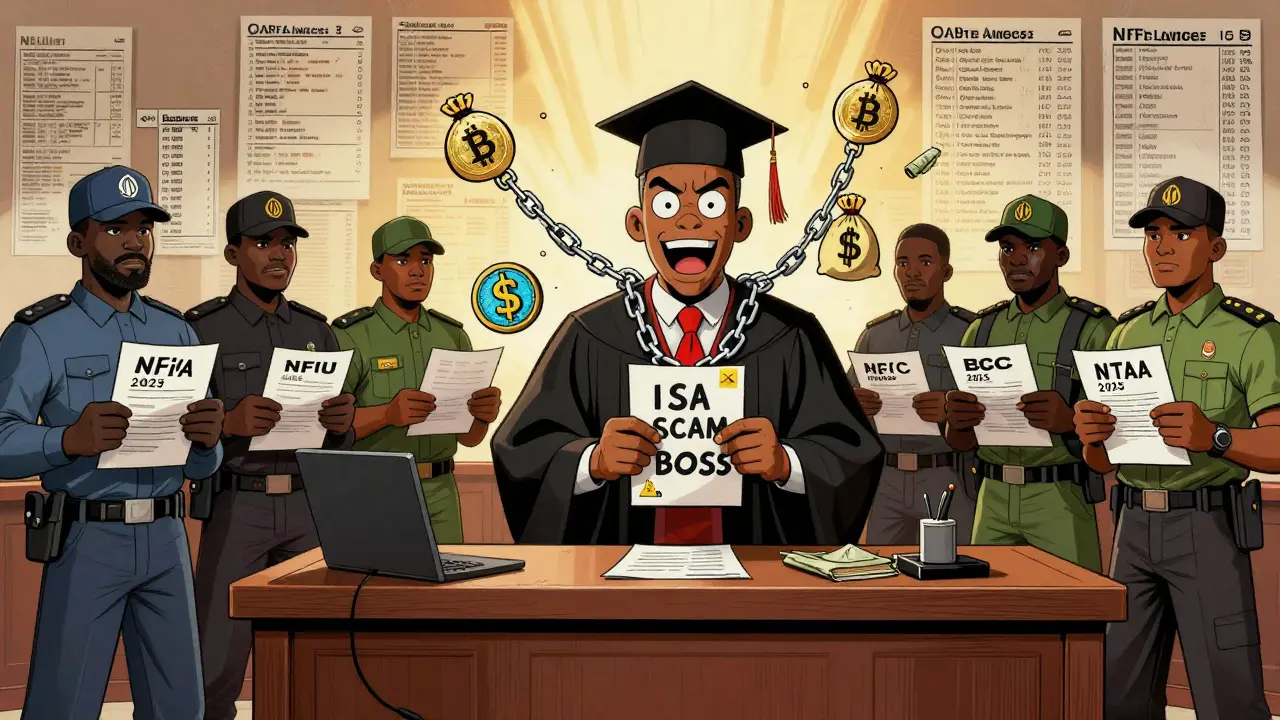
This isn’t bureaucracy for the sake of it. It’s a response to years of abuse. In 2023, over ₦12 billion in crypto scams were reported. Many were run by people using fake identities and offshore accounts. Now, regulators can request call logs, bank records, and IP addresses to track down fraudsters. That’s a game-changer.
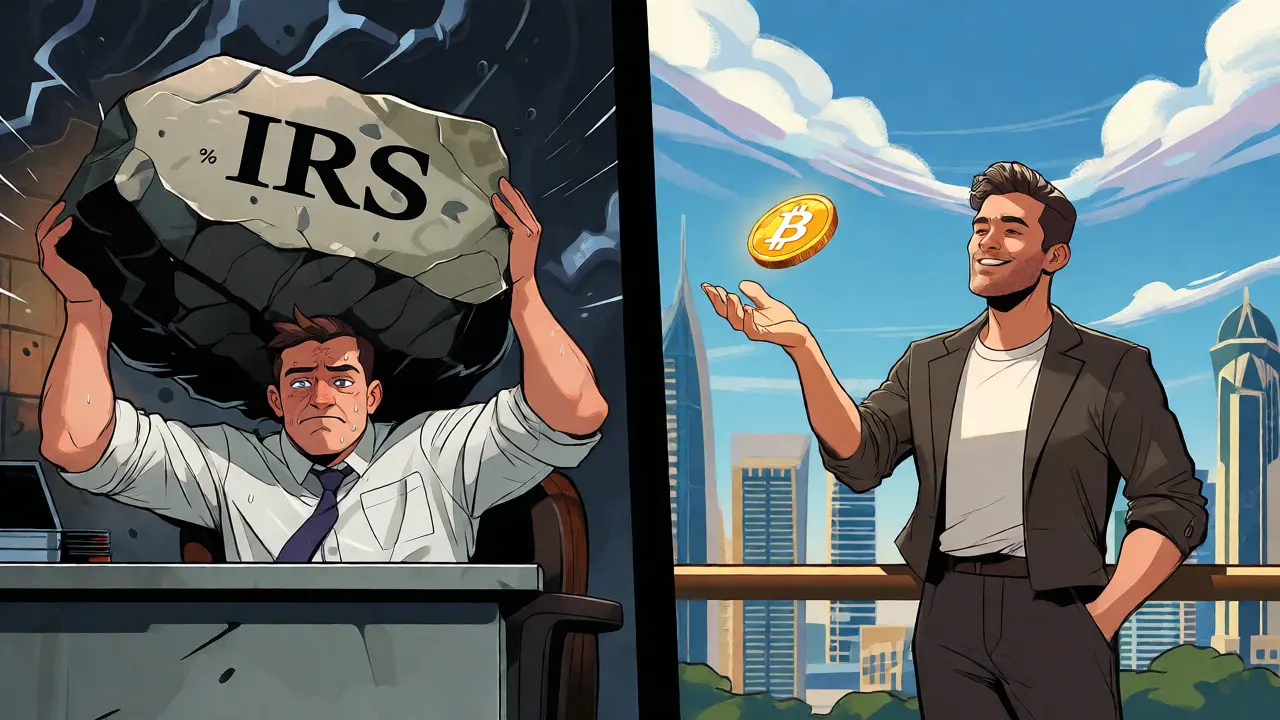
Crypto Taxation Is Now Real - And It’s Strict
If you made money trading crypto in 2025, you owe taxes. The Nigeria Tax Administration Act (NTAA 2025) enacted in June 2025 and effective from January 2026, mandates VASPs to collect and report user tax data, with penalties for non-compliance made that official. VASPs are now required to report every trade, every withdrawal, and every deposit made by Nigerian users.
Here’s how it works:
- Every time you sell Bitcoin for naira, the exchange must record the profit.
- That profit is taxed as capital gains - just like selling a house or stocks.
- If you don’t pay, the exchange will freeze your account until you do.
- Companies that fail to report face fines: ₦10 million ($6,693) in the first month, plus ₦1 million for every month after.
The numbers tell the story. Between July 2024 and June 2025, Nigeria received over $92.1 billion in crypto value. That’s nearly double what South Africa handled. The government isn’t blind to that. They know crypto is a major economic force. Now they’re trying to make sure they get their share.
What About NFTs? Are They Regulated Too?
Not all NFTs are treated the same. If you bought an NFT of a digital artwork just to show off on your phone - no problem. That’s art. But if someone sold you an NFT promising a share of profits, royalties, or future value - that’s a security. And that’s regulated.
The SEC now watches NFTs marketed as investments. If a project says, “Buy this NFT and earn 15% monthly returns,” it’s a Ponzi scheme. And it’s now illegal. The law doesn’t ban NFTs - it bans fraud disguised as NFTs.
That’s why you’re seeing fewer “get rich quick” NFT projects in Nigeria. The regulators are watching. And they’re not afraid to act.
Why Did Nigeria Change Its Mind?
In 2021, the Central Bank banned banks from dealing with crypto. The goal? Stop money laundering and protect the naira. But it backfired. Instead of stopping crypto, the ban pushed it underground. People started using offshore banks, prepaid cards, and even cash handovers to trade Bitcoin. The black market grew.
By 2023, Nigeria was handling more P2P crypto trades than any other country. The CBN realized: you can’t stop what people are already doing. You can only regulate it.
The ISA 2025 and NTAA 2025 are the result of that lesson. The government didn’t try to kill crypto. It decided to own it. To control it. To tax it. And to protect ordinary people from scams.
What Does This Mean for You?
If you’re a regular user:
- You can still buy and sell crypto. No changes there.
- Use only SEC-licensed platforms. Check their website for the license number.
- Keep records of every trade. You’ll need them for taxes.
- Don’t fall for “guaranteed returns.” If it sounds too good to be true, it is.
If you’re a business:
- Apply for your VASP license now. The process is slow - don’t wait.
- Set up AML/KYC systems. The SEC will audit you.
- Start reporting taxes. Even if you’re small, you’re still required to.
The old days of wild west crypto are over. Nigeria isn’t shutting down crypto - it’s bringing it into the light. And for the first time, there’s a real path for honest players to thrive.
What’s Next?
The next big move will be international cooperation. Nigeria is already talking to Ghana, Kenya, and South Africa about cross-border crypto regulation. Imagine a single license that lets you operate across West Africa. That’s the goal.
Also, expect more education. The SEC is planning public campaigns to help people spot scams. And more banks are starting to offer crypto-friendly services - but only for licensed partners.
This isn’t the end of the story. It’s the beginning of a new chapter. One where crypto in Nigeria isn’t about rebellion - it’s about responsibility.
Is cryptocurrency illegal in Nigeria in 2026?
No, cryptocurrency is not illegal in Nigeria in 2026. Ownership, trading, and holding crypto are legal. However, it is not recognized as legal tender, meaning you cannot use it to pay for goods and services in place of the Nigerian naira. All crypto activities must now go through SEC-licensed platforms.
Can I still use Binance or Coinbase in Nigeria?
You can still access global platforms like Binance and Coinbase, but they are not licensed by the Nigerian SEC. Using them puts you at legal risk. The SEC now requires all crypto services operating in Nigeria to be licensed. Local platforms like Quidax and Busha are fully compliant. For safety and legal protection, use only SEC-approved VASPs.
Do I have to pay tax on my crypto profits in Nigeria?
Yes. Under the Nigeria Tax Administration Act (NTAA 2025), which took effect in January 2026, all crypto profits are taxable as capital gains. Virtual Asset Service Providers (VASPs) are required to report your trades to the tax authorities. If you make a profit from selling Bitcoin or other crypto, you must declare it. Failure to do so can lead to fines and account freezes.
What happens if I use an unlicensed crypto exchange in Nigeria?
Using an unlicensed exchange doesn’t make you personally liable for a crime - but it puts your money at risk. The SEC can shut down unlicensed platforms at any time, freezing user funds. If the platform is a scam, you have no legal recourse. Licensed exchanges must follow strict rules on security, audits, and customer protection. Stick to SEC-registered VASPs to protect your assets.
Are NFTs regulated in Nigeria?
Only NFTs sold as investment products are regulated. If you buy an NFT for art, music, or collectibles without any promise of financial returns, it’s not regulated. But if an NFT is marketed as a way to earn dividends, royalties, or passive income, it’s treated as a security and must be registered with the SEC. Selling unregistered investment NFTs is now illegal.
How do I know if a crypto platform is licensed by the SEC in Nigeria?
Visit the official SEC Nigeria website and check the list of licensed Virtual Asset Service Providers (VASPs). Every licensed platform must display its license number clearly on its website and app. If you can’t find it, or if the number doesn’t match the SEC’s public registry, the platform is not authorized. Never trust a platform that says, “We’re working on our license.” In 2026, that’s not good enough.

Anandaraj Br
February 17, 2026 AT 15:08Used to be wild west with people trading crypto via cash handovers in parking lots
Now they're forcing exchanges to play by rules? Good
But don't act like this was some noble move - they saw the money flow and got greedy
Same old story: ban it, it grows, then tax it
Still, at least now I don't have to worry about some guy vanishing with my ETH after a WhatsApp deal
Nikki Howard
February 19, 2026 AT 11:13SEC doesn’t care about you or me - they care about control
They’re not protecting us from scams, they’re protecting themselves from losing their monopoly on financial control
Remember when the CBN banned crypto and everyone thought it was the end? Nah - it just forced people to get creative
Now the same people who told us crypto was illegal are the ones handing out licenses like candy
And don’t get me started on the tax reporting - they’re tracking every satoshi like we’re in a dystopian surveillance state
They didn’t legalize crypto - they just made it a state-run casino with a receipt
Tarun Krishnakumar
February 20, 2026 AT 22:54Remember last year when every Instagram influencer was selling 'digital land' with 20% monthly returns?
Now they're calling them securities? Funny how the same people who screamed 'decentralization!' are now begging for government approval
And don't even mention the EFCC accessing telecom records - that's not regulation, that's a digital dragnet
They'll freeze your account over a $50 profit and call it 'anti-money laundering'
Meanwhile, the real criminals? Still laughing in offshore havens with Swiss bank accounts
They didn't fix the system - they just added more paperwork
jennifer jean
February 22, 2026 AT 14:22For years, I was scared to even trade because I didn’t know if I’d get scammed or arrested
Now I can use Quidax without feeling like I’m in a legal gray zone
Yes, taxes are annoying, but at least I know where I stand
And finally - no more 'guaranteed 1000% returns' scams
It’s not perfect, but it’s a step toward something safe and real 💙
Sasha Wynnters
February 23, 2026 AT 05:05Nigeria didn’t tame crypto - it domesticated it
Turned a grassroots rebellion into a bureaucratic ballet
Once, crypto was the voice of the unbanked, the middle finger to failed institutions
Now? It’s a line item on a tax return, stamped with SEC approval, and wrapped in KYC paperwork like a gift for the state
The revolution didn’t die - it got a corporate HR department
And the most ironic part? The people who built this ecosystem - the P2P traders, the cash couriers, the midnight WhatsApp traders - they’re now the ones being told to 'comply' or get crushed
They didn’t bring crypto into the light
They turned it into a museum exhibit - beautiful, sterile, and completely dead to its soul