Ever clicked on a new crypto project and felt overwhelmed by the jargon? You're not alone. Level Finance is an omnichain, decentralized perpetual exchange that lets you trade futures without trusting a central company to hold your funds. But what exactly is LGO? It’s not just another coin to buy and sell; it’s the key to controlling how the platform evolves.
If you’ve been wondering whether this project is worth your time or if the dual-token system is too complicated, this guide breaks it down simply. We’ll look at how LGO actually works, why it exists, and what it means for your wallet in the real world of decentralized finance (DeFi).
The Core Concept: What Level Finance Actually Does
Before we dive into the tokens, let's understand the machine they power. Level Finance operates as a non-custodial perpetual exchange. In plain English, this means you can trade assets like Bitcoin or Ethereum with leverage, but you never hand over ownership of your coins to an intermediary. Your funds stay in your own Web3 wallet, such as MetaMask or Ledger, until you decide to move them.
This setup solves two major headaches from the centralized exchange era: custody risk and opacity. On platforms like Binance or FTX, you had to trust that the company wasn't stealing your money and that their internal ledgers were accurate. With Level Finance, every position, balance, and liquidity pool is visible on the blockchain. There are no hidden reserves. If you want to verify the protocol's health, you just look at the public data.
The platform also uses Chainlink Oracles to fetch price data. This ensures that when you open a trade, the price is fair and tamper-proof, eliminating the "price impact" issues often seen in smaller decentralized markets. For traders who care about speed and low fees, the deployment on Arbitrum, an Ethereum Layer 2 solution, keeps gas costs manageable while maintaining high security standards.
Understanding the Dual-Token Ecosystem
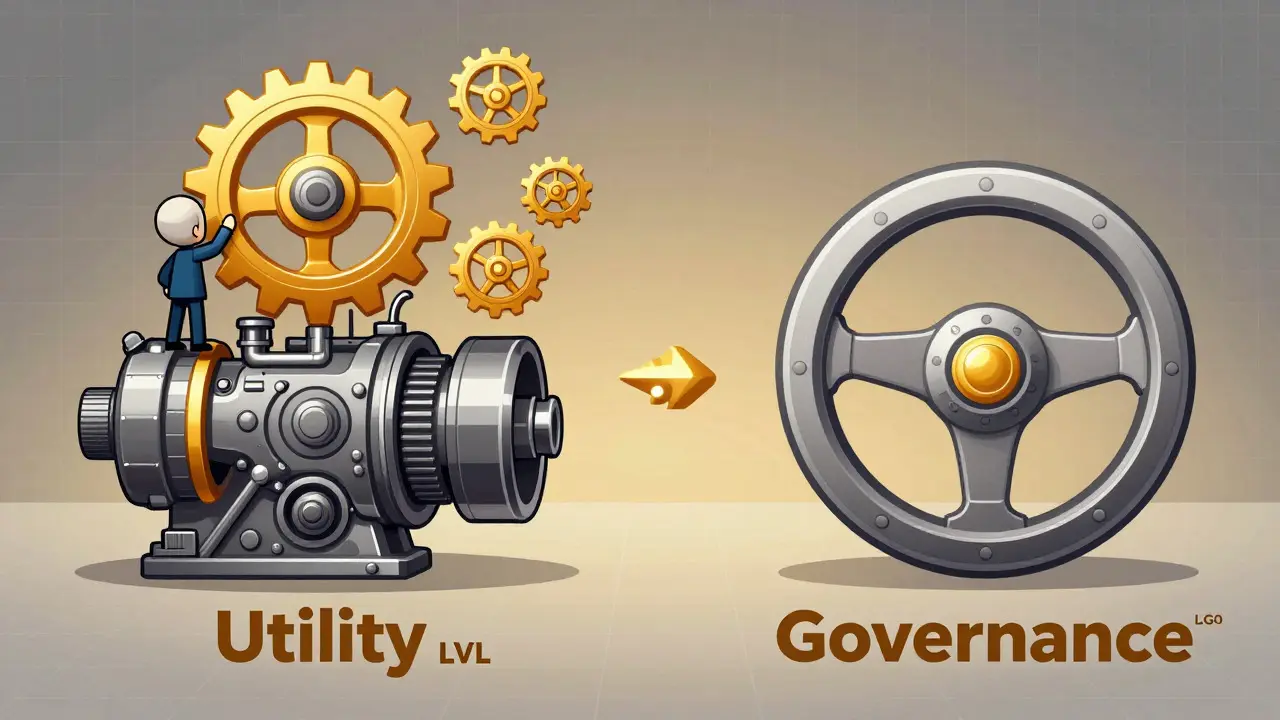
Here is where things get interesting. Level Finance doesn't use one single token for everything. Instead, it splits its ecosystem into two distinct roles: utility and governance. This separation is designed to align incentives more effectively than many competitors who bundle these functions together.
- LVL (Utility Token): This is the working horse of the platform. You use LVL to provide liquidity, pay for certain operations, and participate in the core trading mechanics. Think of it as the fuel for the engine.
- LGO (Governance Token): This is the steering wheel. You don't earn LGO directly by buying it on an exchange. Instead, you earn it by staking LVL. Once you have LGO, you gain voting rights in the LEVEL DAO and access to a share of the protocol's revenue.
This hierarchical structure creates a specific behavior pattern. To become a governor, you first need to be a participant. By requiring users to stake LVL to get LGO, the protocol encourages long-term commitment. Casual speculators who want to flip tokens quickly are less likely to engage deeply with the governance layer, leaving decision-making to those who have skin in the game.
How LGO Earns Value: The Revenue Model
Holding a governance token is nice, but does it pay? In the case of LGO, yes, through a sophisticated revenue-sharing mechanism. Level Finance generates revenue from trading fees and other protocol activities. A significant portion of this-specifically 30% of all protocol revenue-flows into the DAO Treasury.
However, it doesn't just sit there as cash. This revenue is distributed in the form of Senior LLP (Liquidity Provider) tokens. These tokens represent shares in the protocol's liquidity pools and continue to generate yield. When you stake your LGO, you indirectly benefit from this compounding value. The DAO Treasury acts as a growing asset base, backed by actual protocol performance rather than speculative hype.
There is a catch, though. Liquidity isn't instant. LGO holders face a two-week redemption window if they decide to exit their position. This means you can't just sell your LGO instantly on a secondary market whenever you feel like it. You have to plan ahead. This constraint is intentional; it discourages short-term panic selling and stabilizes the governance body by ensuring voters are thinking in terms of quarters or years, not minutes.
Technical Edge: Risk Management and Transparency
Why choose Level Finance over established names like GMX or dYdX? The answer lies in risk management. Traditional automated market makers (AMMs) often leave liquidity providers exposed to impermanent loss and liquidation risks with little control. Level Finance introduces the Risk Management Liquidity Pool (RMLP) system.
The RMLP allows for granular control options. Liquidity providers can set parameters that better suit their risk tolerance, while traders get deeper liquidity with tighter spreads. This isn't just a marketing term; it’s a technical implementation that addresses a critical gap in the perpetual DEX market. For advanced traders, the ability to verify all metrics independently via the on-chain data provides a peace of mind that centralized exchanges simply cannot offer.
| Feature | Level Finance (LGO/LVL) | Typical Single-Token DEX |
|---|---|---|
| Custody | Non-custodial (User holds keys) | Varies (Often custodial or semi-custodial) |
| Governance Access | Earned via Staking LVL | Purchased directly |
| Revenue Share | 30% to DAO Treasury (Senior LLP) | Variable (Often burn or staking rewards) |
| Exit Liquidity | Two-week redemption window | Instant (Secondary markets) |
| Price Data | Chainlink Oracles | Varies (TWAP or Oracle-dependent) |
Who Is This For? User Personas and Realities
Not every trader needs a complex governance structure. If you are a beginner just looking to buy some Bitcoin, the dual-token mechanic of Level Finance might feel like unnecessary friction. You’d need to acquire LVL, stake it, wait for LGO, and then manage the redemption windows. That’s a steep learning curve compared to clicking a "Buy" button on a centralized app.
However, for the experienced DeFi user, the picture changes. Advanced traders appreciate the transparency. They like knowing that the protocol’s treasury is verifiable. Liquidity providers love the RMLP system because it offers more control over their capital efficiency. If you are already comfortable managing leverage ratios and liquidation prices, Level Finance offers tools that go beyond the basics.
For the casual investor, the question is simpler: Do I want to vote on protocol upgrades? If the answer is no, you might stick to using the platform purely for trading (if available in your region) or focus on other DeFi protocols with simpler entry points. But if you believe in the long-term vision of non-custodial trading and want a direct say in where it goes, LGO is your ticket in.

Getting Started: Practical Steps
If you’ve decided to explore Level Finance, here is the realistic path forward. First, ensure you have a compatible Web3 wallet. MetaMask, WalletConnect, Coinbase Wallet, and hardware wallets like Ledger and Trezor are all supported. Next, you need to acquire LVL tokens. This can be done through trading pairs or by providing liquidity directly within the protocol.
Once you have LVL, the next step is staking. Connect your wallet to the official interface, navigate to the staking section, and lock your LVL. Over time, this will accrue LGO. Keep in mind the documentation at docs.level.finance is your best friend here. While community resources are growing, they aren't as vast as those for Ethereum or Solana projects yet. Read the guides carefully before committing large amounts of capital.
Finally, monitor the DAO proposals. As an LGO holder, your job isn't just to hold the token; it's to read the proposals and vote. The value of your governance right depends on active participation. If you ignore the votes, you’re essentially letting others decide the rules of the game you’re playing in.
Frequently Asked Questions
Can I buy LGO directly on an exchange?
Generally, no. LGO is primarily earned by staking LVL tokens within the Level Finance protocol. While secondary markets may emerge, the intended design is for LGO to be derived from LVL staking, creating a link between usage and governance.
What happens if I want to sell my LGO quickly?
You must wait for the bi-weekly redemption window. There is no instant exit mechanism built into the core governance token logic. This is a deliberate feature to prevent volatility in the governance body, so you should only allocate capital you intend to keep for at least two weeks.
Is Level Finance safe from hacks?
Like any smart contract platform, it carries inherent smart contract risk. However, being non-custodial means you always hold your private keys. The use of Chainlink Oracles reduces oracle manipulation risk. Always check the latest audit reports and consider diversifying your exposure across different DeFi protocols.
How does the 30% revenue share work?
Thirty percent of all protocol revenue is directed to the DAO Treasury. This value is held in Senior LLP tokens, which represent yield-generating positions in the liquidity pools. LGO stakers benefit from this growing asset base, effectively receiving a passive income stream tied to the platform's trading volume.
Is LGO suitable for beginners?
It has a moderate-to-high complexity level. Beginners should master basic DeFi concepts like gas fees, wallet security, and liquidity provision before diving into LGO. The dual-token structure and redemption windows add layers of complexity that can be confusing for those new to decentralized finance.