Remember when buying a piece of digital land sounded like science fiction? Back in 2021, headlines screamed about celebrities spending millions on pixels. Fast forward to 2026, and the hype has cooled into something far more practical. Metaverse real estate investment is the acquisition and monetization of virtual land parcels within blockchain-based digital worlds. It’s no longer just about speculation; it’s about building businesses, hosting events, and creating revenue streams in persistent digital environments.
If you’re looking at this space now, you aren’t chasing the same frenzy as before. You’re likely asking smarter questions. Is virtual land still a viable asset class? Which platforms actually have users? How do you avoid losing your capital to dead projects? This guide cuts through the noise to give you a realistic view of investing in virtual property today.
The Current Landscape: Fragmented Worlds
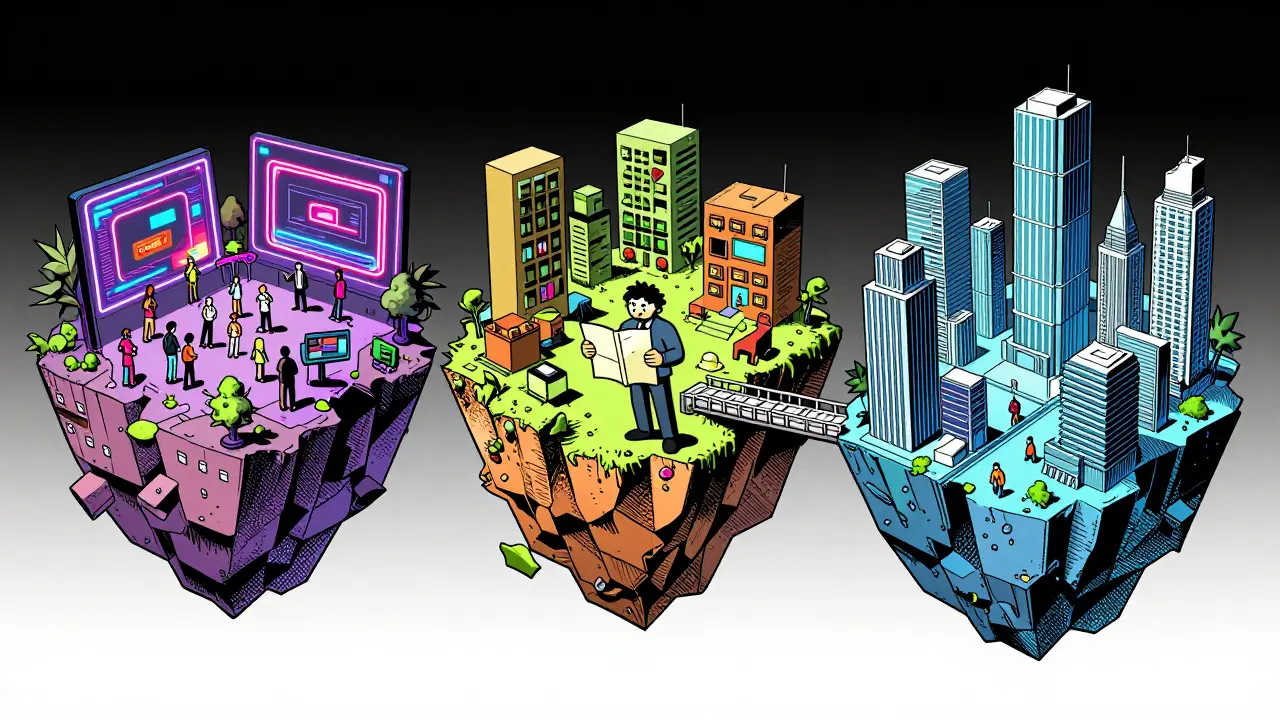
The biggest misconception new investors make is thinking there is one single "Metaverse." There isn’t. As of 2026, the landscape is fragmented into separate, competing platforms. Each world operates on its own rules, uses its own currency, and has its own economy. Your land in one world holds no value in another unless specific interoperability bridges are built-and those are rare.
This fragmentation means your first job isn’t buying land; it’s choosing an ecosystem. You need to understand that Decentraland is a leading virtual world operating on the Ethereum blockchain using MANA tokens for transactions. It remains one of the most established platforms with a mature marketplace and consistent event activity. Similarly, The Sandbox is a popular gaming-focused metaverse platform utilizing SAND tokens for land purchases and in-world activities. It leans heavily into user-generated content and partnerships with major entertainment brands.
Other notable players include Somnium Space, which focuses on high-fidelity VR experiences, and Upland, which maps real-world addresses onto a blockchain grid. Each offers different utility. Decentraland feels like a social plaza, while The Sandbox feels like a game development studio. Your investment strategy must align with the platform’s primary use case.
Why Invest in Virtual Land?
Traditional real estate requires physical maintenance, zoning approvals, and geographical constraints. Virtual land removes these barriers but introduces new dynamics. Here is why investors are still putting capital into digital plots:
- Scarcity and Ownership: Most metaverse lands are minted as Non-Fungible Tokens (NFTs). This means ownership is recorded on the blockchain, immutable and verifiable. There is a finite supply of prime locations, mirroring the scarcity of downtown Manhattan or London’s West End.
- Unlimited Creative Freedom: You aren’t limited by physics or building codes. You can build a floating castle, a neon-lit nightclub, or a corporate headquarters that defies gravity. This creativity attracts attention and foot traffic.
- Diversification: For crypto-native investors, virtual land offers a way to deploy capital outside of pure token holding. It ties your assets to a specific platform’s growth rather than just general market sentiment.
- Corporate Adoption: Major brands like PwC, JP Morgan, and Samsung have already purchased virtual real estate. They aren’t doing it for fun; they’re doing it for advertising, customer engagement, and brand awareness. Their presence validates the medium and often boosts surrounding land values.
Risks You Cannot Ignore
Let’s be blunt: metaverse real estate is risky. It is not a safe harbor like a government bond or a blue-chip stock. Before you buy, you need to respect these dangers:
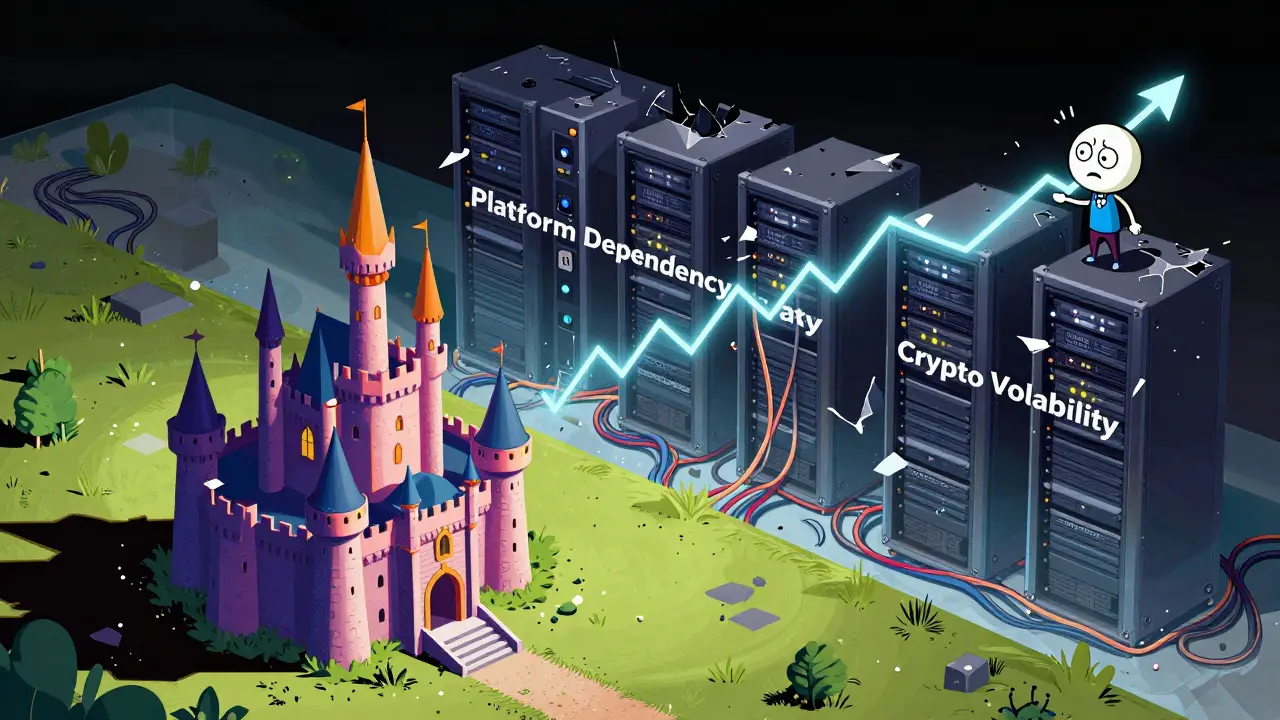
Platform Dependency is the biggest threat. If the company running the metaverse goes bankrupt, loses interest, or suffers a massive security breach, your land becomes worthless. Unlike physical land, which exists regardless of who owns the deed office, virtual land exists only because the server runs. If the servers stop, your asset vanishes.
Market Volatility hits hard. Land prices are usually denominated in the platform’s native cryptocurrency (like MANA or SAND). If the token price crashes by 50%, the dollar value of your land crashes by 50% too, even if demand for the land itself hasn’t changed. You are exposed to both real estate risk and crypto market risk simultaneously.
Liquidity Issues are common. In traditional real estate, you can list a house and expect offers within weeks. In the metaverse, you might hold a plot for months or years without finding a buyer. The market is small, and liquidity is thin. Don’t invest money you need for rent or groceries.
How to Evaluate a Plot
Not all virtual land is created equal. Some plots sit in desolate wastelands with zero foot traffic. Others are in bustling hubs near popular venues. Here is how to analyze a potential purchase:
- Location Metrics: Look at historical foot traffic data. Platforms often provide analytics showing how many unique visitors pass by a coordinate weekly. High traffic equals higher potential for advertising revenue or event sales.
- Proximity to Landmarks: Land next to a famous concert venue, a brand flagship store, or a main transportation hub commands a premium. Just like in the physical world, location is everything.
- Zoning and Permissions: Check what you can build. Some areas restrict commercial activity or limit the height of structures. Ensure the plot allows the type of business you want to run.
- Community Vibe: Join the platform’s Discord or forum. Is the community active? Are developers building cool things nearby? A vibrant community drives organic growth and value appreciation.
Monetization Strategies
Buying land is easy; making money from it is hard. Passive holding rarely works in the metaverse. You need an active strategy. Here are the most proven ways to generate revenue from virtual property in 2026:
| Strategy | Description | Effort Level | Potential Return |
|---|---|---|---|
| Advertising Billboards | Sell ad space on your property to brands or individuals. | Low | Steady, Low-Medium |
| Event Hosting | Host concerts, conferences, or parties and charge ticket fees. | High | Variable, High |
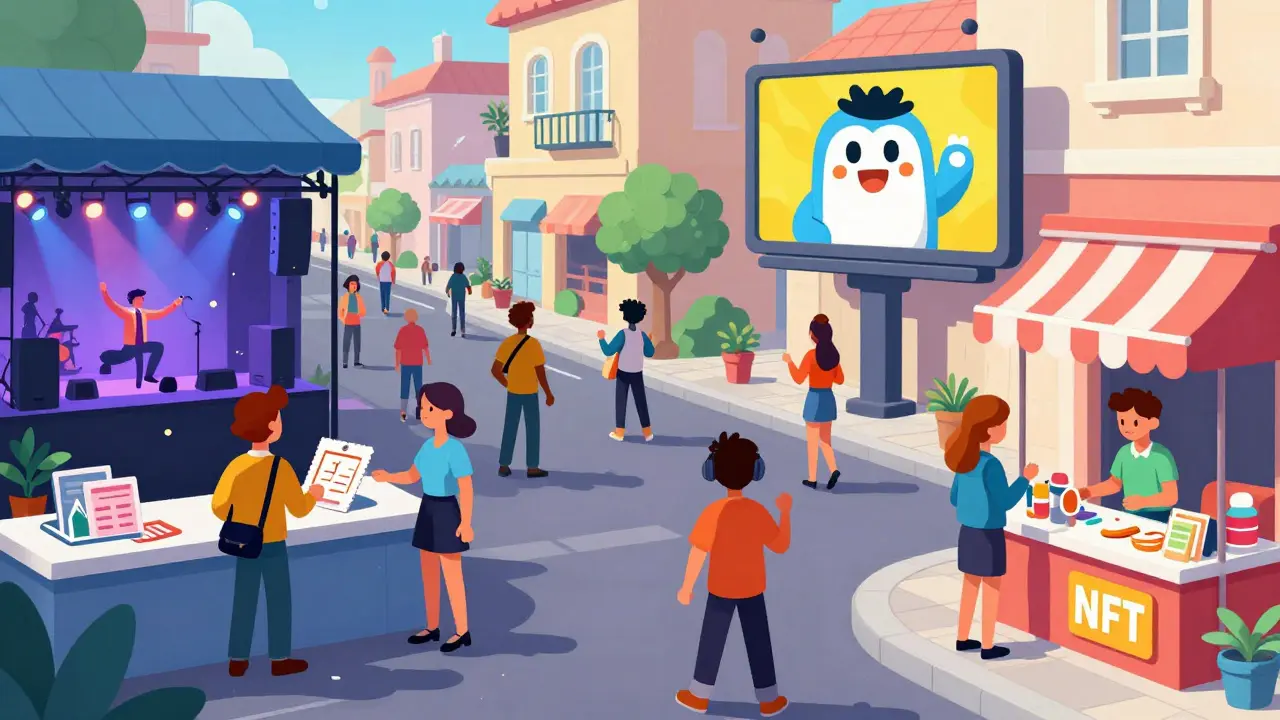
| NFT Storefronts | Build a gallery or shop to sell digital art, wearables, or items. | Medium | Dependent on Product |
| Leasing | Rent out your land to other users for their projects. | Low | Steady, Medium |
| Gaming Experiences | Create interactive games or attractions with entry fees. | Very High | High, Scalable |
For beginners, leasing or advertising is the safest start. It requires minimal development skills. If you have coding abilities or access to 3D artists, building immersive experiences or branded stores offers much higher upside but demands significant time and upfront cost.
Getting Started: Step-by-Step
If you’ve decided to proceed, here is the practical path to acquiring your first parcel:
1. Set Up a Crypto Wallet. You’ll need a non-custodial wallet like MetaMask. This is where you’ll store your ETH and platform tokens. Secure your seed phrase offline. If you lose it, you lose your land forever.
2. Acquire Cryptocurrency. Buy Ethereum (ETH) on a major exchange. You’ll need ETH to pay for gas fees (transaction costs) on the Ethereum network. Then, swap some ETH for the specific platform token you’re targeting (e.g., MANA for Decentraland, SAND for The Sandbox).
3. Connect to the Marketplace. Go to the official marketplace of your chosen platform. Connect your wallet. Browse available listings. Use filters to sort by price, size, and location.
4. Due Diligence. Before bidding, check the history of the plot. Has it been sold recently? At what price? Who owned it before? Use tools like OpenSea or platform-specific analytics dashboards to verify authenticity and value trends.
5. Execute the Purchase. Place your bid or buy instantly. Confirm the transaction in your wallet. Once confirmed, the NFT representing the land will appear in your wallet. You are now the owner.
Future Outlook: What Comes Next?
The metaverse is still evolving. Two major trends will shape real estate investment in the coming years:
Interoperability is the holy grail. Currently, your avatar and assets are stuck in one world. If platforms begin allowing seamless movement of assets between worlds, land value could become more standardized. However, this is technically difficult and faces resistance from walled-garden ecosystems.
Hardware Advancement drives adoption. As VR headsets become lighter, cheaper, and higher resolution, more people will spend time in virtual spaces. More users mean more demand for places to go, hang out, and buy things. This fundamental driver supports long-term land appreciation.
Regulatory clarity is also emerging. Governments are beginning to define tax obligations for virtual asset sales. Keep records of every transaction. In many jurisdictions, selling virtual land for a profit triggers capital gains tax. Consult a local accountant familiar with crypto assets.
Is metaverse real estate a good investment in 2026?
It depends on your risk tolerance. It is a high-risk, high-reward asset class. Unlike traditional real estate, virtual land lacks physical utility and is tied to volatile cryptocurrencies. It can be a good diversification tool for experienced crypto investors who understand platform risks and have active monetization strategies. It is not suitable for conservative investors seeking stable returns.
Which metaverse platform is best for real estate investment?
There is no single "best" platform. Decentraland is known for its mature social ecosystem and consistent event traffic. The Sandbox excels in gaming and brand partnerships. Somnium Space offers high-fidelity VR experiences. Choose based on your goals: social interaction favors Decentraland, while gaming development favors The Sandbox. Research each platform’s user base and economic model before committing funds.
How do I make money from virtual land?
You can monetize virtual land through several methods: renting it out to other users, selling advertising space on billboards, hosting paid events like concerts or conferences, building storefronts to sell NFTs or digital goods, or creating interactive gaming experiences with entry fees. Active development and marketing are usually required to generate significant income.
What happens if a metaverse platform shuts down?
If a platform shuts down or loses all users, your virtual land likely becomes worthless. While the NFT may still exist in your wallet as a collectible, it loses its functional utility and rental income potential. This is the primary risk of metaverse real estate: platform dependency. Always diversify across multiple platforms or focus on those with strong, decentralized governance and funding.
Do I need to pay taxes on metaverse real estate profits?
In most jurisdictions, yes. Selling virtual land for a profit is typically treated as a capital gain event, similar to selling stocks or physical property. Rental income from virtual land may also be taxable as ordinary income. Tax laws regarding crypto assets are evolving, so consult a qualified tax professional in your country to ensure compliance and accurate reporting.
Can I transfer my virtual land between different metaverses?
Currently, no. Most metaverse platforms operate as closed ecosystems. Land bought in Decentraland cannot be used in The Sandbox or Roblox. Interoperability is a future goal for the industry, but technical and business hurdles remain significant. Treat each platform’s land as a separate, isolated investment.