
The big draw here is the P2P model. In a standard exchange, you trade with the platform. With Remitano, you trade with another human. To keep this from becoming a Wild West of scams, the platform uses a proprietary escrow system. When you agree to buy crypto, the seller's coins are locked in a secure wallet. Once you send the money via your chosen payment method and the seller confirms receipt, the coins are released to you. It's a straightforward process that makes it one of the most reliable on-ramps for people in Africa, Asia, and Latin America who might not have access to a credit card or a friendly bank.
The Trade-Off: Simplicity vs. Selection
If you've used Binance or Coinbase, the first thing you'll notice is that Remitano is... empty. While those giants offer hundreds of tokens, Remitano only supports five: Bitcoin (BTC), Ethereum (ETH), Litecoin (LTC), Ripple (XRP), and Tether (USDT). For a casual investor or someone just trying to move money into a stablecoin, this is fine. But if you're chasing the latest AI-token or meme-coin, you're in the wrong place.
| Feature | Remitano (P2P) | Typical CEX (e.g., Binance) |
|---|---|---|
| Asset Selection | Very Limited (5 coins) | Massive (300+ coins) |
| Trading Method | Direct User-to-User | Centralized Order Book |
| Payment Flexibility | High (Local money, Bank transfers) | Moderate (Mostly Card/Bank) |
| Control | Users set their own prices | Market-driven pricing |
Money Matters: Fees and Funding
There is a bit of a contradiction in the data regarding costs. Some reports claim zero fees, but real-world usage shows a basic fee of 0.25% for both makers and takers. While that sounds low, there aren't really any discounted tiers for high-volume traders. To get started, you'll need a minimum fiat deposit of $50.
What actually makes Remitano stand out is the payment variety. Because it's P2P, you can use things that big corporate exchanges won't touch, such as mobile money options in emerging markets. Of course, you can still use the basics: Apple Pay, Google Pay, SEPA transfers, and standard ACH bank transfers. This flexibility is why the platform maintains a strong grip on over 50 countries, particularly where banking infrastructure is shaky.
The Elephant in the Room: Security and Trust
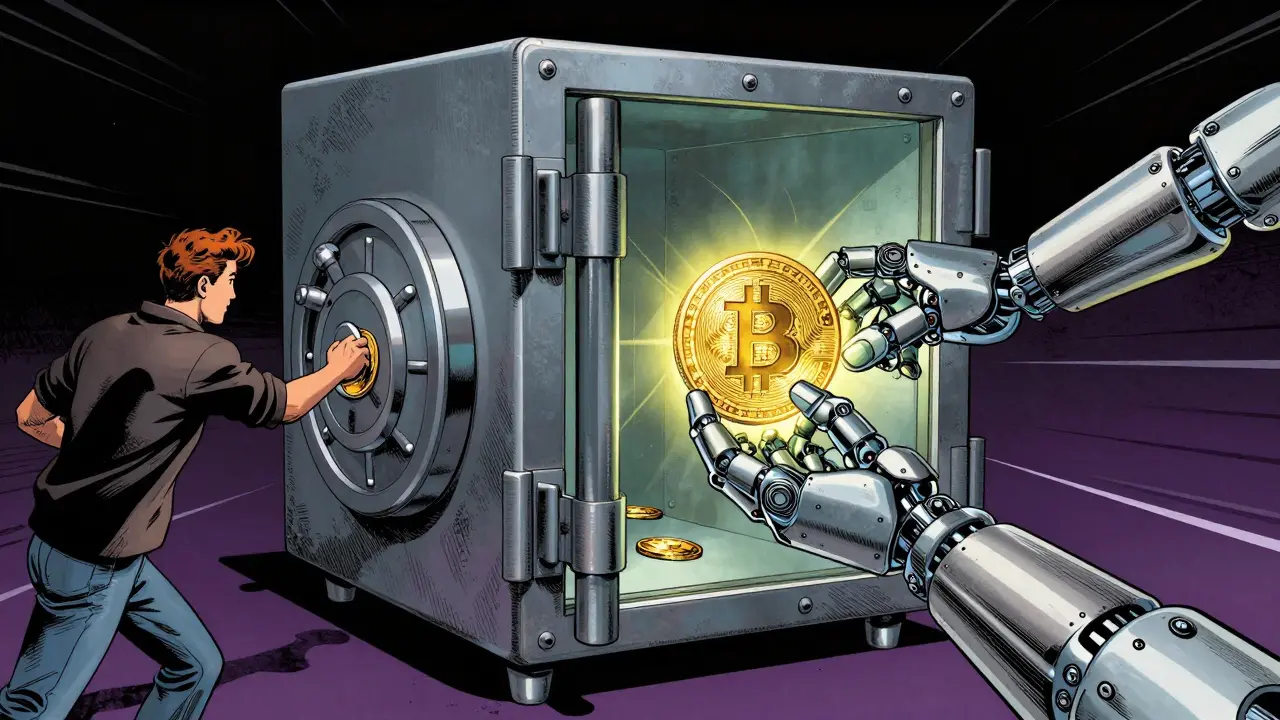
We have to talk about the 2023 hack. For years, Remitano was praised for its pristine security record, but that changed when a breach occurred. In the crypto world, a hack isn't always a dealbreaker, but the aftermath is what matters. Currently, Remitano does not provide Proof of Reserves, which is a transparent accounting method that proves an exchange actually holds the assets it claims to have for its users.
Without this transparency, you're relying entirely on the company's word and their escrow system. The escrow is the strongest part of their tech-it effectively eliminates the "I sent the money but he didn't send the coins" scenario. However, the lack of regulatory oversight is a red flag for those who want a fully compliant environment. They have strong KYC (Know Your Customer) and AML (Anti-Money Laundering) rules, but they aren't licensed in the way a US-based brokerage would be.
How to Actually Use Remitano
Getting started is surprisingly easy. You don't need to upload your passport the second you sign up, though it's recommended for better security and higher limits. Here is the typical flow for a buyer:
- Browse Ads: Go to the marketplace and find a seller offering the coin you want at a price you like.
- Initiate Trade: Select the ad and specify how much you want to buy. This locks the seller's coins in the escrow.
- Pay the Seller: Use the agreed-upon method (e.g., a bank transfer or mobile wallet) to send the funds.
- Confirm & Release: Once the seller sees the money in their account, they mark the trade as paid, and Remitano releases the crypto to your wallet.
If something goes wrong-say the seller disappears after you've paid-you trigger a dispute. Remitano's dispute resolution team is generally well-regarded for stepping in and solving these issues, which is a huge relief when you're dealing with strangers online.

The Verdict: Who is this for?
Remitano isn't trying to be everything to everyone. It's not a professional trading terminal with 1-minute candles and complex leverage tools. It's a bridge. If you are in a region where getting crypto via a bank is nearly impossible, Remitano is a lifesaver. It turns your local currency into digital assets with a safety net (escrow) that makes it far safer than trading on a random Telegram group.
On the flip side, if you live in a country with easy banking and you want a diverse portfolio of 20 different altcoins, you'll find Remitano frustratingly limited. You're paying for the convenience of the P2P network and the security of the escrow, but you're sacrificing variety and institutional-grade transparency.
Is Remitano safe for beginners?
Yes, for basic buying and selling. Its simple layout and the use of an escrow system protect beginners from the most common P2P scams. However, beginners should be aware that it is an unlicensed platform and lacks Proof of Reserves.
What are the fees on Remitano?
While some sources vary, users generally encounter a 0.25% fee for both makers and takers. There are currently no tiered discounts for high-volume traders.
How many cryptocurrencies does Remitano support?
Remitano supports a very limited selection of 5 coins: Bitcoin (BTC), Ethereum (ETH), Litecoin (LTC), Ripple (XRP), and Tether (USDT).
What happens if a seller doesn't release my coins?
You can open a dispute with Remitano's support team. Because the coins are held in escrow, the platform can mediate the trade and release the funds once you provide proof of payment.
Does Remitano require KYC?
Account creation is simple and doesn't require immediate ID verification, but KYC is highly recommended and often required for higher transaction limits and enhanced security.
Next Steps and Troubleshooting
For New Users: Start with a small "test trade" of $50 to get a feel for the escrow process and the responsiveness of the seller. Don't rush the payment-double-check the seller's payment details before hitting send.
For Advanced Traders: If you find the 5-coin limit too restrictive, use Remitano as your "on-ramp." Buy USDT here using your local currency, then transfer that USDT to a more diverse exchange like Binance or Kraken to trade a wider variety of assets.
Dealing with Delays: If a seller is slow to release coins, don't panic. Keep all your payment screenshots ready. If the seller doesn't respond within the timeframe specified in the ad, open a dispute immediately. The escrow ensures the coins are still there; it's just a matter of getting the support team to verify the transfer.




Jagdish Sutar
April 26, 2026 AT 08:20This is a real lifesaver for folks in India and other parts of Asia where the banks make everything so complicated. Using mobile money is the only way some people can even get started with crypto. It's great to see a platform that actually bridges that gap for people who aren't in the West.
Kathleen Bergin
April 27, 2026 AT 05:51Five coins is just too few. Everyone knows you need a diverse portfolio to actually make money in this market. If you only trade BTC and ETH you are missing out on the real gains. It's common sense.
Benjamin Forg
April 27, 2026 AT 16:45no proof of reserves is a total red flag and you know it... these companies just print numbers on a screen while they hold your actual assets in some offshore account in the seychelles. it is all a game to keep the sheep calm while the elites pull the plug whenever they feel like it. dont trust any centralized escrow because the people running the escrow are the ones who will rob you in the end
Jennifer Taylor
April 28, 2026 AT 03:12The 2023 hack was just the start. They probably still have backdoors in their system. Why would anyone put money into a place that doesn't show where the money is? It's obviously a trap to collect your KYC data and sell it to the highest bidder.
Paige Raulerson
April 29, 2026 AT 17:37Honestly the very idea of a digital flea market for currency is just so quaint. I cannot imagine the tediousness of waiting for some random individual to confirm a bank transfer when professional grade interfaces exist. It's practically primitive for anyone with actual capital.
Lisa Camp
May 1, 2026 AT 08:39JUST STOP OVERTHINKING IT AND GET YOUR MONEY IN THE GAME! If you're too scared of a little risk you'll never make any real profit! Use this as an on-ramp and move the hell out to a bigger exchange if you want more coins! Stop whining about reserves and start building wealth!
Gary Lingrel
May 3, 2026 AT 07:56imagine thinking 0.25% is low when the risk is this high... lol. it's basically a tax on people who dont know better 🙄 no one should be using unlicensed platforms in this day and age its just wrong
Mike Krasner
May 5, 2026 AT 06:46actually the lack of regulation is the only reason it's still useful. once the government gets its hooks in these p2p things disappear anyway so enjoy it while it lasts
Clair Geary
May 5, 2026 AT 11:01it sounds like such a wild ride using a flea market for crypto!! kinda love the vibe of just trading with humans instead of some cold robot algorithm.. keeps things spicy
jill huyo-a
May 7, 2026 AT 00:03I wonder if anyone has tried using the test trade method for smaller amounts first to see how the dispute team handles things. It seems like a helpful way for beginners to feel more comfortable without risking too much at once. Maybe some of us could share our experiences with the sellers here to help others find the most reliable ones.