
Singapore Crypto Tax Savings Calculator
How Singapore's Tax Policy Saves You Money
Singapore doesn't tax cryptocurrency capital gains, staking rewards, or mining income. This calculator shows how much you could save compared to tax-affected jurisdictions like the US or Germany.
US Tax Scenario
Germany Tax Scenario
Why this matters
Singapore's zero capital gains tax policy means more of your investment returns stay in your pocket. Unlike jurisdictions that tax crypto gains as income (up to 37% in the US), Singapore treats crypto as an investment asset with no tax liability.
When people talk about crypto hubs, they usually name places like New York, London, or Dubai. But if you want to see where the real institutional weight is gathering in Asia, you need to look at Singapore. It’s not just popular-it’s the most trusted crypto environment in the region, and one of the few places where big finance and blockchain innovation actually coexist without chaos.
Why Singapore Stands Out in Asia’s Crypto Scene
Singapore doesn’t just allow crypto-it builds systems around it. While other countries debate whether crypto is a threat or an opportunity, Singapore’s Monetary Authority of Singapore (MAS) has spent years creating a clear, predictable framework. That’s why 83% of Fortune 500 companies running blockchain pilots in Asia do so under MAS-approved rules. It’s not luck. It’s design. The MAS doesn’t treat all crypto the same. Payment tokens? Licensed. Security tokens? Heavily regulated. Utility tokens? Treated differently still. This level of nuance gives firms confidence. They know exactly what’s allowed, what needs approval, and where the red lines are. That’s rare in crypto, where most jurisdictions either ban everything or throw open the gates and hope for the best. This clarity attracted giants like BlackRock, which picked Singapore as its Asian tokenization hub. SWIFT is testing CBDC bridges with Singaporean banks. Circle, the issuer of USDC, opened its Asia office here in May 2025. These aren’t symbolic moves. They’re bets on long-term stability.The Stablecoin Powerhouse
Singapore is the second-largest stablecoin hub in the world-right after the U.S. Between June 2024 and June 2025, $2.4 trillion in stablecoin activity flowed through the Asia-Pacific region, and Singapore was the engine. That’s not just trading volume. It’s corporate payments, supply chain settlements, and cross-border commerce. The Singapore-China corridor is now the busiest stablecoin route on Earth. Businesses like Wetrip, Capella Hotels, and Ginza Xiaoma are accepting USDC for bookings and luxury purchases. Why? Because it’s faster, cheaper, and more transparent than traditional banking. A hotel chain in Singapore can settle payments with a supplier in Shanghai in minutes, not days, with no middlemen or hidden fees. Corporate stablecoin use has exploded-from under $100 million in early 2023 to over $3 billion by early 2025. That’s not a blip. It’s a structural shift. Companies aren’t just experimenting. They’re building workflows around it.Zero Taxes, Big Rewards
If you’re holding or trading crypto in Singapore, you don’t pay capital gains tax. No tax on staking rewards. No tax on mining income. No tax on selling Bitcoin for SGD. That’s not a loophole-it’s official policy. The government decided early on that taxing crypto gains would stifle innovation and drive capital elsewhere. This fiscal environment is a magnet. Crypto.com’s founders moved here. Changpeng Zhao, the former CEO of Binance, made Singapore his operational base. High-net-worth individuals and crypto funds relocated their assets not just for access to markets, but because they could keep more of their gains. Compare that to countries like the U.S. or Germany, where crypto gains are taxed as income or capital gains. Singapore’s approach isn’t just friendly-it’s strategically aggressive. It’s saying: if you want to build wealth in digital assets, do it here.
The Institutional Trust Factor
What makes Singapore different isn’t just regulation or taxes. It’s trust. Institutions don’t just tolerate crypto here-they rely on it. Sky Wee of Sky Ventures put it simply: “Singapore has achieved what no other crypto hub has: institutional trust at scale.” That’s the key. Other places have hype. Singapore has credibility. MAS doesn’t just issue licenses. It audits. It monitors. It enforces. In June 2025, unlicensed crypto firms were forced to shut down. That wasn’t a crackdown-it was a cleanup. And the market didn’t collapse. It got stronger. Investors saw that rules were enforced, and confidence grew. That’s why TOKEN2049 Singapore 2025 sold out completely. 25,000 people from 160 countries. 500+ exhibitors. Title sponsors like Coinbase, OKX, and TRON didn’t pick Singapore because it’s cheap or trendy. They picked it because they knew their clients would be there-and that the environment would protect their business.Tokenized Real-World Assets: The Next Frontier
Singapore isn’t just about Bitcoin or Ethereum. It’s about turning real things-real estate, art, bonds, even carbon credits-into digital tokens that can be traded 24/7. The MAS is actively testing tokenized bonds and asset-backed tokens. Goldman Sachs and BlackRock are already involved. By 2030, tokenized real-world assets could unlock $2 trillion in value globally. Singapore is positioning itself to capture the largest share. Why? Because tokenization solves real problems. Illiquid assets become tradable. Fractional ownership becomes possible. Transparency replaces paperwork. A Singapore-based fund can now buy 1% of a commercial building in Tokyo as a token, track its performance on-chain, and sell it in minutes. That’s not science fiction. It’s happening now.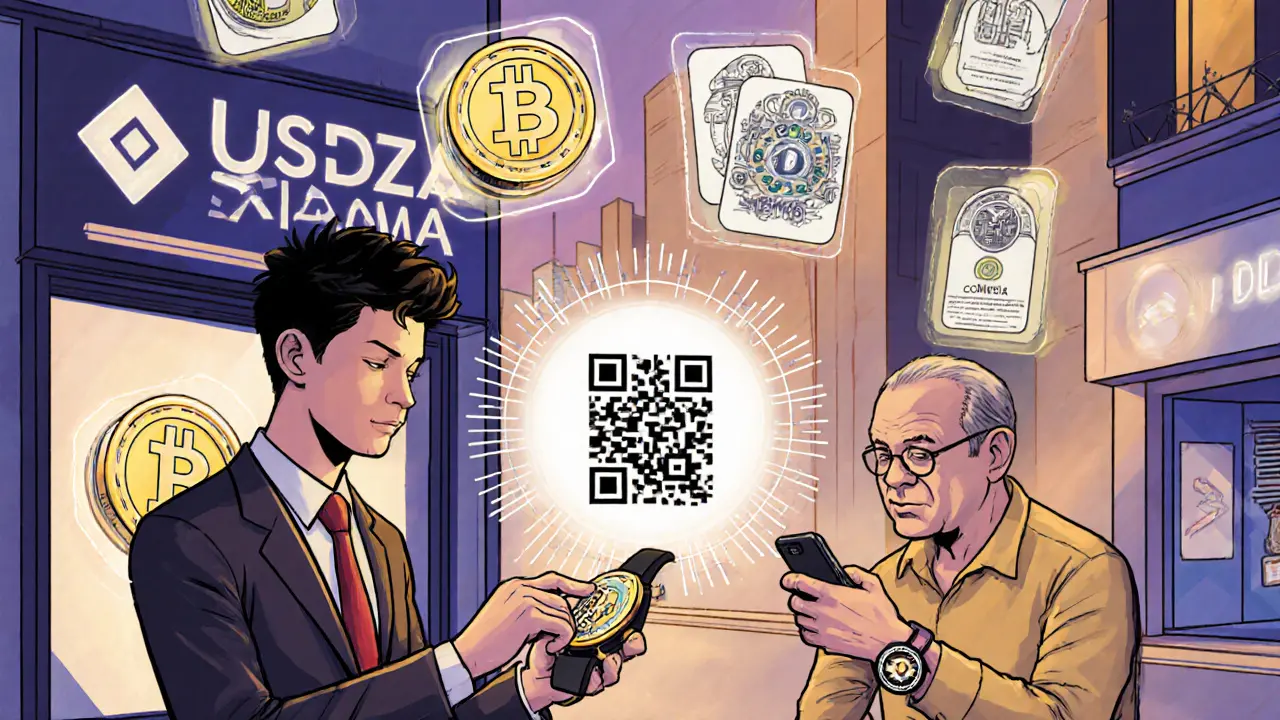
Who’s Driving Adoption?
The biggest force behind crypto adoption in Singapore isn’t regulation-it’s demographics. Millennials and Gen Z are adopting crypto at three times the rate of Baby Boomers. They’re not just speculating. They’re using DeFi, managing digital identities, and holding crypto as part of their savings strategy. This isn’t a niche trend. It’s a cultural shift. Young professionals in Singapore see crypto not as a gamble, but as a financial tool-like a bank account or a stock portfolio. They want control. They want speed. They want transparency. And Singapore’s infrastructure delivers that. The government knows this. That’s why it’s building crypto-first public services. Imagine paying your taxes in stablecoins. Or receiving government grants as tokenized vouchers. These aren’t distant ideas-they’re being piloted.The Flip Side: Restrictions That Keep It Safe
Singapore isn’t a free-for-all. There are rules. And those rules are strict. You can’t run an unlicensed exchange. You can’t market crypto as a guaranteed return. You can’t target retail investors with high-risk DeFi products without clear disclosures. The MAS has cracked down on misleading ads, pump-and-dump schemes, and unregulated staking platforms. This isn’t about stopping innovation. It’s about protecting people. The same rules that forced unlicensed firms to leave also kept retail investors from losing money to shady operators. The result? A cleaner, more professional market. Some complain it’s too restrictive. But look at the data: Singapore has the highest crypto adoption score in the world-45.7 out of 60 on the Henley Crypto Adoption Index. People aren’t fleeing the rules. They’re flocking to them.What Comes Next?
Singapore’s next move? Integrating crypto into everyday finance. Think: crypto debit cards linked to MAS-regulated wallets. Instant cross-border payroll in stablecoins. Tokenized pensions. The goal isn’t to replace the dollar or the SGD. It’s to add a new layer of financial infrastructure-one that’s faster, cheaper, and more inclusive. For businesses, the message is clear: if you’re building in crypto, Singapore is the safest, smartest place in Asia to do it. For investors, it’s the most transparent. For regulators, it’s the most controlled. And for everyone else? It’s simply working.Is crypto legal in Singapore?
Yes, crypto is fully legal in Singapore. The Monetary Authority of Singapore (MAS) regulates digital asset service providers through a licensing system. You can buy, sell, hold, and trade crypto without restrictions, as long as you use a licensed platform. Unlicensed exchanges and services are banned.
Does Singapore tax cryptocurrency gains?
No, Singapore does not tax capital gains from cryptocurrency trading, staking rewards, or mining income. This applies to both individuals and businesses. The only taxes that may apply are corporate income tax on profits from crypto trading as a business activity, but not on personal holdings.
Why are so many crypto companies moving to Singapore?
Singapore offers regulatory clarity, zero capital gains tax, strong legal protections, and access to institutional investors. Unlike other jurisdictions that fluctuate between bans and bans, Singapore provides a stable, predictable environment. Companies like Circle, BlackRock, and Coinbase opened offices here because they know their operations won’t be shut down overnight.
Can I use stablecoins to pay for goods in Singapore?
Yes, many businesses in Singapore now accept stablecoins like USDC. Major hotels like Capella, travel agencies like Wetrip, and luxury retailers like Ginza Xiaoma allow payments in stablecoins. These transactions are fast, low-cost, and settled on-chain with full transparency.
Is Singapore safer for crypto than Dubai or Hong Kong?
Singapore is considered safer for institutional crypto activity than Dubai or Hong Kong because of its stronger regulatory enforcement and legal framework. While Dubai offers tax benefits and Hong Kong has reopened to crypto, Singapore has a proven track record of enforcing rules consistently. Its partnership with global institutions like SWIFT and BlackRock gives it unmatched credibility.
What’s the difference between MAS regulation and other crypto rules?
MAS doesn’t treat all crypto the same. It classifies tokens by function-payment, security, or utility-and applies rules accordingly. This is unlike places that either ban crypto entirely or apply one-size-fits-all rules. MAS also requires strict AML/KYC, cold storage for assets, and regular audits. This precision builds trust with banks and large investors.
What’s the future of crypto in Singapore?
Singapore is moving toward tokenized real-world assets-like property, bonds, and commodities-on blockchain. It’s also testing CBDCs and crypto-based public services. The goal is to make Singapore the world’s first fully integrated digital finance hub, where traditional banking and crypto operate side by side under one trusted system.
For anyone serious about crypto in Asia, Singapore isn’t just an option-it’s the default. The rules are tight, but they’re working. The taxes are zero, and the infrastructure is world-class. The institutions are here. The people are here. And the future? It’s already being built.





Tina Detelj
November 25, 2025 AT 16:10jeff aza
November 26, 2025 AT 10:04Vijay Kumar
November 27, 2025 AT 07:10Vance Ashby
November 28, 2025 AT 12:11Brian Bernfeld
November 30, 2025 AT 03:18