Regulatory Obligations in Crypto: What You Must Know in 2025
When it comes to regulatory obligations, the legal requirements that crypto users, exchanges, and businesses must follow to operate legally under national and international laws. Also known as crypto compliance, these rules aren’t optional anymore—they’re the difference between staying in business and facing fines, shutdowns, or criminal charges. In 2025, if you’re trading, holding, or accepting crypto, you’re already under someone’s regulatory radar.
These regulatory obligations aren’t the same everywhere. In Cyprus, traders use EU-licensed exchanges under MiCAR, the Markets in Crypto-Assets Regulation, a comprehensive EU framework that standardizes crypto rules across member states. In Georgia, owning crypto is tax-free, but running an ATM or exchange requires a license—strict VASP licensing, a requirement for Virtual Asset Service Providers to register with financial authorities and follow anti-money laundering rules. Meanwhile, in China, accepting any crypto as payment is illegal, and the only digital currency allowed is the state-backed digital yuan. And in the U.S., the SEC, the Securities and Exchange Commission, which treats many crypto tokens as unregistered securities and enforces strict disclosure and trading rules is chasing projects left and right, from tokenized stocks to DeFi protocols.
These rules aren’t just for big firms. If you’re running a business in Latin America, you need to know if your exchange is compliant with local banking rules. If you’re a trader in Morocco, you’re part of an underground network that’s slowly being monitored by regulators. Even if you just earned an airdrop, you might owe taxes—or worse, you might have unknowingly participated in a scam that’s now under investigation. The drop in trading volume we saw in Q2 2025? That wasn’t just market fatigue. It was traders fleeing unregulated platforms as governments started enforcing regulatory obligations with real penalties.
What you’ll find below isn’t a list of opinions. It’s a collection of real cases: exchanges that got shut down for ignoring compliance, countries that cracked down on mining, tokens that vanished because they broke securities laws, and users who learned the hard way that ‘no regulation’ doesn’t mean ‘no consequences.’ Whether you’re trying to claim a token, run a business, or just hold crypto safely, the rules are here. And they’re not going away.
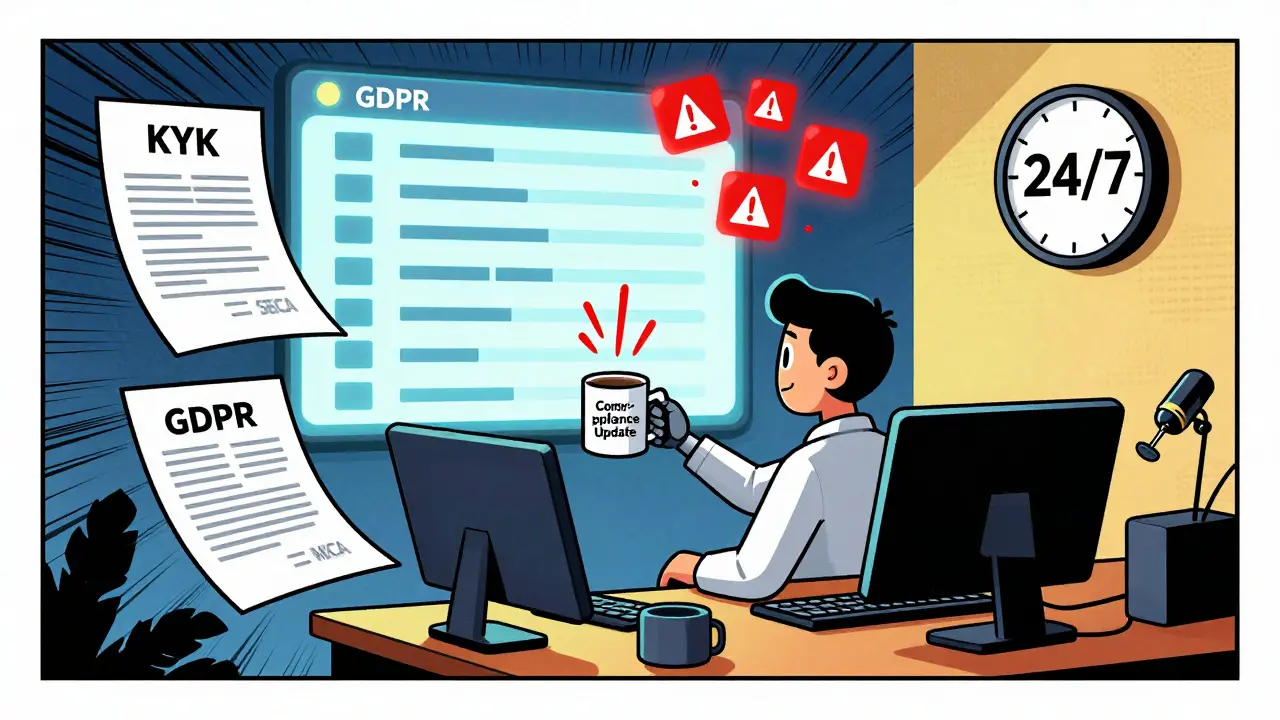
Ongoing Compliance Obligations in Blockchain: What You Must Keep Doing to Stay Legal
- 6 Comments
- Aug, 13 2025
Ongoing compliance obligations in blockchain require constant monitoring of laws like AML, KYC, and securities regulations. Learn how to stay legal, avoid fines, and build trust with users through practical, real-world steps.