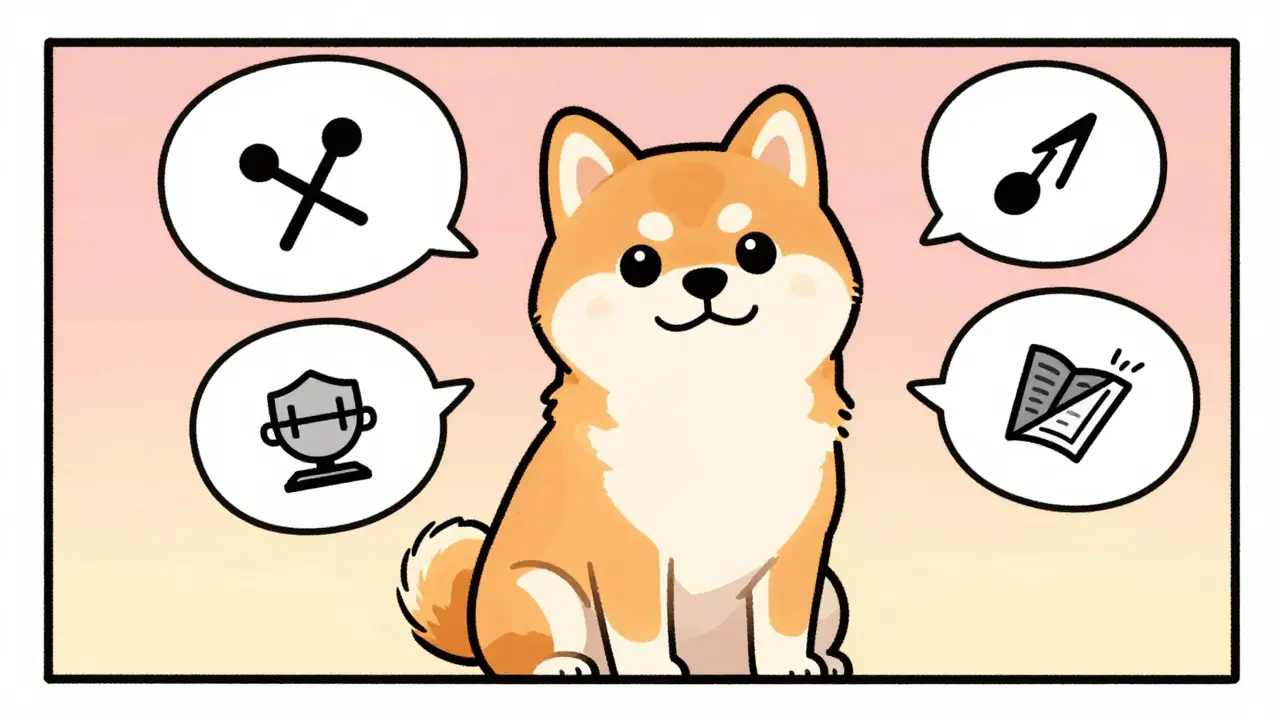
You’ve probably heard of Shiba Inu (SHIB). It’s one of the biggest names in crypto. But have you heard of ESTEE? If not, you’re not alone. ESTEE is a niche meme coin that claims to honor the actual dog who inspired the original SHIB logo. It sounds like a cute tribute, but under the hood, it’s a high-risk speculative asset with some serious red flags for new investors.
This article breaks down exactly what ESTEE is, how it works, and whether it’s worth your attention in 2026. We’ll look at the numbers, the story behind the coin, and the real risks involved before you decide to buy or hold.
The Story Behind ESTEE: More Than Just a Meme?
To understand ESTEE, you first need to know its origin story. The project launched on September 18, 2024. Its main selling point isn’t technology or utility-it’s history. ESTEE claims to be named after a real Shiba Inu dog named Estee, owned by Irina Valko. According to the project’s narrative, this specific dog was the inspiration for the logo used by the massive Shiba Inu (SHIB) cryptocurrency.
Estee the Dog is a real Shiba Inu credited as the muse for the original SHIB logo, serving as the central figure for the ESTEE token project.. The project uses professional photography and documented pedigree to back up this claim. This distinguishes it from many other meme coins that rely solely on internet jokes or abstract concepts. By tying the token to a physical animal with a verifiable owner, ESTEE attempts to create a sense of "legitimacy" within the chaotic world of meme culture.
However, it’s crucial to separate marketing from reality. While the story is charming, it doesn’t add technical value to the blockchain. You aren’t buying a share in the dog; you’re buying a token that trades based on community sentiment and hype. The connection to SHIB is historical, not financial. SHIB developers have no official partnership with ESTEE, and the two tokens operate independently.
Tokenomics and Technical Details
Let’s look at the hard data. How does ESTEE work technically? The token operates primarily on the Ethereum blockchain. Some sources mention availability on Solana, but Ethereum remains the primary network for trading and liquidity.
Here are the key specifications:
- Total Supply: Fixed at 420.69 billion tokens. This number is a nod to internet culture (420) and is fully in circulation.
- Circulating Supply: Approximately 420 billion ESTEE tokens are actively traded.
- Contract Address: On Ethereum, the contract is
0x4298e4ad48be89bf63a6fdc470a4b4fe9ce633b1. - Taxes: Zero transaction taxes. Buying or selling doesn’t incur hidden fees from the smart contract.
- Liquidity: Burned. This means the liquidity pool tokens were destroyed, preventing the creators from easily pulling out all the money and leaving investors with worthless tokens-a common scam known as a "rug pull."
- Contract Status: Renounced. The developer has given up administrative control over the smart contract. No one can change the rules of the token later.
These features-burned liquidity and renounced contracts-are standard safety measures in the meme coin space. They signal to buyers that the project is decentralized and less likely to be a direct scam. However, they do not protect you from market crashes or lack of interest.
Price Performance and Market Reality
If you’re looking at ESTEE for profit potential, the recent price action tells a sobering story. Meme coins are notoriously volatile, but ESTEE’s decline has been steep.
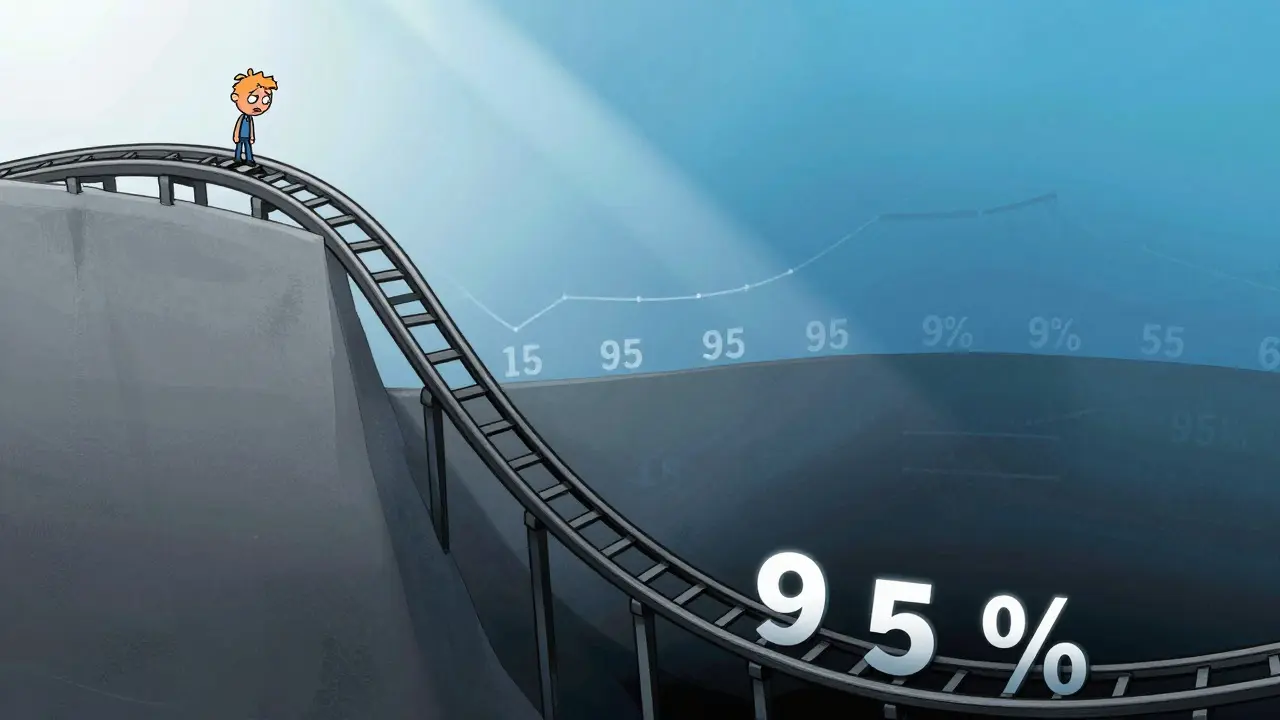
As of mid-2026, the price of ESTEE hovers around $0.00000028 to $0.00000031 USD. To put that in perspective, you would need millions of tokens to equal just one dollar. The all-time high (ATH) was reached on October 1, 2024, at approximately $0.00002919. Since then, the token has lost roughly 95% of its value. The all-time low was recorded in December 2025 at $0.000000265.
While there have been minor recoveries-such as a +10.54% gain over a 30-day period in early 2026-the overall trend remains bearish. The market capitalization fluctuates wildly due to low liquidity, ranging from $74,000 to over $500,000 depending on the momentary trading volume. Currently, it sits below $150,000, ranking it outside the top 4,000 cryptocurrencies globally.
| Metric | Value |
|---|---|
| All-Time High | $0.00002919 (Oct 2024) |
| Current Price Range | $0.00000028 - $0.00000031 |
| Market Cap | ~$133,000 - $150,000 |
| 24h Trading Volume | $3,000 - $68,000 (Highly Variable) |
| Number of Holders | ~1,650 - 2,890 |
The low trading volume is a major concern. With daily volumes often under $70,000, large buys or sells can drastically swing the price. This makes it difficult to enter or exit positions without significant slippage (getting a worse price than expected).
How to Buy and Store ESTEE
Buying ESTEE isn’t as simple as clicking "buy" on Binance or Coinbase. Because it’s a small-cap meme coin, it lacks listings on major centralized exchanges. Instead, you must use Decentralized Exchanges (DEXs).
Here is the step-by-step process:
- Get an Ethereum Wallet: Download MetaMask or Trust Wallet. Ensure you have ETH (Ethereum) in your wallet to pay for gas fees.
- Add the Token: Import ESTEE into your wallet using the contract address:
0x4298e4ad48be89bf63a6fdc470a4b4fe9ce633b1. This ensures you’re adding the correct token and not a fake copy. - Connect to Uniswap: Go to Uniswap V2 (the primary exchange for ESTEE). Connect your wallet.
- Swap ETH for ESTEE: Enter the amount of ETH you want to spend. Set your slippage tolerance appropriately (often 5-10% for low-liquidity tokens) to ensure the trade goes through.
- Confirm Transaction: Approve the swap in your wallet. Wait for confirmation.
Storing ESTEE is straightforward once bought. It stays in your Ethereum-compatible wallet. There are currently no staking rewards or yield-generating mechanisms associated with ESTEE. It is a "hold-only" asset, meaning its value depends entirely on someone else paying more for it later.
Risks and Red Flags
Before you invest, you need to understand why ESTEE is considered high-risk. Here are the critical factors:
1. Extreme Volatility: A 95% drop from the all-time high shows how quickly sentiment can shift. Meme coins often rise on hype and fall when attention moves elsewhere.
2. Low Liquidity: With fewer than 3,000 holders and low daily volume, selling your tokens might be difficult. If everyone tries to sell at once, the price could crash to near zero instantly.
3. No Utility: ESTEE doesn’t offer voting rights, dividends, or access to services. Its value is purely speculative, based on the community’s belief in the "Estee the Dog" narrative.
4. Lack of Development: There is no active roadmap, no new partnerships, and no technological innovation being built around the token. The project relies entirely on organic community growth, which has stalled significantly since late 2024.
5. Concentration Risk: With such a small holder base, a few large wallets could manipulate the price. Even though the contract is renounced, whales can still dump their holdings on retail investors.
ESTEE vs. Other Meme Coins
How does ESTEE compare to giants like Shiba Inu (SHIB) or Dogecoin (DOGE)?
SHIB and DOGE have established ecosystems, massive communities, and listings on every major exchange. They have survived multiple market cycles. ESTEE, by contrast, is a micro-cap experiment. It tries to borrow credibility from SHIB’s history but lacks the infrastructure to support it. While SHIB has moved toward building a Layer-2 blockchain and charity initiatives, ESTEE remains a static token with no development team driving forward momentum.
For experienced traders, ESTEE might represent a high-risk, high-reward gamble if they believe the narrative will resurge. For average investors, the risks far outweigh the potential rewards compared to more established assets.
Is ESTEE a good investment in 2026?
ESTEE is highly speculative and risky. With a 95% decline from its peak and low liquidity, it is not suitable for conservative investors. Only consider it if you understand meme coin volatility and can afford to lose your entire investment.
What is the relationship between ESTEE and Shiba Inu (SHIB)?
There is no official business relationship. ESTEE is named after the dog that allegedly inspired the SHIB logo. It is a fan-driven tribute project, not an official subsidiary or partner of the Shiba Inu ecosystem.
Where can I buy ESTEE tokens?
You cannot buy ESTEE on major exchanges like Binance or Coinbase. You must use a decentralized exchange like Uniswap V2 on the Ethereum network. You will need an Ethereum wallet (like MetaMask) and ETH to pay for gas fees.
Is the ESTEE contract safe?
The contract is renounced and liquidity is burned, which reduces the risk of a traditional "rug pull" by developers. However, this does not protect against market crashes, low liquidity issues, or manipulation by large holders.
Does ESTEE have any utility or staking rewards?
No. ESTEE is a pure meme coin with no built-in utility, staking mechanisms, or revenue-sharing models. Its value is derived solely from community sentiment and speculation.

Mekz Wheoki
June 21, 2026 AT 10:08Another dog coin trying to ride the coattails of SHIB like it’s some kind of spiritual successor. The irony is palpable. You’re not honoring a dog, you’re honoring your own desperation for relevance in a market that has already moved on. Burned liquidity and renounced contracts are the bare minimum now, not a badge of honor. It’s like showing up to a gunfight with a plastic spoon and calling it tactical genius.
Skm Shubham
June 23, 2026 AT 01:01The tokenomics are a joke. 420.69 billion supply? Really? That number screams 'I made this at 3 AM while watching memes.' A 95% drop from ATH isn't just volatility; it's a structural failure of interest. When you have no utility, no roadmap, and no development team, you aren't an investment vehicle. You're a charity case for whales who want to dump on retail. The low liquidity means you can't even exit gracefully if things go south, which they inevitably do. Stop pretending this is sophisticated finance.
Rob Aronson
June 24, 2026 AT 07:09Let’s look at the on-chain metrics here 📊. The slippage tolerance required to execute trades on Uniswap V2 for ESTEE is absurdly high due to the thin order book. This creates significant impermanent loss risks for any LPs who might try to provide depth, though there aren’t many. The concentration risk is real-when you have fewer than 3k holders, a single whale wallet moving funds can trigger cascading liquidations or price crashes. It’s not just speculation; it’s a liquidity trap disguised as a meme narrative. Proceed with extreme caution if you must interact with this asset class ⚠️.
Kwon Bill
June 25, 2026 AT 02:03In my experience tracking niche altcoins across different jurisdictions, the 'tribute' narrative is often used to bypass regulatory scrutiny by framing the asset as cultural rather than financial. However, the lack of official partnership with SHIB developers makes this legally precarious. Investors should be aware that without a clear utility or governance structure, this token exists in a gray area where consumer protections are virtually non-existent. The historical connection to Estee the dog is charming but financially irrelevant in the context of blockchain valuation models.
Danna Charris
June 25, 2026 AT 07:57I simply don’t understand why people still fall for this. It’s elementary economics. No utility equals zero intrinsic value. It’s pure hype, and the hype has died. Holding this is like holding a ticket to a movie that ended two years ago. Just say no.
Fede Faith
June 25, 2026 AT 14:26If you are going to dip your toes into this, please make sure you understand how gas fees work on Ethereum. It’s easy to lose more in transaction costs than the value of the tokens you buy. I’d suggest using a testnet first to practice swapping before committing real capital. Also, keep your MetaMask seed phrase offline. Never share it. Most people get wrecked not because the coin goes to zero, but because they get phished. Stay safe out there.
Josh Dodson
June 27, 2026 AT 02:58i mean its super risky but hey anything can happen right?? i lost money on shib too so im not judging lol just dont put ur rent money in it. maybe set a stop loss or something idk im not a pro. good luck tho!
Suman Patil
June 28, 2026 AT 10:09Look, I get the appeal of the underdog story. We all love a comeback arc. But let’s keep our heads straight here. The market cap is tiny, which means it’s highly susceptible to manipulation. If you’re in this for the community vibe, cool. But if you’re expecting returns based on fundamentals, you’re looking at the wrong chart. Let’s support projects that actually build something instead of just selling nostalgia. Keep the discussion respectful and informed, folks. We’re all learning together here.