
Imagine trying to mine Bitcoin with your gaming PC. You’d burn through electricity for weeks just to earn a fraction of a cent, if you earned anything at all. That’s because Bitcoin and most major cryptocurrencies are now dominated by industrial-grade machines called ASICs. But what if there was a fast, modern blockchain that actually welcomed everyday graphics cards? That is exactly where Karlsen (KLS) fits in.
Karlsen is a Layer-1 proof-of-work cryptocurrency designed specifically to be friendly to GPU miners while resisting ASIC dominance. It operates on a unique architecture known as a BlockDAG, which allows it to process transactions incredibly fast-often in under a second. If you’ve heard of Kaspa, you already know the foundation Karlsen is built on. In fact, Karlsen is explicitly a fork of the Kaspa blockchain, keeping the speed and decentralization but tweaking the mining algorithm to keep small-scale miners relevant.
The Core Technology: Why Karlsen Works Differently
To understand Karlsen, you have to look past traditional blockchains. Most chains like Bitcoin or Ethereum (before its merge) rely on a single longest chain of blocks. This creates a bottleneck; only one miner can win a block at a time, leading to congestion during high traffic.
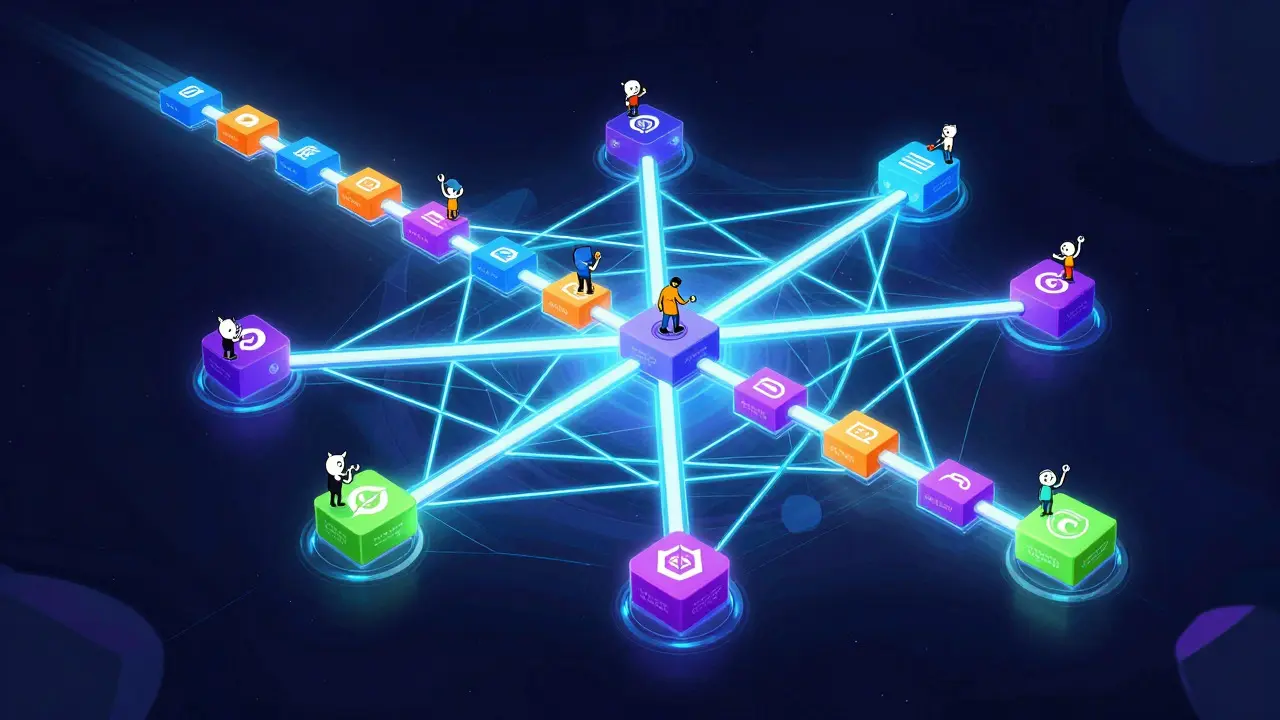
Karlsen uses a technology called GhostDAG, inherited from Kaspa. Instead of a single line, imagine a web or a directed acyclic graph (DAG). Multiple blocks can be created simultaneously and linked together. This parallel processing means the network gets faster as more people join, rather than slower. For the user, this translates to sub-second confirmation times and transaction fees that are often less than a penny.
The real differentiator, however, is the mining algorithm. While Kaspa uses an algorithm called kHeavyHash, which has seen increasing ASIC adoption, Karlsen utilizes a custom algorithm identified as Karlsenhashv2. This algorithm incorporates Blake3 hashing and is engineered to run efficiently on consumer-grade GPUs. The goal is simple: prevent large mining farms from monopolizing the network security, ensuring that anyone with a decent graphics card can participate in securing the network.
Monetary Policy and Supply Details
If you are looking at the price of KLS, you might notice it looks very small numerically (fractions of a cent). This is due to its massive supply cap. Let’s break down the economics so you know what you are holding.
| Metric | Value / Detail |
|---|---|
| Maximum Supply | ~4.96 Billion KLS |
| Circulating Supply (Aug 2026) | ~3.01 Billion KLS |
| Block Time | 1 Second |
| Current Block Reward | ~21.83 - 23.09 KLS |
| Emission Schedule | Smooth monthly deflation after initial phase |
The emission schedule is crucial here. Unlike Bitcoin’s sudden "halving" events that cut rewards in half overnight, Karlsen employs a smooth deflationary model. After an initial pre-deflationary phase where blocks paid 50 KLS, the reward decreases gradually every month by a specific factor. This approach aims to provide predictable income for miners over time, avoiding the shock-to-the-system effect that sudden halvings can cause in smaller networks.
As of mid-2026, roughly 60% of the total supply has been mined. The remaining coins will be distributed slowly over the coming years. This scarcity curve is designed to support value accrual as demand grows, assuming the network maintains its utility and miner interest.
How to Get Started: Wallets and Mining
You don’t need a computer science degree to use Karlsen, but you do need to follow the right steps to secure your assets. The ecosystem provides several options depending on your technical comfort level.
Setting Up a Wallet
The official way to hold KLS securely is through the karlsend node software. When you download and run this full node, you get access to a command-line wallet. Here is what you need to watch out for:
- Seed Phrase Security: The wallet generates a 24-word seed phrase. This is your master key. Write it down on paper and store it safely. Anyone with these words owns your funds.
- Compatibility Warning: The Karlsen seed format is specific to the network. Do not assume it works with generic hardware wallets or other crypto apps unless explicitly stated. As of 2026, hardware wallet integration is still a work in progress.
- Mobile Options: For easier daily management, the project offers mobile wallets for Android and iOS (derived from the Kaspium codebase). These are convenient for checking balances and sending small amounts, though running a full node remains the gold standard for security.
Mining KLS with a GPU
If you have a spare graphics card, you can mine Karlsen. The process is straightforward for those familiar with Windows or Linux commands.
- Download Software: Grab the latest release of SRBMiner Multi or similar GPU mining software that supports Karlsenhashv2.
- Choose a Pool: Connect to a reputable mining pool. Solo mining on a 1-second block time network is statistically unlikely to yield consistent results for individual users.
- Configure Worker: Input your Karlsen wallet address into the miner’s configuration file along with the pool’s server address.
- Monitor Profitability: Use tools like WhatToMine or Hashrate.no to check current profitability. Remember, electricity costs vary wildly by region. If you pay more than $0.10 per kWh, mining might not be profitable yet.
The network hashrate hovers around 16-17 GH/s, which is relatively low compared to giants like Bitcoin, meaning your chances of contributing to the network are higher as an individual miner.
Market Status and Exchange Availability
Let’s talk about the elephant in the room: liquidity. Karlsen is currently a micro-cap cryptocurrency. In August 2026, it trades at fractions of a cent with a market capitalization hovering near $94,000 to $150,000 depending on the data source. This makes it highly volatile. A single large trade can move the price significantly.
Where can you buy it? Currently, trading is concentrated on mid-tier centralized exchanges. The primary venues include:
- XT.COM: Handles the majority of the trading volume.
- MEXC: Provides additional liquidity and pairs.
You won’t find KLS on major platforms like Coinbase Pro or Binance yet. This limits accessibility for retail investors who prefer big-name exchanges but opens the door for early adopters willing to navigate smaller platforms. Always verify exchange legitimacy before depositing funds.

Risks and Future Outlook
No investment is without risk, especially in the crypto space. Karlsen carries specific risks you should weigh carefully.
Volatility and Illiquidity: With a low market cap, exiting a large position can be difficult without slippage (selling at a lower price than expected). The price history shows significant swings, with all-time highs varying widely across data sources due to thin order books.
ASIC Resistance Sustainability: The core promise of Karlsen is ASIC resistance. However, history shows that if a coin becomes popular enough, someone will eventually build an ASIC for it. The developers must continuously update the algorithm to stay ahead, which requires active maintenance and community consensus.
Development Activity: On the positive side, the GitHub repositories show active development. There are ongoing efforts to improve the Rust-based node implementation (rusty-karlsen), enhance mobile wallets, and even explore smart contract capabilities via a side-chain integrated with the Cosmos ecosystem. The launch of Testnet-1 in early 2026 signals that the team is pushing forward with new features.
Frequently Asked Questions
Is Karlsen (KLS) a good investment?
Karlsen is a high-risk, high-reward speculative asset. Its low market cap means potential for significant growth if adoption increases, but also high volatility and risk of loss. It is best suited for investors who understand proof-of-work dynamics and are comfortable with micro-cap altcoins. Never invest more than you can afford to lose.
Can I mine Karlsen with my CPU?
Technically yes, but it is not efficient. Karlsen is optimized for GPUs (Graphics Processing Units). The Karlsenhashv2 algorithm leverages parallel processing power found in graphics cards. CPU mining would likely result in negligible earnings compared to electricity costs.
How is Karlsen different from Kaspa?
Karlsen is a fork of Kaspa, sharing the same BlockDAG architecture and GhostDAG protocol for fast transactions. The key difference is the mining algorithm. Kaspa uses kHeavyHash, which has become increasingly ASIC-dominated. Karlsen uses Karlsenhashv2, designed to remain ASIC-resistant and favorable for GPU miners, aiming for greater decentralization among small-scale participants.
Where can I buy Karlsen tokens?
As of 2026, Karlsen is primarily traded on mid-tier centralized exchanges such as XT.COM and MEXC. It is not yet listed on major tier-1 exchanges like Coinbase or Binance. Users should create accounts on these platforms and look for the KLS/USDT trading pair.
Is the Karlsen wallet safe?
The official karlsend wallet is non-custodial, meaning you control your private keys. This is generally safer than leaving funds on an exchange. However, you must protect your 24-word seed phrase. Ensure you download the software only from the official GitHub repository to avoid malware. Mobile wallets offer convenience but verify their source as well.
What is the maximum supply of KLS?
The maximum supply of Karlsen is approximately 4.96 billion KLS. About 60% of this supply has already been mined as of mid-2026. The remaining tokens are released through a smooth, monthly deflationary schedule rather than sudden halving events.



SUBHAM CHOUDHURY
August 14, 2026 AT 08:07Hey everyone, this is actually a really solid breakdown of the tech stack. I think people overlook how important the BlockDAG structure is for keeping fees low when traffic spikes. It’s great to see a project that isn’t just copying Bitcoin but trying to solve actual usability issues with GPU mining. Keep sharing these kinds of guides, they are super helpful for newcomers who want to understand the mechanics before diving in.
amy miranda
August 15, 2026 AT 07:10Oh, wonderful. Another fork. Just another desperate attempt to recreate the wheel because the original creators couldn't keep their community happy. It is absolutely exhausting watching these projects pop up every other week promising 'ASIC resistance' while simultaneously ignoring the fundamental economic flaws that plague them all. The sheer arrogance of thinking a slight tweak to the hashing algorithm will save it from becoming digital dust is laughable. We have been here before, we are here now, and we will be here again when this inevitably collapses under its own weight.
Subhash Kashyap Dm
August 15, 2026 AT 15:35you guys are sleeping on the real play here. karlsenhashv2 is basically a trap for the retail miners. once the liquidity hits certain thresholds the dev team will just pivot to asic friendly algo and dump on you. look at the github commits. most are automated scripts. the 'smooth deflation' is just marketing speak for slow bleed. wake up sheeple. the blockdag is a lie designed to hide the centralization of the node operators. check the ip addresses of the top validators. same data center in frankfurt. classic rug pull setup disguised as innovation. dont let your gpu melt for pennies while whales accumulate off exchange.
Billy Cunningham
August 16, 2026 AT 09:06So if I read this right, I can mine with my old GTX 1060? 🤔 That sounds too good to be true but also kinda cool. I’ve been sitting on that card for years gathering dust. If it’s truly ASIC resistant, maybe I’ll give it a shot just to see if I can earn enough for a coffee. ☕️
Ed Wallace
August 17, 2026 AT 05:02The philosophical underpinning of Karlsen is fascinating when you consider the democratization of computation. By shifting the burden away from specialized industrial hardware back to consumer-grade GPUs, we are essentially returning the power of network validation to the individual. It poses an interesting question about the nature of value: does security come from the sheer cost of energy expenditure by corporations, or from the distributed participation of individuals? Karlsen argues for the latter, suggesting that a network secured by many small hands is more resilient than one held by a few giant fists. It’s a beautiful ideal, even if the market cap is currently microscopic.
Pernelia Wahkan
August 17, 2026 AT 08:43I’ve been digging into the GhostDAG implementation details, and honestly, the way it handles parallel block creation is quite elegant. Most people dismiss forks as copycats, but the tweaks to the emission schedule here are significant. Avoiding the sudden halving shock is a smart move for network stability. I ran a quick test with SRBMiner Multi on my RTX 3080, and the hashrate per watt was surprisingly decent compared to some of the older PoW chains. It’s definitely worth keeping an eye on, especially if they manage to get those mobile wallets fully integrated with hardware support soon.
Joshua Hofford
August 17, 2026 AT 12:00This reminds me of the early days of Ethereum before the merge, where anyone with a decent rig could participate. There’s a certain nostalgia to it, but also a fresh opportunity. I’m curious to see how the community builds out the ecosystem around KLS. If they can attract developers to build dApps on the side-chain, that would be a game-changer. For now, it feels like a quiet little corner of crypto that might surprise us later. Good luck to everyone experimenting with it!
Marcia Albert
August 19, 2026 AT 02:08I’m just vibing with the idea of sub-second confirmations. Nothing worse than waiting forever for a transaction to clear. The fact that fees are less than a penny is pretty wild. I haven’t bought any yet, just watching from the sidelines. It’s like a digital pet rock that occasionally pays you back in fractions of cents. Kinda cute though.
Emma Smith
August 20, 2026 AT 18:43the semantic drift between kaspa and karlsen is negligible at best. they are using the same underlying codebase so why pretend it is different. the jargon about blockdag is just noise to confuse the uninitiated. i mean sure the hash function changed but does that really change the fundamental dynamics of proof of work. probably not. the whole concept of asic resistance is a myth because economics always wins. someone will always build the machine that makes money faster. stop chasing the dragon of decentralization through algorithm tweaking it never works. the truth is buried in the order books which are thin as paper. buy high sell low repeat until broke.
Joy Kwant
August 21, 2026 AT 16:03It’s pathetic how easily people are convinced by technical buzzwords. You’re all throwing your money into a black hole hoping for a miracle. The moral failure here is staggering-encouraging speculative gambling under the guise of 'mining' and 'decentralization.' Who benefits? Only the insiders who dumped their tokens before this article went viral. Wake up and smell the desperation. This isn’t innovation; it’s exploitation wrapped in pretty HTML tables.