You’ve probably seen the ticker PIPE flash across your screen or heard it mentioned in a crypto group chat. But here’s the catch: there isn’t just one PIPE coin. There are two completely different projects using the same name and symbol. One is a serious infrastructure project building decentralized networks. The other is a community-driven memecoin tied to the Pi Network narrative. If you buy the wrong one, you might end up with a digital sticker instead of a stake in future internet technology.
This confusion is real. It happens often in crypto when new projects adopt familiar tickers. To navigate this, you need to understand exactly what each version of PIPE does, how they differ, and which one actually has utility in the current market landscape of mid-2026.
The Two Faces of PIPE Token
When you search for PIPE on a cryptocurrency exchange, you are likely looking at one of two distinct entities. Both operate on the Solana blockchain, which is known for its high speed and low transaction costs. However, their purposes could not be more different.
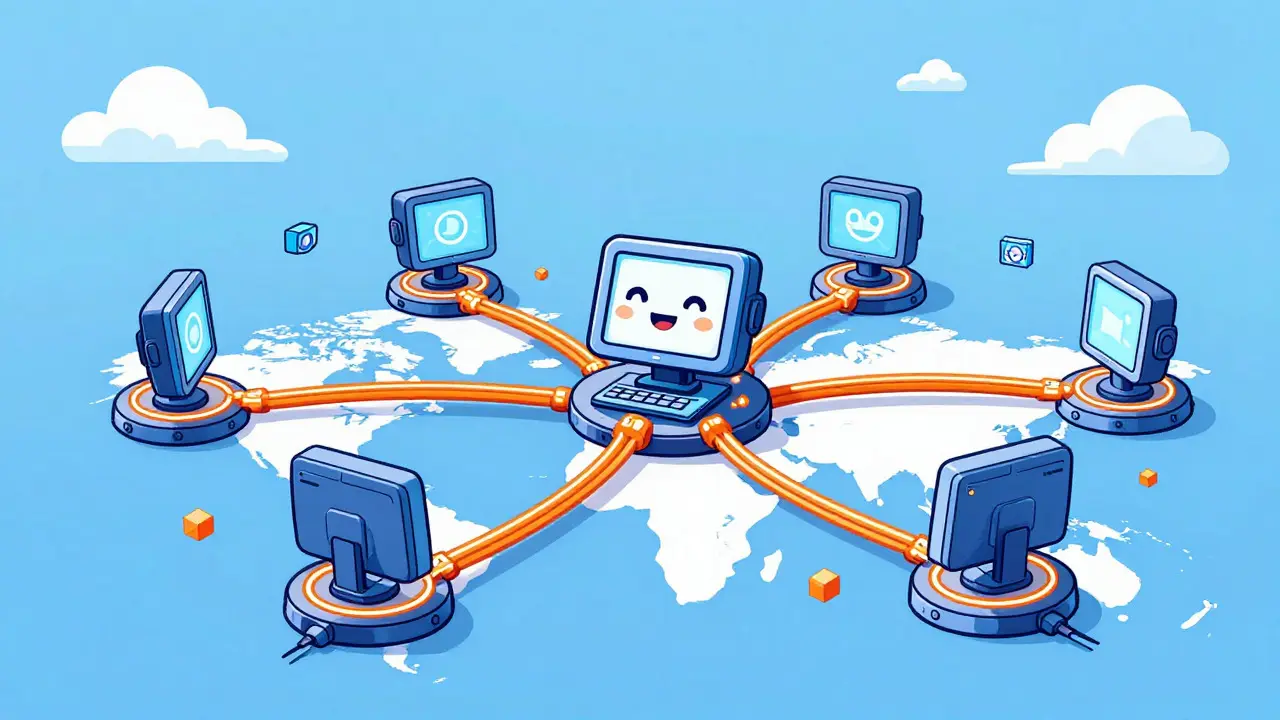
First, there is the PIPE Network. This is a Decentralized Physical Infrastructure Network (DePIN) project. It aims to replace traditional centralized content delivery networks (CDNs) with a permissionless, user-owned alternative. Think of it as a way to deliver video streams, web pages, and data faster by using people’s own hardware rather than giant corporate servers.
Second, there is the PIPE memecoin. This token launched on Pump.fun in 2024. It was created by anonymous developers to honor the Pi Network community. It has no technical utility beyond being a speculative asset and a badge of community identity. Its value is driven entirely by social sentiment and trading volume, much like Dogecoin or Shiba Inu.
| Feature | PIPE Network (DePIN) | PIPE Memecoin |
|---|---|---|
| Primary Purpose | Decentralized Content Delivery & Edge AI | Community Speculation & Meme Culture |
| Launch Date | Token Sale June-July 2025 | 2024 (Fair Launch on Pump.fun) |
| Technology | zk-TCP Verification, PoP Nodes | Standard SPL Token on Solana |
| Key Partners | Solana Foundation, CoinList | None (Community-led) |
| Risk Profile | Medium-High (Tech execution risk) | Very High (Volatility & abandonment) |
Deep Dive: PIPE Network (The Infrastructure Play)
If you are interested in the fundamentals of Web3 infrastructure, this is the PIPE you want to study. The PIPE Network addresses a specific problem: latency. Traditional CDNs, like those run by Cloudflare or Akamai, are efficient but centralized. They can be slow during peak traffic and expensive for smaller developers.
PIPE Network solves this by creating a global mesh of Point-of-Presence (PoP) nodes. These are essentially computers owned by everyday users that cache and serve data. By placing these nodes closer to the end-user, the network reduces latency from the standard ~100ms down to an impressive 3-8ms. That difference matters for real-time applications like gaming, live streaming, and edge AI processing.
A key technical differentiator here is zk-TCP verification. This uses zero-knowledge proofs to verify that data was delivered correctly without revealing the underlying data itself. This ensures trust in a decentralized system where you don’t know who owns the server hosting your video stream.
The project gained credibility through a structured token sale on CoinList from June 26 to July 3, 2025. This platform typically vets projects more rigorously than open launchpads. Furthermore, backing from the Solana Foundation signals that the ecosystem sees value in this DePIN approach. As of late 2025 and early 2026, analysts have projected prices between $0.80 and $1.00+, assuming the network successfully scales its node count and secures enterprise partnerships for bandwidth provisioning.
Deep Dive: PIPE Memecoin (The Community Play)
On the flip side, you have the memecoin. This version of PIPE is pure speculation. It launched in 2024 via a fair launch on Pump.fun, meaning there were no venture capital investors or private allocations-just the public buying in as soon as it went live. This aligns with the "degenerate" ethos of many Solana-based meme coins.
The token’s entire value proposition rests on its connection to the Pi Network. Pi Network is a mobile mining project that has amassed millions of users over several years. While Pi itself has faced scrutiny regarding its mainnet progress and liquidity, the PIPE memecoin serves as a proxy for traders who believe in the Pi community’s potential or simply want to ride the hype wave.
As of September 30, 2025, this token traded around $0.000022. With a circulating supply of nearly 996 million tokens, its market cap hovered around $22,000. This is tiny. For context, top-tier meme coins have market caps in the billions. A small market cap means the price can swing wildly on very little volume. You might see a 6% increase in 24 hours, but that could be driven by just a few thousand dollars in trades.
The all-time high for this memecoin was $0.000372 back in May 2025. Since then, it has dropped about 94%. Predictions for 2026 are bearish, with forecasts suggesting a range between $0.000014 and $0.000057. Unless a major viral event occurs, this token remains a high-risk gamble rather than an investment.
How to Buy and Store PIPE Tokens
Buying either version requires a Solana wallet. Popular choices include Phantom or Solflare. Since both tokens are SPL tokens on Solana, the storage mechanism is identical. However, finding the right contract address is critical to avoid scams or accidental purchases.
- Set up a Wallet: Download a reputable Solana wallet app. Secure your seed phrase offline. Never share it.
- Fund with SOL: Buy Solana (SOL) on a major exchange like Coinbase or Binance, then send it to your wallet address. You’ll need some SOL left over for transaction fees (gas).
- Identify the Correct Contract Address: This is the most important step. Go to a reliable explorer like Solscan or DexScreener. Search for "PIPE." You will see multiple results. Check the age, liquidity, and holder distribution.
- For the DePIN token: Look for the official announcement from CoinList or the PIPE Network website. Verify the partnership badges.
- For the Memecoin: Look for the Pump.fun launch record. Check if the liquidity pool is locked.
- Swap on a DEX: Use a decentralized exchange like Raydium or Jupiter. Paste the exact contract address. Set your slippage tolerance appropriately (memecoins often require higher slippage due to volatility).
- Confirm Receipt: Check your wallet balance to ensure the tokens arrived.

Market Outlook and Risks for 2026
The broader crypto market in mid-2026 is maturing. Investors are becoming less tolerant of vaporware and more focused on projects that generate revenue or provide tangible services. This trend favors the DePIN sector.
The DePIN sector is expanding rapidly. Companies are looking for cheaper ways to handle data loads. If PIPE Network can prove that its zk-TCP technology works at scale, it could attract significant institutional interest. The collaboration with the Solana Foundation provides a safety net of sorts, ensuring the project isn’t operating in a vacuum.
Conversely, the memecoin space is saturated. Thousands of new meme tokens launch daily on Solana. Most fail within weeks. The PIPE memecoin survives solely on community loyalty. Without new catalysts-like a listing on a Tier-1 exchange or a major influencer endorsement-it risks fading into obscurity. The Fear & Greed Index currently sits at 53 (Neutral), indicating cautious optimism, but the 30-day volatility for the memecoin remains high.
Technical indicators for the memecoin show a Relative Strength Index (RSI) of 57.73, which is neither overbought nor oversold. However, the 50-day simple moving average is trending downward. For the infrastructure token, the outlook depends on adoption metrics: number of active PoP nodes, data throughput, and enterprise contracts signed.
Conclusion: Which PIPE Should You Choose?
Your choice depends entirely on your goals. If you want exposure to the growing DePIN industry and believe in decentralized internet infrastructure, the PIPE Network token is the logical pick. It has technology, partners, and a clear use case. It carries execution risk, but it’s built on fundamentals.
If you are a degenerate trader looking for quick flips based on social media trends and Pi Network hype, the memecoin might appeal to you. But treat it like a lottery ticket. Expect high volatility, low liquidity, and the possibility of losing your entire position. Do not invest money you cannot afford to lose.
Always double-check the contract address before swapping. The similarity in names is a trap for the unwary. In crypto, attention to detail is your best defense against loss.
Is PIPE crypto related to Pi Network?
Only the memecoin version is culturally related to the Pi Network community. It was created to honor Pi users. The PIPE Network (DePIN) project is technically unrelated to Pi Network; it is an independent infrastructure initiative on Solana.
Which blockchain does PIPE use?
Both versions of the PIPE token operate on the Solana blockchain. This allows for fast transactions and low fees, which is essential for both high-frequency meme trading and decentralized infrastructure operations.
What is the price prediction for PIPE in 2026?
Predictions vary drastically depending on which token you mean. The PIPE Network (DePIN) token has analyst targets of $0.80-$1.00+ if adoption scales. The PIPE memecoin is predicted to trade between $0.000014 and $0.000057, reflecting its speculative nature and recent price declines.
How do I distinguish between the two PIPE tokens?
Check the contract address on a block explorer like Solscan. The DePIN token will have links to CoinList and official PIPE Network documentation. The memecoin will show a launch date in 2024 via Pump.fun and significantly lower liquidity and market cap.
Is PIPE Network a good investment?
It has stronger fundamentals than most crypto projects due to its DePIN utility and Solana Foundation support. However, it is still a young project with execution risks. Success depends on whether enterprises adopt its decentralized CDN technology.