
PoolTogether Prize Calculator
Calculate your potential daily prize and winning odds in the PoolTogether no-loss lottery. Your deposit is always returned, and prizes come from DeFi yield.
Your Deposit
Your Results
Note: This calculation uses $202M total deposits (2021 data) and current yield rates.
Your original deposit is always returned. Prizes come from yield earned by all deposits.
Most people think of lotteries as a gamble - you pay, you lose, and the odds are stacked against you. But what if you could play the lottery and still get your money back? That’s exactly what PoolTogether does. It’s not a casino. It’s not a get-rich-quick scheme. It’s a savings tool that turns your deposit into a ticket for a weekly prize - without risking your principal.
How PoolTogether works (no loss, no magic)
PoolTogether lets you deposit stablecoins like USDC or DAI into a prize pool. Every dollar you put in equals one ticket. Every day, one person wins the entire interest earned from all the deposits. The rest? They keep their original money. Always. Here’s how it’s built: When you deposit USDC, PoolTogether lends it out on DeFi platforms like Compound. Compound pays interest on those deposits. That interest isn’t split evenly. Instead, it’s pooled together and given to one lucky winner each day. If you don’t win? Your USDC is still there. You can pull it out anytime - no penalties, no waiting. It’s like putting $100 in a savings account that also gives you a shot at winning $10,000. But unlike a real lottery, you don’t lose your $100 if you don’t win. That’s the whole point.What is the POOL token?
The POOL token is the governance coin of the PoolTogether protocol. It was launched in February 2021 with a fixed supply of 10 million tokens. It wasn’t sold to the public. Instead, it was airdropped to early users - 17,072 wallets got POOL tokens just for using the platform before the launch. POOL doesn’t earn you interest. It doesn’t give you a share of the prize pool. It gives you voting power. Token holders can propose and vote on changes to the protocol - like adding new asset pools, adjusting prize structures, or even introducing a small annual inflation rate of 2% (if the community approves it). To vote, you need to hold POOL for at least four years. That’s a long time. It’s designed to reward long-term supporters, not speculators. If you’re just buying POOL hoping it’ll pump, you’re missing the point. The token’s value comes from its role in keeping the protocol decentralized and community-run.Why it’s different from traditional lotteries
Traditional lotteries like Powerball take every dollar you spend. If you lose, your money vanishes. The house keeps it. The state keeps it. You get nothing back. PoolTogether flips that. Your money stays yours. The prize comes from yield - not your deposit. That’s why regulators don’t classify it as gambling in most places. You’re not betting your principal. You’re saving, and the prize is just a bonus. One user deposited $74 and won over $40,000. That story gets shared a lot. But here’s the truth: most people win small amounts - $10, $50, $200. The odds are low unless you deposit thousands. But even if you win nothing, you still have your original cash. That’s the trade-off: low odds for high upside, but zero risk to your base amount.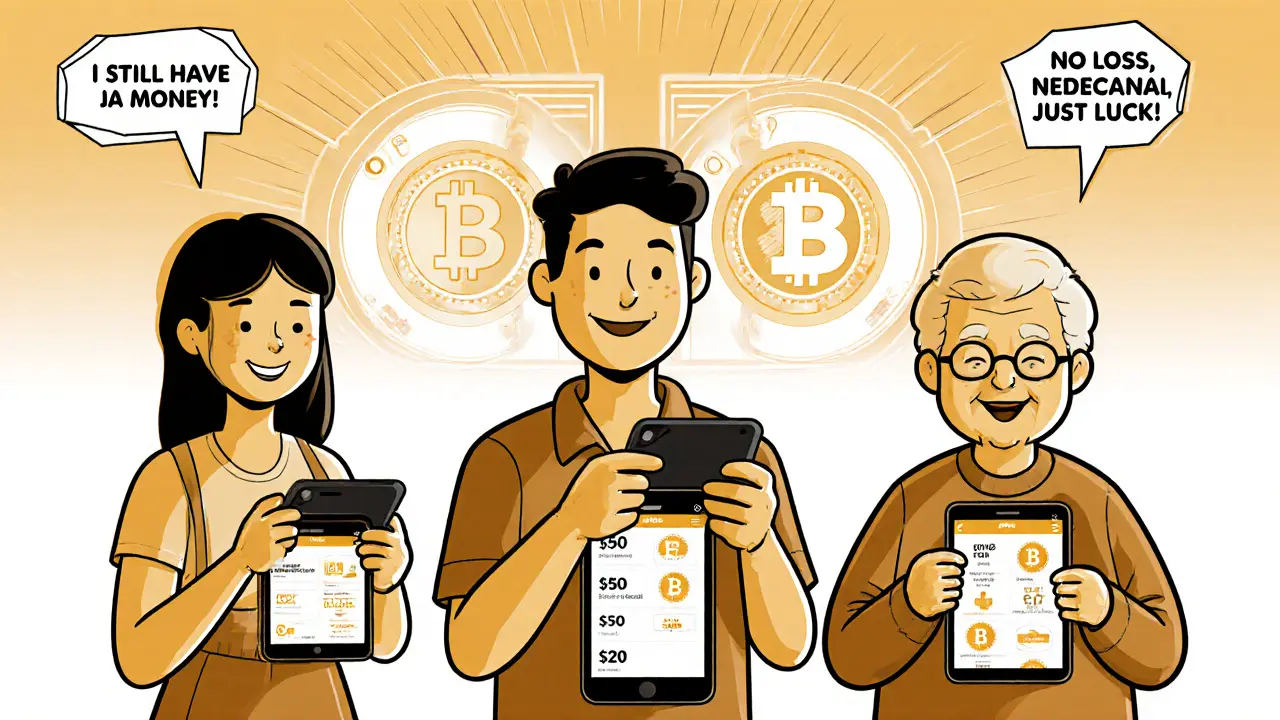
How much can you actually win?
The prize pool size depends on how much is deposited and the yield rate. In 2021, daily prizes averaged around $149,000 across all pools. But yields change. When interest rates drop, so do prizes. That’s the biggest risk: if DeFi yields fall, the prizes shrink. If you deposit $100, your chance of winning is tiny - maybe 1 in 10,000. If you deposit $10,000, your odds go up proportionally. But even then, you’re not guaranteed to win. It’s random. And it’s not designed to be a high-return investment. It’s designed to make saving feel fun. A 2021 study by Infura showed PoolTogether had over $202 million locked in across four asset pools. Over $10 million in prizes had been paid out since launch. But the real win? People who never saved before started putting money away - because they had a shot at something big.Who uses PoolTogether?
It’s not just crypto nerds. It’s people who like the idea of lotteries but hate losing money. It’s parents saving for their kids’ education. It’s freelancers setting aside cash for slow months. It’s people who’ve lost money in crypto and want something safer. Reddit threads are full of users saying things like, “I used to buy $5 Powerball tickets every week. Now I deposit $50 in USDC and get the same thrill - but I still have my money.” That’s the behavioral magic. It doesn’t change your brain’s reward system. It just removes the downside. The protocol has over 6,000 weekly active users - not millions, but consistent. That’s not a flash in the pan. It’s a loyal community built on trust and transparency.Is it safe?
PoolTogether’s code is open source. It’s been audited multiple times by top blockchain security firms. All transactions happen on Ethereum. You never hand over your keys. You connect your wallet - MetaMask, Coinbase Wallet, etc. - and interact directly with the smart contracts. The only risks are:- Smart contract bugs (extremely rare, but possible)
- Ethereum network fees during high congestion
- Yield drops if Compound or other lending protocols pay less interest
- Price volatility of POOL token (but that doesn’t affect your deposit)

How to get started
You don’t need to be a coder. Here’s how:- Get an Ethereum wallet (MetaMask is easiest)
- Buy USDC or DAI on Coinbase, Kraken, or another exchange
- Send it to your wallet
- Go to pooltogether.com
- Connect your wallet
- Deposit your stablecoin
- That’s it. You’re in the draw.
What’s next for PoolTogether?
The team is working on expanding to other blockchains - Polygon, Arbitrum, Optimism - to cut gas fees and make it faster and cheaper. They’re also testing new prize structures, like weekly multi-million dollar jackpots. The bigger goal? To replace traditional lotteries. The U.S. spends $80 billion a year on them. PoolTogether wants to be the alternative - a fair, transparent, no-loss version that keeps your money safe while still giving you a thrill.Is PoolTogether right for you?
Ask yourself:- Do you like the idea of a lottery but hate losing money?
- Do you have spare cash you’d normally keep in a savings account?
- Are you okay with low odds in exchange for zero risk to your principal?
Is PoolTogether a scam?
No. PoolTogether is a legitimate DeFi protocol with open-source code, multiple audits, and over $200 million in total value locked as of 2021. Your deposits are always under your control. You can withdraw them anytime. It’s not a scam - it’s a savings model built on blockchain transparency.
Can I lose money using PoolTogether?
You cannot lose your original deposit. If you put in $100 in USDC, you can always withdraw $100 in USDC. However, if the value of USDC drops (extremely rare), your dollar amount could technically lose value - but that’s not PoolTogether’s fault. The protocol itself doesn’t take your money.
How do I win the prize?
You don’t choose a number. You don’t pick a lucky date. Every time you deposit, you get one ticket. Every day, a random winner is selected using a verifiable on-chain algorithm. The more you deposit, the more tickets you get - and the higher your odds. But winning is still random.
Do I need to hold POOL tokens to use PoolTogether?
No. You can deposit USDC or DAI and participate in prize draws without owning any POOL tokens. The POOL token is only for governance - voting on future changes to the protocol. You don’t need it to save or win.
Is PoolTogether available worldwide?
Yes. PoolTogether has no geographic restrictions. Anyone with an Ethereum wallet and access to USDC or DAI can use it. However, local laws may apply - for example, some countries restrict DeFi participation. Always check your local regulations before depositing.



SHIVA SHANKAR PAMUNDALAR
November 26, 2025 AT 02:48Michael Fitzgibbon
November 26, 2025 AT 04:19Komal Choudhary
November 27, 2025 AT 11:01Tina Detelj
November 29, 2025 AT 00:34Wilma Inmenzo
November 30, 2025 AT 17:01George Kakosouris
December 1, 2025 AT 23:04