You’ve probably seen the name pop up in your feed or heard it whispered in a Telegram group. RichQUACK (QUACK) isn’t just another meme coin trying to ride the hype train. It’s a deflationary token on the Binance Smart Chain that launched back in June 2021 with a specific mission: to reward long-term holders while punishing whales. But what exactly is this "quack" about? If you’re wondering whether this community-driven project has real utility or if it’s just noise, you’re in the right place. We’re breaking down the tokenomics, the staking rewards, and the very real risks involved as of late 2026.
The Core Concept: More Than Just a Duck Joke
At its heart, RichQUACK is a decentralized launchpad platform. While many meme coins exist solely for speculation, RichQUACK aims to provide actual functionality. The project operates on the Binance Smart Chain (BSC), leveraging smart contracts to automate transactions without needing a central authority. The motto, "Don't Get Rich Quick, Get Rich Quack," reflects its satirical take on the get-rich-quick mentality common in crypto. Instead of promising overnight millions, it focuses on steady ecosystem growth through community participation.
The project describes itself as 100% community-driven. This means updates aren’t dictated by a single CEO but are overseen by volunteers within the holder base. As of December 2025, over 149,000 people hold QUACK tokens. That’s a significant user base for a micro-cap asset. The platform offers an extensive ecosystem that includes staking pools, IDO launches, and even a metaverse component being developed within Vimpto Worlds. It’s trying to be both entertaining and substantial, which is a tricky balance to strike.
Tokenomics: How the Deflationary Engine Works
If you look at the supply chart, you’ll see why RichQUACK is classified as hyper-deflationary. The total maximum supply was set at 100 trillion tokens. During the initial distribution, 50% of all QUACK tokens were burned-sent to a black hole address forever. The remaining 50% served as working capital for liquidity. This immediate scarcity was designed to support long-term value sustainability from day one.
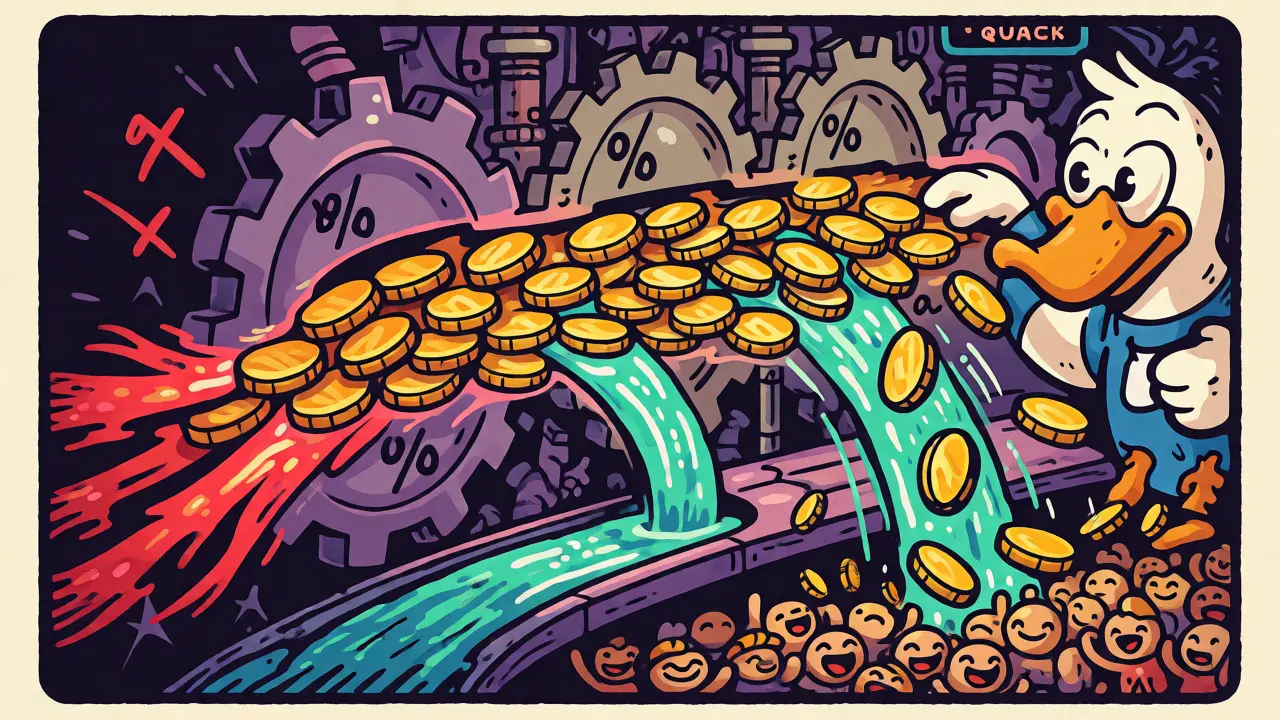
But the deflation doesn’t stop there. Every transaction triggers a sophisticated fee structure totaling approximately 12%. Here is how that pie gets sliced:
- 4% Holder Rewards: Automatically redistributed to existing token holders. The more you hold, the more you earn just by sitting still.
- 4% Auto Liquidity: Added directly to the liquidity pool to stabilize trading and reduce slippage.
- 2% Burn Wallet: Tokens sent to the "Quack PUMP and Burn Wallet," permanently removing them from circulation.
- 2% Marketing & Dev: Funds used for ongoing development and promotional activities.
Additionally, there is a 3% allocation split between the Deployer Wallet (1%) and Team Holdings (2%). This dual-fee structure creates constant deflationary pressure. With a circulating supply hovering around 44.35 trillion tokens as of late 2025, every trade technically makes the remaining tokens scarcer.
Staking and Yield Opportunities
Holding is nice, but staking pays better. RichQUACK offers several staking options to incentivize users to lock up their tokens rather than dumping them after a small pump. The most popular option is the Quack Pool, which currently offers an Annual Percentage Yield (APY) of 15.40%. Note that this comes with a 2.5% entry fee, so factor that into your calculations.
For those who prefer flexibility, there are tiered lock-in periods:
| Lock-in Period | Annual Percentage Rate (APR) | Flexibility |
|---|---|---|
| 14 Days | 8% | Short-term commitment |
| 30 Days | 13% | Medium-term commitment |
| 90 Days | Maximum APR | Longest lock, highest potential yield |
To get the maximum annual percentage rate, you need to secure your QUACK in the site for 90 days without withdrawals. Once you stake, you also gain access to Initial DEX Offerings (IDOs). This is where the "launchpad" aspect kicks in. You can participate in presale voting and use a "START" feature to help fund new projects. Allocation levels in these IDOs depend on how much QUACK you have staked, rewarding deeper commitment with better odds.
Anti-Whale Mechanisms and Community Protection
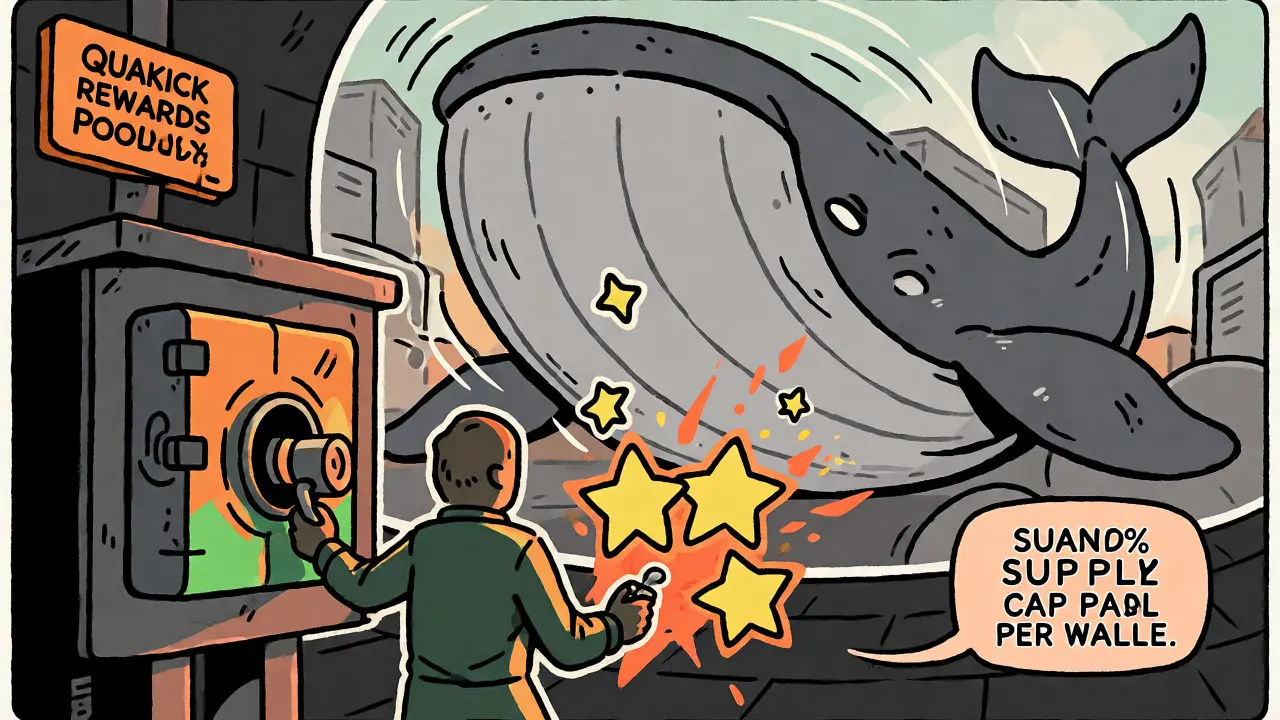
One of the biggest complaints in crypto is that whales dump on retail investors. RichQUACK addresses this with an anti-whale mechanism. No single wallet can possess more than 1% of the total token supply. Furthermore, sales are limited to quantities less than 1% of the whole supply per transaction. This prevents any single entity from crashing the price with a massive sell-off.
There is also a financial reserve known as the "money bin." This reserve remains inaccessible for five years, referred to as "Liquidity Locked on Team." This restriction prevents the team from pulling liquidity early, a common rug-pull tactic in smaller projects. It signals a long-term vision, forcing the team to think in terms of years, not weeks.
Market Performance and Risks
Let’s talk numbers, because they matter. RichQUACK hit its all-time high (ATH) of $0.000000015463 on November 7, 2021. That was during the peak of the bull run when everything seemed possible. Since then, the market has cooled significantly. As of December 2025, the token experienced a documented 78% decline over the past year. The current market cap sits around $17.4 million USD.
This volatility is typical for micro-cap tokens. While the deflationary mechanics help, they don’t guarantee price appreciation. The speculative nature of early-stage crypto assets means you could see double-digit gains in a week or lose half your investment just as fast. Trading platforms like Gate.com and MEXC list QUACK, providing spot trading for direct ownership and futures for leverage. However, liquidity can dry up quickly if market sentiment shifts.
The Metaverse and Future Roadmap
Is RichQUACK staying relevant in 2026? The team is betting on integration. They are developing a metaverse component inside the framework of Vimpto Worlds. This isn’t just a digital land grab; it’s designed for socializing, recreational activities, and generating income. Users can relax and interact in this virtual space, tying the token utility to real-world usage scenarios beyond just trading.
The roadmap emphasizes becoming a safe and secure investing and fundraising platform. Features like jackpot raffles for holding and hourly lotteries aim to keep engagement high. The goal is to create a sticky ecosystem where users stay because they enjoy the community and the rewards, not just because they hope the price goes up.
Is RichQUACK a scam?
RichQUACK is not inherently a scam; it is a legitimate community-driven project on the Binance Smart Chain with active development since 2021. However, like all micro-cap cryptocurrencies, it carries high risk. Always verify contract addresses and do your own research before investing.
How does the deflationary mechanism work?
A portion of every transaction fee is burned (removed from circulation) and added to liquidity. Specifically, 2% of each transaction is sent to a burn wallet, reducing the total supply over time and theoretically increasing scarcity.
Can I buy QUACK on major exchanges?
Yes, QUACK is traded on several exchanges including Gate.com and MEXC. It may not be available on top-tier centralized exchanges like Coinbase or Binance directly, so you might need to swap via PancakeSwap on the BSC network first.
What is the maximum supply of QUACK?
The original maximum supply was 100 trillion tokens. However, due to deflationary burns, the circulating supply decreases over time. As of late 2025, approximately 44.35 trillion tokens were in circulation.
Are there fees for staking QUACK?
Yes, the main Quack Pool staking requires a 2.5% entry fee. There are also transaction fees when moving tokens into and out of staking contracts, plus gas fees on the Binance Smart Chain.